
This post may contain affiliate links. If you buy through them, we may earn a small commission at no extra cost to you.
Knowing how to heat a tent safely turns a long, frosty night into one of the best parts of cold weather camping. A warm tent makes it easier to change clothes, read, play cards and fall asleep without shivering. It also comes with real risk, because the wrong heater in a closed tent can produce carbon monoxide, start a fire or steal oxygen from the air. If you are new to camping in the cold, our cold weather camping tips cover the basics first.
This guide explains the safe ways to warm a tent, from indoor rated propane heaters to electric heaters at hookup sites, plus the simple tricks that warm you without any heater at all. You will also learn the carbon monoxide rules that every camper should follow, the mistakes to avoid and how to stay warm once the heater is off for the night.
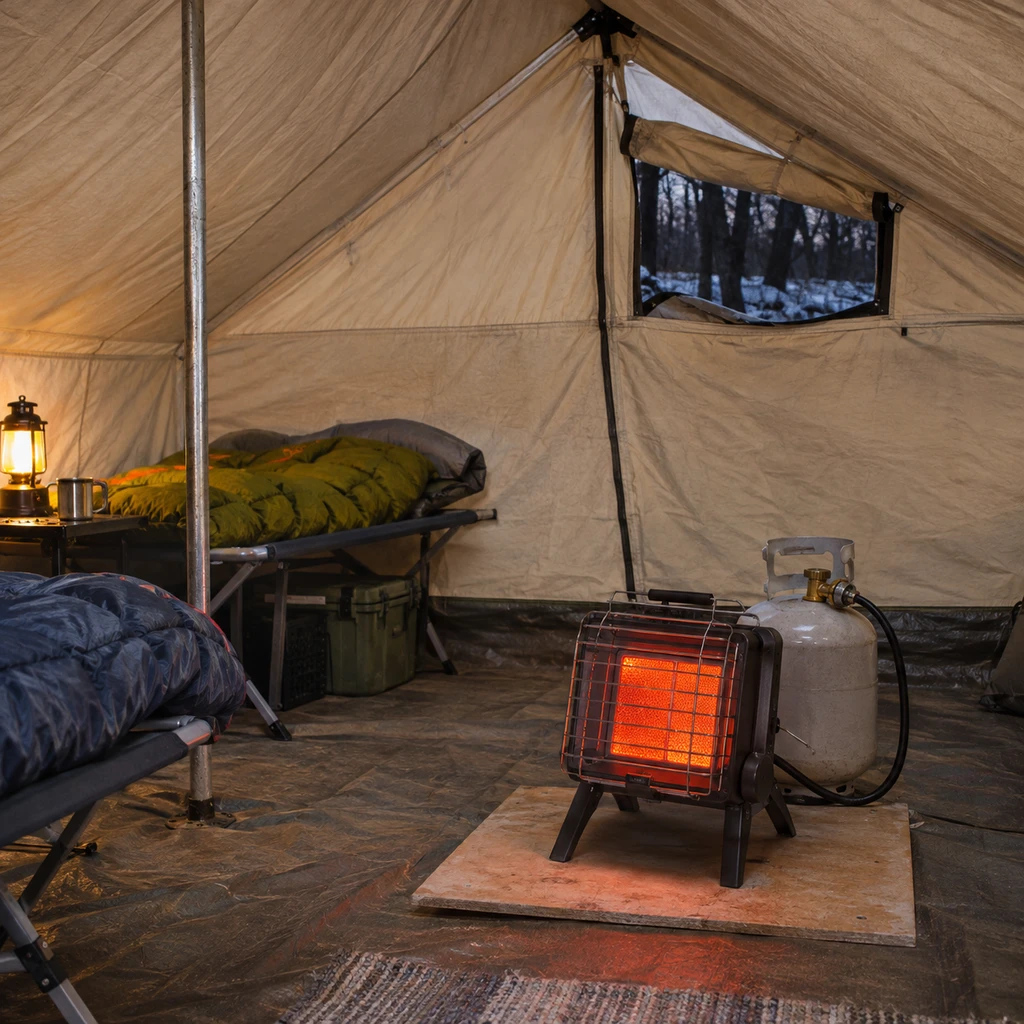
Table of Contents
Safety First When You Heat a Tent
Before you buy any heater, understand the three dangers. Every safe method below is built around avoiding them, and none of them are worth risking for a few degrees of warmth.
Carbon Monoxide
Anything that burns fuel, including propane, butane, white gas, charcoal and wood, can produce carbon monoxide. You cannot see or smell it, and in a small tent it can build to dangerous levels quickly. Early symptoms such as headache, dizziness, nausea and sleepiness are easy to mistake for tiredness or altitude. Never use a camp stove, grill, charcoal, lantern or campfire coals inside a tent for heat, even for a few minutes.
Fire Risk
Tent fabric, sleeping bags and clothing burn easily, and many tents are not made from fire resistant materials. Any heater needs clear space around it, a stable flat base and a way to shut off automatically if it tips over.
Low Oxygen
Fuel heaters use oxygen as they burn. In a sealed tent, the oxygen level can drop, which also makes combustion less clean and creates more carbon monoxide. Ventilation is not optional, even when it lets a little cold air in.
Always Use a CO Detector
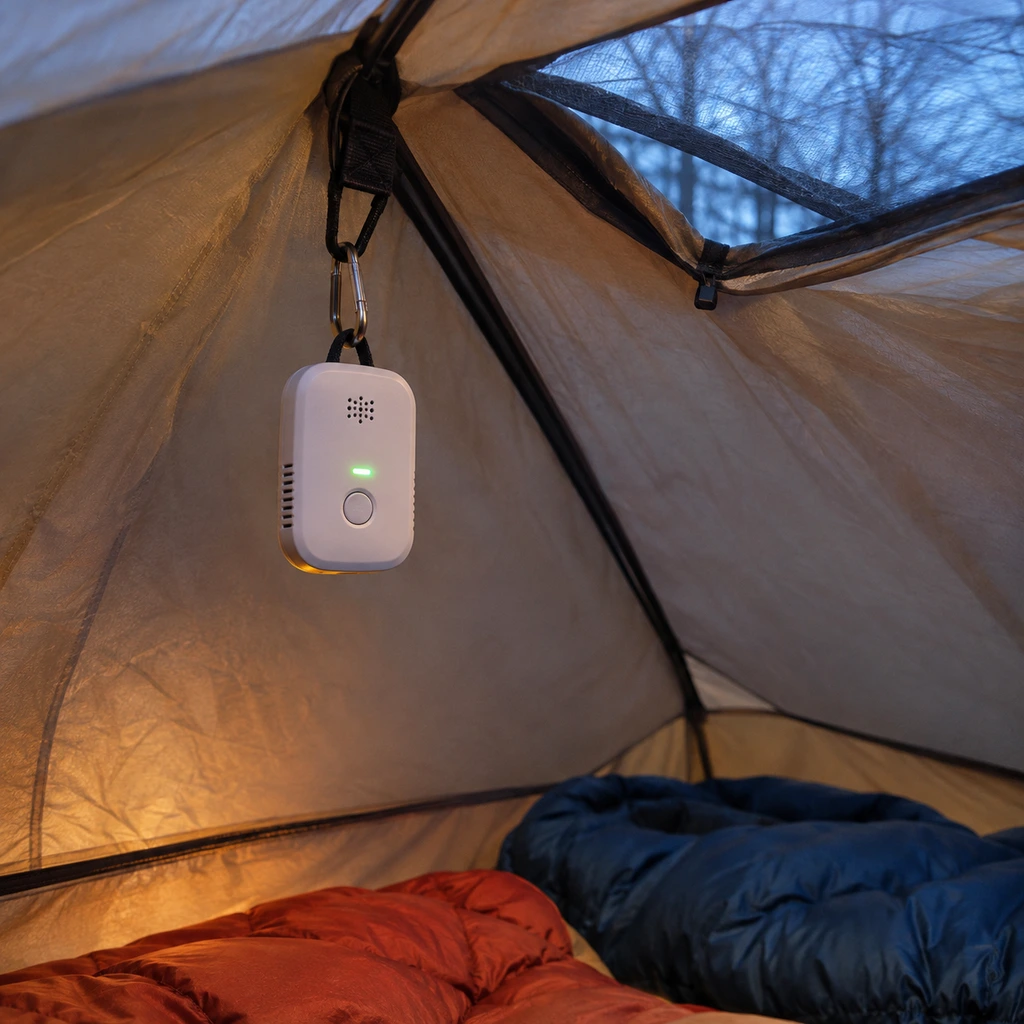
A battery powered carbon monoxide detector is the single most important piece of safety gear for anyone who uses a fuel heater in a tent. Hang it at head height, test it before every trip and pack spare batteries. If it alarms, turn off the heater, get everyone outside into fresh air and do not go back in until the tent has aired out. Our list of essential camping safety tips covers other cold weather hazards.
How to Heat a Tent Safely With a Heater
If you want real heat, choose a heater that is designed and approved for indoor use and has built in safety shutoffs. Here are the options that work, from the most common to the most situational.
Indoor Rated Propane Heaters
Small radiant propane heaters are the most popular choice for tent campers. Look for one that is approved for indoor use and has both a low oxygen shutoff and a tip over shutoff. The Mr. Heater Little Buddy is a common example: it puts out 3,800 BTU, warms up to about 95 square feet, runs around 5.6 hours on a 1 pound propane cylinder, and shuts itself off if it tips over or oxygen drops. Note that its indoor use is not approved in Canada or Massachusetts, so check your local rules.
Use it only while you are awake, set it on a flat, hard surface like a small board, keep it at least three feet from fabric and bedding, and keep a vent open the whole time it runs. Turn it off before you go to sleep, every time.
Bring more fuel than you think you need, since small cylinders run out faster in the cold, and store spare cylinders outside the tent. Change cylinders outdoors, away from any flame, and check the connection for leaks before you bring the heater back inside. Radiant heaters warm what they face, so point the heater at the people in the tent rather than at the walls, and run it on low once the tent is comfortable. A short burst of heat while you change into dry clothes and get ready for bed is usually all you need.
Electric Heaters at Hookup Sites
If your campground has electric hookups, a small electric space heater is the safest way to heat a tent, because it burns no fuel and produces no carbon monoxide. Choose one with tip over protection and overheat protection, use an outdoor rated extension cord, and keep the cord and outlet dry. Never run one from an undersized cord or a power strip.
Portable Power Stations
Without hookups, a portable power station can run a heated blanket or heated sleeping pad, but it cannot run a space heater for long. Heaters draw too much power. Heated blankets and pads are a more realistic use of battery power.
Hot Tents and Wood Stoves
Canvas hot tents are built with a stove jack, a fire resistant ring that lets a wood stove pipe pass safely through the roof. They are a specialized setup with their own training and safety rules. Never put a wood stove in a regular nylon or polyester tent. If a canvas setup interests you, start with our comparison of canvas tents vs nylon tents and our list of the best canvas tents.
Warming a Tent Without a Heater
Many experienced winter campers never use a heater at all. These methods are free or cheap, carry no carbon monoxide risk and keep working all night long.
Use a Hot Water Bottle
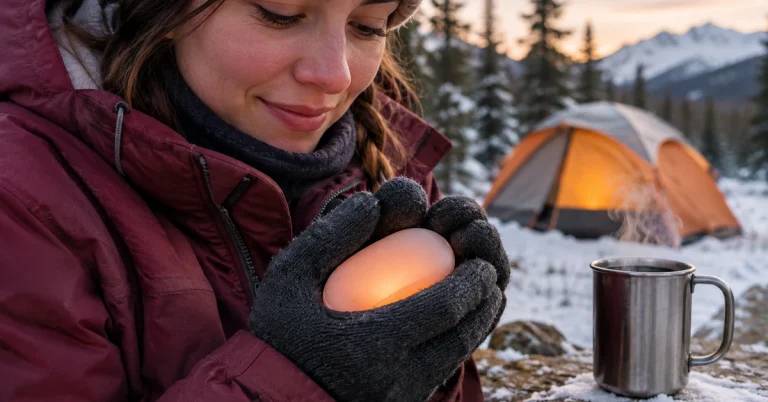
Boil water outside the tent, pour it into a sturdy, leakproof bottle such as a Nalgene wide mouth bottle, close it tightly and slip it into a sock. Tucked into your sleeping bag, it radiates warmth for hours.
Rechargeable Hand Warmers
A rechargeable hand warmer such as the Hotdot rechargeable hand warmers adds steady, flameless warmth inside a pocket, glove or sleeping bag footbox. They are reusable, so you are not throwing away a pile of disposable packets after every trip.
Insulate the Floor
The cold ground pulls heat away faster than the air does. Put a foam pad or a rug under your sleeping area, and sleep on an insulated pad with a high R-value. Two pads stacked together, a foam pad under an inflatable one, add their R-values for very little money. Our list of the best sleeping pads for camping compares warmth ratings.
Choose a Smaller Tent and Fill It
Your body heat warms a small tent much faster than a big one. A tent sized for the number of people in it, with gear and bodies filling the space, stays noticeably warmer. A footprint and a well pitched rainfly also block wind.
Pick a Sheltered Campsite
Cold air sinks into valleys at night, so a spot a little way up a slope is warmer than a valley floor. Trees and boulders break the wind. Point the tent door away from the wind, and avoid pitching right next to water.
Warm Yourself, Not the Air
Eat a warm dinner and a fatty snack before bed, drink something hot, and do a few minutes of light exercise before you climb in. Wear dry base layers, wool socks and a hat. Our guide on how to stay warm in a sleeping bag shares a dozen more tricks.
Build a Warm Sleep System
Even with a heater, you should never sleep with a fuel heater running. That means your sleeping bag, pad and clothing have to keep you warm on their own once the heater is off. Choose a bag rated at least 10 degrees colder than the lowest temperature you expect, like the ones in our list of the best car camping sleeping bags. A liner from our list of the best sleeping bag liners adds a few more degrees, and a warm jacket from our list of the best insulated jackets helps around camp.
Why Ventilation Still Matters
It feels backwards to open vents when you are trying to stay warm, but ventilation protects you in two ways. It lets carbon monoxide and combustion gases escape when a heater is running, and it lets moisture from your breath escape all night. Without it, condensation soaks your tent walls and sleeping bag, and damp insulation is cold insulation. Keep at least one high vent and one low vent cracked open. Wet weather makes this even more important, as our guide to camping in the rain explains.
Common Mistakes to Avoid
- Bringing a camp stove, grill or charcoal inside for heat. This is one of the most common causes of carbon monoxide deaths among campers.
- Sleeping with a fuel heater running, even an indoor rated one.
- Sealing every vent to trap heat.
- Using a heater without a working CO detector.
- Setting a heater on a soft sleeping pad or near the tent wall.
- Running an electric heater on a cheap indoor extension cord in wet grass.
Hammock campers face different heat loss from below. Our guide to cold weather hammock camping explains how to fix it, and our cold weather camping tips to stay warm add more ideas for car campers.
Frequently Asked Questions
Is it safe to use a propane heater in a tent?
Only if the heater is approved for indoor use, has a low oxygen shutoff and a tip over shutoff, the tent is ventilated, a CO detector is running, and you are awake. Turn it off before you sleep.
Can you sleep with a heater on in a tent?
Not a fuel burning heater. Turn it off before sleep and rely on your sleeping bag. An electric heater with tip over and overheat protection at a hookup site is lower risk, but keep it well away from bedding.
How do you heat a tent without electricity?
Use a hot water bottle in your sleeping bag, rechargeable hand warmers, an insulated floor, a smaller tent and a sheltered campsite. If you use an indoor rated propane heater, follow every safety rule above.
What is the best way to heat a tent?
For most campers, the best answer to how to heat a tent is a combination: a warm sleep system, an insulated floor and a hot water bottle overnight, with an indoor rated heater used briefly while you are awake.
Discover more from Maive Verse
Subscribe to get the latest posts sent to your email.