
This post may contain affiliate links. If you buy through them, we may earn a small commission at no extra cost to you.
How thick does ice need to be before you can safely walk, fish or drive on it? The short answer is at least 4 inches of clear, solid ice for a person on foot, and far more for anything with an engine. The longer answer matters just as much, because ice is never uniform, and the type of ice, the weather and the water underneath can make a thick looking sheet dangerously weak. If you are heading out for the first time this winter, read this alongside our ice fishing for beginners guide.
This guide gives you the thickness numbers that state wildlife agencies use, explains how to read ice by its color, shows you how to check thickness yourself, and walks through exactly what to do if you ever break through. No guideline can promise that ice is safe, but knowing these rules dramatically lowers your risk.
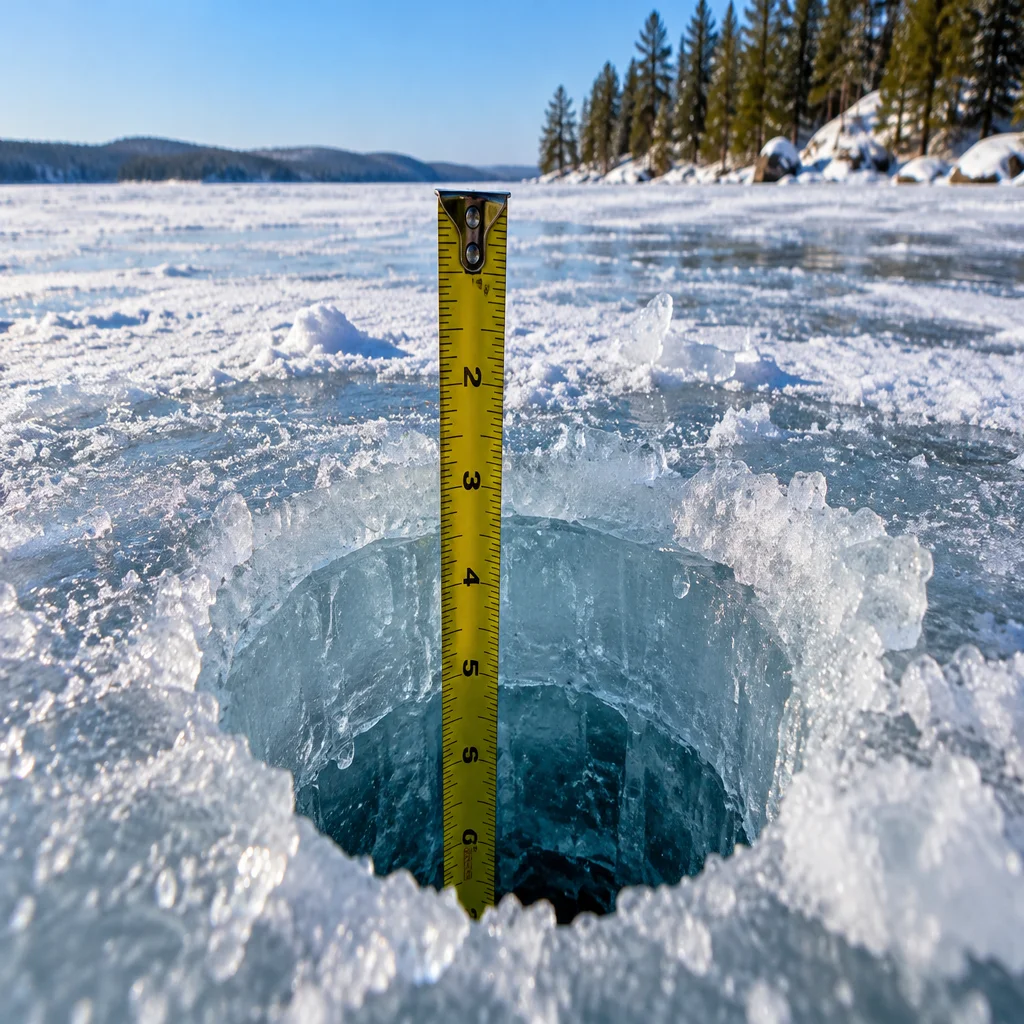
Table of Contents
How Thick Does Ice Need to Be? The Safety Chart
These are the widely used minimums for new, clear, solid ice, based on guidance from agencies such as the Minnesota Department of Natural Resources. Treat them as the starting point, not a guarantee.
| Clear Ice Thickness | What It Can Support |
|---|---|
| Under 4 inches | Stay off. Not safe for anyone. |
| 4 inches | Ice fishing and other activities on foot |
| 5 to 7 inches | Snowmobile or ATV |
| 8 to 12 inches | Car or small pickup truck |
| 12 to 15 inches | Medium sized truck |
Double It for White Ice
White, cloudy or snow covered ice contains trapped air and slush and is roughly half as strong as clear ice. If the ice you are standing on is white, you need about twice the thickness in the chart, so 8 inches rather than 4 for walking.
Thickness Is Not Uniform
A lake can have a foot of ice in one bay and 2 inches near an inlet a few hundred yards away. A single measurement at the shore tells you about that one spot, nothing more. That is why you keep checking as you walk out.
Reading Ice by Its Color
The old saying is “thick and blue, tried and true; thin and crispy, way too risky.” Color is a useful first clue, though never a replacement for measuring.
Clear or Blue Ice
Clear, dark or blue ice forms slowly in steady cold and is the strongest kind. It can look alarming because you can see the water through it, but it is the ice the safety chart is based on.
White or Opaque Ice
White ice forms when snow melts and refreezes on top of the lake. It is much weaker. Many lakes have a layer of clear ice under a layer of white, and only the clear layer should count toward your thickness.
Gray or Dark Spots
Gray ice usually means water is present inside it, and it is a sign of melting or thin ice. Stay off gray patches entirely, especially late in the season.
Where Ice Is Weakest
Inlets, Outlets and Currents
Moving water erodes ice from below. Ice near streams entering or leaving a lake, narrows between two bodies of water, and anywhere with current, including most rivers, is often far thinner than the rest. Our guide on how to read a river explains where currents run.
Springs, Docks and Structures
Underwater springs, dock pilings, bridges, rocks and fallen trees all absorb or release heat and weaken the ice around them. Give them a wide berth.
Pressure Ridges and Cracks
Pressure ridges form when ice sheets push against each other. They can open into areas of thin or open water. Do not cross them, and treat any wet crack with suspicion.
Under Snow
A blanket of snow insulates ice and slows freezing, and the extra weight can push the ice down and flood it with slush. Snow also hides weak spots completely. Fresh snow on early ice is a reason for extra caution.
How to Check Ice Thickness Yourself
Use a Spud Bar on the Way Out
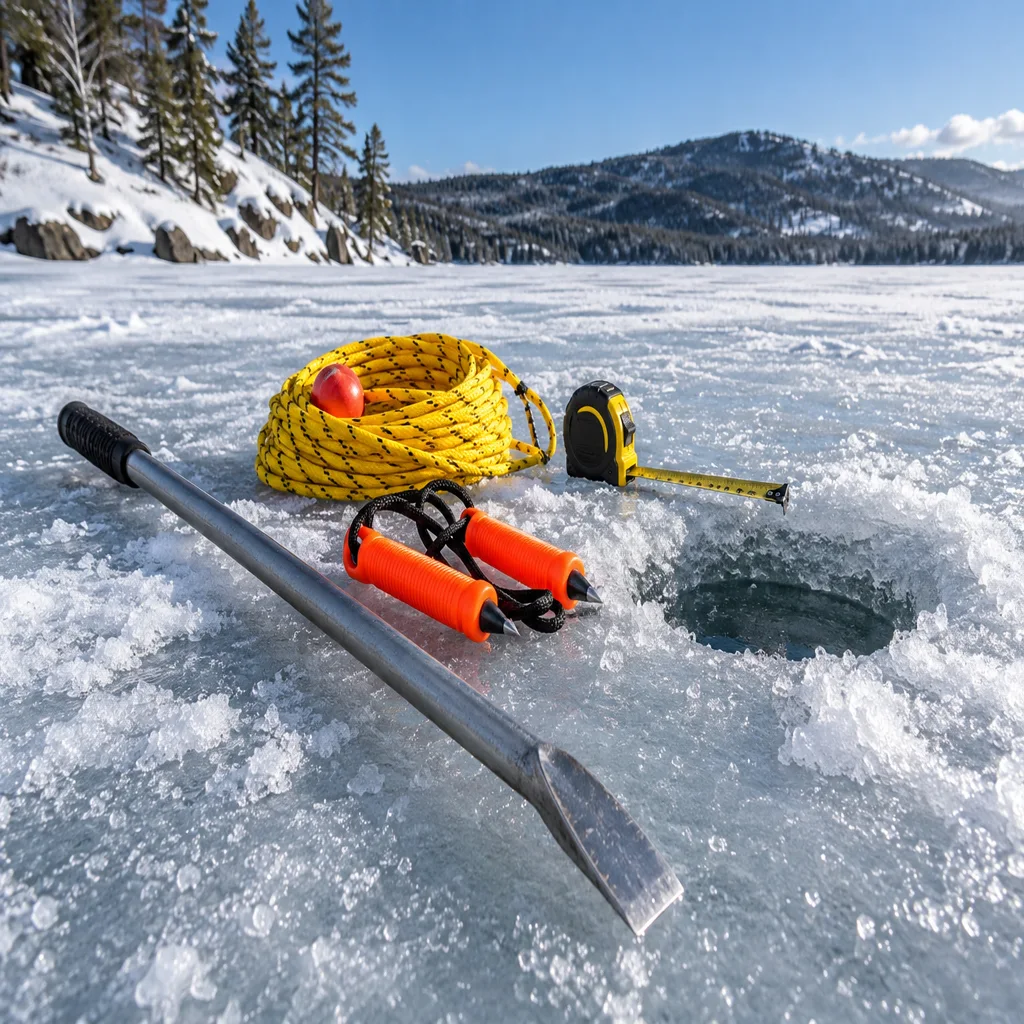
A spud bar, such as the Eskimo 64 inch ice chisel, is a heavy steel chisel on a long handle. Strike the ice ahead of you every few steps as you walk. If it punches through in one or two hits, the ice is too thin, so turn back the way you came.
Drill Test Holes
Drill or chisel a test hole near shore and then every 150 feet or so as you move out. Measure with a tape measure or an ice gauge, and note how much of the ice is clear versus white.
Ask Locals and Check Reports
Bait shops, resorts and local fishing groups usually know current conditions better than anyone. Their reports are a great starting point, but still check the ice yourself, since conditions change fast.
Gear That Can Save Your Life
A small amount of safety gear makes a huge difference if something goes wrong. Wear it, rather than leaving it in the sled.
- Ice picks worn around your neck, such as the Frabill retractable ice picks, to pull yourself out.
- A throw rope or throw bag to help a partner from a safe distance.
- A spud bar for testing ice as you walk.
- A flotation suit or a life jacket worn under your outer layer.
- Traction on your boots. Bare ice is slick, and our list of the best microspikes for hiking includes options that work well on lakes.
- A charged phone in a waterproof bag, kept in an inside pocket.
Dress for the cold, too. Our guides on how to layer and the best insulated jackets cover the system, and the same principles that keep you safe in cold water kayaking apply on the ice.
What to Do If You Fall Through the Ice
Remember the 1-10-1 Rule
Sudden immersion in icy water triggers a gasp reflex and rapid breathing. You have about 1 minute to get your breathing under control, about 10 minutes of useful movement before your muscles stop working, and up to about 1 hour before you lose consciousness from hypothermia. Do not panic. You have more time than it feels like.
Get Out the Way You Came
Turn toward the direction you came from, since that ice held you. Put your arms on the ice, kick your legs to get your body horizontal, and use your ice picks to pull yourself forward onto the surface.
Roll Away, Then Get Warm
Once out, do not stand up. Roll away from the hole to spread your weight, then crawl back along your own tracks. Get to warmth and dry clothes immediately, and seek medical help even if you feel fine.
Helping Someone Else
Call 911 first. Never run up to the hole. Reach with a pole, throw a rope, or push a ladder or branch across the ice while lying flat. Going in after someone usually means two people in the water.
Plan a Safer Day on the Ice
Most ice accidents happen early and late in the season, when people are eager to get out or reluctant to stop. A little planning keeps you on the right side of the odds.
- Never go out alone. Fish with a partner and stay within shouting distance.
- Tell someone where you are going and when you will be back.
- Walk out in single file, spaced well apart, so the ice is never loaded in one spot.
- Avoid the ice after a thaw, during warm rain, or when you see open water near shore.
- Leave vehicles on shore until locals confirm the ice is thick enough, and drive with windows down.
Pack your gear so it is easy to pull on a sled and quick to grab. Our list of the best tackle boxes includes compact options, and our best rod and reel combos roundup and guide on how to tie fishing knots cover the basics of a winter kit. If you prefer to stay on land in winter, our guides to hiking in snow and ice and rucking in cold weather cover the same cold weather safety for the trail.
Frequently Asked Questions
Is 3 inches of ice safe to walk on?
No. Three inches of ice is not considered safe for walking. Wait for at least 4 inches of clear, solid ice, and more if the ice is white or snow covered.
How long does it take for ice to get 4 inches thick?
It varies widely with temperature, wind, snow cover and lake depth. A run of several nights well below freezing can grow a few inches, but snow cover slows growth a lot. Always measure rather than estimate.
Is river ice as safe as lake ice?
Generally no. Current wears ice from below, so river ice is often thinner and less predictable than lake ice of the same age. Be especially careful near bends and narrows.
What ice thickness do you need for ice fishing?
At least 4 inches of clear ice for anglers on foot. If you bring a shelter and gear on a sled, aim for more, and see our list of the best ice fishing shelters and our fall fishing tips as the season changes.
Discover more from Maive Verse
Subscribe to get the latest posts sent to your email.