


This post may contain affiliate links. If you buy through them, we may earn a small commission at no extra cost to you.
Trail running in the rain is one of the best things you can do on a gray fall day. The trails empty out, the forest smells incredible, and the cool air makes hard efforts feel easier. It also changes almost everything about footing, clothing and safety, so a run that is routine in July can turn sketchy in October if you head out the same way.
This guide covers what to wear, which shoes grip on wet rock and mud, how to adjust your stride, when to call it off, and how to care for your gear afterward. If you are newer to the sport, our trail running for beginners guide covers the basics first, and our fall trail running tips pair well with everything below.
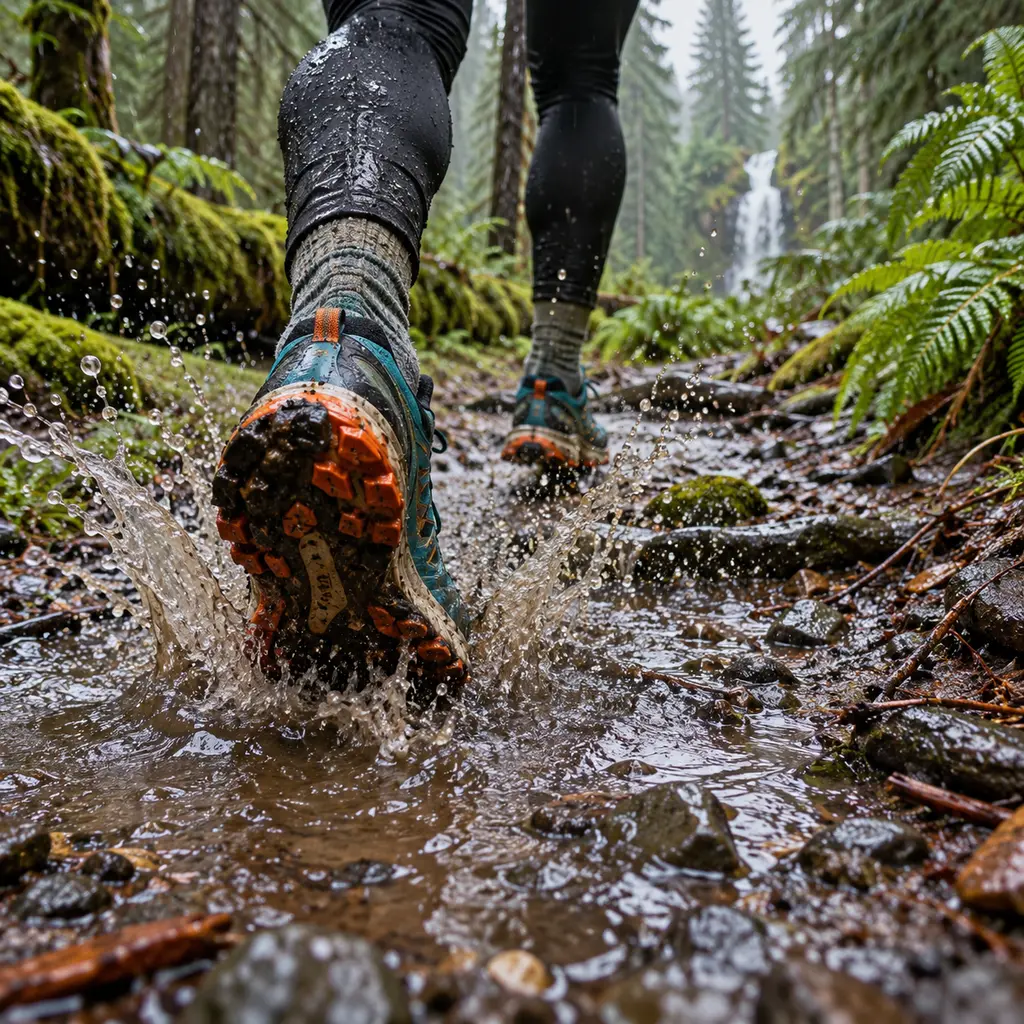
Table of Contents
Why Run Trails in the Rain
Rain running builds skills that make you better on every surface. Slick roots and mud force quicker, lighter steps and better balance, and learning to read wet terrain makes dry trails feel easy. It also builds the kind of confidence that pays off in races, where you rarely get to choose the weather.
There is a practical side too. Popular trails are quiet in bad weather, and once you are wet, you stop worrying about it. Most runners who try it find the first ten minutes are the only uncomfortable part.
Start With Short, Familiar Routes
Your first rain runs should be on trails you already know well, in daylight, and shorter than usual. Familiar terrain means you already know where the slick sections, creek crossings and bail out points are, so your attention can go to footing instead of navigation. Treat the first few outings as skills sessions rather than workouts, and let your pace drop as much as it needs to.
Expect a Slower Pace
Most runners lose thirty seconds to a couple of minutes per mile on wet trails, more on technical ground. That is normal. Run by effort or time rather than pace, and resist the urge to make up the difference on the downhills, where a fall costs far more than a slow split.
What to Wear for Trail Running in the Rain
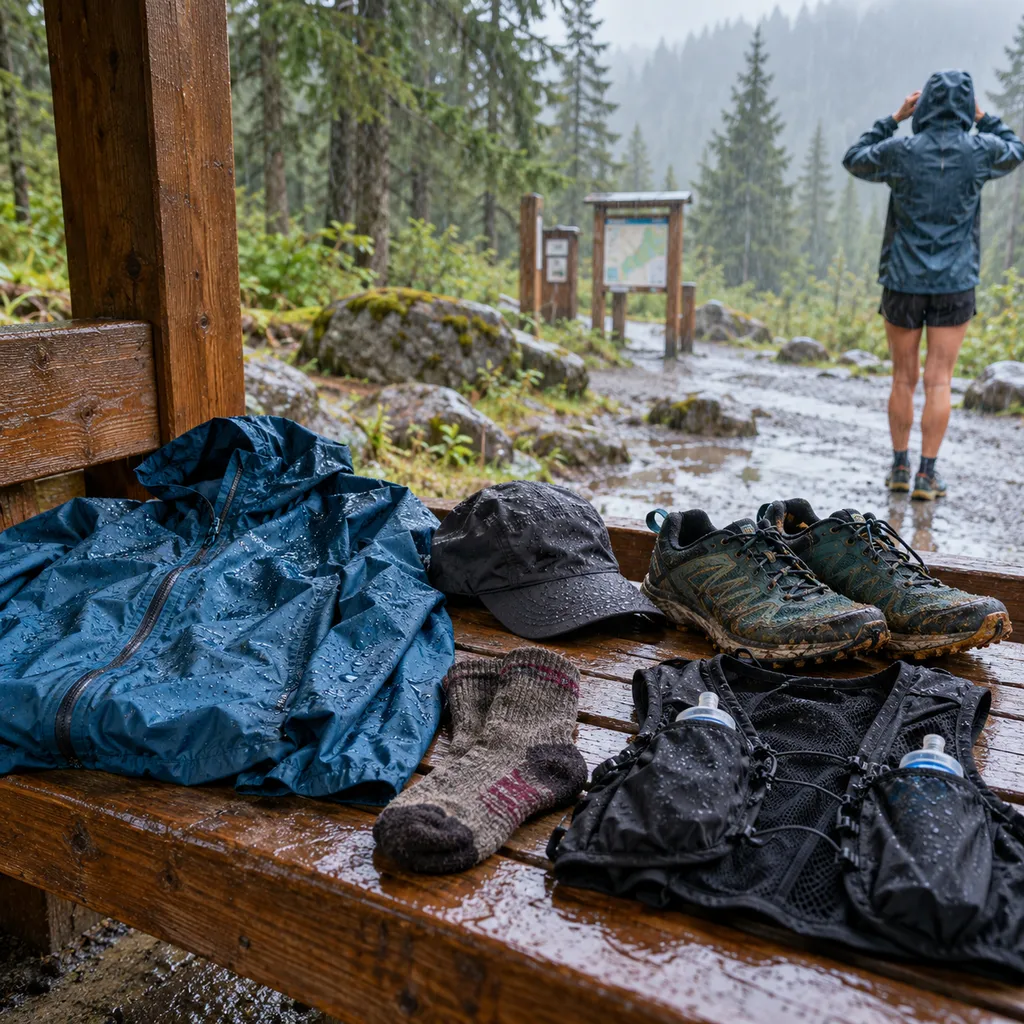
A Light, Packable Rain Jacket
A light shell keeps wind and rain off your core, which is where you lose the most heat. Running jackets are thinner than hiking shells, so look for something that packs into its own pocket and has vents or pit zips. In warm rain over about 60 degrees, many runners skip it and accept getting wet. Our best rain jackets for hiking include budget shells like the Columbia Watertight II that work fine for shorter runs.
Synthetic or Wool Layers, Never Cotton
Cotton holds water against your skin and pulls heat away fast. Wear synthetic or merino wool, which stay warm when wet. The layering system hikers use works for runners too, just with thinner pieces because you generate more heat.
A Cap With a Brim
A simple running cap is the most underrated rain item. The brim keeps water out of your eyes so you can actually see the trail, and it does more for comfort than a hood, which flops around and blocks your peripheral vision.
Wool Socks
Your feet will get wet, so the goal is warm and blister free rather than dry. Thin merino or synthetic socks drain and dry faster than thick ones, and they hold their shape so they do not bunch up and rub.
Gloves for Cold Rain
Below about 45 degrees, wet hands go numb quickly, and numb hands cannot open a gel or a zipper. Thin liner gloves are enough for most runs; carry a waterproof pair on long, cold days.
Shoes and Grip on Wet Trails
Lugs Matter Most
Deep, widely spaced lugs bite into mud and shed it as you run. Shallow lugs pack with mud and turn into slicks. Our best trail running shoes list flags the best mud grippers, and the Salomon Speedcross 6 GTX (the link goes to the women’s listing) is a classic choice for soft, sloppy ground.
Sticky Rubber for Wet Rock
Mud and wet rock want different things. Big lugs help in mud, but on wet granite or slick roots, softer, stickier rubber grips better. If your trails are rocky, choose a shoe known for its outsole compound rather than its lug depth.
Waterproof or Not?
A Gore-Tex shoe keeps feet dry through wet grass and shallow puddles, which helps on cold days. Once water gets in over the collar, though, it stays in. For long runs with stream crossings or deep puddles, breathable mesh that drains quickly is usually more comfortable.
How to Run Safely on Wet Trails

Shorten Your Stride
Short, quick steps keep your feet under your body, where they can react to a slip. Long strides land out in front of you with your weight behind, which is exactly how people fall on wet ground.
Watch Roots, Rocks and Wooden Bridges
Wet roots are as slick as ice, especially when they cross the trail at an angle. Step over them rather than on them. Smooth rock slabs, painted surfaces and wooden boardwalks are also far slicker than they look.
Take Descents Slowly
Downhills are where most rain falls happen. Keep your weight centered, arms out for balance, and accept a slower pace. Our guide on how to run downhill covers the technique in detail, and trail running poles add two extra points of contact on steep, muddy descents.
Run Through Puddles, Not Around Them
Stepping around puddles widens trails and damages the vegetation at the edges. Run straight through the middle, which is usually the firmest footing anyway. It is one of the simplest Leave No Trace habits.
When Not to Run
Thunderstorms
If you hear thunder, you are within range of lightning. Avoid ridges, summits and open meadows, and do not shelter under a lone tree. Check the forecast before you go, and our guide to predicting trail weather lists apps that track storms.
Flash Flood Risk
Heavy rain can turn a creek crossing dangerous in minutes, especially in canyons. Never cross fast moving water above your shins. Our guide to reading a river explains what moving water is doing beneath the surface.
Closed or Fragile Trails
Many parks close dirt trails after heavy rain because footsteps carve deep ruts into saturated soil. Respect the closures and run a gravel path or road instead.
Cold Rain and Hypothermia Risk
Rain in the 40s with wind is the classic hypothermia setup. Shivering, clumsy hands and slurred thinking are signs to get warm right away. Run loops close to your car on cold, wet days so you can bail out quickly.
What to Carry
A small vest holds a jacket, a phone in a zip bag and a snack without bouncing. The Nathan TrailMix 7L from our trail running vest picks is a good size for rainy two hour runs. Rain days are also dark days, so if there is any chance you finish late, bring a light from our best running headlamps.
| Item | Why it matters in the rain |
|---|---|
| Packable shell | Blocks wind on exposed sections and summits |
| Phone in a zip bag | Rain kills touchscreens and soaks pockets |
| Liner gloves | Keeps hands working below 45 degrees |
| Headlamp | Overcast days get dark early, especially in forest |
| Snack and water | You still sweat and burn fuel in cool weather |
Fuel and Drink Anyway
Cool, wet weather blunts thirst, but you still sweat under a jacket and burn more energy staying warm. Drink on a schedule rather than by feel on runs longer than an hour, and eat something every forty five minutes. Warm fluids in an insulated bottle are a welcome treat on cold, soggy days.
After the Run
Get Warm First
Change into dry clothes as soon as you stop, before you drive home. Keep a towel, a dry top and a warm layer in the car. A hot drink helps more than you would expect.
Dry Your Shoes Slowly
Pull out the insoles, stuff the shoes with newspaper and leave them at room temperature. Never put them on a heater or in a dryer; heat breaks down the glue and foam.
Wash and Reproof Your Jacket
Dirt and body oils stop the water repellent coating working, so wash your shell with a technical cleaner every so often and reapply DWR when water stops beading. Our tips on storing outdoor gear help it all last longer.
Frequently Asked Questions
Is it safe to trail run in the rain?
Yes, with adjustments. Slow down on descents, shorten your stride, watch for roots and rock, and avoid thunderstorms, flooded crossings and closed trails.
What shoes are best for running trails in the rain?
Shoes with deep, widely spaced lugs for mud, or sticky rubber for wet rock. Waterproof shoes help in cold weather but drain slowly once water gets in.
Should I wear a rain jacket when running?
In cold or windy rain, yes. In warm rain, many runners go without, because a jacket can make you sweat more than the rain would wet you.
How do I keep my phone dry on a run?
Seal it in a zip top bag inside your vest or shorts pocket. Most running vests are water resistant at best, not waterproof.
Trail running in the rain is mostly about expectations. Accept that you will get wet and muddy, dress to stay warm rather than dry, slow down where it is slick and you will come home grinning. If the skies clear on your next outing, put those new skills to work on our guide to running uphill, or slow things down with a wet weather overnight using our camping in the rain tips.
Discover more from Maive Verse
Subscribe to get the latest posts sent to your email.