

This post may contain affiliate links. If you buy through them, we may earn a small commission at no extra cost to you.
The best trail running poles are the ones you forget you are carrying until the trail turns steep. That is the real difference from ordinary trekking poles: running poles have to fold small enough to ride on a vest, weigh little enough not to swing your arms around, and deploy in seconds when a climb starts. A heavy telescoping hiking pole does the job on the climb and becomes dead weight everywhere else.
Six poles below, from race-ready carbon to a budget aluminum pair, every one checked for stock, rating and the specifications on the listing. If you are new to poles entirely, our guide on how to use trekking poles covers the basic technique, and our best trekking poles round-up covers heavier hiking options.
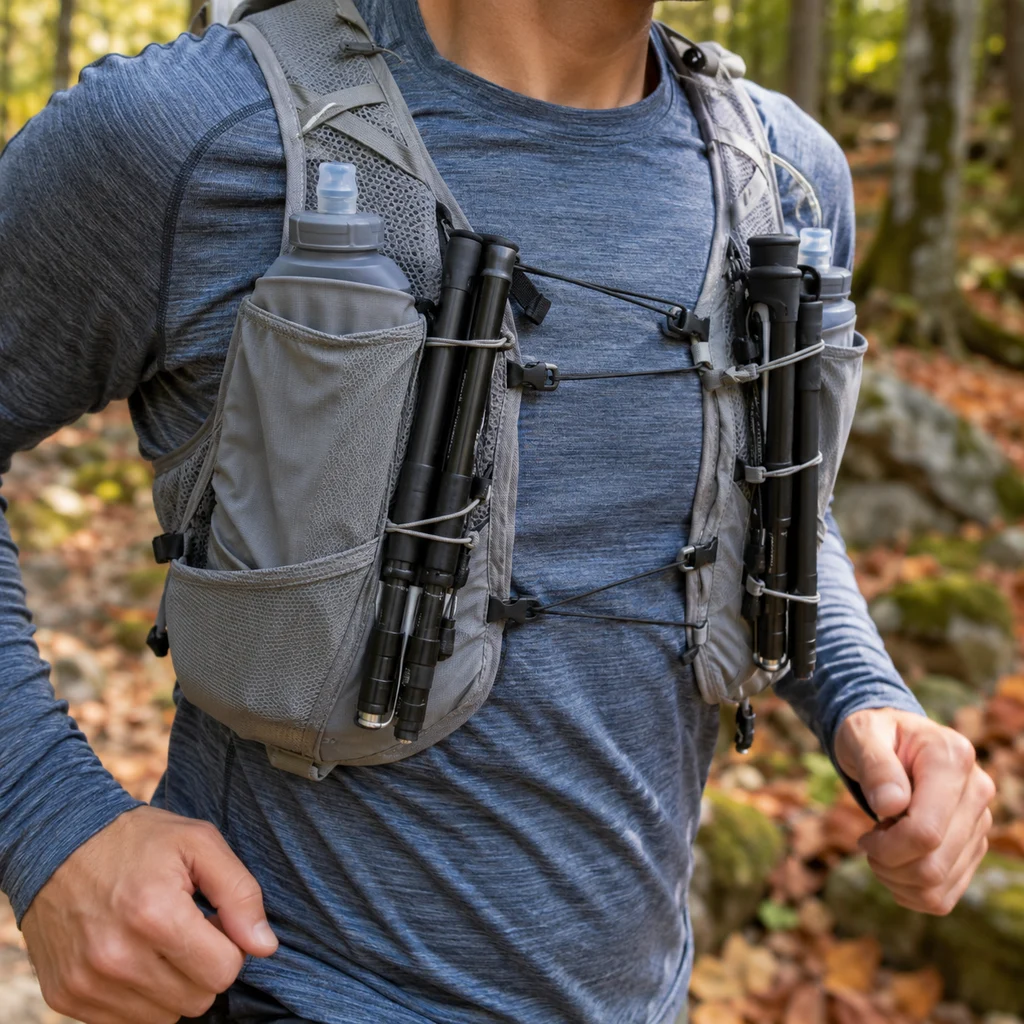
Table of Contents
What Separates the Best Trail Running Poles
Folded size is the first test. A running pole needs to collapse to around 14 or 15 inches so it fits the quiver or bungee holders on a running vest. Three-section folding designs, often called Z-poles, do this far better than telescoping poles, which usually stay over two feet long collapsed.
Then weight and swing. Every ounce at the end of a pole is multiplied every time you move your arm, so light shafts matter more here than on hiking poles. Carbon fiber saves weight and damps vibration; 7075 aluminum is heavier but bends before it snaps, which some runners prefer on rocky ground.
Then deployment. The best poles open with one pull and lock with a single button or cord, even with cold hands. A pole that takes thirty seconds to assemble gets left on the vest, which defeats the point.
Last, fixed or adjustable length. Fixed-length poles are lighter and stiffer, but you have to buy the right size. Adjustable poles are heavier and have more parts, in exchange for fitting anyone and letting you shorten them on climbs and lengthen them on descents.
The Best Trail Running Poles at a Glance
| Pole | Shaft | Length | Reviews | Best For |
|---|---|---|---|---|
| Black Diamond Distance Carbon Z | Carbon | Fixed | 4.8 stars | Best overall |
| LEKI Ultratrail FX.One | Carbon | Fixed | 4.8 stars, 287 | Racing |
| Black Diamond Distance Carbon FLZ | Carbon | Adjustable | 4.3 stars | Adjustable folding |
| AONIJIE Trail Running Poles | 7075 aluminum | Fixed | 4.6 stars | Budget |
| Hiker Hunger Foldable Poles | Aluminum | Adjustable | 4.5 stars, 1,764 | Value, most reviewed |
| Cascade Mountain Tech Carbon | Carbon | Telescoping | 4.6 stars, 3,580 | Hike and run days |
The Six Best Trail Running Poles in Detail
Black Diamond Distance Carbon Z: Best Overall
This is the pole most mountain runners picture when they think of running poles, and the carbon version is the one to buy. The shafts are 100 percent carbon fiber, the three sections fold into a small bundle, and a single pull snaps them together into a rigid, fixed-length pole.
The details are right for running. A lightweight EVA foam grip with a breathable strap stays comfortable when your hands sweat, and a foam mini-grip below the handle lets you choke down on steep climbs without stopping to adjust anything. Carbide Tech Tips bite on rock, dirt and snow.
Four point eight stars, on a smaller review base than some picks here. Fixed length means you need to size carefully, so check the size chart against your height before ordering.
Specs That Matter
- Shaft: 100 percent carbon fiber
- Design: three-section folding Z-pole
- Length: fixed, in several sizes
- Grip: EVA foam with mini-grip extension
- Tips: carbide, accepts rubber tips and baskets
Who It Is For
Mountain runners and fastpackers who want one light, proven pair for everything.
LEKI Ultratrail FX.One: Best for Racing
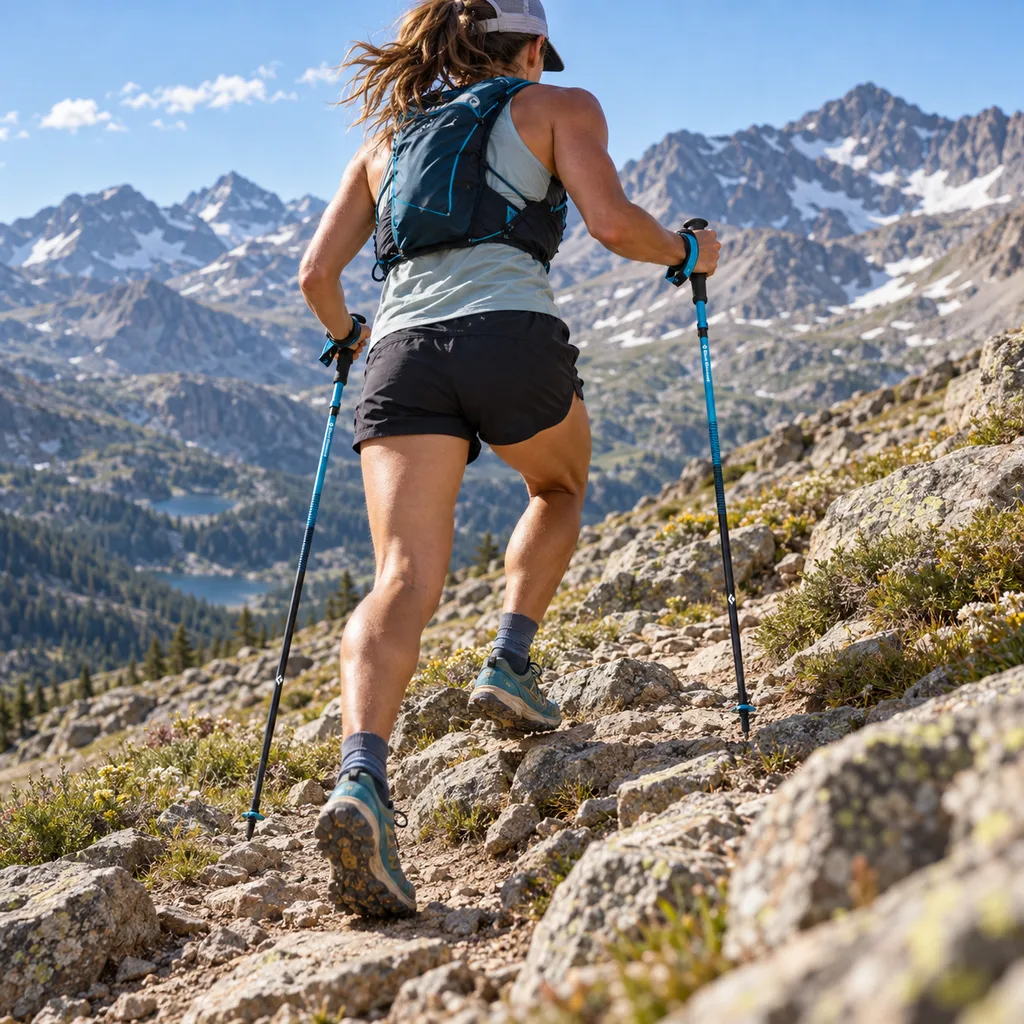
LEKI designed the Ultratrail FX.One for trail runs and race day, and it shows. The carbon shafts separate into three sections of about 14.5 inches at the push of a button, and the listed weight is 5.9 ounces, light enough that you notice the effort they save rather than the weight they add.
The standout is the Trail Trigger Shark grip and strap system. The foam grip conforms to your hand, and the mesh strap detaches from the pole with a click, so you can drop the poles to eat or use your hands on a scramble without unthreading anything.
Four point eight stars across 287 reviews. Stock on popular sizes runs low, so buy early if you have a race in mind.
Specs That Matter
- Shaft: carbon
- Design: push-button three-section folding
- Length: fixed, 105 to 135 cm sizes
- Weight: listed at 5.9 oz
- Grip: Trail Trigger Shark with detachable strap
Who It Is For
Racers and ultrarunners who use poles for hours at a time.
Black Diamond Distance Carbon FLZ: Best Adjustable
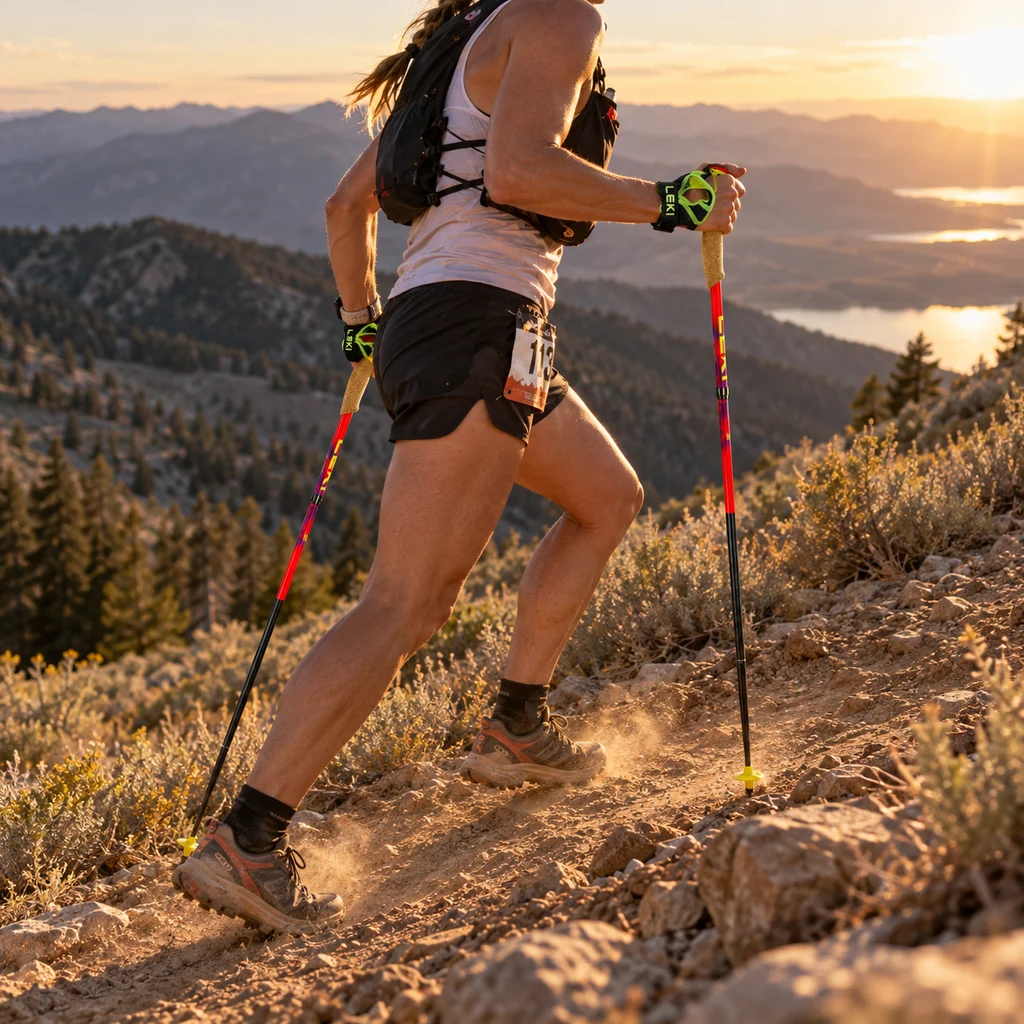
The FLZ takes the folding Distance design and adds a FlickLock on the upper shaft, so you get fine length adjustment on top of compact packing. That matters if you share poles, sit between two sizes, or like shorter poles on climbs and longer ones on long descents.
The carbon shafts, EVA foam grips, mini-grip extensions and carbide tips are the same features that make the fixed Distance Z so good. The adjustment adds a little weight and one more moving part, which is the honest tradeoff.
Four point three stars across 105 reviews, a little lower than the fixed version. It is the pick if adjustable length matters more to you than the last few grams.
Specs That Matter
- Shaft: carbon fiber
- Design: folding Z-pole with FlickLock adjustment
- Length: adjustable, up to 140 cm
- Grip: EVA foam with mini-grip extension
- Tips: carbide, interchangeable rubber tips and baskets
Who It Is For
Runners between sizes, or anyone who wants to tune length between climbs and descents.
AONIJIE Trail Running Poles: Best Budget
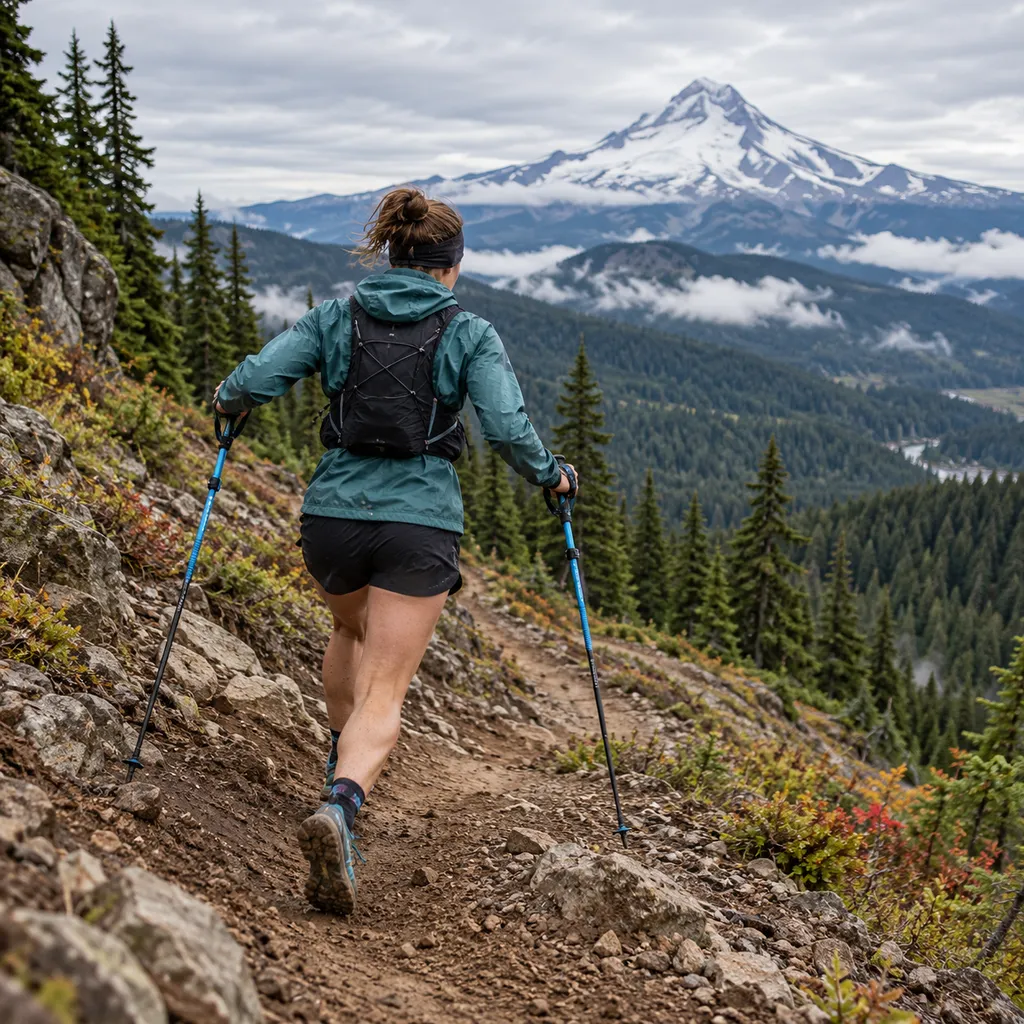
AONIJIE is a trail running brand first, which is why these feel like running poles rather than cheap hiking poles. Folding 7075 aluminum sections collapse to about 36 cm, and the listed weight is 5.92 ounces, remarkably light for the price.
They come in three fixed sizes matched to height ranges, with a quick-lock system that pulls tight in one motion. EVA grips stay grippy when wet, and a moisture-wicking strap keeps them comfortable on long climbs.
Four point six stars on 62 reviews. Aluminum will dent before it snaps, which many runners actually prefer on rocky trails where a carbon pole can break on a hard hit.
Specs That Matter
- Shaft: 7075 aluminum alloy
- Design: folding with quick lock
- Length: fixed, three sizes
- Weight: listed at 5.92 oz
- Folded: about 36 cm
Who It Is For
Runners trying poles for the first time, or anyone who wants a light pair without the carbon price.
Hiker Hunger Foldable Poles: Best Value
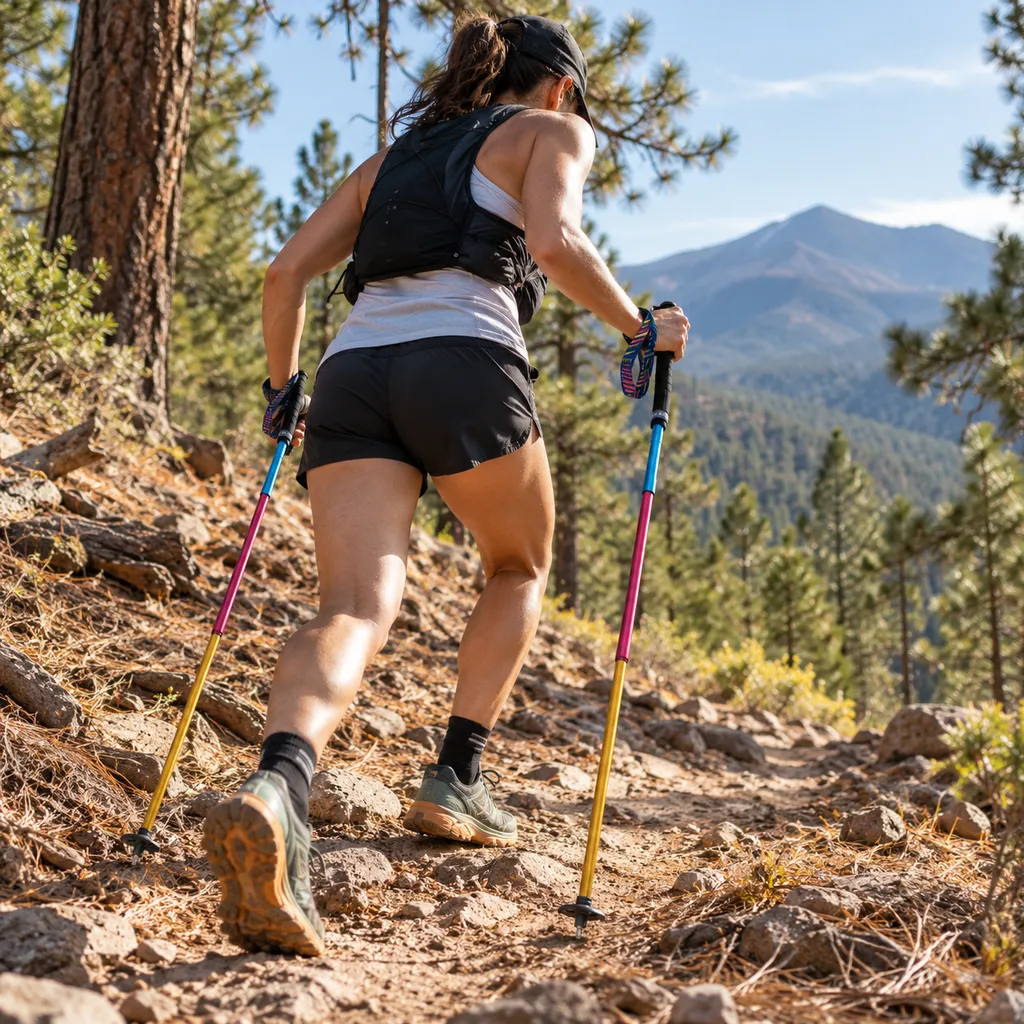
Hiker Hunger Outfitters is a Montana company that tests its poles in the Rocky Mountains, and this folding model has 1,764 reviews at 4.5 stars, the biggest review base of any folding pole here. That track record is the main argument.
The poles fold down to about 14 to 15 inches but still adjust in length, with metal flip locks rather than plastic ones. There are two size ranges, 100 to 120 cm and 115 to 135 cm, and a choice of cork or EVA foam grips with foam extensions below.
They are heavier than the carbon picks, listed at 9.95 ounces for the short version and 10.7 for the long. Treat them as a sturdy hike and run pole rather than a race pole.
Specs That Matter
- Shaft: aircraft-grade aluminum
- Design: folding and adjustable
- Length: 100 to 120 cm or 115 to 135 cm
- Locks: metal flip locks
- Grip: cork or EVA with foam extension
Who It Is For
Runners who power hike a lot and want adjustable, durable folding poles at a fair price.

Cascade Mountain Tech Carbon: Best for Hike and Run Days
The one telescoping pole on the list, and the one with the most reviews: 3,580 at 4.6 stars. Carbon fiber shafts keep the listed weight around 8 ounces, and the quick locks adjust anywhere from 26 to 54 inches.
The catch for runners is packed size. At 26 inches collapsed, it will not fit a vest quiver, so it suits days where you carry poles in your hands the whole way, such as mountain runs that are mostly steep hiking.
Cork grips wick sweat and damp vibration, and the included tip kit adds snow baskets, mud baskets and rubber tips, which makes these a solid year-round pair for mixed hiking and running.
Specs That Matter
- Shaft: carbon fiber
- Design: telescoping with quick locks
- Length: 26 to 54 inches
- Weight: listed at about 8 oz
- Extras: snow and mud baskets, rubber tips, carry bag
Who It Is For
Hikers who run the flats and downhills, and want one pair for both.
How to Choose the Right Pair
For Racing and Ultras
Go fixed-length carbon and prioritize fast deployment. The LEKI Ultratrail FX.One and the Black Diamond Distance Carbon Z are the two to consider. In an ultramarathon you will fold and unfold them dozens of times, so a mechanism that works with tired, cold hands is worth more than any spec.
For Training and Mountain Runs
The Black Diamond Distance Carbon FLZ or the AONIJIE pair. Pair either with a vest from our list of the best trail running vests and check that the vest has pole holders before you buy. Our guide to training for elevation explains how to build steep climbing into your weeks.
For Power Hiking and Mixed Days
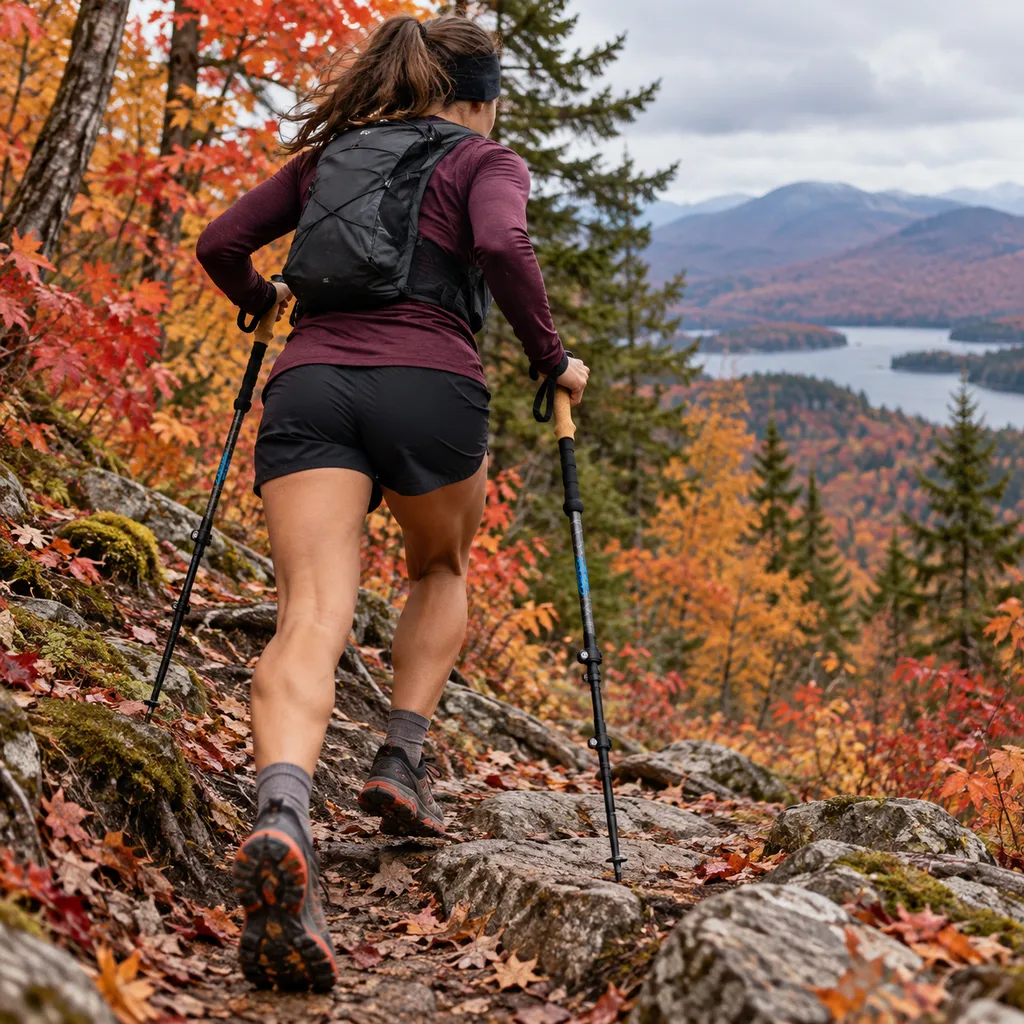
The Hiker Hunger folding poles or the Cascade Mountain Tech Carbon. Adjustable length and sturdier builds make sense when poles spend most of the day in your hands. If your runs lean toward loaded walking, our guide to rucking for beginners covers that style of training.
What the Specifications Mean
Sizing a Fixed-Length Pole
Stand with your arm bent at 90 degrees at the elbow and measure from the floor to your hand. Most runners then go about 5 cm shorter than a hiking pole would suggest, because running poles are used for driving uphill rather than for support. Between sizes, pick the shorter one for climbing and the longer for descents.
Carbon Against Aluminum
Carbon is lighter and stiffer and dampens vibration, but it can shatter if it takes a hard sideways hit on rock. Aluminum is heavier and can bend, but a bent pole usually still gets you home. For most runners, carbon is worth it; for rocky, technical trails, aluminum has a real case.
Tips and Baskets
Most poles use hard tungsten carbide tips that bite into rock and ice. Rubber tip covers quiet them on pavement and protect rock surfaces. Snow baskets are worth adding for winter, as our guide to hiking in snow and ice explains.
Grips and Straps
EVA foam is light and grippy when wet, while cork molds to your hand and handles sweat well but adds weight. Straps matter more than people think: a good strap carries much of the push so you can keep a loose grip, which saves forearm fatigue over hours.
Using Trail Running Poles Well
On climbs, plant both poles together slightly ahead of your feet and push down and back, a double-pole motion borrowed from cross-country skiing and Nordic walking. On runnable ground, fold them away rather than carrying them; they slow you down more than they help on the flat.
On descents, poles can take load off the quads, but they also change your balance. Practice on easy ground first, and read our guide on how to run downhill for the technique that matters most on the way down.
After each run, wipe mud and grit off the joints, dry them fully, and store them unfolded if they got wet. Check the cords on folding poles every few months, because a frayed cord is the most common failure. Our fall trail running guide has more tips for muddy season running.
Poles also help when you are carrying more than usual. On long self-supported runs, they take real work off tired legs, one of the reasons thru-hikers swear by them in our look at the science of thru-hiking. Pair them with the right footwear from our list of the best trail running shoes.
Frequently Asked Questions
Are trail running poles worth it?
On steep, long climbs and in mountain races, yes. Poles move some of the work from your legs to your upper body, which saves your legs for later. On flat or rolling trails, they are usually not worth carrying.
What is the difference between trail running poles and trekking poles?
Running poles are lighter, fold much smaller to fit on a vest, and are often fixed length. Trekking poles are sturdier, adjustable and telescoping, and built for support under a heavy pack.
What length trail running poles do I need?
Bend your elbow to 90 degrees and measure floor to hand, then go a few centimeters shorter for running. Most brands publish a height chart; if you are between sizes, go shorter.
Can I carry poles in a running vest?
Yes, if they fold to around 14 or 15 inches and your vest has pole holders or a quiver. Folding Z-poles are designed for this. See our vest picks for models with pole carry.
Are carbon running poles fragile?
Carbon is strong along its length but can break from a hard sideways hit, such as wedging a pole between rocks and falling onto it. Used normally, carbon poles last for years. If your trails are very rocky, aluminum is the safer choice.
For most runners, the Black Diamond Distance Carbon Z tops our list of the best trail running poles: light, fast to deploy and small enough to disappear on a vest. Racers should look hard at the LEKI Ultratrail FX.One, and the AONIJIE pair is the easy way to try poles without the carbon price. New to the sport? Start with our trail running for beginners guide.
Discover more from Maive Verse
Subscribe to get the latest posts sent to your email.