
This post may contain affiliate links. If you buy through them, we may earn a small commission at no extra cost to you.
Ask how many lumens for a camping headlamp and you will get answers ranging from eighty to two thousand, which is unhelpful in exactly the way gear advice usually is. The honest version is that the number you need depends on what you are doing in the dark, and that for most camping the answer is far lower than the packaging suggests.
Here is what a lumen actually measures, the ranges that match real camp tasks, and why the biggest number on the shelf is usually the wrong buy. If you are still assembling the rest of your kit, start with our camping guide for beginners.
The Short Answer
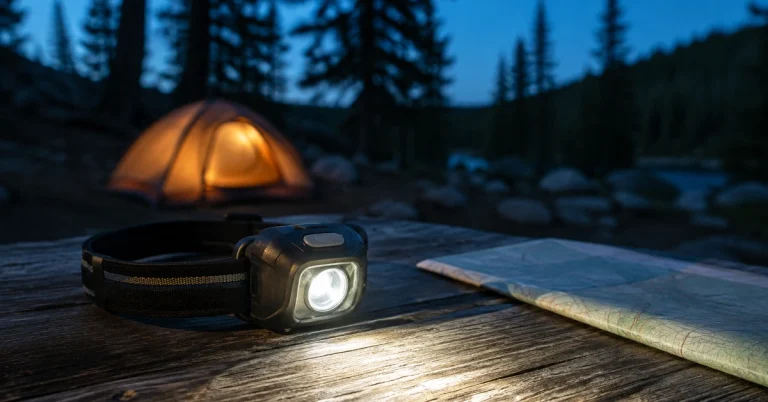
For general camping, and for most of the jobs in our campsite setup routine, 200 to 350 lumens is the sweet spot. That is bright enough to walk to the toilet block, find the tent pegs you dropped and cook after sunset, while still giving you a usable burn time on one set of batteries. Below 100 lumens you will feel limited outside the tent. Above 500 you are mostly buying runtime problems and glare for your companions.
| What you are doing | Lumens you want | Why |
|---|---|---|
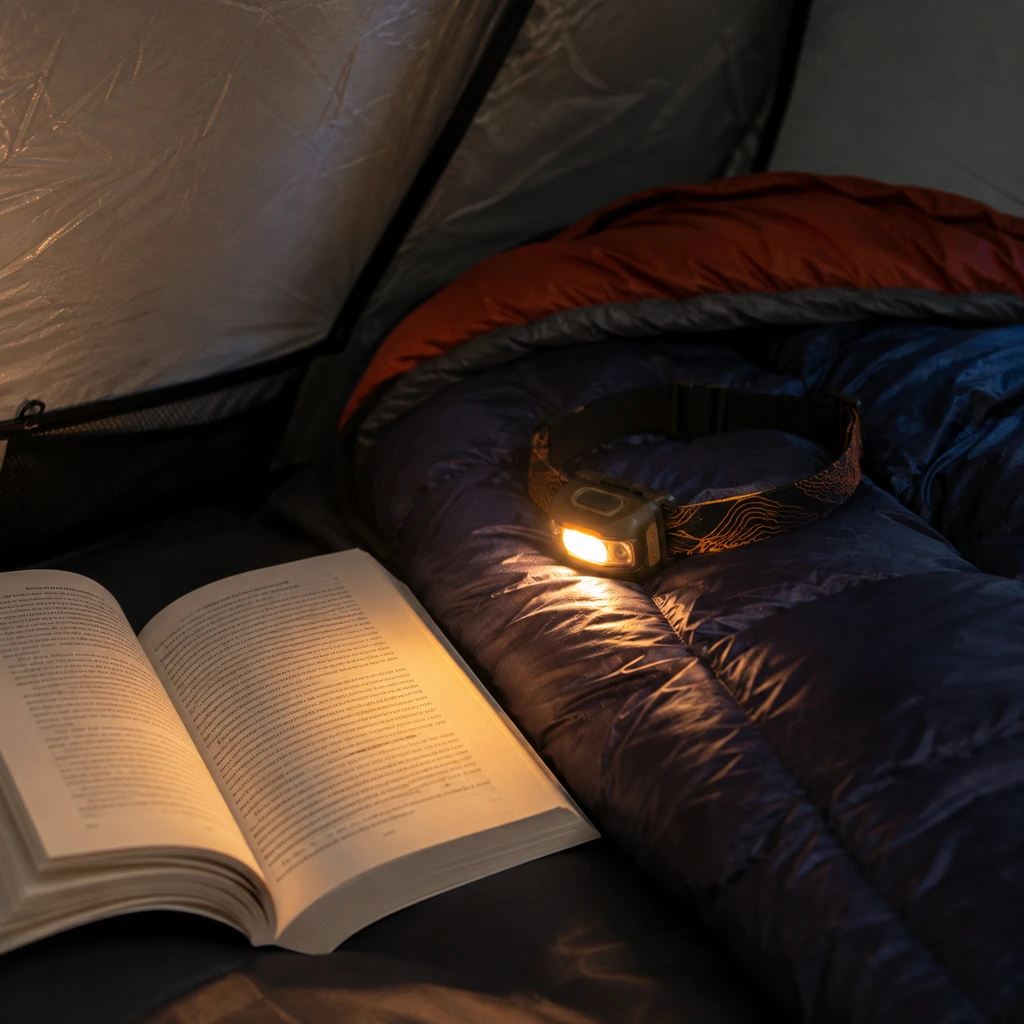
| Reading in the tent | 5 to 20 | Anything more bounces off the fabric and hurts |
| Moving around camp | 20 to 100 | Enough to see pegs, guylines and your feet |
| Cooking and camp chores | 100 to 200 | Even close range light without washing out detail |
| Walking a trail after dark | 200 to 400 | Reaches far enough to read the trail ahead |
| Route finding or search | 400 and up | Throw matters more than flood at this point |
What a Lumen Actually Measures
A lumen is total light output, summed in every direction the lamp throws it. That is the whole definition, and it is why the number tells you less than you would hope. Two headlamps rated at 400 lumens can perform completely differently, because output says nothing about where the light lands. The REI expert advice on headlamps is a good technical companion on how the rest of the specs fit together.
Lumens Are Not Beam Distance
Beam distance, sometimes printed as throw, is the range at which the lamp still puts out roughly the light of a full moon. A tight beam pushes a modest lumen count a long way. A wide flood spreads the same output over your boots and the ground beside you. For camping you want mostly flood. For finding a trail junction at midnight you want throw.
Flood, Spot or Both
A flood beam lights a wide close area, a spot pushes a narrow column into the distance, and the better lamps do both and let you switch. Camp life is almost entirely flood. The exception is walking out, which is where a spot earns its keep, the same way it does on a dispersed site with no lighting at all.
Regulated Output Is the Spec Nobody Prints
A regulated headlamp holds its brightness steady and then drops off; an unregulated one fades continuously from the moment you switch it on. Two lamps can share a headline number while one stays useful for four hours and the other is visibly dim after forty minutes. Burn time charts tell you more than the lumen figure does.
How Many Lumens for a Camping Headlamp, Task by Task
Break the evening into jobs and the answer to how many lumens for a camping headlamp stops being one number.
In the Tent: 5 to 20 Lumens
Tent fabric is a reflector. Anything above about twenty lumens at arm’s length bounces straight back into your eyes and wrecks the night vision you spent an hour building. This is the single most common mistake, and it is why a low mode that actually goes low matters more than a high mode that goes high.
Around Camp: 20 to 100 Lumens
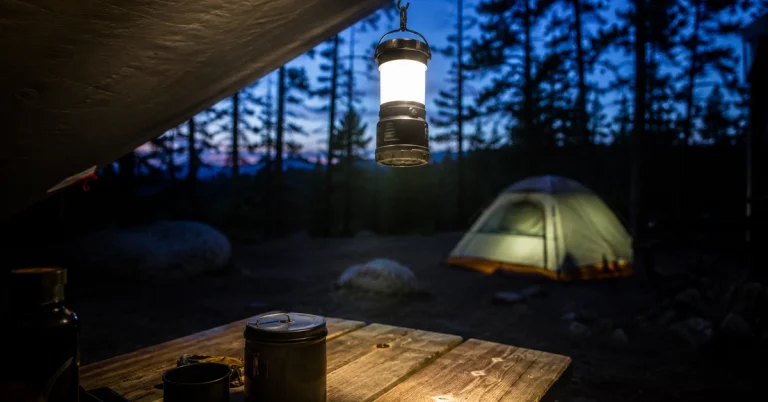
Enough to find a guyline, sort a food bag or walk to the water tap. If you already run a lantern over the table, as in our guide to the best camping lanterns, your headlamp barely leaves this range all evening.
Cooking and Camp Chores: 100 to 200 Lumens
Close work wants even light rather than a bright spot, so a flood beam at moderate output beats a spot at high output. Being able to see what is in the pan is the difference between dinner and a guess, which matters most on the kind of menu in our camp kitchen setup.
Walking a Trail After Dark: 200 to 400 Lumens
Now you need to read the ground eight to fifteen metres out, spot roots and see a trail marker before you walk past it. This is the range most campers should optimise for, because it is the task that actually goes wrong. Our night hiking guide covers the rest of the technique.
Route Finding and Emergencies: 400 Lumens and Up
Scanning a slope for a cairn, checking on a noise at the edge of camp, or signalling. You will use this mode for seconds at a time, which is exactly why it should not drive your purchase. It is worth having available though, and it belongs in the same drawer as the rest of your camp safety habits.
Why the Number on the Box Is Optimistic
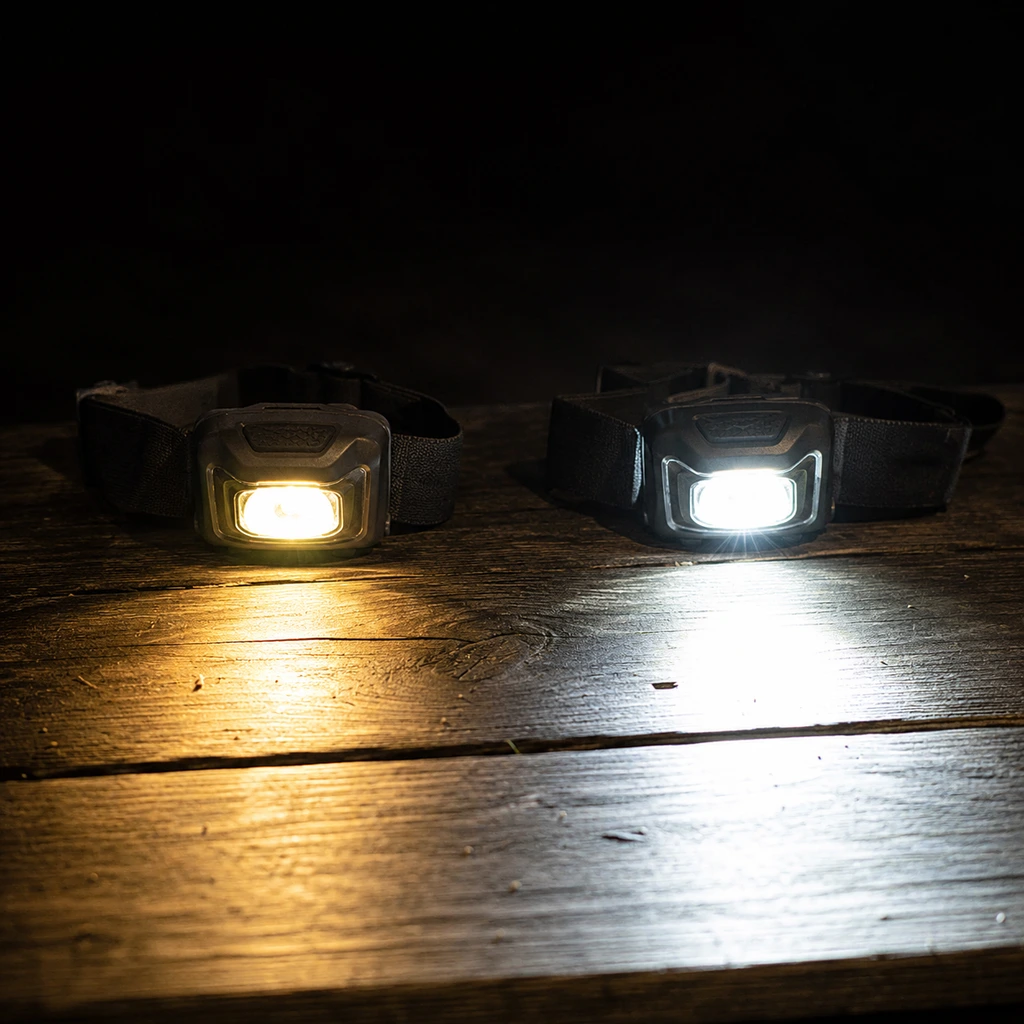
Most brands quote the ANSI FL1 figure, measured in the first thirty seconds from a fresh battery. Many lamps step down from that within a minute or two to protect the LED from heat. A headlamp advertised at 600 lumens may settle at half that for the rest of the evening, and the honest brands publish a burn time graph showing exactly this.
Treat the headline number as a ceiling reached briefly, not a level you can hold. When two lamps look similar, the one that publishes runtime at a stated output is telling you the truth.
Runtime Is the Trade You Are Actually Making
Every lumen costs battery. Running a lamp at 400 lumens instead of 100 does not quarter the runtime exactly, but it is not far off. That is the whole trade, and it is why chasing the biggest number is usually a bad deal for camping. The same logic applies to every powered item you bring, which is why the packing list is worth a look before a long trip.
- A three AAA lamp at 100 lumens will usually run all weekend. The same lamp on high may not last one evening.
- Rechargeable lamps are lighter and cheaper to run, but a dead cell in the field is a dead lamp unless it also takes AAA.
- Cold drains batteries fast, which is worth planning for alongside the rest of your cold weather camping kit.
- Carry a spare set of batteries or a small power bank. It weighs less than the extra lumens you were tempted by.
- Store cells out of the lamp between trips so a slow leak cannot ruin it, along with the rest of your off season gear storage.
Red Light Matters More Than Extra Lumens
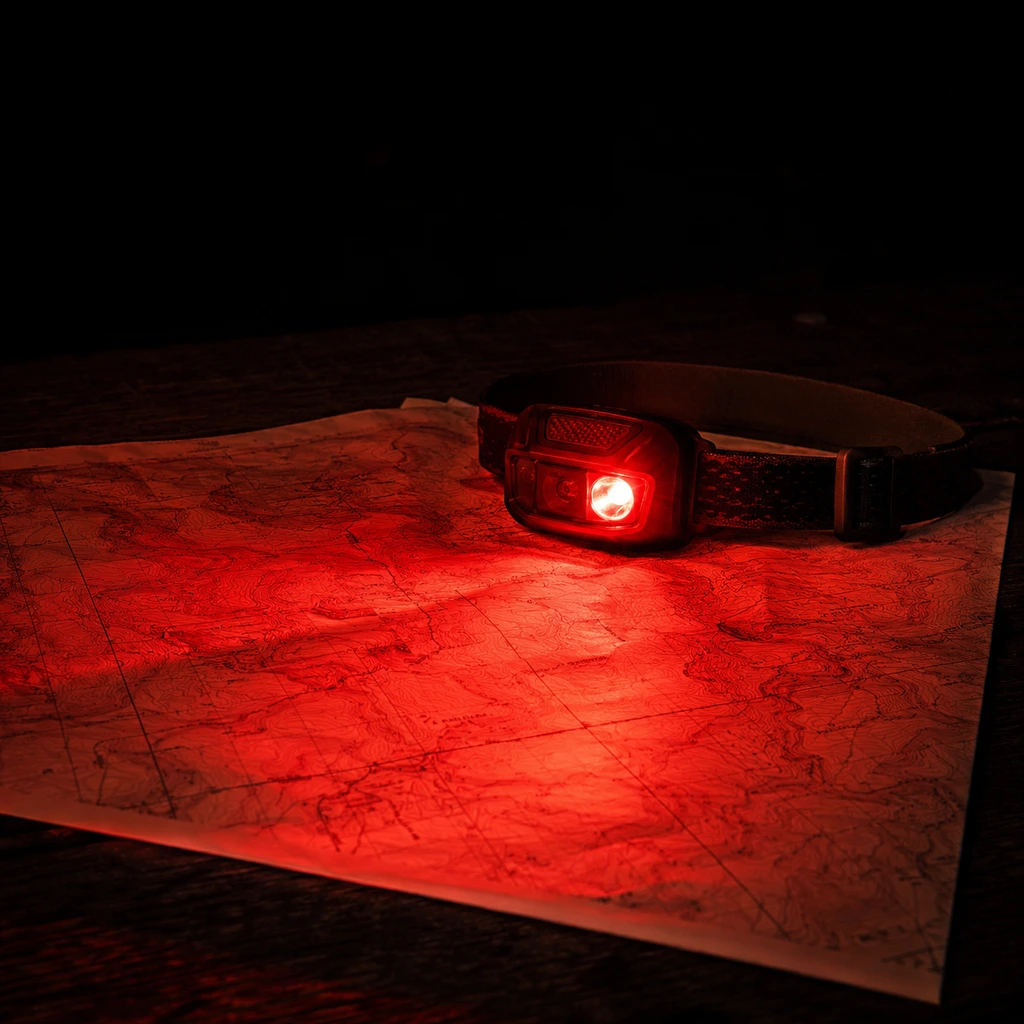
Full dark adaptation takes your eyes twenty to thirty minutes to build and about a second of white light to destroy, which is why the International Dark-Sky Association pushes red light for anything done after nightfall.
Red light preserves dark adaptation, so you can read a map or find a bag without resetting your eyes for the next twenty minutes, which matters as much on a short autumn day hike that finishes late as it does in camp. It also stops you blinding the person across the table, which is the real reason experienced groups use it. A headlamp with a good red mode at 20 lumens is more useful in camp than one with a 700 lumen spot and no red.
Look for red that comes on first, before the white, so a stray button press does not wreck everyone’s night vision. It is the same courtesy logic as the leave no trace habits that keep a shared site pleasant.
Frequently Asked Questions
Is 1000 lumens too bright for camping?
For camp use, yes. A 1000 lumen burst is genuinely useful for scanning a hillside, but you will run it for seconds and carry the weight and battery cost all weekend. Buy the lamp for the 200 lumen job you do every night, not the 1000 lumen job you do twice a year.
How many lumens do I need to walk to the toilet block?
Around 50 to 100 is plenty on a maintained campground path, which is one small argument for choosing a well run campground in the first place. On an unlit trail with roots and rock, step up to 200.
Do I need a headlamp if I already have a lantern?
Yes. A lantern lights a place; a headlamp lights whatever you are looking at, hands free. Most campers end up using both, the lantern over the table and the headlamp for everything away from it. That pairing is what makes an evening of after dark camp activities workable with kids.
Are rechargeable or AAA headlamps better for camping?
Rechargeable for weekends near a car or a power bank, AAA for long trips and cold weather. The best answer is a hybrid lamp that runs on either, which removes the decision entirely.
Does IPX rating matter for a camping headlamp?
It does the first time you get caught out. IPX4 handles splashes and light rain, IPX7 and IPX8 survive real immersion. If you camp anywhere it rains properly, treat IPX4 as the floor, and read our notes on camping in the rain while you are at it.
So the short answer to how many lumens for a camping headlamp: 200 to 350, with a low mode that goes genuinely low, a red mode, and published runtime you can trust. That covers almost every camping night. When you are ready to compare real models, our roundup of the best headlamps for camping lines up six against exactly these criteria, and the rest of the kit list lives in our camping checklist.
Discover more from Maive Verse
Subscribe to get the latest posts sent to your email.