
This post may contain affiliate links. If you buy through them, we may earn a small commission at no extra cost to you.
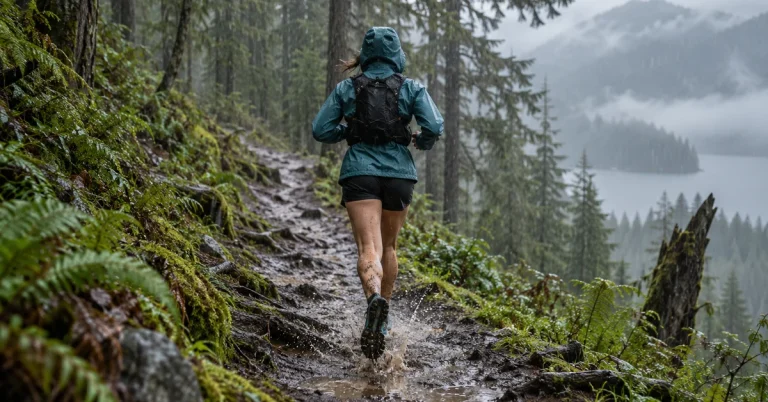
Winter trail running turns familiar paths into something new. Snow muffles every sound, frost sparkles on the trees, and you often have the trail to yourself. It also brings real challenges: cold air, short days, ice hidden under fresh snow and footing that changes from one mile to the next. With the right layers, a bit of traction and a few smart habits, you can keep running trails all season and come back stronger in spring. If you are new to running off road, start with our trail running for beginners guide.
This guide covers how to layer so you stay warm without soaking in sweat, which traction devices and shoes work on snow and ice, how to adjust your pace and effort, how to deal with darkness and cold water bottles, and the safety steps that matter most when the temperature drops.
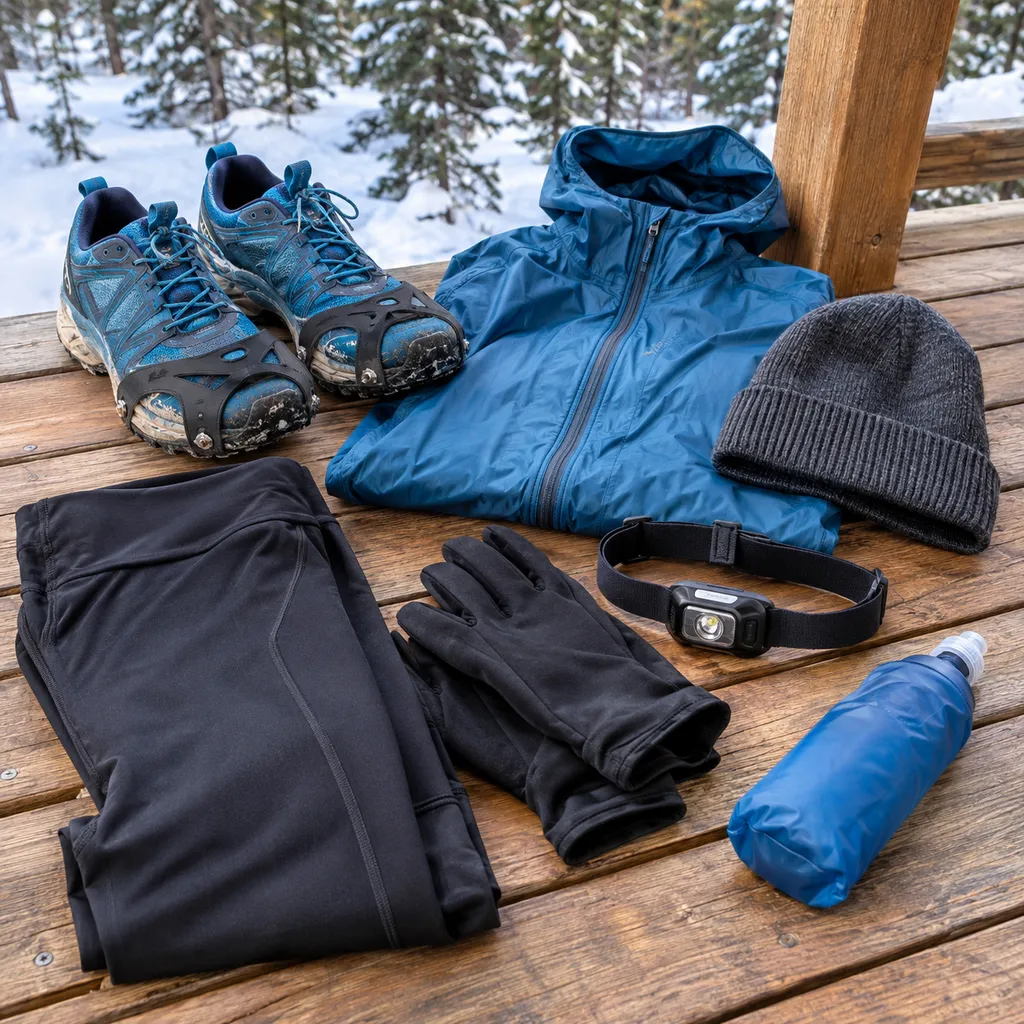
Table of Contents
Why Winter Trail Running Is Worth It
Running on snow is a strength workout in disguise. Every stride on soft or uneven ground works your ankles, hips and core harder than pavement does, and slower winter miles build an aerobic base that pays off when racing season comes around. Cold, quiet trails are also simply beautiful, and many runners say winter is their favorite season once they learn to dress for it.
The key is to adjust your expectations. Winter miles are slower, your watch will show paces that look disappointing, and some days the right call is a shorter loop. That is normal. Think in terms of time on your feet, not distance or speed.
How to Layer for Cold Weather Runs
The biggest mistake new winter runners make is dressing for the temperature at the trailhead. You warm up fast once you start moving. A good rule is to dress as if it were 15 to 20 degrees warmer than it is, so you feel slightly cold for the first five minutes. Our layering guide explains the same system for hiking.
Base Layer
Start with a thin, moisture wicking base layer that pulls sweat away from your skin. Merino wool stays warm when damp and resists odor, while synthetic fabrics dry faster. A set like the Merino.tech merino base layer works for both top and legs on colder days. Avoid cotton completely.
Insulating Layer
On cold days, add a light insulating layer such as a grid fleece or a hybrid running jacket with a padded front and stretchy sleeves. A hybrid like the baleaf thermal running jacket keeps your core warm while letting your arms and back breathe.
Wind and Rain Shell
A light shell blocks wind and wet snow. On dry, cold days, a wind jacket is enough. On wet days, choose a waterproof jacket with vents. Our roundup of the best running headlamps compares packable shells, softshells and insulated options.
Hands, Head and Feet
Your hands, ears and toes get cold first. Wear thin running gloves or mittens, a beanie or headband, and a neck gaiter you can pull over your face in the wind. On bitter days, a fleece balaclava like the Tough Headwear balaclava covers everything. Merino socks such as the OutdoorMaster merino socks keep your feet warm even when snow sneaks in.
Traction for Snow and Ice
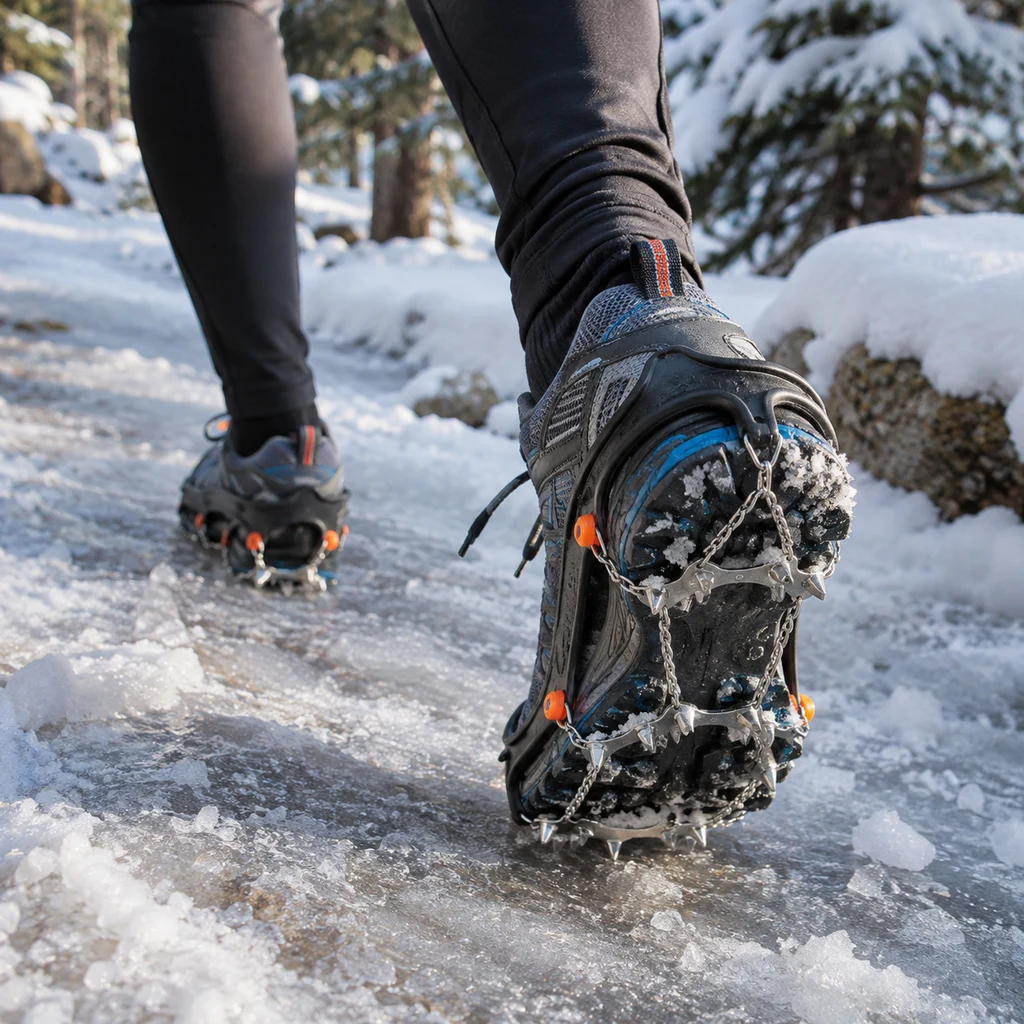
Good traction is the single most important piece of cold weather trail gear. Packed snow and ice can turn a gentle downhill into a slide, and falls on frozen ground hurt.
Microspikes
Microspikes are chains with small steel spikes on a rubber harness that stretches over your shoes. They grip ice and hard packed snow very well and are the go to choice for icy trails and steep terrain. Our picks for the best microspikes for hiking include lighter running friendly models.
Running Cleats
Lighter traction devices with small studs or coils are built for runners. They feel more natural on mixed terrain and roads, but they grip less on steep ice than microspikes do. They are a good choice for rolling trails with packed snow.
Screw Shoes and Studded Shoes
Some runners add short hex head sheet metal screws to the lugs of an old pair of trail shoes for a cheap, low profile grip on ice. Others buy shoes with built in carbide studs. Both work well on icy trails but feel clunky on rock and pavement.
Choosing Shoes for Winter Trails
Deep Lugs and a Grippy Rubber
Look for trail shoes with deep, widely spaced lugs that shed snow instead of packing it in, and soft rubber that stays grippy in the cold. Our list of the best trail running shoes highlights pairs that grip well on mud and snow.
Waterproof or Not
Waterproof shoes keep your feet dry in light snow and cold slush, but once snow gets over the top, they hold water in. Many runners prefer regular mesh shoes with warm wool socks and a pair of low gaiters to keep snow out of the collar.
Pacing and Effort in Winter
Effort is the honest measure in winter. A route that takes you 45 minutes in October might take an hour in January, and that is fine. Your heart, lungs and legs are working just as hard, often harder, even though the numbers look slower. Many coaches suggest dropping speed workouts entirely for the snowy months and focusing on steady, easy running plus some strength work.
Running through snow takes far more effort than running on dry dirt. Slow down, shorten your stride and keep your feet under your hips for balance. Run by effort rather than pace, and walk the steep climbs. The techniques in our guides on how to run uphill and how to run downhill matter even more on slippery ground.
Warm Up Indoors
Do a few minutes of dynamic stretches, leg swings and lunges inside before you head out. Cold muscles are stiffer and more prone to strains, and starting warm means you are less tempted to overdress.
Run Short Loops
Plan loops that bring you back near your car or home often. If the weather turns, a trail is icier than expected or you get cold, you can cut the run short without a long walk back.
Read the Snow
Not all snow runs the same. Fresh powder a few inches deep is soft and forgiving but tiring. Packed snow on popular trails is fast and fun with traction. Crusty, refrozen snow can collapse under each step and is hard on the ankles, while icy patches under a dusting of new snow are the most dangerous of all. Learn to scan the trail ahead and adjust your stride before you reach a tricky section.
Running in Darkness and Cold
Bring a Headlamp
Winter days are short, so even midday runs can end in dusk under thick trees. Always carry a headlamp, and keep the batteries warm in an inside pocket because cold drains them fast. Our list of the best running headlamps and our guide to trail running at night cover lights and technique.
Hydration in the Cold
You still sweat in winter, and cold dry air pulls moisture out with every breath, but you feel less thirsty. Drink before you leave and carry water. Soft flasks and hydration hoses freeze, so keep a flask inside your jacket or use a vest that holds bottles close to your body. Our picks for the best trail running vests carry layers and water.
Staying Safe on Cold Trails
- Tell someone your route and when you expect to be back.
- Carry your phone in an inside pocket so the battery stays warm.
- Pack a light extra layer, even on short runs. If you twist an ankle, you cool down fast.
- Watch for signs of frostbite on fingers, ears and nose: numbness, pale or waxy skin.
- Avoid frozen lakes and creeks unless you know the ice is safe.
- Change out of damp clothes right after your run, before you start to shiver.
Winter hiking skills transfer directly to running, so our guide to hiking in snow and ice is worth a read. When spring arrives, our fall trail running and trail running in the rain guides help with the shoulder seasons.
After the Run
The minutes after you stop are when you get coldest. Have a dry top, a warm jacket and a hat waiting in the car or by the door, and change out of damp layers right away. A warm drink and a snack with some protein and carbohydrates help you recover and rewarm. Stretch indoors rather than standing around in the cold.
Look after your gear too. Stuff wet shoes with newspaper and let them dry at room temperature, away from heaters that can warp the foam and glue. Rinse traction devices and let them dry so the chains do not rust, and wash merino and synthetic layers on a gentle cycle so they keep wicking well all winter.
Frequently Asked Questions
How cold is too cold for trail running?
Many runners head out down to around 0F with the right layers, face covering and traction. Below that, or with strong wind chill, frostbite risk rises quickly, so shorten your run or move indoors.
Is it bad to breathe cold air while running?
For most healthy runners, no. Your airways warm the air before it reaches your lungs. A neck gaiter or buff over your mouth makes very cold air feel more comfortable.
Do I need microspikes for winter trail running?
On icy or hard packed trails, yes. Fresh, soft snow often gives enough grip with deep lugs alone, but conditions change fast, so it is smart to carry a light pair.
What should I wear for winter trail running?
A wicking base layer, a light insulating layer on cold days, a wind or waterproof shell, tights, gloves, a hat and warm socks. Dress to feel slightly cool at the start, which is the golden rule of winter trail running.
Discover more from Maive Verse
Subscribe to get the latest posts sent to your email.