

This post may contain affiliate links. If you buy through them, we may earn a small commission at no extra cost to you.
The canvas tent vs nylon tent question sounds like a debate about materials, and it is really a question about how you travel. Canvas is heavy, breathable, quiet and lasts decades. Nylon is light, cheap, packs small and will not take a wood stove. Neither is better in the abstract, and picking the wrong one is how people end up with an expensive tent they never carry.
Here are the seven differences that actually change the decision, in the order they usually matter. If you already know canvas is the direction you want, skip ahead to our roundup of the best canvas tents.
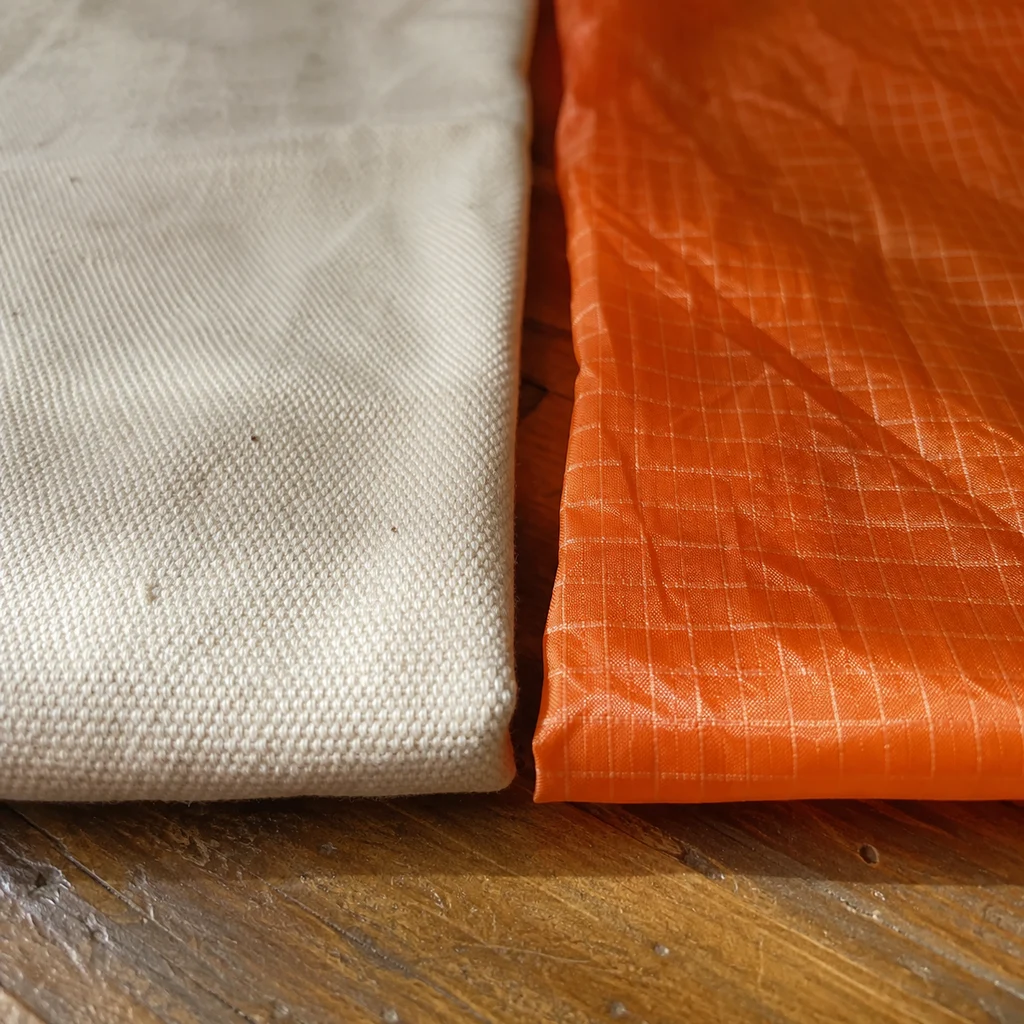
Table of Contents
Canvas Tent vs Nylon Tent: The Short Answer
New to all of this? Start with our camping guide for beginners and come back. Otherwise: buy canvas if you drive to your pitch, stay put for several nights, and want to camp comfortably in cold weather. Buy nylon if you carry the tent on your back, move every day, or camp mostly in warm months. Most people who ask this question end up owning both, because they are answers to different trips.
| Difference | Canvas | Nylon |
|---|---|---|
| Weight | 40 to 120 lb, vehicle only | 3 to 15 lb, carryable |
| Breathability | High, very little condensation | Low, condensation is normal |
| Wood stove | Yes, with a stove jack | No, apart from purpose built hot tents |
| Lifespan | Fifteen to thirty years | Five to ten years |
| Dry time | Hours, must be dried before storage | Minutes |
| Noise in wind | Quiet and dull | Loud and flappy |
| Up front cost | High | Low |
Weight Decides This Before Anything Else
A 13 foot cotton bell tent runs roughly 60 to 90 pounds with its poles, and a canvas wall tent can pass 120. A comparable nylon family tent is 15 to 25 pounds, and a backpacking tent is under 4. That gap is not a detail, it is the whole decision.
If You Carry It, Buy Nylon
There is no ultralight canvas. If the tent has to go on your back for any distance, or into a kayak, or on a bike, canvas is out, and the conversation ends there. The same logic drives everything else in a carried kit, which is why our ultralight packing guide exists.
If You Drive To It, Weight Barely Matters
Once the tent goes from the boot to a pitch thirty metres away, the weight stops being a cost and starts being a benefit, because mass is what makes canvas stable and quiet in wind. This is the case for most car camping and effectively all glamping.
Breathability Is the Real Comfort Difference
Cotton canvas is a woven fabric that passes water vapour. Nylon with a waterproof coating does not, which is why you wake up in a nylon tent with damp inner walls and a wet sleeping bag foot on a cold morning. Canvas absorbs some moisture into the fibres and lets the rest pass through, so condensation is dramatically reduced. The REI guide to choosing a tent is a useful second opinion on how fabric choice plays out across tent types.
The trade is that canvas needs airflow to work and it takes hours to dry. Nylon sheds water instantly and dries on a line in a breeze. If your camping is short, wet and mobile, that matters more than condensation does.

Only One of Them Takes a Wood Stove
This is the reason canvas is having a moment. A stove jack is a heat resistant port in the roof that lets a wood stove flue pass through safely, and cotton canvas can host one because it chars rather than melting. Standard nylon melts, so it cannot, and the polyester hot tents that do exist use a specially treated panel around the jack.
A stove turns a cold trip into a warm one, which is what makes a canvas tent a genuine four season shelter rather than a summer one. If autumn and winter camping is the plan, this single feature usually settles the argument. Our notes on cold weather camping cover the rest of the setup.
Lifespan and Cost Over Time
Cost is where the canvas tent vs nylon tent comparison flips. A canvas tent costs several times what a nylon tent of the same footprint costs, and then lasts three to five times as long. Cotton does not degrade in ultraviolet light the way coated nylon does, the coatings on a nylon flysheet start delaminating after a handful of seasons, and canvas can be patched almost indefinitely.
- Canvas: high up front, very low cost per year, repairable by hand with a needle and a patch.
- Nylon: low up front, a replacement every five to ten years, and coatings that fail before the fabric does.
- Canvas holds resale value. A ten year old bell tent still sells; a ten year old nylon dome does not.
- Either way the tent is only part of the spend. Budget for the sleeping system before you stretch on the shelter.
- Neither survives being packed away damp, which is the single most common way tents die. See our gear storage guide.
Setup, Space and Living In It
A bell tent is one centre pole, a door pole and a ring of pegs, which is genuinely quick once you have done it twice. What you get is near vertical walls and a high centre, so the floor area is usable rather than notional. Nylon domes taper, so a six person nylon tent has about four people of standing room.
Canvas Rewards Staying Put
Because it is heavy to pitch and slow to dry, canvas suits base camps: a long weekend, a festival, a week in one spot. That is exactly the shape of a glamping trip, and it is why the two are so closely associated.
Nylon Rewards Moving
Pitch in ten minutes, strike in five, dry it at the next stop. If your trip involves a different site every night, nylon is not a compromise, it is the correct tool. It is also what you want when the forecast is unsettled and you may need to move, which our guide to camping in the rain goes into.
Maintenance Is Not Optional With Canvas
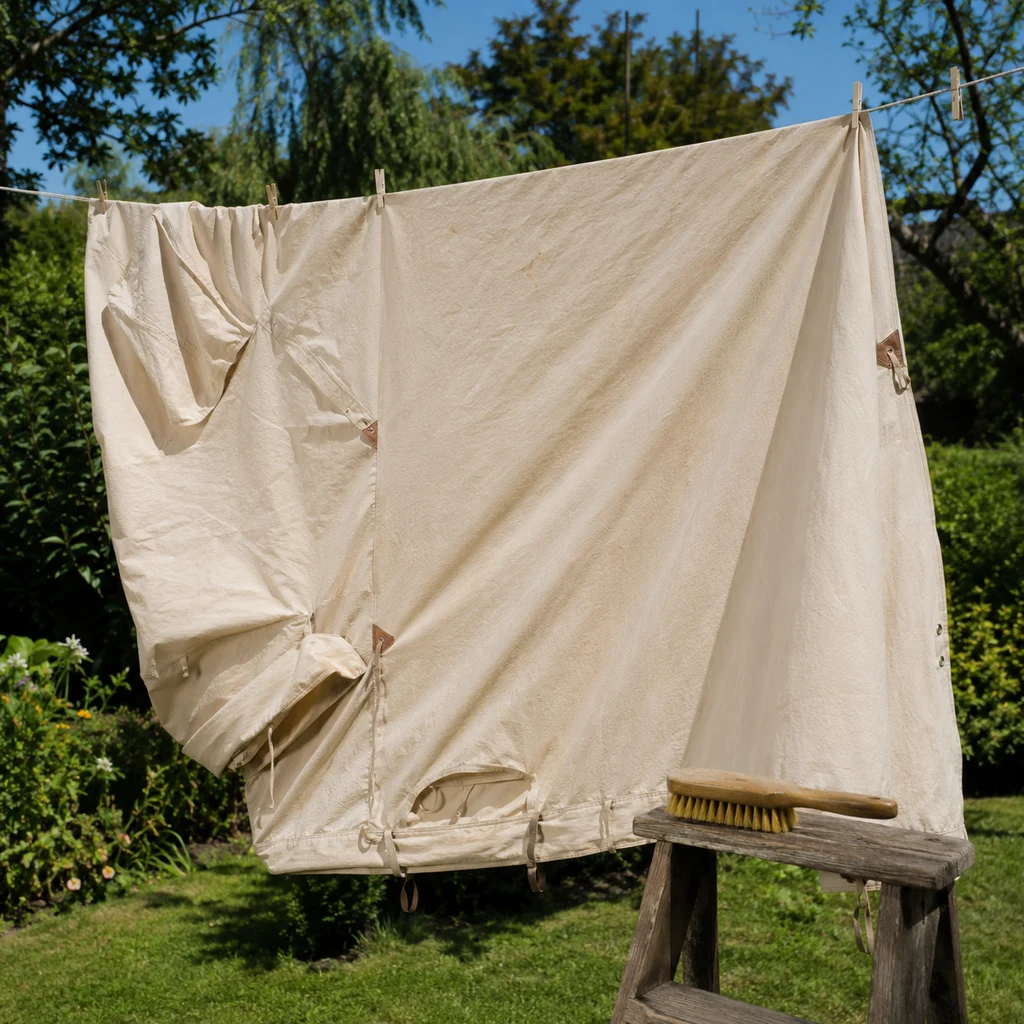
Maintenance is the part of canvas tent vs nylon tent that people underestimate. A canvas tent must be bone dry before it is packed, or it will mildew, and mildew on cotton is permanent. That means either drying it on site or pitching it again at home during the week.
- Never store canvas damp. Not overnight, not for a day, not once.
- Weather a new cotton tent before its first trip: wet it thoroughly and let it dry so the threads swell and seal the stitch holes.
- Brush off dirt dry rather than scrubbing wet, and never use detergent, which strips the water repellent finish.
- Re-proof every few seasons depending on sun exposure.
- Pitch it in daylight the first time. Canvas is not hard to put up, but it is not the thing to learn at dusk after a long drive, and a decent headlamp covers you if it comes to that.
- Nylon needs far less, but it still wants a dry pack and an occasional seam seal, the same discipline as the rest of your camping kit.
Frequently Asked Questions
Are canvas tents warmer than nylon tents?
Slightly, on their own, because the thick fabric insulates a little and blocks wind better. The real difference is that a canvas tent can take a wood stove, and that is worth far more than the fabric itself.
Do canvas tents leak?
Not once weathered. New cotton canvas can seep through the needle holes on its first soaking, which is why you wet and dry a new tent before using it, which works because of the way the cotton duck weave behaves when wet. After that the threads swell and seal. Do not touch the inside of a wet canvas wall though, because that can draw water through.
How long does a canvas tent last?
Fifteen to thirty years with proper drying and occasional re-proofing. Neglect the drying and it can be finished in a single season, so the lifespan is really a measure of how disciplined you are.
Is a canvas tent worth it for one trip a year?
Probably not. The cost per night only works out if you use it, and the drying routine is a real chore for someone who camps once a summer. A good nylon tent and the money saved is the better call at that frequency.
Can you use a canvas tent in summer?
Yes, and it is better than nylon in heat. The thick roof blocks sun rather than transmitting it, so the interior stays noticeably cooler through the afternoon, which is the same reasoning behind picking a breathable summer tent. Most bell tents also have roll up sidewalls for airflow. Our tips on staying cool while camping apply either way.
So the canvas tent vs nylon tent answer comes down to one question: do you carry it or drive it? Carry it and buy nylon without agonising. Drive it, stay a few nights, and want to camp past October, and canvas earns its weight many times over. If that is you, our roundup of the best canvas tents compares six that are actually available, and our car camping to glamping guide covers what goes inside.
Discover more from Maive Verse
Subscribe to get the latest posts sent to your email.