
This post may contain affiliate links. If you buy through them, we may earn a small commission at no extra cost to you.
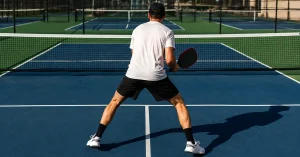
Most pickleball injuries do not happen during a spectacular point. They happen in the first ten minutes, on a cold calf, reaching for a ball that was never really gettable. Pickleball warm up exercises are the cheapest insurance in the sport, and the routine below takes ten minutes, needs no equipment, and can be done in the space behind the baseline while you wait for a court.
The pickleball warm up exercises below follow a deliberate order, and that order matters more than the individual moves. You want blood flow first, then range of motion, then sport speed, then paddle contact. Static stretching, the kind where you hold a hamstring for thirty seconds, belongs at the end of the session, not the beginning.
Why Pickleball Warm Up Exercises Matter More Than You Think
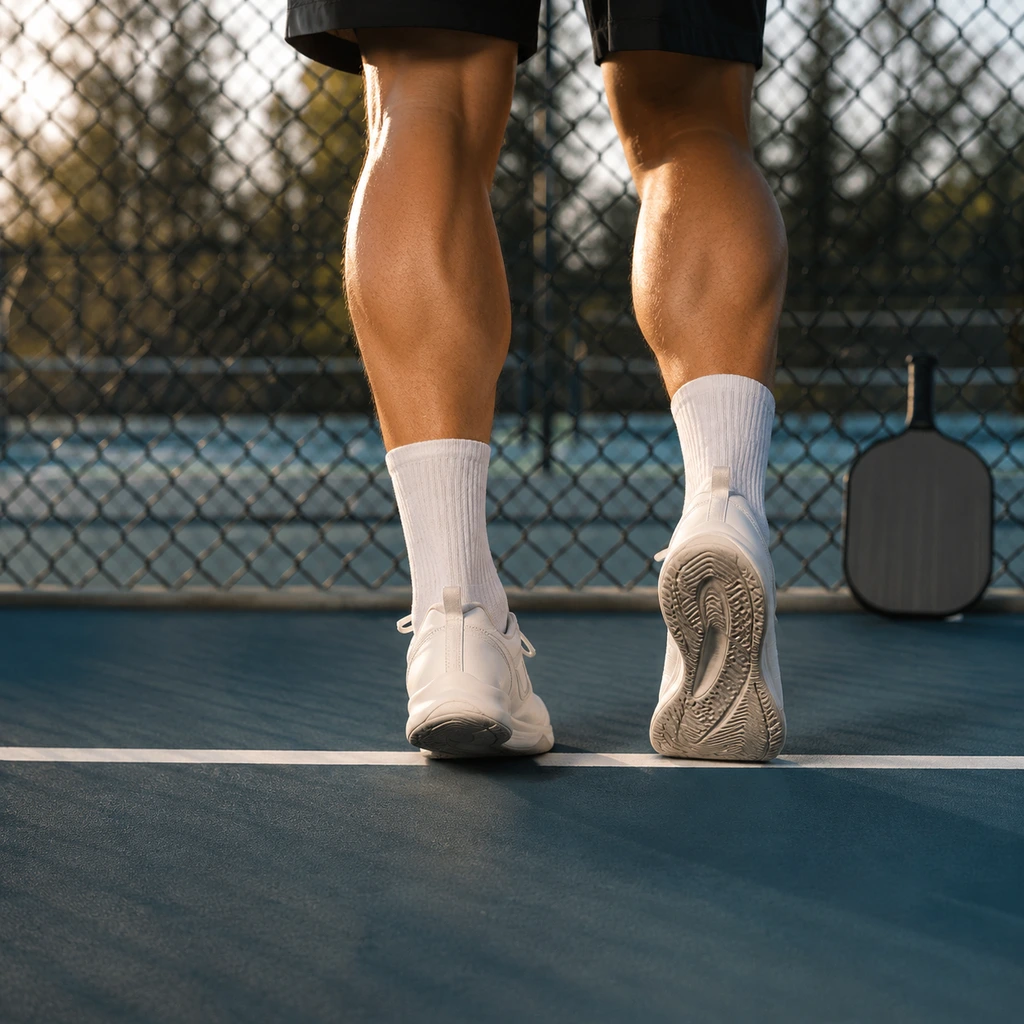
Pickleball looks gentle and moves brutally. The court is small, so the game is played in short explosive bursts: a split step, a lunge to the kitchen line, a backward shuffle for an overhead, then a hard stop. Those are exactly the movements that strain a cold Achilles or calf, and they arrive within the first few rallies whether you are ready for them or not.
The injuries that end seasons in this sport are predictable. Calf and Achilles strains from pushing off backwards. Ankle rolls from lateral movement on a cold joint. Shoulder and elbow trouble from serving hard before the rotator cuff has woken up. A warm up does not eliminate the risk, it moves the odds, and it also makes you play better in games one and two rather than finding your range in game three. If you are new to the sport, start with our guide to how to play pickleball and add this routine on top.
The 10 Minute Pickleball Warm Up Routine
These are the pickleball warm up exercises themselves: six blocks, roughly ninety seconds each. Do them in this order. Nothing here should feel hard, and none of it should hurt.
1. Two Minutes of Easy Movement
Walk briskly or jog gently around the court perimeter, or skip rope if you have one. The only goal is to raise your body temperature and heart rate slightly. You should be able to hold a conversation. This is the block people skip, and it is the one that makes everything after it work.
2. Hips and Legs Through Full Range
Ten leg swings forward and back per leg, then ten side to side, holding the fence for balance. Follow with ten walking lunges and ten slow bodyweight squats. Keep the swings controlled rather than ballistic. You are teaching the hip to move through the range the game will demand, not stretching it.
3. Ankles and Calves
This block matters most and gets skipped most. Twenty calf raises, slow up and slower down. Then ten ankle circles each direction per foot, and twenty seconds of gentle bouncing on the balls of your feet. The calf and the Achilles take the load every time you push off to cover a lob, and cold tissue is what tears.
4. Shoulders, Wrists and Elbows
Twenty arm circles forward and twenty back. Ten shoulder pass throughs with the paddle held in both hands, moving it from waist to overhead. Then twenty wrist circles and ten gentle wrist flexions each way. If your serve is the part of your game that hurts the next day, this is the block that fixes it.
5. Split Steps and Lateral Shuffles
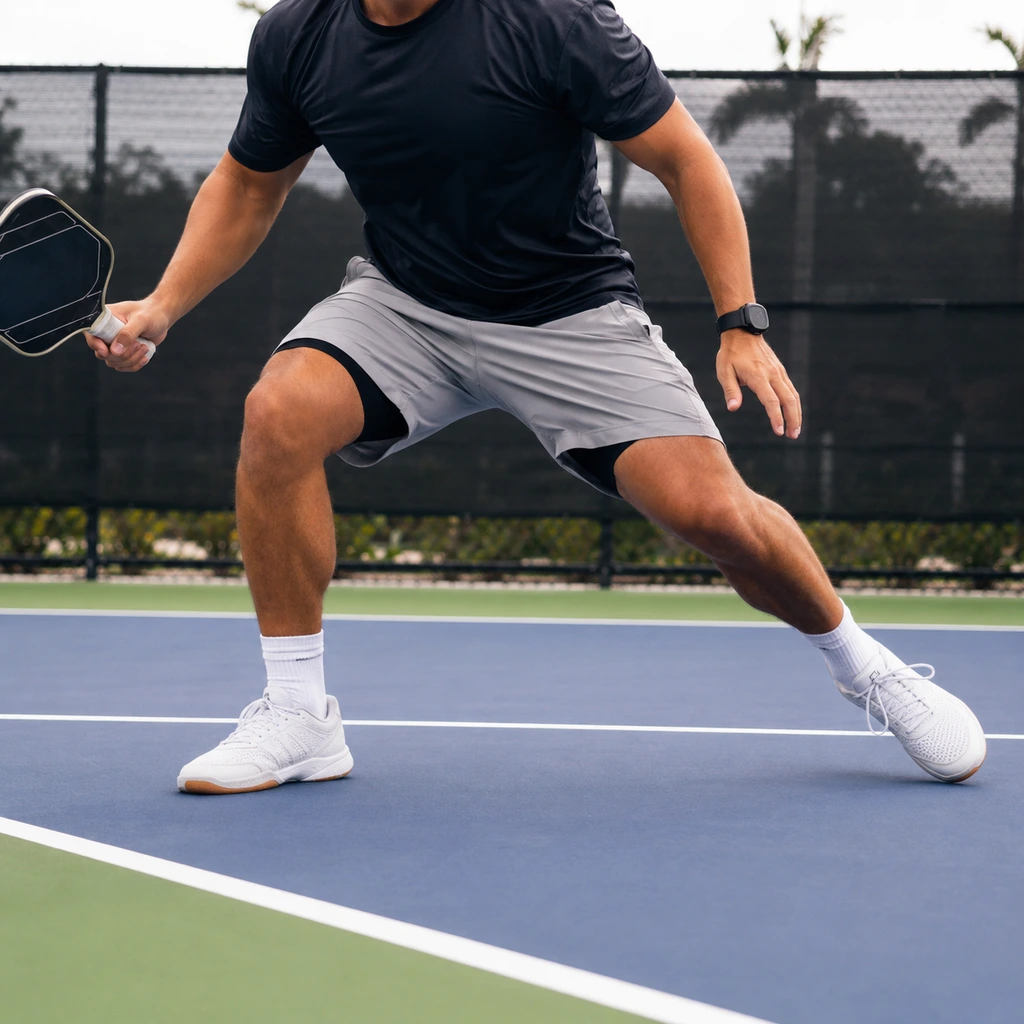
Now add game speed. Ten split steps, landing softly with your weight forward. Then shuffle sideways along the baseline for five yards and back, three times each direction. Add three short forward sprints from the baseline to the kitchen line. This is where the routine stops being general fitness and starts being pickleball, and it feeds directly into the footwork we cover in our outdoor pickleball drills.
6. Dinks, Then Drives
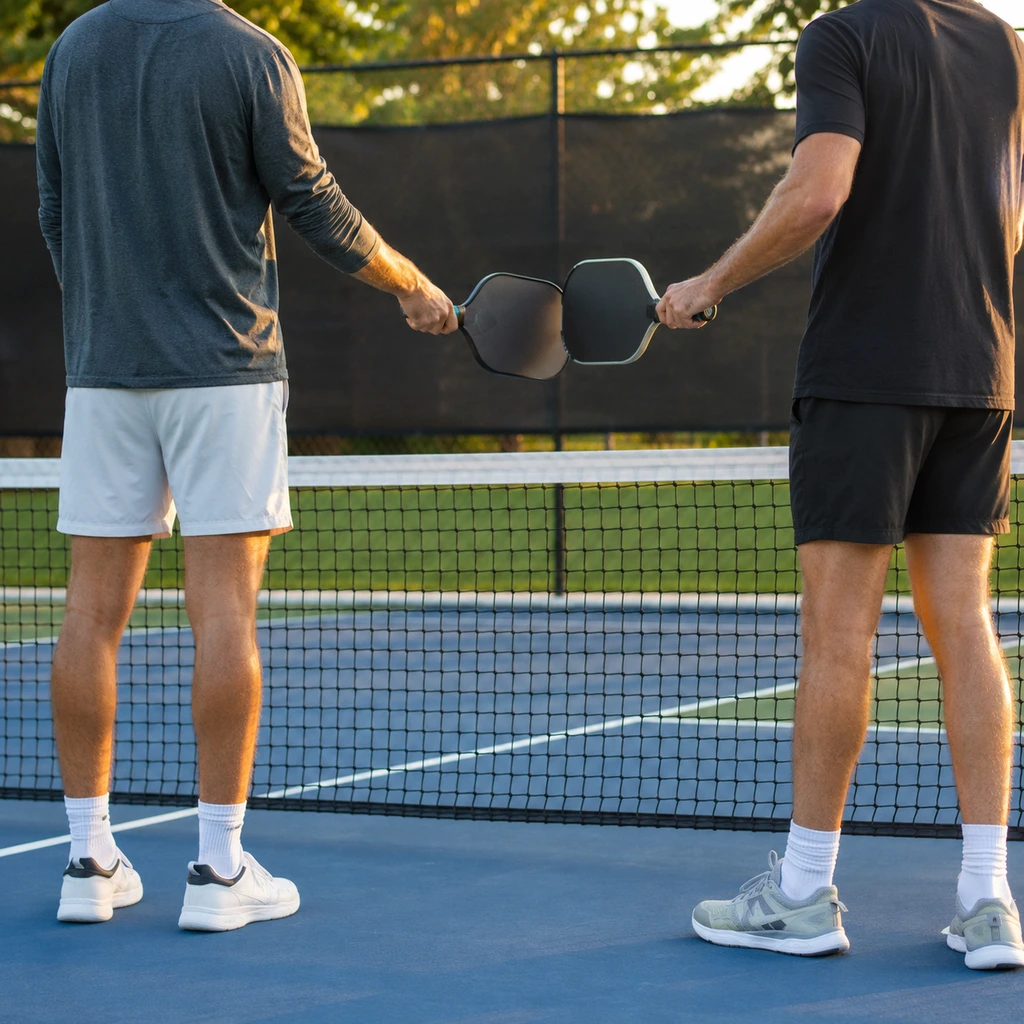
Start at the kitchen line with your partner and dink cross court for a minute, aiming for soft and consistent rather than clever. Move back to mid court for another minute of controlled drives, then hit five serves at about seventy percent and five at full pace. Ten more seconds of overheads and you are ready. Going straight to hard serves is how shoulders get hurt.
Common Warm Up Mistakes
Three habits undo most of the benefit of any pickleball warm up, and all three are easy to fix.
Static Stretching First
Holding a long stretch on cold muscle does not prevent injury and can briefly reduce power output. Save the held stretches for after you play, when the tissue is warm and the goal is recovery rather than readiness.
Skipping the Calves and Ankles
Almost everyone warms up their shoulders, because serving hurts if they do not. Far fewer people warm the calf, the Achilles and the ankle, which is where the serious pickleball injuries actually happen. Those thirty seconds of calf raises are the highest value part of the routine.
Warming Up in the Wrong Shoes
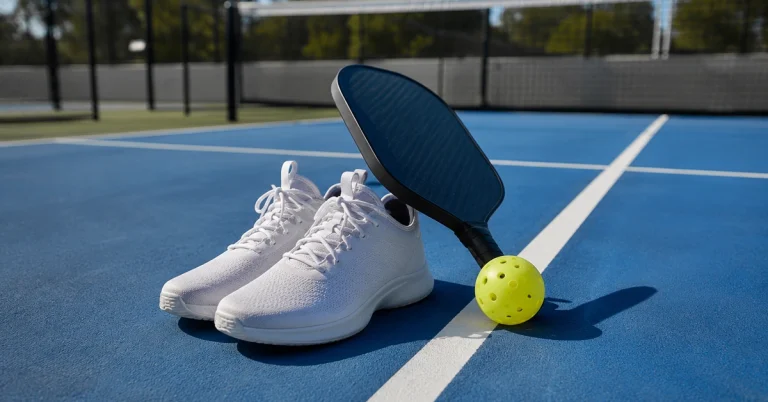
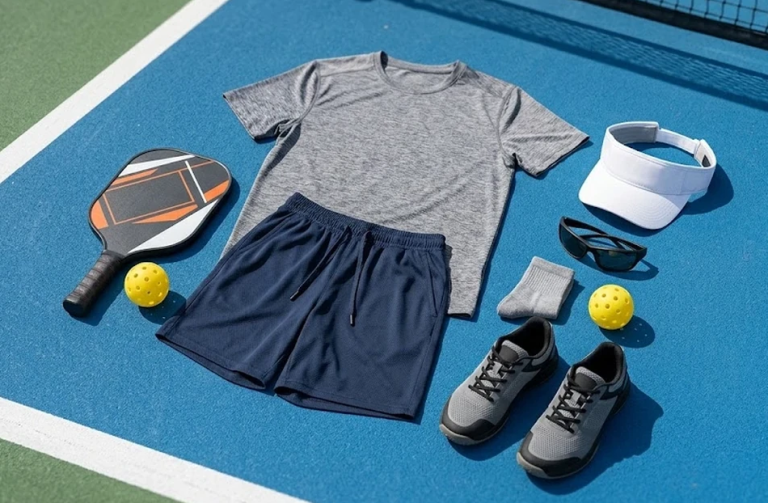
Running shoes are built to roll forward, not to resist sideways force, so they let the ankle move exactly the way you do not want it to during a lateral shuffle. A court shoe changes that, and if you are still playing in trainers, our picks for the best pickleball shoes explain what to look for. What you wear above the ankle matters less, though the notes in our outdoor pickleball clothing guide still apply for hot and cold days.
Cool Down and Recovery
Pickleball warm up exercises get you onto the court, and five quiet minutes at the end pays for itself the next morning. Walk for two minutes until your breathing settles, then hold four stretches for thirty seconds each: calf against the fence, quad, hamstring and a doorway or fence chest stretch. Drink something, and if you played in heat, keep drinking for the next hour rather than all at once.
If you play several days a week, treat soreness as information rather than a badge. Persistent pain in the same spot, especially the Achilles or the shoulder, is the point at which you rest or see a physio rather than warming up harder. General activity guidance from the CDC and the rules and player resources at USA Pickleball are both worth a look if you are building a weekly schedule.
Frequently Asked Questions
How long should a pickleball warm up be?
Ten minutes of pickleball warm up exercises is the sweet spot for recreational play, and five is enough if you are genuinely pressed, as long as you keep the easy movement, the calf work and the dinking. In cold weather, or if you are over about fifty, closer to fifteen minutes is a better investment.
Should I stretch before playing pickleball?
Good pickleball warm up exercises move you through your range rather than holding stretches. Leg swings, arm circles and lunges prepare the joints without the temporary loss of power that comes from long static holds. Keep the held stretches for the cool down.
What are the most common pickleball injuries?
Calf and Achilles strains, ankle sprains, shoulder and rotator cuff irritation from serving, and tennis elbow from repetitive contact. The first two come from explosive movement on cold tissue, which is exactly what a warm up addresses.
Do I need to warm up if I am only playing social doubles?
Yes, and arguably more. Social doubles still involves split steps, lunges and backward movement, but it usually starts with less structure, so people go straight from the car to the first serve. That transition is where most warm up related injuries happen.
What is the best warm up in cold weather?
Double the first block. Four minutes of easy movement instead of two, keep a layer on until you have hit some balls, and add extra calf raises and ankle circles. Cold tissue needs more time, not more intensity, and the same logic applies to the slower tactical game that suits cold days.
Before Your Next Game
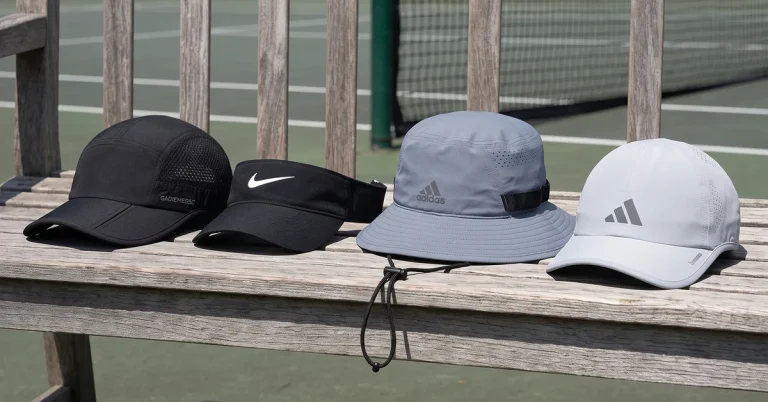
Print the six blocks or keep them on your phone, and run them in order while the previous game finishes. Ten minutes of pickleball warm up exercises will not make you a better player on their own, but they will keep you on court all season, and staying on court is what actually makes you better. Everything else, the paddle, the hat and the court, matters less than being uninjured in September.
Discover more from Maive Verse
Subscribe to get the latest posts sent to your email.