
This post may contain affiliate links. If you buy through them, we may earn a small commission at no extra cost to you.
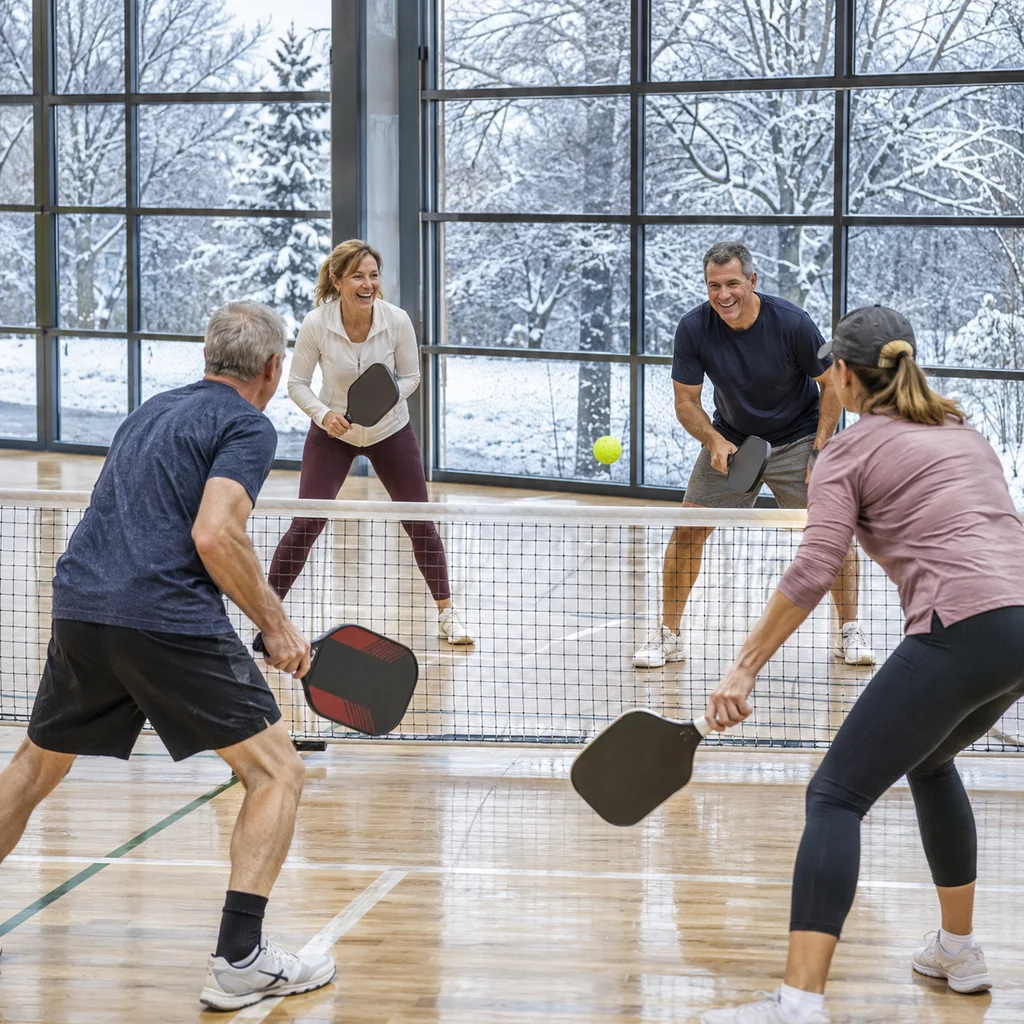
Indoor vs outdoor pickleball can feel like two different sports once winter pushes your weekly game into a school gym or recreation center. The rules are the same, the court is the same size and the kitchen is still seven feet deep, yet the ball flies differently, the floor grips your shoes differently and rallies take on a whole new rhythm. If you are brand new to the game, start with our guide on how to play pickleball and then come back here.
This guide breaks down every real difference between playing inside and outside: the balls, court surfaces, shoes, paddles, weather, speed and strategy. You will also learn how to find indoor courts when the outdoor season ends and how to make the switch back and forth without losing your touch.
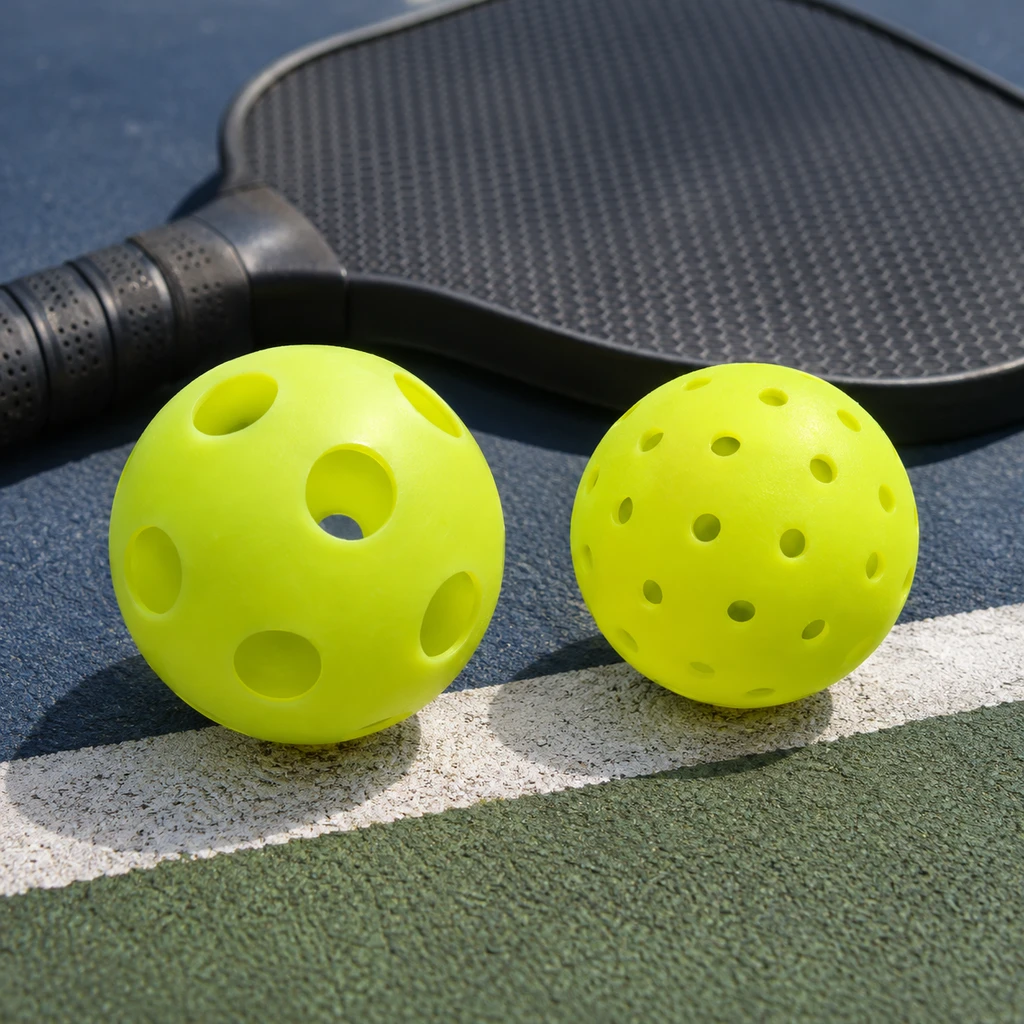
Table of Contents
Indoor vs Outdoor Pickleball: The Key Differences
Most of the differences come from two things: the ball and the environment. Everything else, from footwork to shot selection, follows from those two factors. Here is a quick overview before we go deeper.
- Balls: indoor balls are softer and lighter with larger holes, while outdoor balls are harder and heavier with smaller holes.
- Surface: indoor courts are usually wood or sport tile, while outdoor courts are coated asphalt or concrete.
- Speed: outdoor play is faster, with harder drives and quicker points, while indoor rallies are longer and softer.
- Conditions: indoor play is predictable, while outdoor play adds wind, sun, heat and cold.
- Visibility: gyms often have multiple sets of colored lines and overhead lights, while outdoor courts have glare and shadows.
Indoor and Outdoor Pickleball Balls
The ball is the single biggest difference, and using the wrong one is the fastest way to ruin a session. Always check which ball the facility or group uses before you play.
Indoor Balls: Softer and Slower
Indoor balls usually have around 26 larger holes and are made from a softer, lighter plastic. They are easier to control, bounce a little less and move more slowly through the air. That slower speed rewards touch, patience and soft shots. Indoor balls also tend to last longer, since smooth gym floors cause far less wear than rough outdoor surfaces.
Outdoor Balls: Harder and Faster
Outdoor balls usually have around 40 smaller holes and are made from a harder, heavier plastic. The smaller holes and extra weight help them cut through wind, and the harder shell bounces higher and comes off the paddle faster. They also crack more easily in cold weather, so carry a spare or two on chilly days.
What Happens If You Use the Wrong Ball
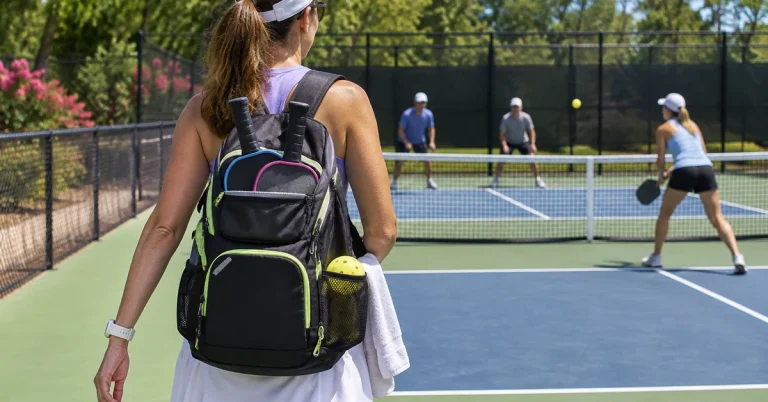
An outdoor ball on a gym floor skids and bounces unpredictably, and it can feel like a rocket at the kitchen line. An indoor ball outside gets pushed around by even a light breeze and wears out quickly on rough concrete. Keep a sleeve of each in your bag so you are ready for either court. A bag with dedicated ball pockets, like the sportsnew waterproof pickleball bag, makes it easy to keep the two types apart.
Court Surfaces and Lines
The surface under your feet changes how the ball bounces and how your body feels after a long session.
Indoor Surfaces
Most indoor courts are painted onto hardwood basketball floors or rubberized sport tile. Wood is fast and slick when dusty, so wipe your soles between games. The ball bounces lower and stays truer than outside. Wood and tile are also kinder to your knees than concrete, which many older players appreciate.
Outdoor Surfaces
Outdoor courts are usually acrylic coated asphalt or concrete, with a textured finish that adds grip and makes the ball bounce higher. That texture also wears down balls and shoes faster. If you are thinking about adding one at home, our guide on how to build an outdoor pickleball court covers surfaces in detail.
Busy Gym Lines
Many gyms share floors with basketball, volleyball and badminton, so you may see several sets of colored lines. Take a minute before play to find your pickleball lines, especially the kitchen line and the baselines. Temporary nets are common indoors too, and many groups bring their own, like the ones in our list of the best portable outdoor pickleball net systems.
Shoes, Paddles and Clothing
Your gear can stay mostly the same, but a few tweaks make a real difference.
Shoes for Each Surface
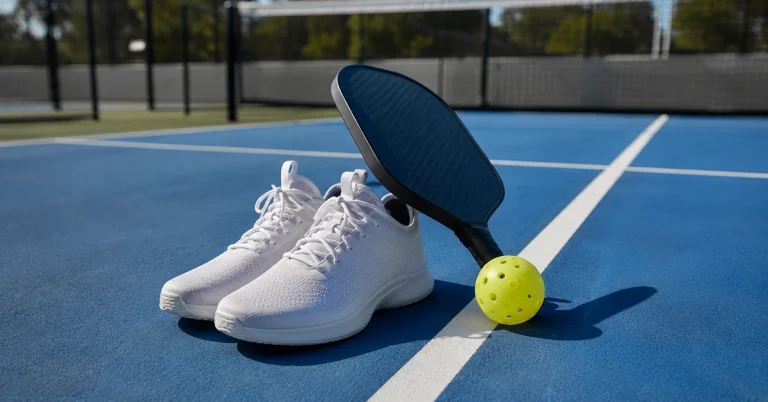
Indoor court shoes have gum rubber soles that grip wood without leaving marks, and many gyms require non marking soles. Outdoor shoes have tougher, more durable soles that stand up to abrasive concrete. Wearing outdoor shoes indoors can feel grabby, while indoor shoes wear out fast outside. Many players who play both carry two pairs, and a backpack with a ventilated shoe compartment such as the SDLINR pickleball backpack keeps dusty outdoor soles away from clean indoor ones. Our guide to the best pickleball shoes explains the soles to look for.
Paddles Indoors and Outdoors
Any paddle works on both courts. That said, many indoor players like a paddle with a softer feel for the touch heavy game, while outdoor players often prefer a bit more power to drive the harder ball. If you are choosing your first paddle, our guide to outdoor pickleball paddles for beginners is a good starting point.
What to Wear
Indoors, lightweight athletic clothes are all you need, though some gyms are cool in winter, so a light layer helps during warm ups. Outdoors, you need to dress for the weather, including a hat and sunglasses for glare. See our guides on what to wear to outdoor pickleball and the best pickleball hats and visors for glare.
How the Setting Changes Your Strategy
Because the ball and conditions differ, smart players adjust their game plan when they change courts.
Indoor Strategy: Patience and Touch
Indoors, the slower ball and true bounce make long dinking rallies common. Drives are easier to block, so winning points usually means working your opponent out of position with soft shots, resets and well placed drops. Expect longer points and more time at the kitchen line.
Outdoor Strategy: Power and Conditions
Outdoors, harder drives and faster balls reward aggressive play and quick hands. You also have to manage wind and sun. Play into the wind with more margin, use a tailwind to push deep, and lob only when the sun is in your opponent’s eyes. Our guide to outdoor pickleball strategy covers these tactics in depth.
Wind, Sun, Heat and Cold
Weather is the wild card outside. Wind moves the ball, sun creates glare on high balls, heat makes the ball livelier and cold makes it harder and more likely to crack. Indoors you can forget about all of that, which is a big reason many players move inside for the winter months.
Finding Indoor Courts in Winter
When temperatures drop, indoor courts fill up fast, so it helps to know where to look.
Where to Look
Start with community recreation centers, YMCAs and church gyms, many of which run open play sessions several mornings and evenings a week. Dedicated indoor pickleball clubs are opening in many cities and offer reservable courts, leagues and lessons. Tennis clubs often add pickleball lines to indoor courts in the off season too.
Booking and Etiquette Tips
Arrive early for open play, since popular sessions fill up. Learn the paddle rotation system the group uses, bring your own indoor balls, and wipe down shared equipment. A compact bag such as the Athletico sling bag keeps your paddle, balls, water and court shoes together between the parking lot and the gym.
How to Switch Between Indoor and Outdoor Play
Plenty of players play both, inside on cold weekdays and outside on warm weekends. A few habits make the switch smoother.
Warm Up With the New Ball
Spend the first ten minutes hitting with the ball you will play with. Dinks, drops and drives all feel different, and your timing needs a few rallies to adjust. Our pickleball warm up exercises get your body ready at the same time.
Practice Both Touch and Power
Indoor play builds patience and soft hands, while outdoor play builds power and adaptability. Practicing both makes you a more complete player. Try alternating weeks: one week focused on soft dinks and resets, the next on drives, volleys and serves, then bring both skills to whichever court you play next. If you are still shopping for gear, a beginner friendly paddle from our guide to outdoor pickleball paddles for beginners works well on either court. Our outdoor pickleball drills work on either surface with the right ball.
Frequently Asked Questions
Can you use outdoor balls indoors?
You can, but they bounce higher, play faster and can skid on wood. Most indoor groups ask players to use indoor balls, so bring the right type.
Is indoor or outdoor pickleball harder?
Neither is harder overall. Outdoor play is faster and adds weather, while indoor play demands more patience and touch. Many players find outdoor play more physically demanding and indoor play more mentally demanding.
Do you need different shoes for indoor and outdoor pickleball?
It helps. Indoor court shoes grip wood and do not mark floors, while outdoor shoes have tougher soles for concrete. Using one pair for both is possible, but they wear out faster. Our list of the best pickleball shoes includes options for each surface.
Which is better for beginners, indoor or outdoor?
Indoor play is often easier for beginners because the slower ball and lack of wind make rallies longer and more forgiving. Once you are comfortable, outdoor play adds new challenges and keeps the game fresh. Our guide on how to play pickleball covers the basics for both.
Discover more from Maive Verse
Subscribe to get the latest posts sent to your email.