


This post may contain affiliate links. If you buy through them, we may earn a small commission at no extra cost to you.
Learning how to sleep in a hammock is mostly about unlearning the way you lie in one at a backyard party. Lie straight down the middle of a tight hammock and you get a banana curve, a sore back and cold shoulders. Hang it with a deep sag, lie across it on an angle and insulate underneath, and a hammock becomes one of the flattest, most comfortable beds you can carry into the woods.
This guide walks through the setup that makes a good night possible, the diagonal lay, positions for back and side sleepers, staying warm, and the small fixes that solve most common complaints. If you have never hung one, start with our hammock camping for beginners guide and our step by step how to hang a hammock tutorial.
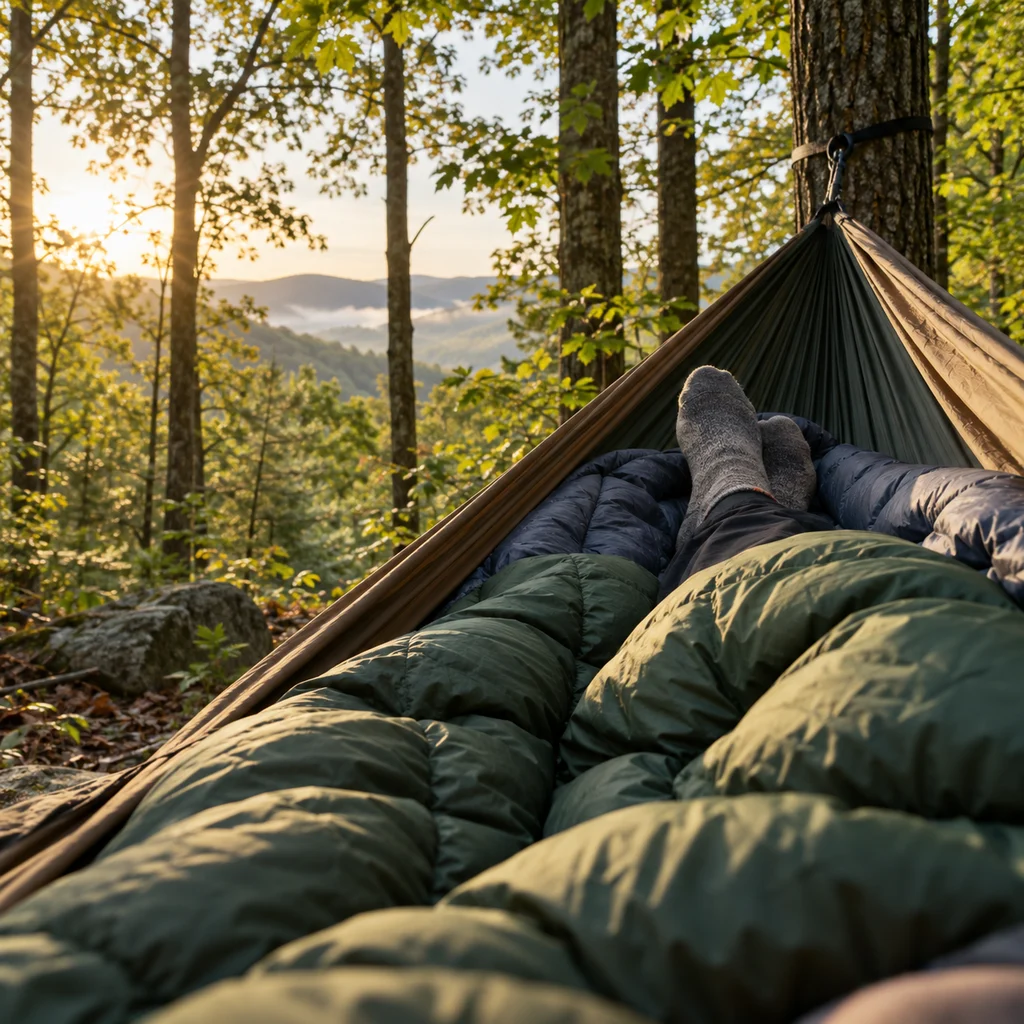
Table of Contents
Set Up Your Hammock for Sleep
Hang It at a 30 Degree Angle
The single biggest comfort factor is sag. Your suspension straps should run down from the trees at roughly 30 degrees from horizontal. A tight, flat hang feels sturdy when you sit in it, but once you lie down the fabric squeezes your shoulders and arches your back. A looser hang lets the fabric open up so you can lie flat.
Use a Structural Ridgeline
A structural ridgeline is a cord tied between the two ends of the hammock that fixes the sag no matter how far apart the trees are. Most hammockers set it at about 83 percent of the hammock’s length. It also gives you a handy place to hang a headlamp, glasses or a small organizer pouch.
Hang It at Sitting Height
Aim for the bottom of the hammock to sit about 18 inches off the ground when you are in it, roughly chair height. That makes it easy to get in and out, keeps you low if anything fails, and keeps the setup out of the wind.
Raise the Foot End Slightly
Hang the foot end about 8 to 10 inches higher than the head end. Without it, your body slowly slides toward the middle overnight and you wake up folded. With it, you settle into place and stay there.
The Diagonal Lay Explained
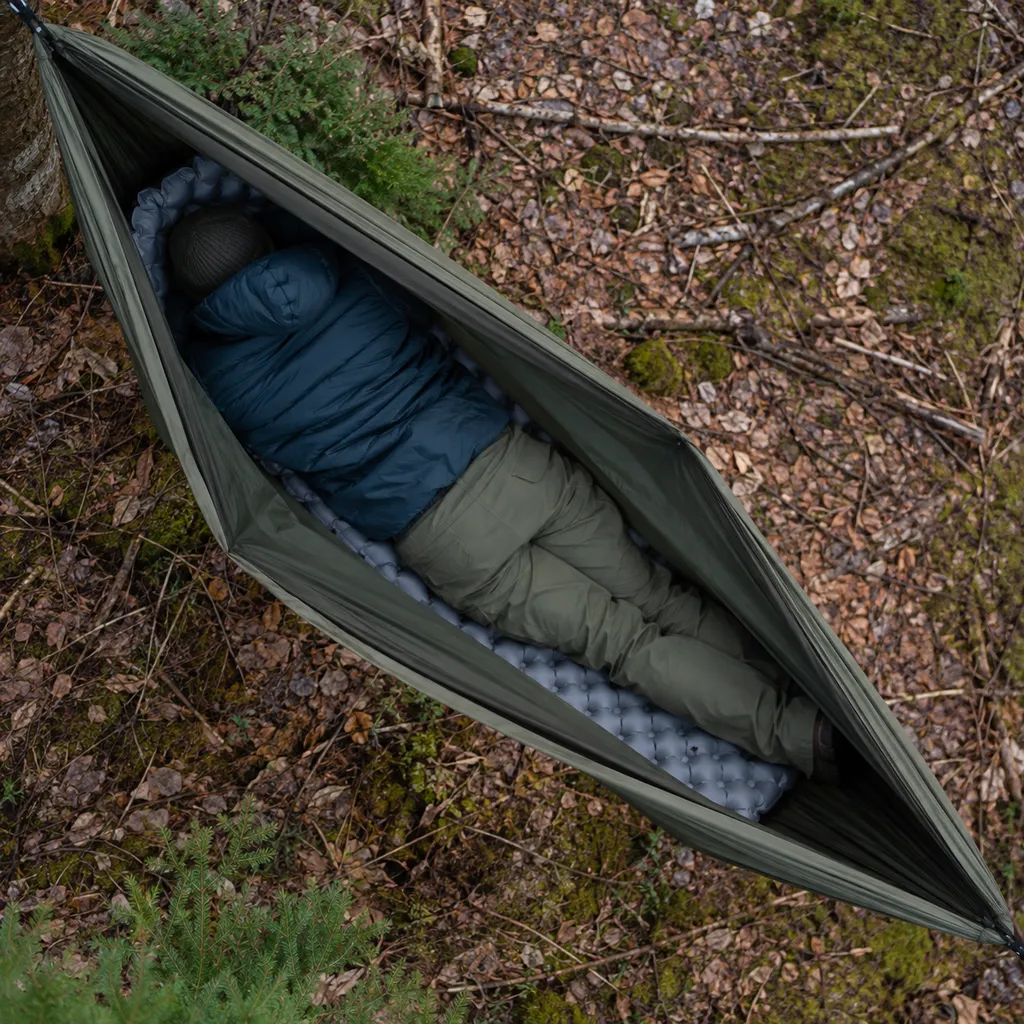
Why Lying on an Angle Works
A gathered end hammock is wider than it is deep. When you lie at an angle of about 15 to 30 degrees off the centerline, your body spreads across that width and the fabric flattens beneath you. Your head goes slightly to one side of center and your feet go to the other.
Find Your Sweet Spot
Get in, lie down in the middle, then shift your head toward one edge and your feet toward the other until your back feels flat. Most people find it in under a minute. If one side feels easier, mark it on the hammock with a small knot or tag so you can find it again in the dark.
Why Hammock Size Matters
The diagonal lay only works if the hammock is wide and long enough. Look for one at least 10 feet long and 55 inches wide, like the ENO DoubleNest. Short, narrow hammocks force you to lie straight. Our best camping hammocks list notes the dimensions of each pick.
How to Sleep in a Hammock by Sleeping Position
Back Sleepers
Back sleepers have it easiest. Use the diagonal lay, put a small pillow or rolled jacket under your knees to stop hyperextension, and add a thin pillow under your head. Many back sleepers find they sleep better in a hammock than in a tent.
Side Sleepers
Side sleeping works once you are on a strong diagonal and the hang has plenty of sag. Bend your knees, roll slightly toward the low side of the hammock and let the fabric cradle your hips. A slightly wider hammock helps a lot here.
Stomach Sleepers
Stomach sleeping is the hardest position in a gathered end hammock. If you cannot sleep any other way, look at bridge hammocks, which use spreader bars to make a flatter bed, or try a deeper diagonal with a pillow under your hips.
| Problem | Likely Cause | Fix |
|---|---|---|
| Shoulder squeeze | Hang too tight | Add sag, aim for a 30 degree hang |
| Calf pressure | Lying too straight | Go more diagonal, pillow under knees |
| Sliding to the middle | Ends level | Raise the foot end 8 to 10 inches |
| Cold back | No insulation below | Add an underquilt or pad |
| Swinging | Loose sleeping posture | Shift weight to the low side and relax |
Stay Warm All Night
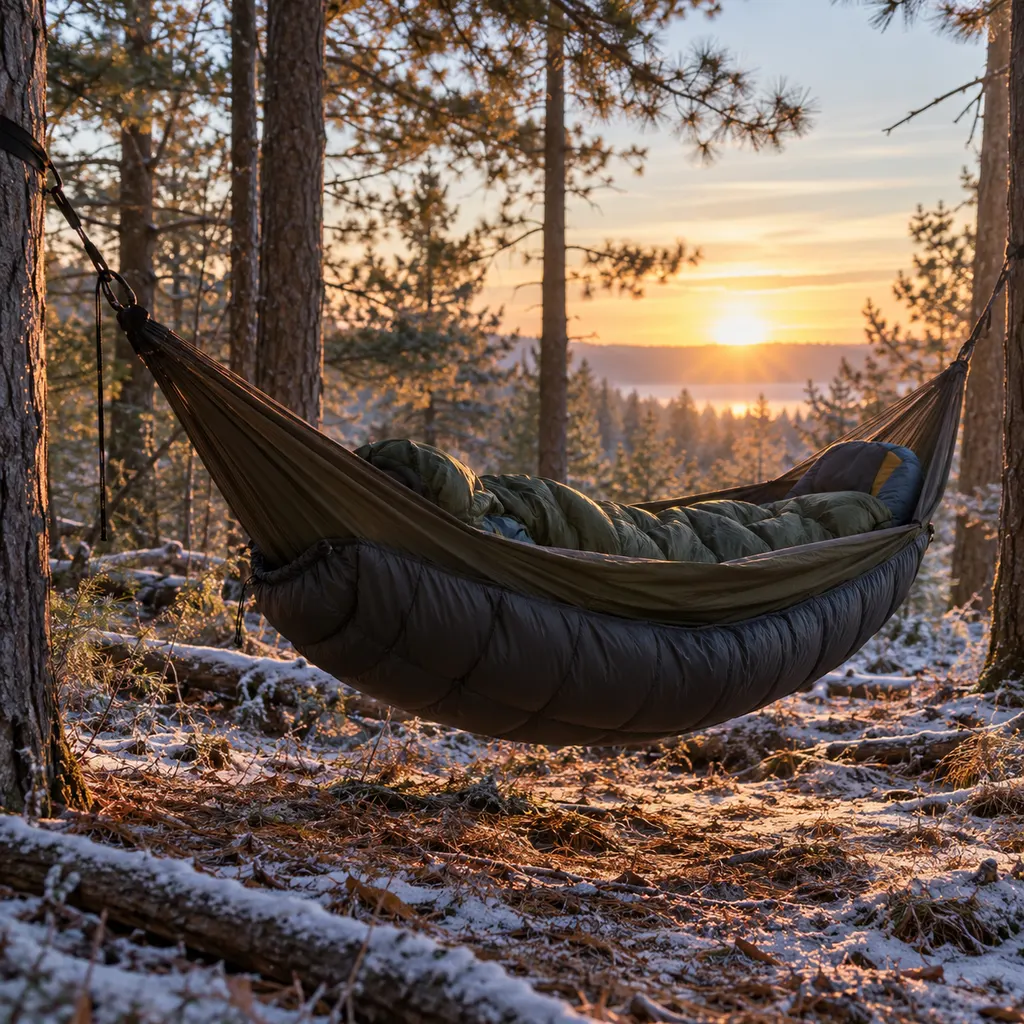
Avoid Cold Butt Syndrome
The air moving under a hammock steals heat fast, and a sleeping bag compressed under your body does almost nothing to stop it. That chill is so common hammockers call it cold butt syndrome. Even on a 60 degree night you may feel it.
Use an Underquilt or Pad
An underquilt hangs beneath the hammock and stays lofted because you do not crush it. The OneTigris Hideout is a solid starting point, and our best hammock underquilts guide compares temperature ratings. A closed cell or inflatable pad inside the hammock also works, though it can slide around.
Pair It With a Top Quilt
On top, a quilt is easier to manage than a zipped bag in a hammock. The Featherstone Moondance 25 is a well loved down option, and our best hammock top quilts list covers synthetic choices. For colder trips, read our full cold weather hammock camping guide.
Block the Wind and Rain
A tarp pitched low over the hammock blocks wind as well as rain and adds a few degrees of warmth. Our best hammock tarps roundup explains coverage sizes, and our tips on camping in the rain help when the forecast turns.
Extra Comfort Tips
Bring the Right Pillow
A small inflatable or stuff sack pillow works best. Large camp pillows push your head too high in the curve of the hammock. Many people use one pillow for the head and a second, smaller one under the knees.
Use a Bug Net in Warm Months
Mosquitoes find a hammock sleeper easily. A hammock with a built in net, or a separate net that zips around it, lets you sleep with the sides open on warm nights.
Get Settled Before Lights Out
Stage everything you need on the ridgeline or in a pouch before you climb in: headlamp, water, earplugs and a warm hat. Use the bathroom first. Getting in and out of an insulated hammock in the dark is the part most beginners dread.
Practice at Home First
A backyard or a local park with a permit is the perfect place for a test night. You can tweak the sag, try the foot end at different heights and learn your best angle with your car or house a few steps away. Pay attention to where you feel pressure in the first ten minutes, because that is where you will ache at 3 a.m. Make one change at a time, lie down again, and note what helped. By the end of the evening you will have a setup you can repeat at any campsite.
Adjust During the Night
It is normal to wake once or twice on your first few nights. Instead of lying awake, fix the cause. If your calves feel pressure, shift more diagonal. If your shoulders feel pinched, the hang is probably too tight and can be loosened in the morning. If you feel a draft, check that the underquilt has not shifted to one side. Small adjustments made right away usually end the problem for good.
Choose a Good Site and Protect the Trees
Pick two healthy, living trees about 12 to 15 feet apart, at least six inches across, with no dead branches overhead. Use straps at least one inch wide to protect the bark, and follow the Leave No Trace principles and our Leave No Trace camping rules. Our campsite setup guide covers what else to check before you unpack.
If you are heading out alone, our solo camping tips are worth a read, and our hammock camping gear list makes sure nothing gets left at home.
Frequently Asked Questions
Is sleeping in a hammock bad for your back?
Not when it is hung and used correctly. With a deep sag and a diagonal lay, your back lies close to flat. Pain usually comes from a tight hang or lying straight down the middle.
Can you fall out of a hammock while sleeping?
It is very unlikely in a gathered end hammock with a proper sag, because the sides rise around you. Hanging at sitting height also means any fall is short.
Can side sleepers sleep in a hammock?
Yes. Use a wide hammock, a strong diagonal and bent knees. Most side sleepers adapt within a night or two.
Do I need an underquilt in summer?
Below about 70 degrees, most people want some insulation underneath. On warm nights a thin pad or light underquilt is enough.
Is it healthy to sleep in a hammock every night?
Plenty of people do, and many say it eases pressure points. If you have a medical condition affecting your back or breathing, check with your doctor first.
Once you know the basics, sleeping in a hammock is easy: hang it loose at about 30 degrees, raise the feet a little, lie on the diagonal and put insulation underneath. Try a night in the backyard before your first trip, adjust one thing at a time, and you will wake up rested and ready for the trail.
Discover more from Maive Verse
Subscribe to get the latest posts sent to your email.