
Mastering Lightweight Bikepacking Food Ideas for 2026
Discover the best bikepacking food ideas for 2026. Master lightweight, high-calorie trail nutrition with our expert meal planning guide.
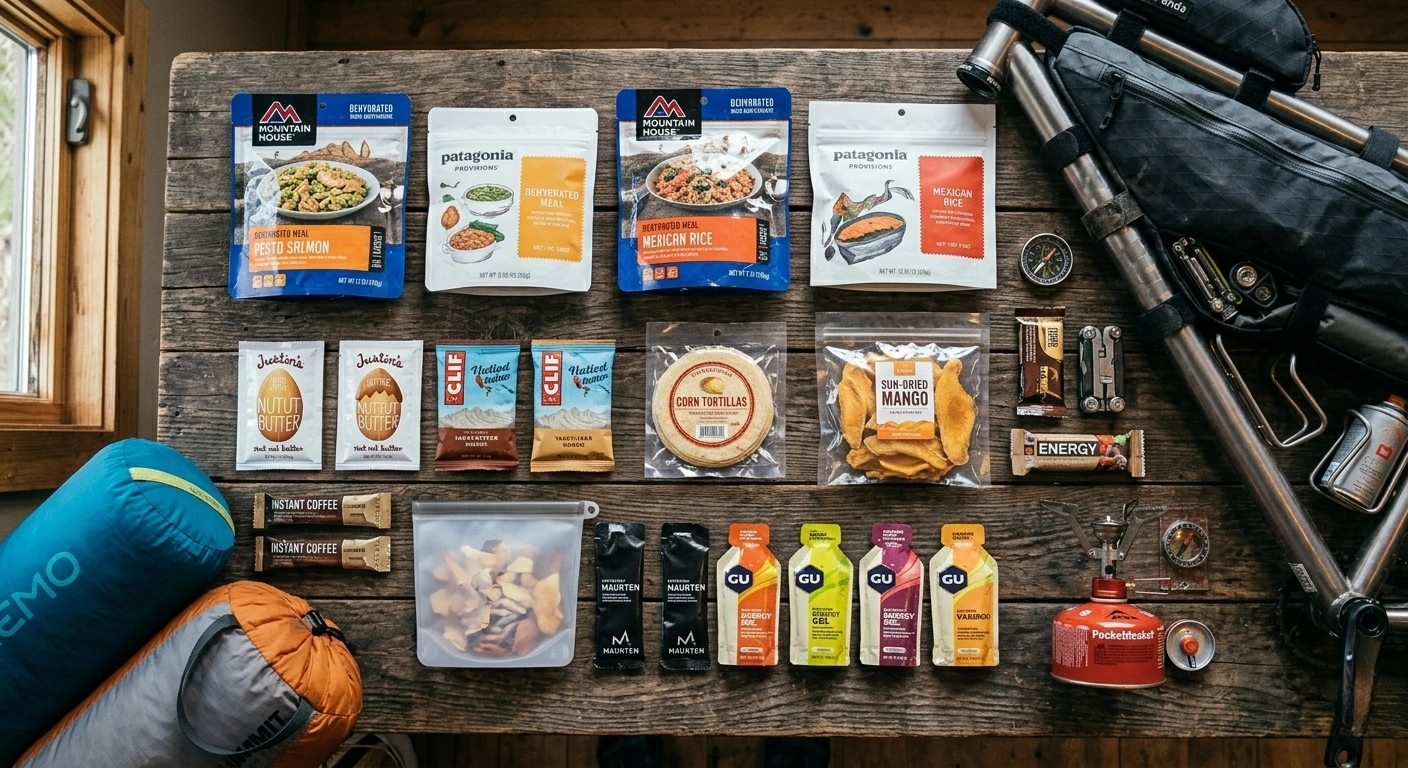
Table of Contents
Introduction: The Metabolic Requirement of Wilderness Cycling
Selecting efficient bikepacking food ideas is a technical requirement for any successful multi-day expedition. Unlike standard camping, bikepacking demands a rigorous focus on the calorie-to-weight ratio. A rider can easily burn between 3,000 and 6,000 calories per day depending on the elevation and trail technicality. Failure to provide adequate fuel leads to “bonking,” a state of glycogen depletion that compromises both physical safety and navigational focus. This guide analyzes the most effective nutritional strategies for maintaining energy levels in remote environments.
The primary logistical challenge of a 3-day mission is packing enough fuel without over-encumbering the bicycle. High-quality nutrition must be shelf-stable, resistant to crushing, and require minimal water for preparation. For those who have already reviewed the 7 Proven Steps for Bikepacking for Beginners, understanding these caloric demands is the next step in self-sufficiency. Proactive meal planning ensures that the bike remains nimble, a concept detailed in our Bikepacking Packing Guide.
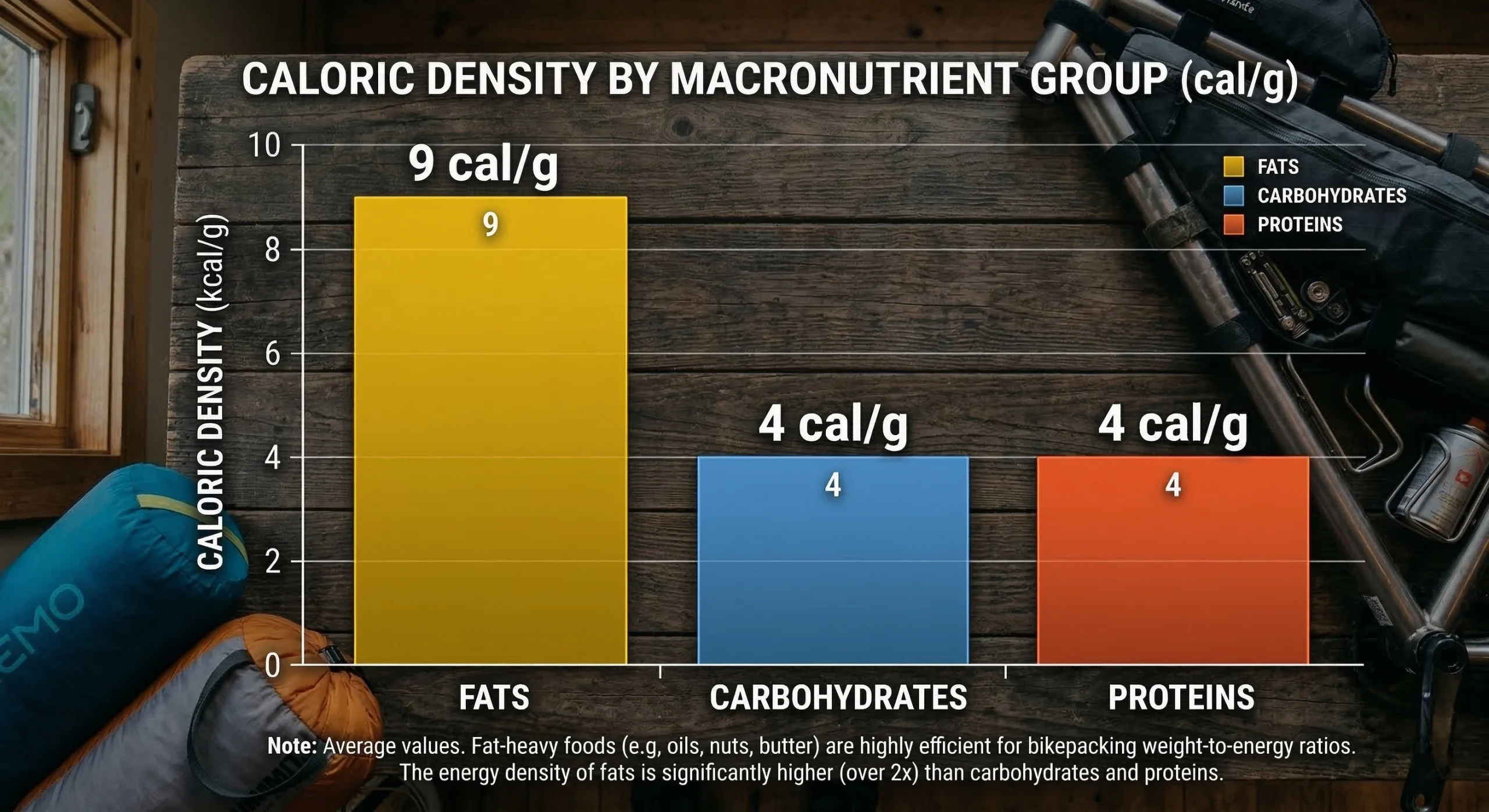
1. Understanding Caloric Density and Weight Efficiency
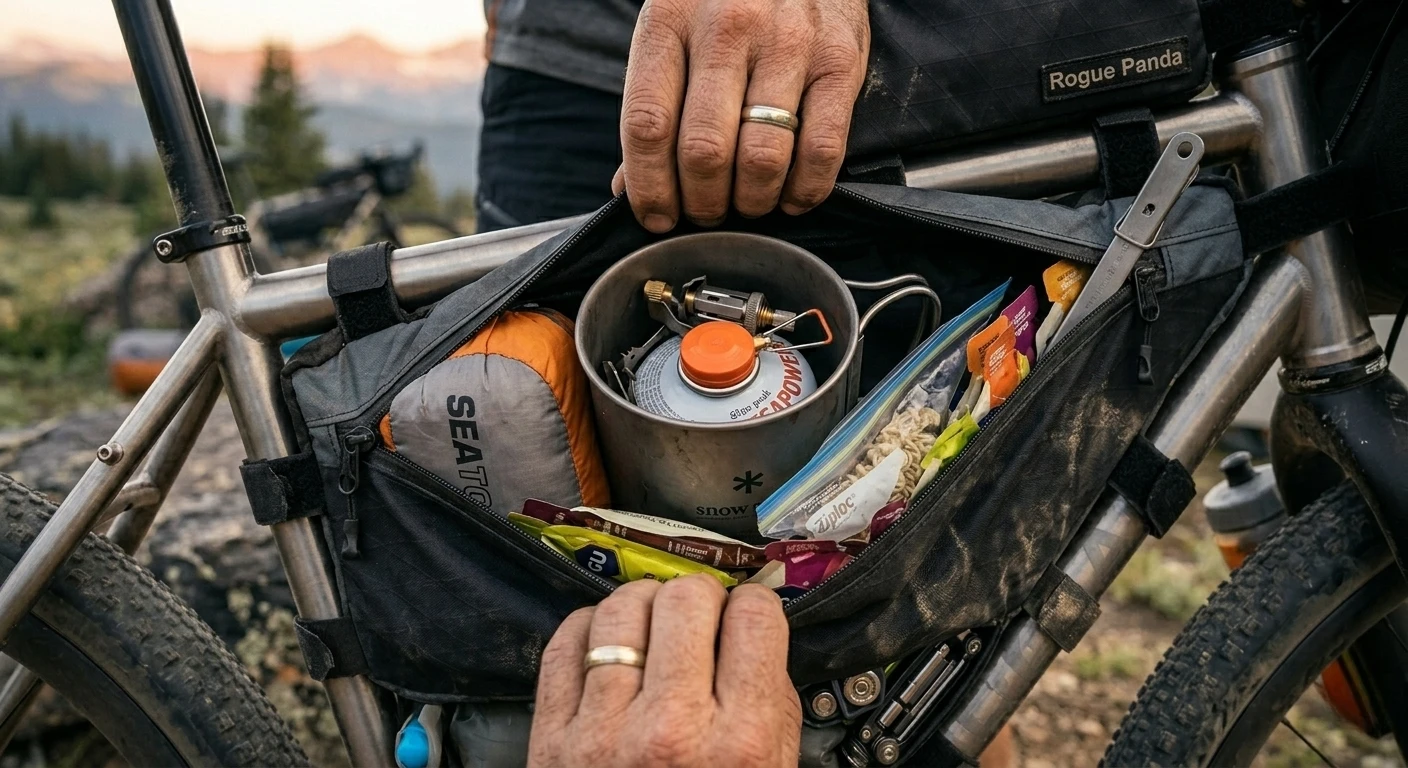
The most critical principle in evaluating bikepacking food ideas is caloric density. The goal is to maximize energy while minimizing the volume carried in the Bikepacking Frame Bag. Foods high in healthy fats are the most efficient, providing over double the energy per gram compared to protein or carbs. This efficiency is vital for maintaining a low center of gravity on technical trails.
The Power of Fat-Rich Nutrition
Fats provide a slow-burning, sustained energy source that is ideal for long, steady-state climbs. Incorporating items like olive oil packets, nuts, and avocados (on day one) ensures the rider avoids the insulin spikes associated with pure sugar consumption. For technical details on wilderness metabolic needs, the Wilderness Medical Society provides excellent research on high-altitude exertion.
2. Best Breakfast Bikepacking Food Ideas
A high-performance breakfast must provide immediate glucose for the first climb and long-chain carbohydrates for sustained power. The following bikepacking food ideas focus on rapid preparation and minimal cleanup.
Quick Oats and Nut Butters
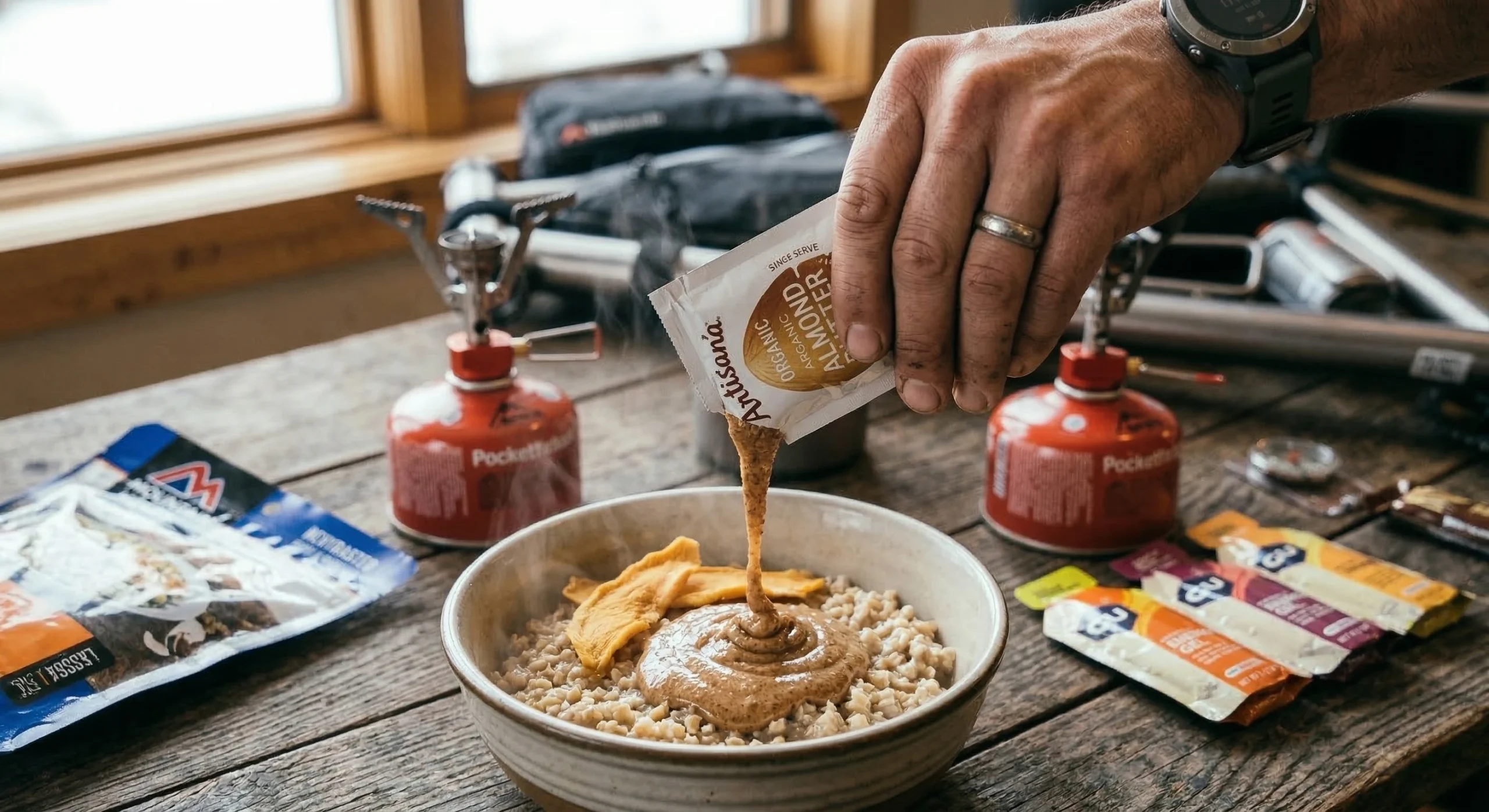
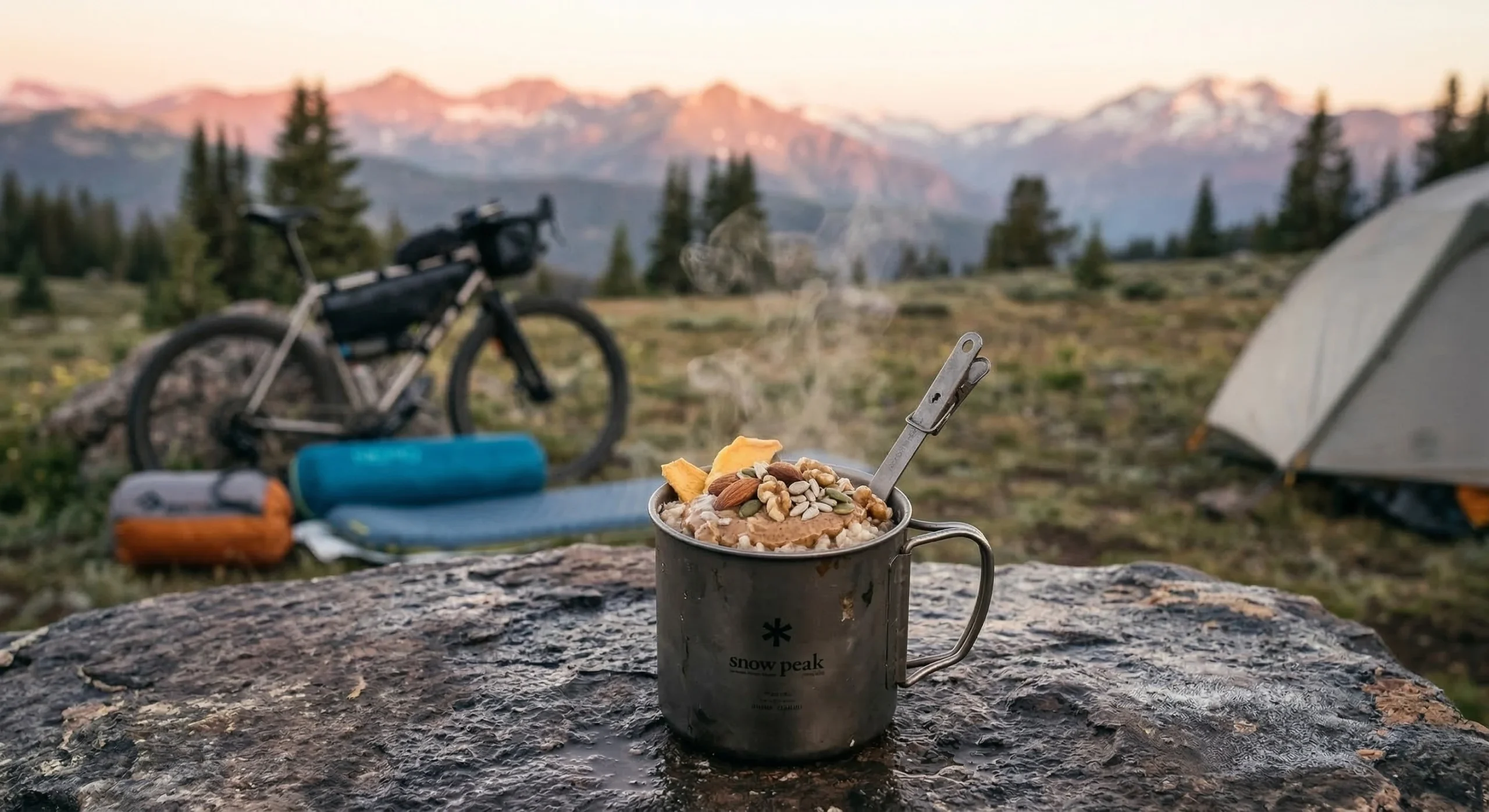
Instant oatmeal remains a staple because it is lightweight and requires only boiling water. To increase the caloric density, riders should add a packet of almond butter and a handful of chia seeds.
- Energy Profile: ~450 calories per serving.
- Weight: 80 grams.
- Preparation: 2 minutes.
Performance Coffee Systems
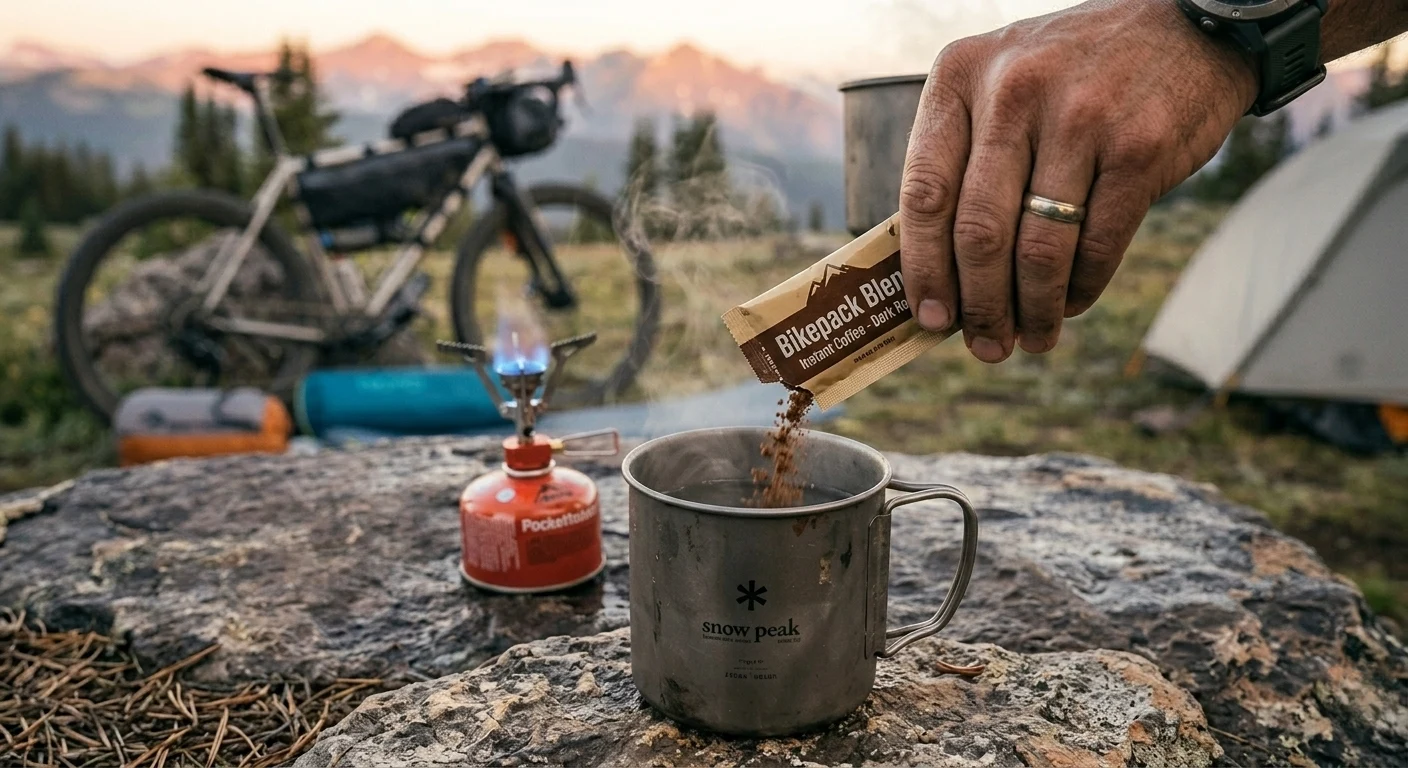
For many, caffeine is a functional requirement for morning focus. Instant specialty coffee, such as Swift Cup Coffee, provides a high-quality experience without the weight of a traditional press. This ensures the rider maintains the concentration needed for Off-Road Navigation.
3. Mid-Ride Nutrition and Grazing Strategies
Bikepackers should avoid large, heavy meals during the day. Instead, a “grazing” strategy involves consuming small amounts of food every 45 to 60 minutes. This prevents the digestive system from diverting blood away from the muscles.
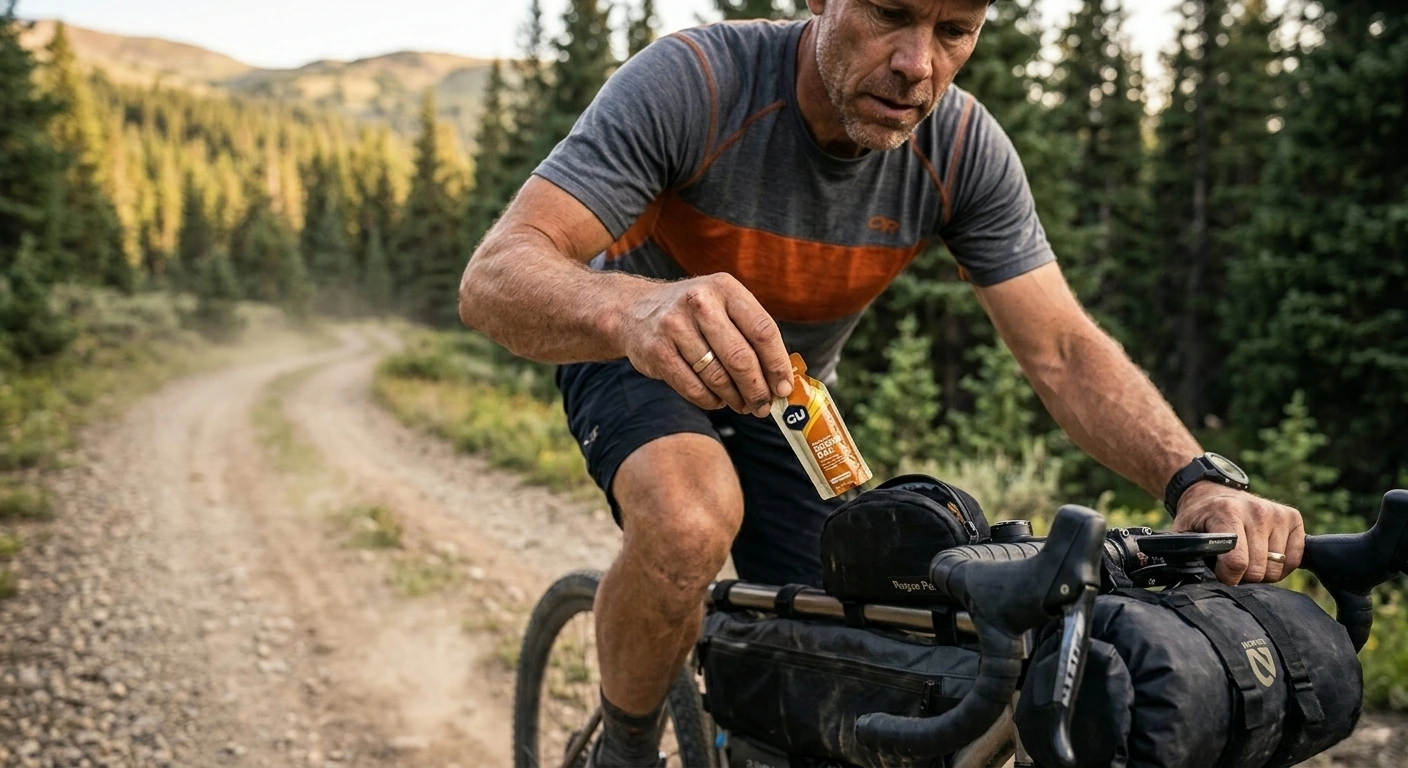
Energy Bars and Gels
For high-intensity efforts, energy gels provide rapid-access fuel. However, for long-duration rides, solid food is necessary to satisfy hunger.
- Recommendation: Clif Builders Bars
- Key Features: 20g protein, high-calorie density, durable packaging.
- Pros: Resists melting in summer heat; high satiety.
- Cons: Can be difficult to chew during intense breathing.
- Check Price on Amazon: Clif Builders Protein Bars.
Salty Snacks for Electrolytes
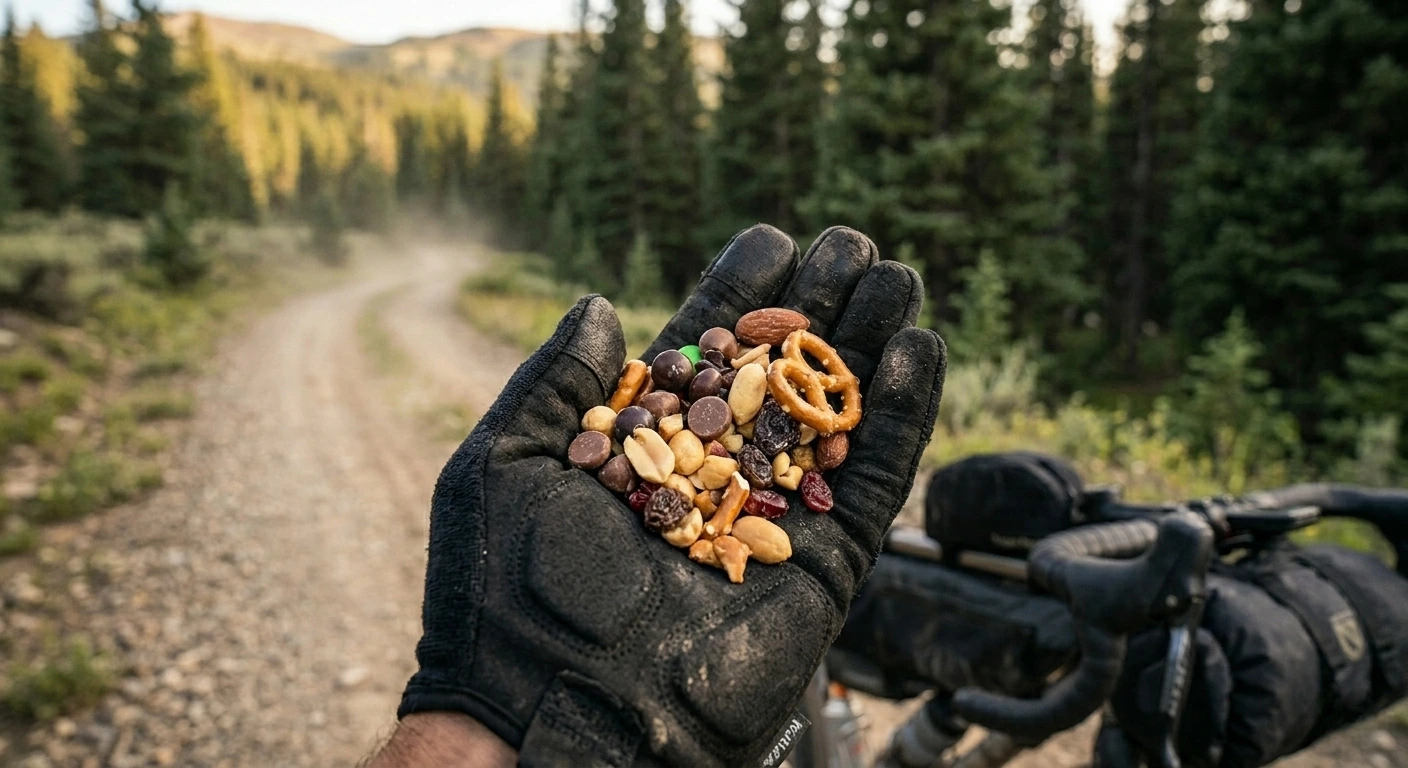
Sodium loss through sweat can lead to cramping and fatigue. Salty snacks like pretzels or salted cashews are essential bikepacking food ideas for maintaining mineral balance. For a deeper look at electrolyte management, consult the Adventure Cycling Association’s Nutrition Tips.
4. Trail Lunch: The Tortilla Strategy
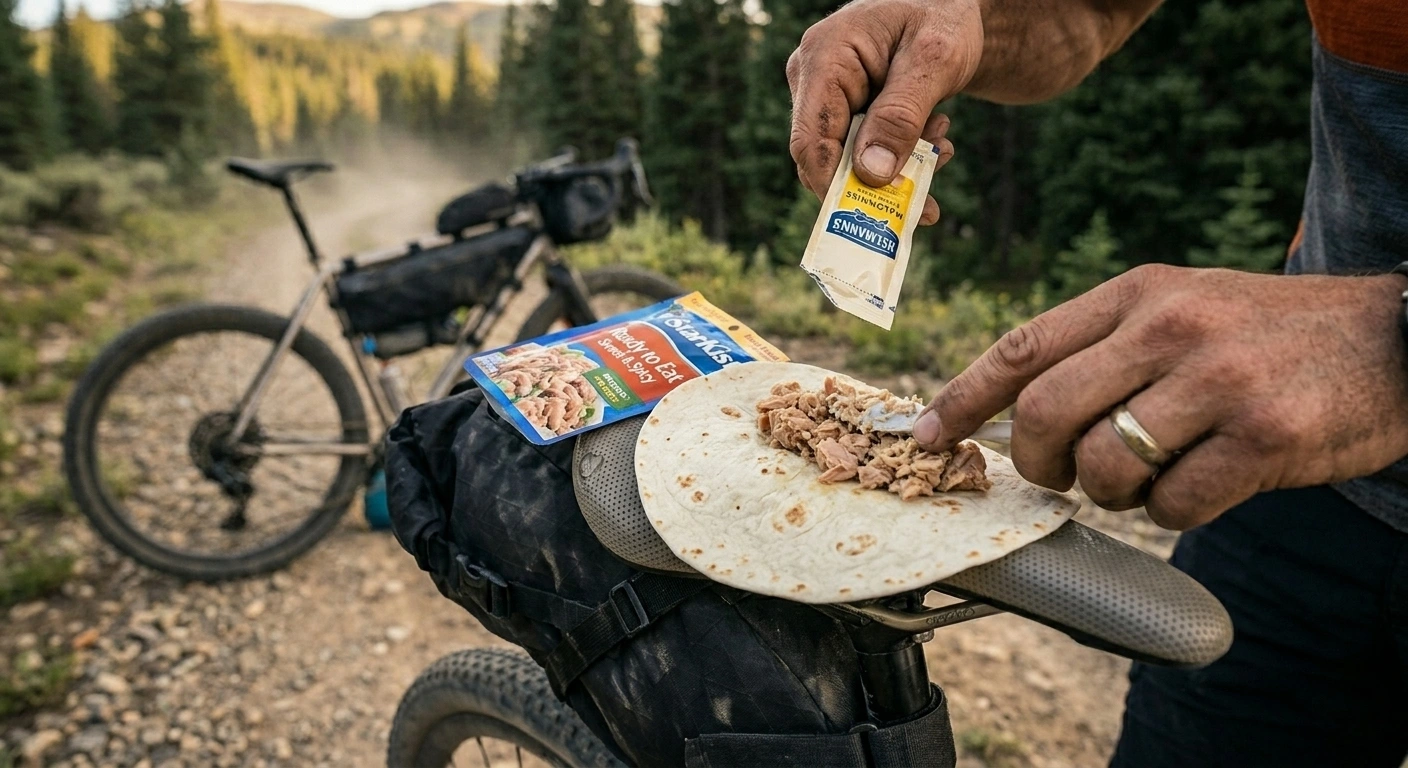
Tortillas are the ultimate bread replacement for bikepacking because they are dense, do not get crushed in a seat pack, and are highly versatile. A “wrap” lunch is quick and requires no stove.
Tuna and Chicken Pouches
Vacuum-sealed meat pouches provide high-quality protein without the weight or bulk of a can.
- Key Features: Shelf-stable for years, 15-20g protein per pouch, flat profile.
- Pros: No draining required; easy to pack in a frame bag.
- Cons: Pouch disposal requires careful sealing to prevent odors in bear country.
- Check Price on Amazon: StarKist Tuna Creations
5. High-Calorie Wilderness Dinners
Dinner is the primary time for physical recovery. The bikepacking food ideas in this category prioritize protein for muscle repair and high calories to replenish glycogen stores for the following day.
Commercial Dehydrated Meals
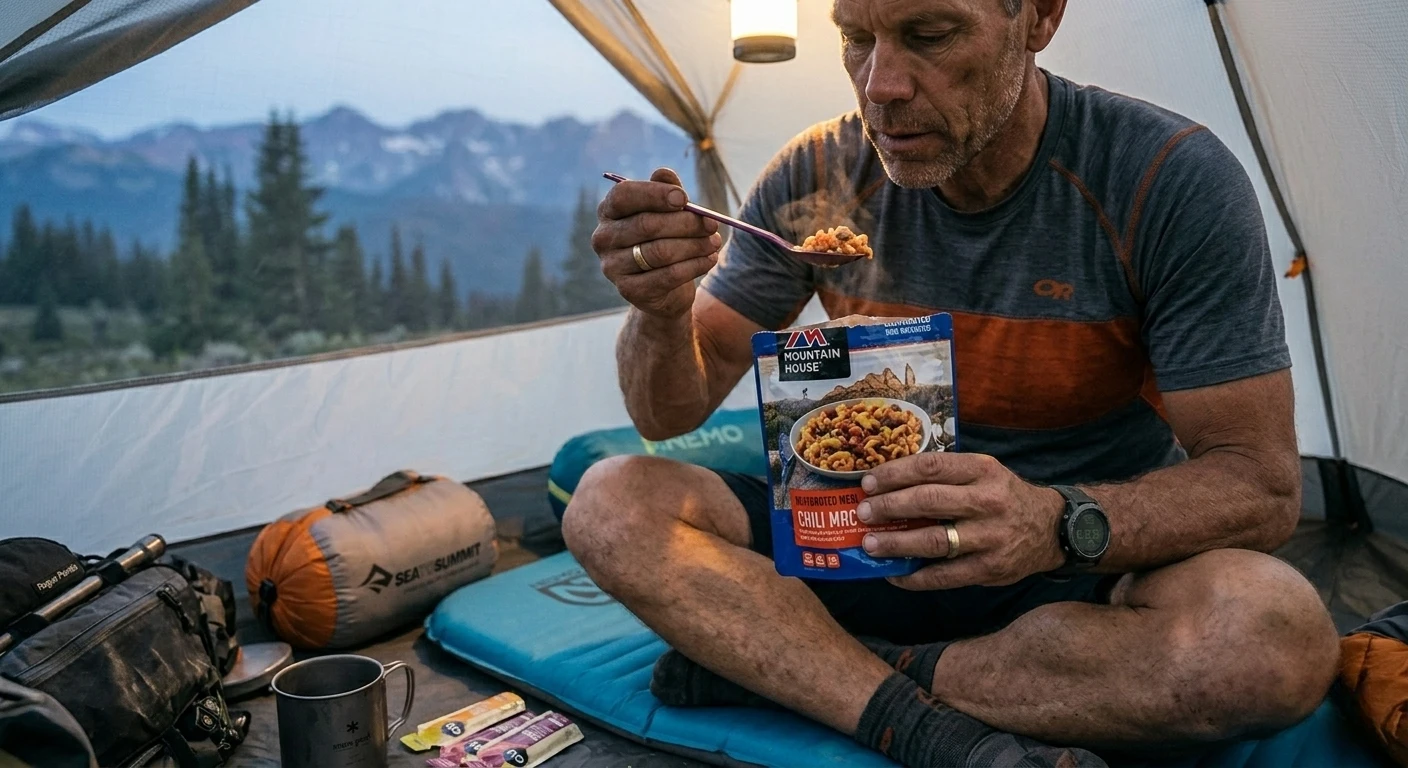
Freeze-dried meals are the gold standard for weight-conscious missions. They allow the rider to eat directly from the pouch, eliminating the need to wash dishes.
- Recommendation: Peak Refuel Biscuits and Gravy
- Key Features: 1,100 calories per pouch, high protein content, premium ingredients.
- Pros: Exceptional taste; high caloric density; fast rehydration.
- Cons: Expensive; the pouch creates significant trash volume.
- Check Price on Amazon: Peak Refuel Dehydrated Meals
DIY Freezer Bag Cooking
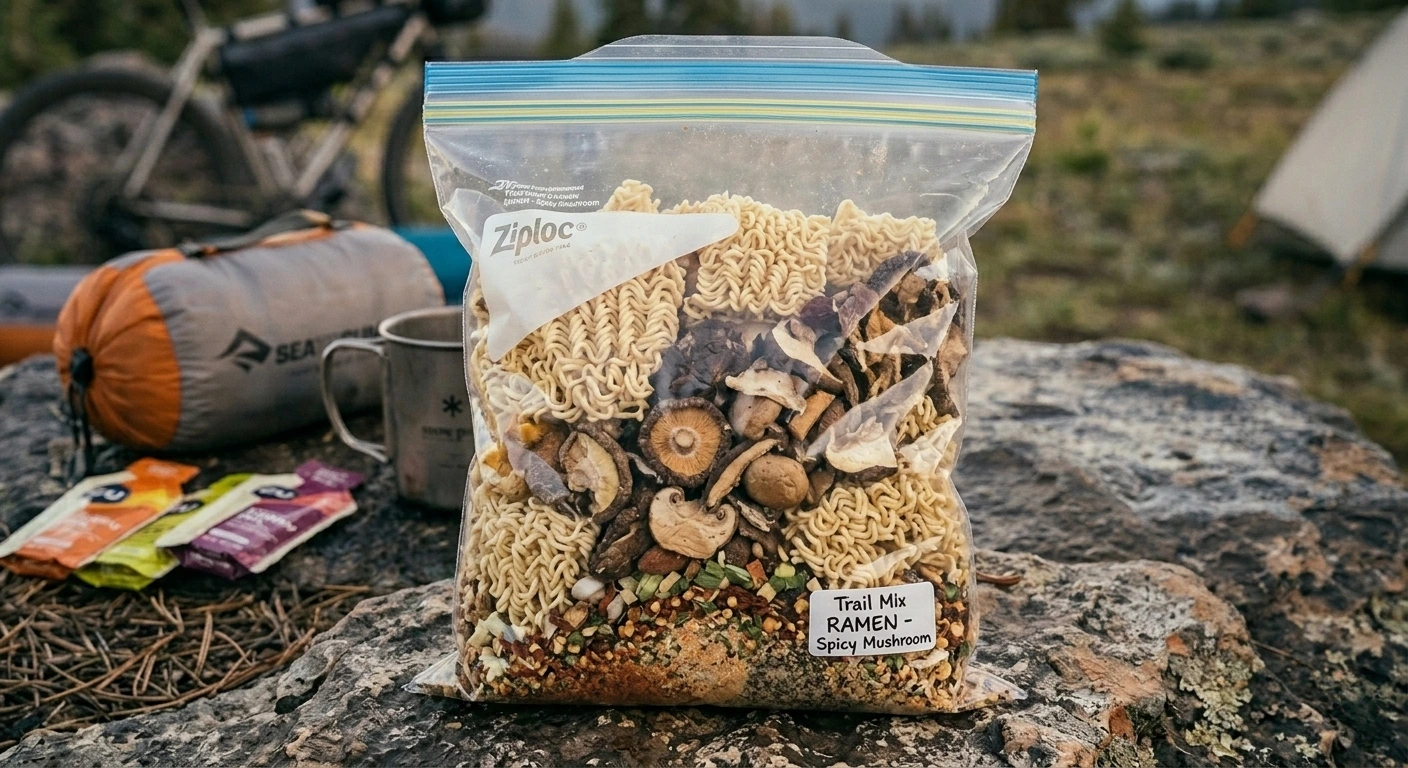
For budget-conscious riders, DIY meals using couscous, ramen, or instant rice are excellent bikepacking food ideas. Adding dehydrated vegetables and a protein source creates a custom meal for a fraction of the cost of commercial options. This approach is recommended in our Ultimate 3-Day Gear List.
6. Essential Cooking and Storage Gear
The efficiency of your bikepacking food ideas depends on the gear used to prepare and store them. Lightweight, reliable systems are mandatory for wilderness survival.
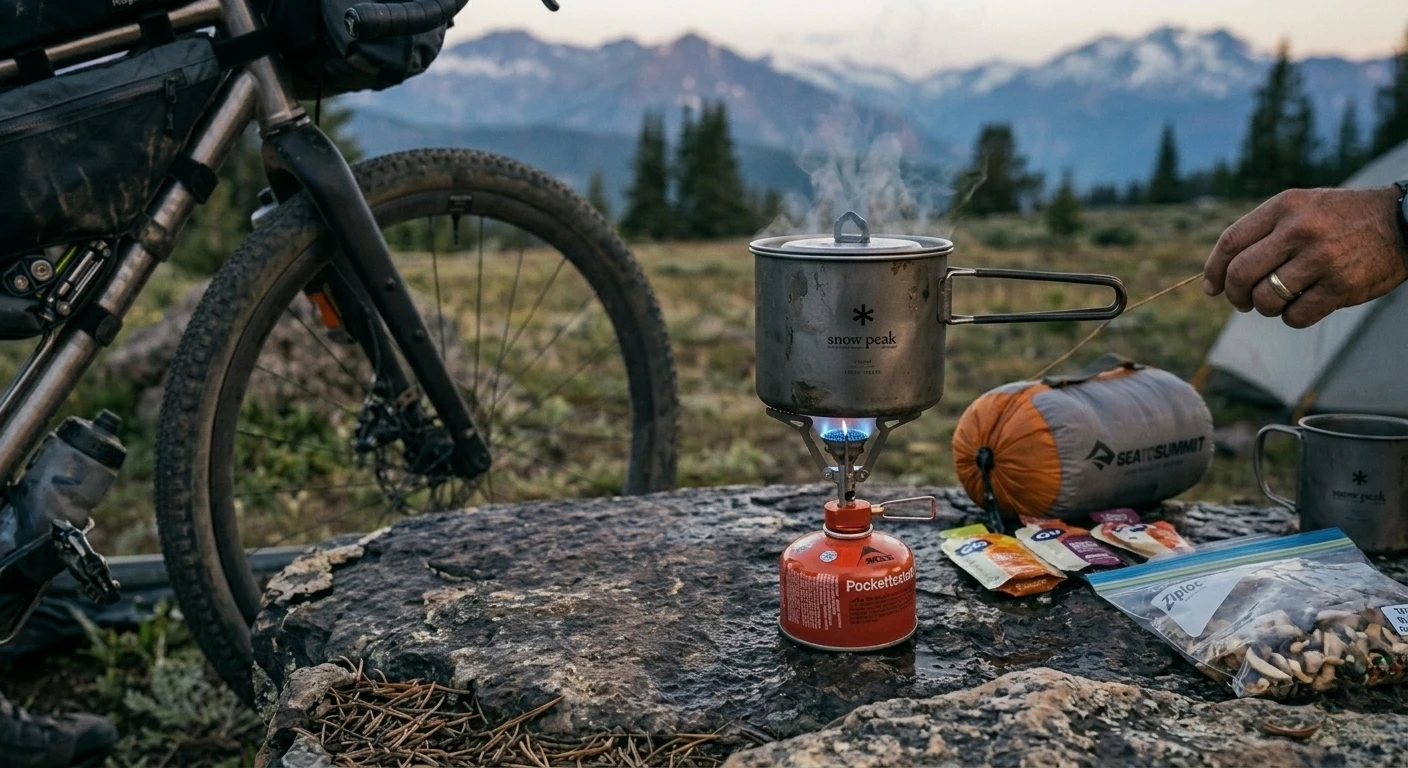
Recommendation: Jetboil Stash Ultralight System
- Key Features: 7.1-ounce weight, FluxRing technology for 2.5-minute boil time, nested design.
- Pros: Incredibly fast; fuel-efficient; occupies very little space in a Bikepacking Sleeping System.
- Cons: Designed for boiling water only; not for complex cooking.
- Check Price on Amazon: Jetboil Stash Cooking System
Titanium Cookware Performance
Titanium is the preferred material for bikepacking because of its high strength-to-weight ratio. Brands like Snow Peak offer minimalist mugs that serve as both a cooking pot and a drinking vessel.
7. Hydration and Recovery Nutrition
Water management is the logistical backbone of trail nutrition. Carrying electrolytes is a primary safety protocol, much like the advice found in the NOLS Backcountry Safety Guidelines.
- Electrolyte Tablets: Products like Nuun prevent hyponatremia during hot rides.
- Recovery Drinks: Consuming a protein-rich drink within 30 minutes of finishing a ride accelerates muscle repair.
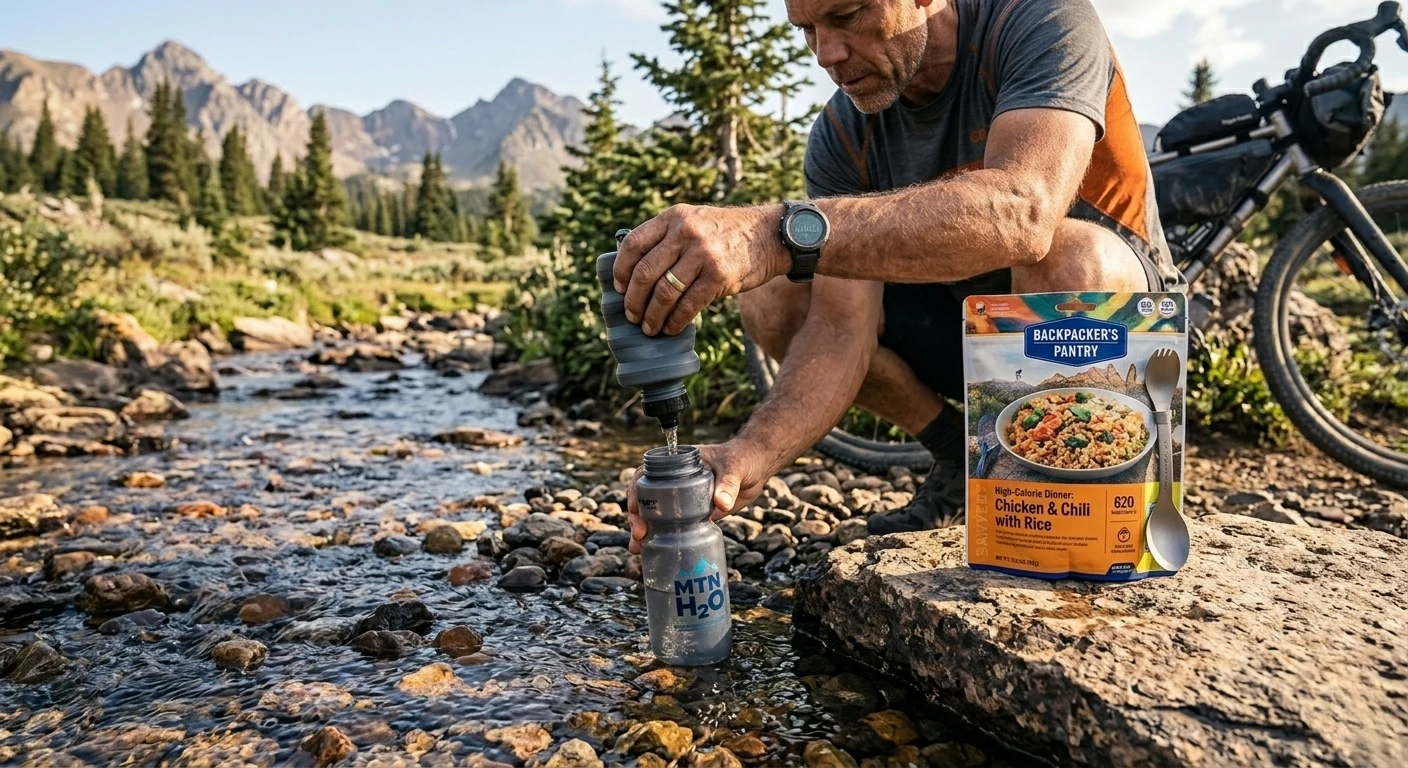
- Water Filtration: A reliable system, like the Sawyer Squeeze, ensures you can prepare your meals using natural sources.
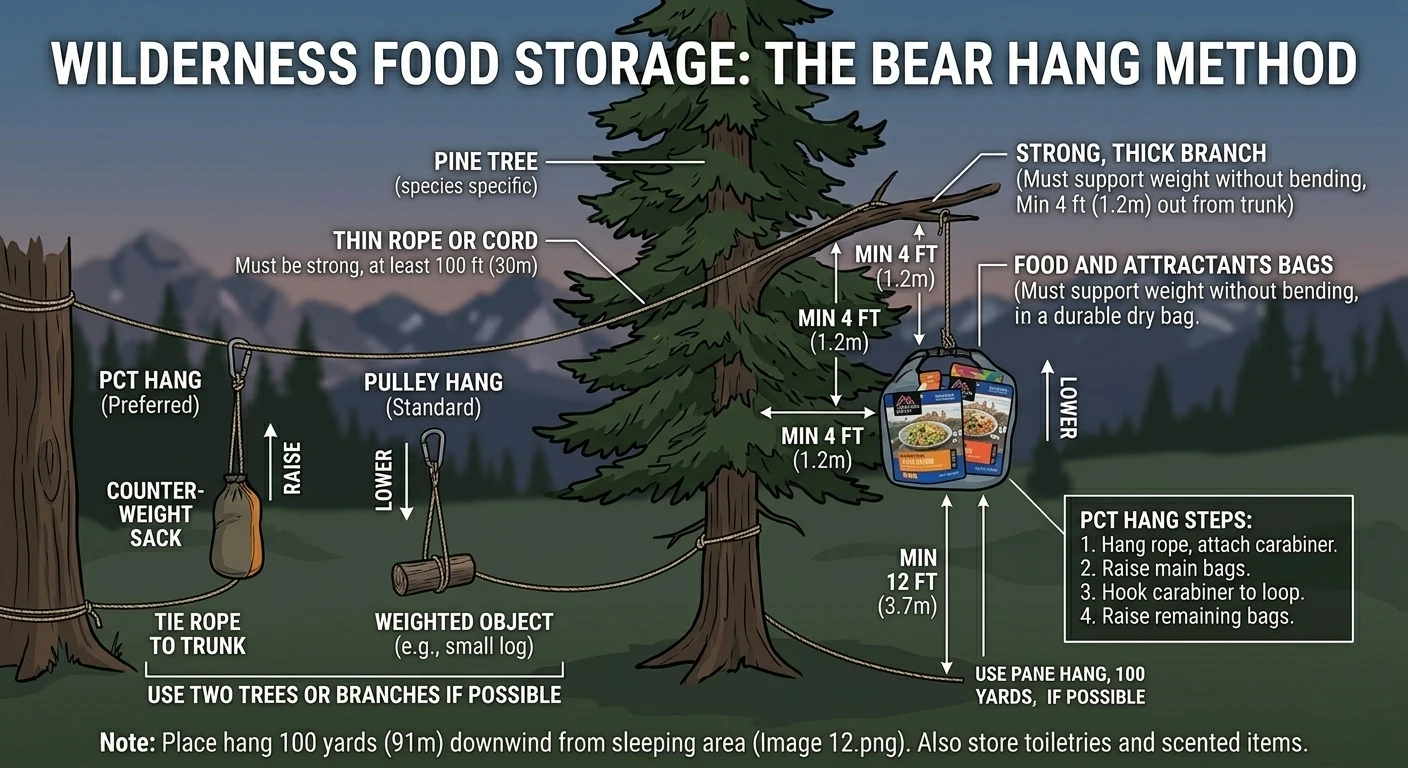
8. Food Storage and Leave No Trace
In wilderness areas, food storage is a critical safety issue. Smells can attract wildlife, including rodents and bears. Following Leave No Trace Principles is a mandatory requirement for all adventurers.
- Bear Bags/Canisters: In certain regions, food must be stored in bear-resistant containers or hung from a tree.
- Odor-Proof Pouches: Using OPSAK bags reduces the scent profile of your food.
- Waste Management: All trash must be packed out. Avoid foods with excessive packaging to minimize waste volume in your Bikepacking Bag.
Conclusion: Fueling Your Wilderness Adventure
Mastering your bikepacking food ideas is the definitive step toward long-distance success. By prioritizing caloric density, utilizing efficient cooking gear like the Jetboil Stash, and implementing a consistent grazing strategy, you ensure your body remains resilient across any terrain. The success of a multi-day mission is not just about the miles ridden, but the quality of the recovery achieved at camp.
Remember that trail nutrition is a personal experiment. Use your next 3-Day Adventure to test different flavors and textures. Keep your Mechanical Readiness high and your caloric intake steady. As you progress from local rail-trails to remote mountain loops, your understanding of these nutritional strategies will become your greatest asset.
The trail is waiting, and with a perfectly fueled engine, you are ready to conquer it. Treat the environment with respect, pack with intention, and enjoy the unique liberation of self-contained cycling. The transition from a day rider to a backcountry expert is a path paved with preparation. Step out with a plan, respect your metabolic limits, and embrace the unparalleled freedom of life on two wheels.