

This post may contain affiliate links. If you buy through them, we may earn a small commission at no extra cost to you.
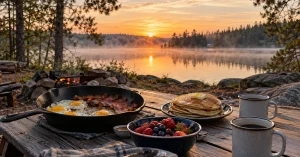
Good camping breakfast ideas are the difference between a slow, happy morning and a cold granola bar eaten standing up. In fall, when the tent is frosted and your hands are stiff, a hot meal is worth far more than the twenty minutes it takes. The trick is choosing breakfasts that match your setup, your group and how far you have to walk before the day really starts.
Below are twelve breakfasts that work in a real campsite, grouped by how you cook them, plus the prep, cooler and cleanup habits that make mornings easy. If you are new to cooking outside, start with our camp cooking for beginners guide first.
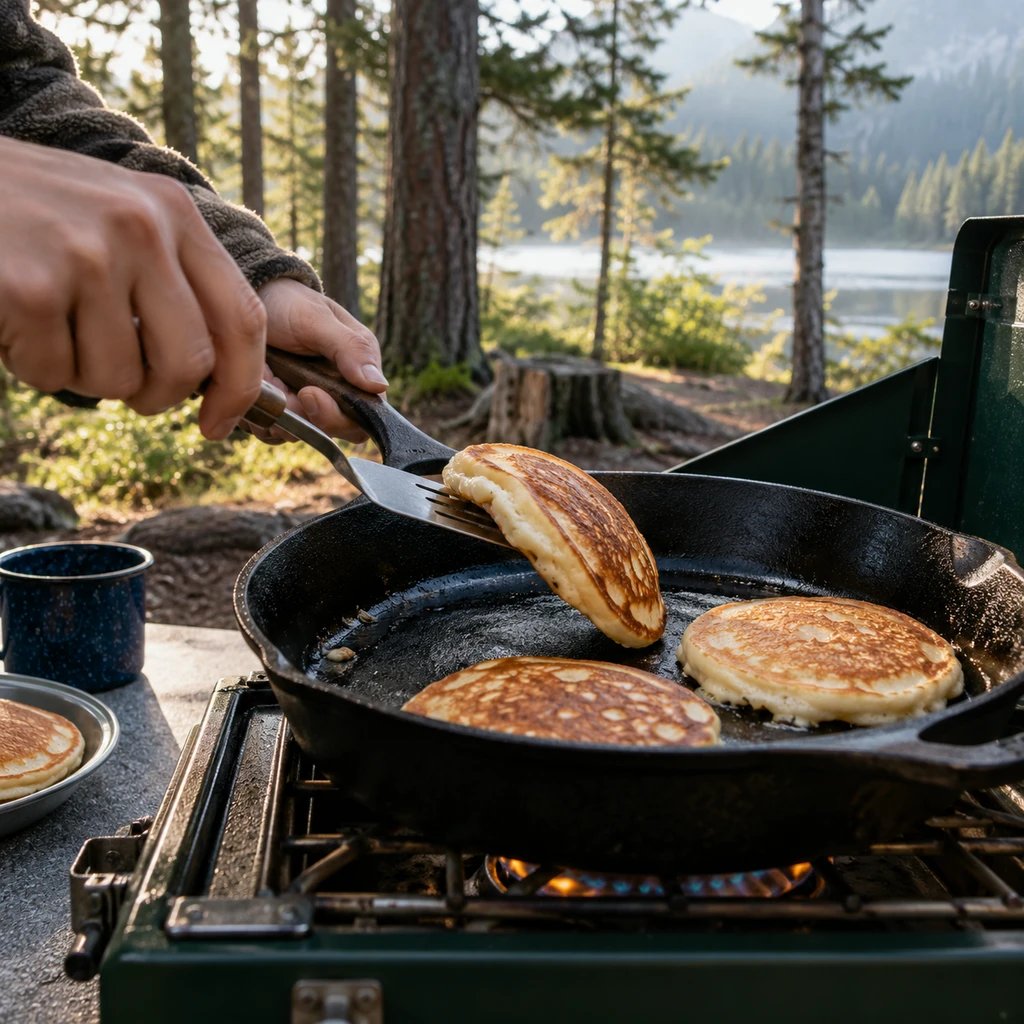
Table of Contents
How to Choose Camping Breakfast Ideas That Work
Three questions decide the menu. How much heat do you have: a two-burner stove, a campfire, or a single canister burner? How cold will it be: the colder the morning, the more you want something hot and quick rather than elaborate. And how soon do you need to move: a lazy car camping morning suits a big skillet, a trail day suits something you can eat in ten minutes.
Car Camping Mornings
With a cooler and a two-burner stove you can cook almost anything you would at home. This is where skillets, pancakes and bacon belong. Our list of the best camping stoves covers the burners that make it easy.
Campfire Mornings
A campfire breakfast needs a bed of coals, not flames, so start the fire early or keep last night’s coals alive. A grate or a swing stand makes it far easier; see our best campfire grills and the technique in how to cook over a campfire.
Backpacking Mornings
On the trail, breakfast is about calories per ounce and a single pot of boiling water. Keep it simple and fast so you are walking while it is still cool. Our backpacking for beginners guide covers the rest of the kit.
Skillet and Griddle Breakfasts
A cast iron skillet holds heat evenly on an uneven stove or a patchy bed of coals, which is exactly what campsite cooking needs. These five are the classics, including one sweet treat.
1. Bacon and Eggs
Cook the bacon first, pour off most of the fat, then fry the eggs in what is left. Thick-cut bacon is more forgiving on uneven heat. Crack eggs into a cup first so a bad one does not ruin the pan. If the stove runs hot, lift the skillet off the flame for a few seconds between batches rather than turning the burner all the way down, which on many camp stoves risks blowing it out in the wind.
2. Campfire Breakfast Skillet
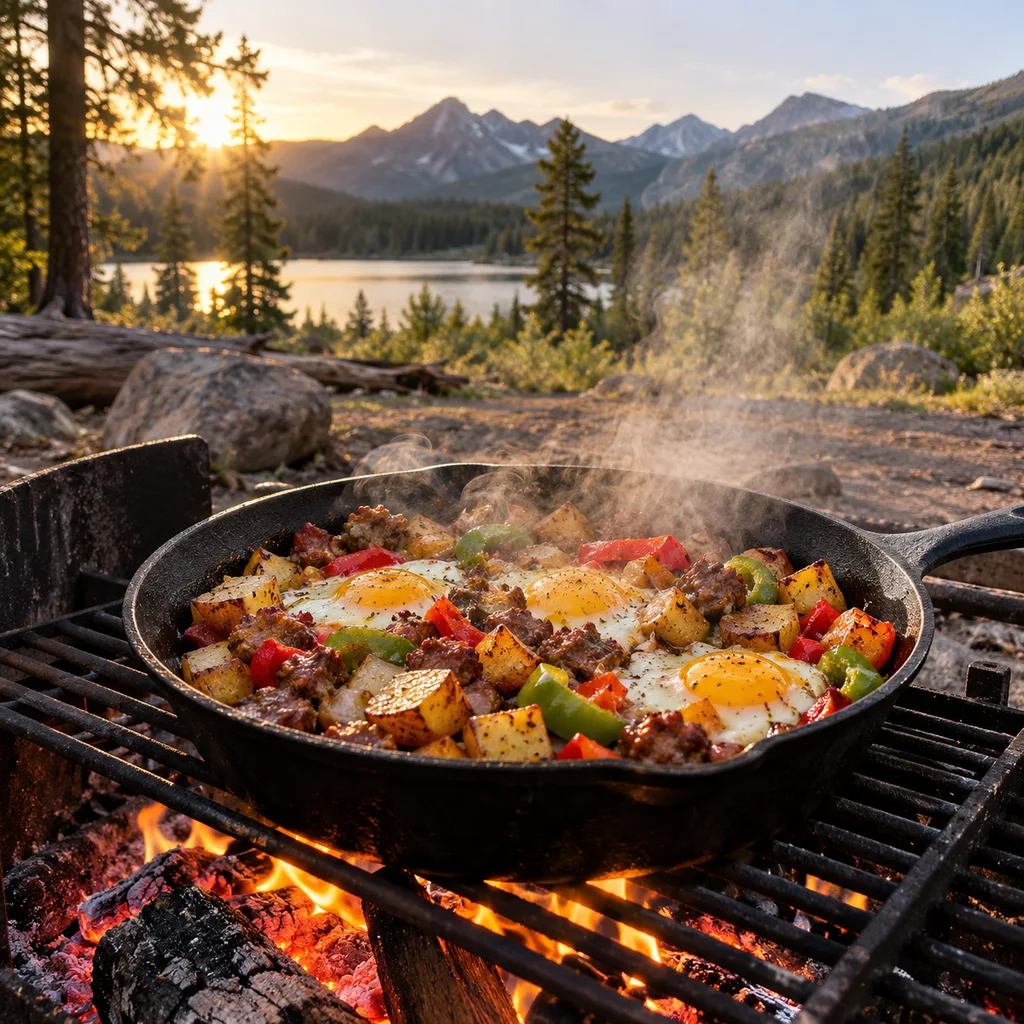
Diced potatoes, onion and peppers, browned in oil until crisp, then sausage and finally eggs cracked into wells and covered until set. Par-cook the potatoes at home or use pre-cooked diced potatoes to cut the time in half. Season with salt, pepper and a pinch of smoked paprika, and finish with shredded cheese melted under a lid or a sheet of foil. One large skillet feeds four hungry people, which makes this the best value breakfast on the list.
3. Pancakes
Mix the dry ingredients at home in a zip bag, then add water or milk and an egg at camp. Cook on a lightly oiled griddle or skillet over medium heat, flipping when bubbles hold their shape. Pancakes are the breakfast kids remember, so make extra.
4. Breakfast Burritos
Scramble eggs with sausage or beans, cheese and salsa, roll into warm tortillas and wrap in foil. Breakfast burritos hold heat well, travel in a pocket and can be made the night before and reheated in foil on the coals.
5. Campfire French Toast
Thick bread soaked in egg, milk and cinnamon, cooked in butter on a griddle over coals. A wide folding grill such as the Adventure Seeka campfire grill gives you room for a full batch, and a swing stand like the REDCAMP campfire grill stand lets you lift the pan away from the heat when it gets too hot.
Whatever you cook, start the coffee first. Our camp coffee setup guide covers the options, from a pour-over to a percolator.
Quick and No-Cook Breakfasts
Some mornings the best camping breakfast ideas are the ones that need no fire at all: packing up in the rain, an early start for a summit, or a cold site where you just want to move.
6. Yogurt Parfaits
Layer yogurt from the cooler with granola and fresh or dried fruit in a cup. Ready in two minutes and easy for kids to build themselves. Our no-cook camp meals guide has more ideas in this style.
7. Overnight Oats
Combine rolled oats, milk or water, chia seeds and a little sweetener in a jar the night before and leave it in the cooler. By morning it is creamy and ready to eat cold, which is also the idea behind traditional Swiss muesli.
8. Bagels and Nut Butter
Unglamorous but reliable. Bagels survive a pack better than bread, and nut butter adds protein and fat that last through a morning hike. Add a banana and honey and you have a real meal. On cold mornings, toast the bagel in a dry skillet for a minute first; warm bread makes the whole thing feel like a proper breakfast rather than a compromise.
Make-Ahead Camping Breakfast Ideas
Doing the work at home is the single best way to enjoy camp mornings. These travel in the cooler and need only reheating.
9. Egg Muffins
Bake eggs with cheese, spinach and diced ham in a muffin tin at home, chill, and pack in a container. Warm them in a covered skillet with a splash of water or eat cold.
10. Dutch Oven Breakfast Casserole
Layer hash browns, cooked sausage, cheese and beaten eggs in a dutch oven and bake on coals with more coals on the lid for about forty minutes. A legged camp oven like the Lodge camp dutch oven is built for this. Our guide to the best dutch ovens for camping covers sizes and coal counts.
Backpacking Breakfasts
11. Upgraded Instant Oatmeal
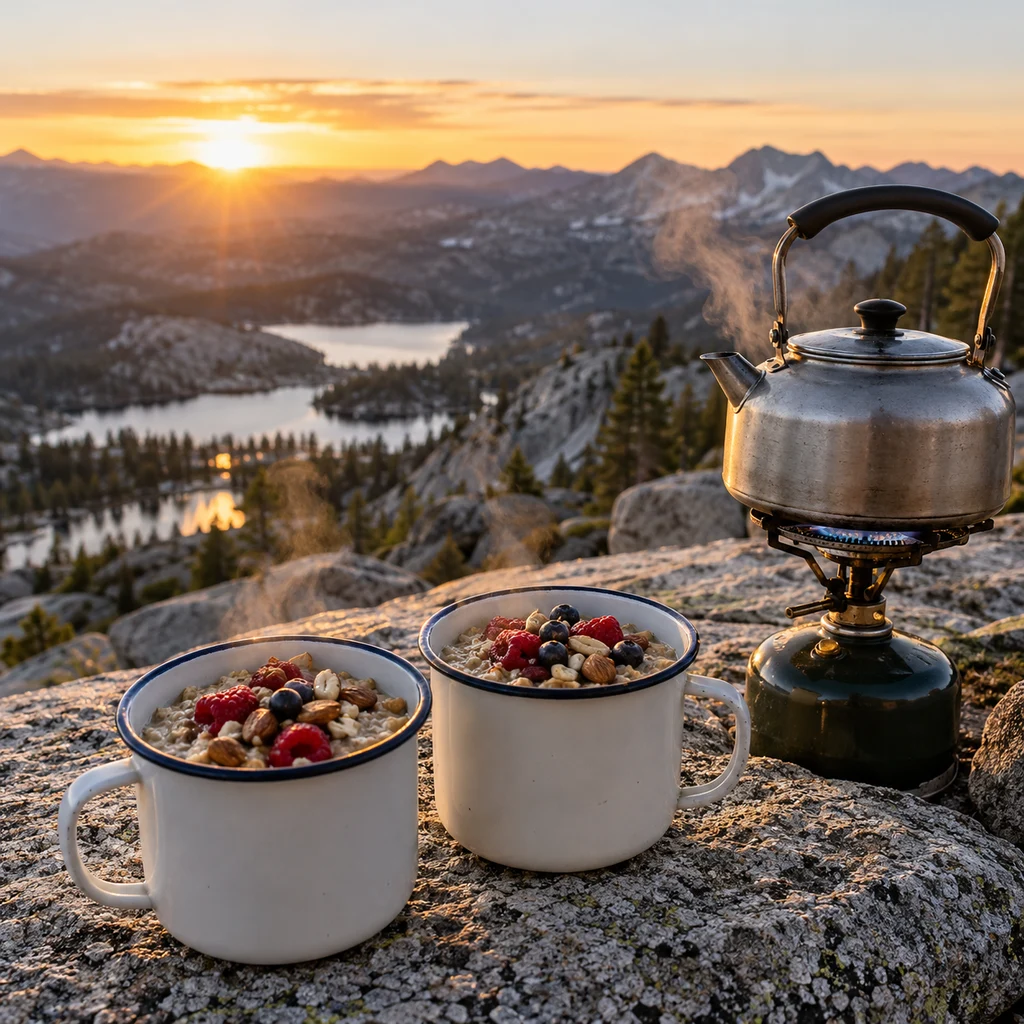
Instant oatmeal packets plus powdered milk, nuts, dried fruit and a spoon of nut butter turn a light breakfast into a four hundred calorie one. Eat straight from the pot to save cleaning. Pre-mix each portion in its own zip bag at home with the extras already added, and breakfast becomes a matter of pouring in water, stirring and waiting two minutes. Add a hot drink and you are packed and walking within twenty minutes of waking.
12. Freeze-Dried Breakfast
Freeze-dried scrambles and granola with milk need only boiling water and a few minutes. They cost more but weigh very little, which matters on long trips and in cold weather, as our cold weather backpacking guide explains.
Camping Breakfast Planning Table
| Meal | Cook Method | Prep Time at Camp | Best For |
|---|---|---|---|
| Bacon and eggs | Skillet, stove or coals | 15 minutes | Car camping |
| Breakfast skillet | Skillet over grate | 25 minutes | Lazy mornings, groups |
| Pancakes | Griddle or skillet | 20 minutes | Families |
| Breakfast burritos | Skillet, foil reheat | 15 minutes | Early starts |
| Yogurt parfaits | No cook | 2 minutes | Hot mornings, kids |
| Overnight oats | No cook | 1 minute | Packing up fast |
| Egg muffins | Reheat | 5 minutes | Make-ahead trips |
| Dutch oven casserole | Coals top and bottom | 45 minutes | Big groups |
| Instant oatmeal | Boil water | 5 minutes | Backpacking |
| Freeze-dried breakfast | Boil water | 10 minutes | Long trips, cold weather |
| French toast | Griddle over coals | 20 minutes | Weekend treat |
Prep, Food Safety and Cleanup
Prep at Home
Chop vegetables, crack eggs into a sealed bottle, mix dry pancake ingredients and cook sausage before you leave. Every task you move to your kitchen is one you do not do in the cold with numb fingers.
Keep the Cooler Cold
Perishable food should stay at or below 40 degrees F, the standard food safety threshold. Pre-chill the cooler, use block ice, keep it in the shade and open it as little as possible. Our best coolers for camping guide covers models that hold ice for days.
Eggs and Raw Meat
Store raw eggs and meat at the bottom of the cooler in sealed containers so they cannot drip onto anything else. Cook eggs until the whites are set and sausage until it is no longer pink in the middle.
Wildlife and Storage
Never leave food, scraps or greasy pans out overnight. Follow local rules on bear boxes and canisters; our camping food storage guide covers the details.
The Gear You Need
A cast iron skillet, a griddle or large pan, a spatula, tongs and a pot for water cover nearly every breakfast here. Our best camping cookware sets round-up has complete kits, and our one-pot camp meals show how far a single pot can go.
Cleaning Up
Clean up right after eating while the pan is warm. Scrape food into the trash, wipe cast iron with a paper towel and a little oil, and strain dishwater before scattering it at least 200 feet from water, following Leave No Trace practice. Our leave no trace camping rules cover the rest. For a full fall packing list, see fall camping essentials.
Frequently Asked Questions
What is the easiest camping breakfast?
Overnight oats or yogurt parfaits, because they need no cooking at all. For a hot option, breakfast burritos made at home and reheated in foil are close behind.
How do you keep eggs fresh while camping?
Keep them in the cooler at or below 40 degrees F. Cracking them into a sealed bottle at home saves space and prevents broken shells.
Can you cook breakfast over a campfire?
Yes. Cook over a bed of coals rather than flames, using a grate or a swing stand, and keep a cooler zone to the side so you can move the pan when it gets too hot.
What should I eat for breakfast when backpacking?
Calorie-dense food that needs only boiling water: instant oatmeal upgraded with nuts, powdered milk and nut butter, or a freeze-dried breakfast.
How do I make camp mornings faster?
Prep everything possible at home, start the coffee water first, and pick one hot item rather than three. A plan beats improvisation when it is cold.
The best camping breakfast ideas are the ones that fit your morning: a big skillet when there is time, burritos or oats when there is not. Prep at home, keep the cooler cold, start the coffee first, and that frosty fall morning becomes the best part of the trip. For the rest of the day’s meals, see our one-pot camp meals.
Discover more from Maive Verse
Subscribe to get the latest posts sent to your email.