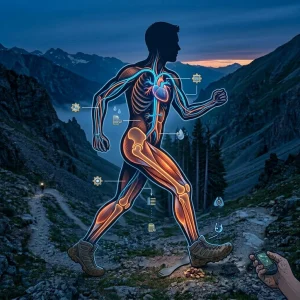

Discover the science of thru-hiking and its physiological effects. Master cardiorespiratory, metabolic, and musculoskeletal adaptations on the trail.
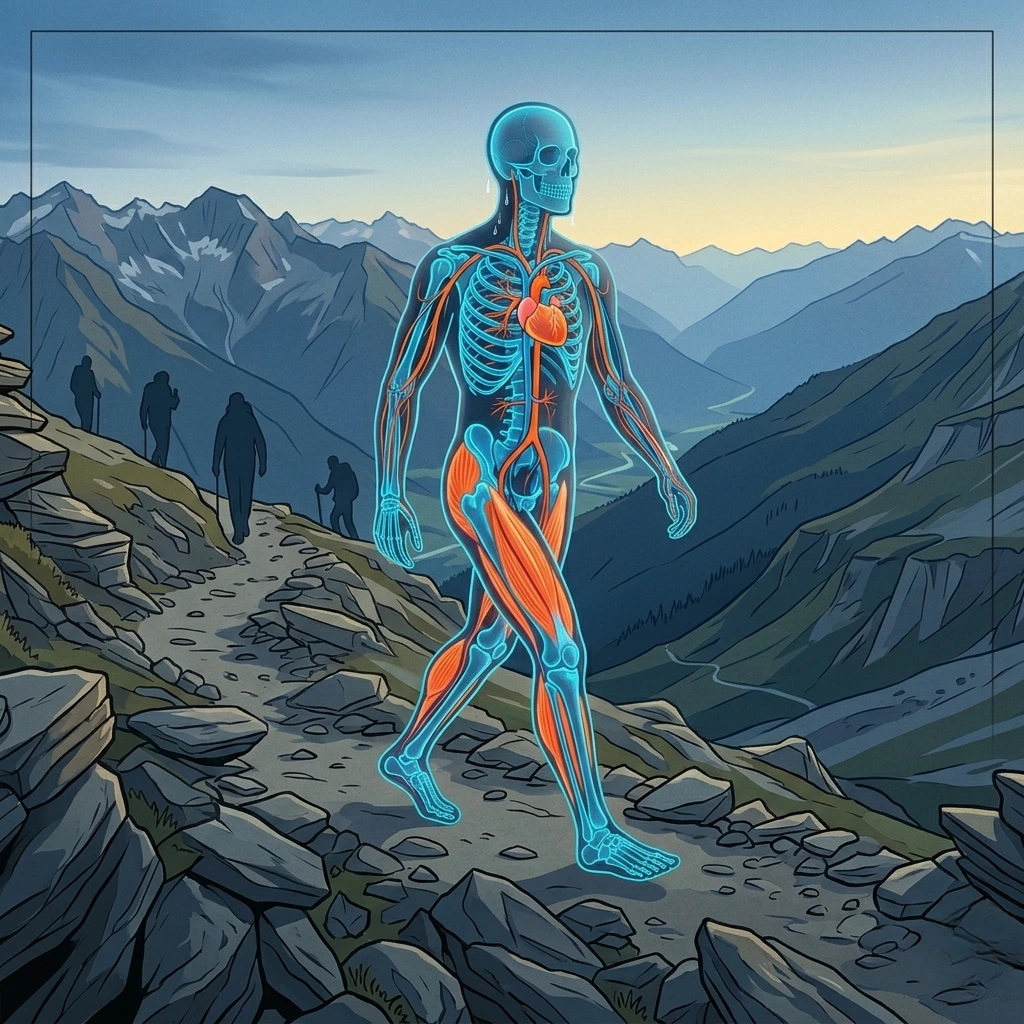
Table of Contents
Metabolic Adaptation: The Caloric Deficit and Energy Efficiency
The science of thru-hiking is fundamentally a study of human metabolic resilience under prolonged physical stress. Walking 15 to 30 miles daily with a loaded pack forces the body into an extreme energetic state. To calculate the daily energy expenditure of a thru-hiker, physiologists use variations of the Harris-Benedict equation for Basal Metabolic Rate ($BMR$) multiplied by an activity factor, or they directly measure oxygen consumption ($VO_2$) over time. This metabolic baseline can be modeled as:$$BMR = 10w + 6.25h – 5a + s$$
Where:
- $w$ is the body mass in kilograms.
- $h$ is the height in centimeters.
- $a$ is the age in years.
- $s$ is a constant (+5 for male, -161 for female physiology).
During the first several weeks of a thru-hike, the body typically experiences a sustained caloric deficit. Because carrying more than 2 pounds of food per day is a logistical challenge, most hikers cannot consume enough calories to offset their active output. This deficit triggers glycogen depletion, prompting the liver to initiate gluconeogenesis and beta-oxidation—the breakdown of fat stores into usable ketones for cellular energy. Over time, the body adapts by increasing its metabolic efficiency. This adaptation reduces the energetic cost of movement, allowing the hiker to perform the same physical work with a lower oxygen cost. Understanding this metabolic stabilization is a key element of any Bikepacking Training Plan designed to build long-term muscular endurance.
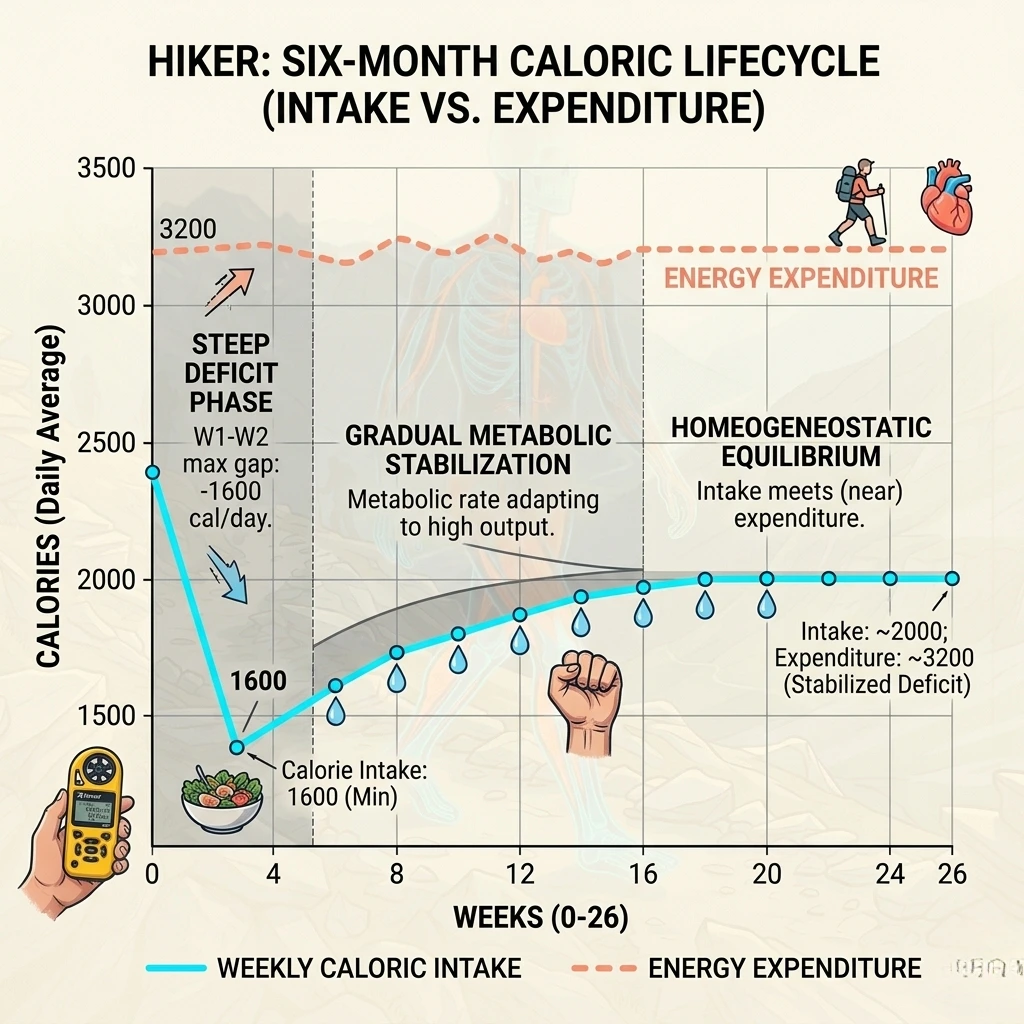
To prevent muscle catabolism—the process where the body breaks down its own muscle tissue for amino acids—a thru-hiker must manage their macronutrient distribution. Consuming highly portable, protein-dense meals is required to maintain muscle protein synthesis (MPS) on the trail. This nutritional strategy is analyzed extensively in our Hiking Nutrition Guide. According to a study published by the National Institutes of Health (NIH), athletes who prioritize protein pacing experience significantly less lean tissue loss during multi-month endurance events. This biological preservation ensures that the hiker can maintain physical power over thousands of miles.
Cardiovascular and Respiratory System Plasticity
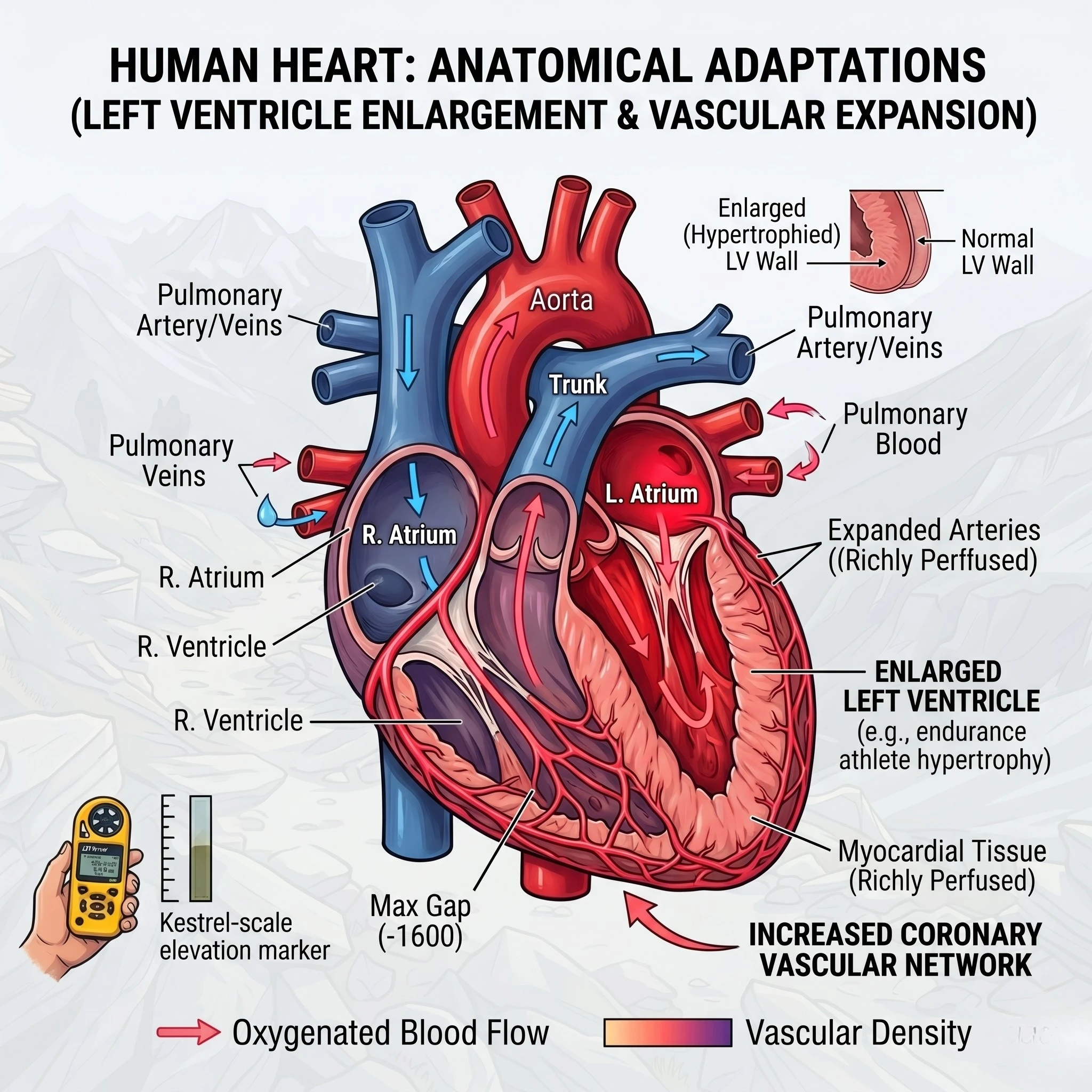
The cardiorespiratory system undergoes major structural and functional remodeling during a long-distance hike. The constant, low-intensity aerobic demand—typically falling within Zone 1 and Zone 2 heart rate thresholds—promotes cardiovascular plasticity. This aerobic base building is similar to the physiological goals outlined in our Soft Hiking Guide. The primary adaptational shift is an increase in left ventricular chamber size, which directly increases the heart’s stroke volume ($SV$).
According to the Fick Equation, maximum oxygen uptake ($VO_{2}\text{ Max}$) is the product of cardiac output ($Q$) and the arterio-venous oxygen difference ($\Delta a\bar{v}\text{O}_2$):$$VO_{2}\text{ Max} = Q \times \Delta a\bar{v}\text{O}_2$$
Since cardiac output ($Q$) is the product of stroke volume ($SV$) and heart rate ($HR$), an increase in stroke volume allows the heart to deliver the same volume of oxygenated blood to the working muscles with fewer beats per minute. This adaptation explains the marked decrease in resting heart rate observed in thru-hikers after several weeks on the trail.
Simultaneously, the respiratory system undergoes localized adaptations. The diaphragm and intercostal muscles increase their strength and endurance, reducing the oxygen cost of breathing. At higher elevations, where the partial pressure of oxygen drops, the kidneys secrete erythropoietin (EPO) to stimulate red blood cell production, increasing the oxygen-carrying capacity of the blood. This process, known as hematological acclimatization, is a critical variable when following a Trail Elevation Prep Guide. These changes ensure that the cardiorespiratory system can support the physical demands of high-altitude mountain passes without suffering from acute hypoxia.
Neuromuscular and Musculoskeletal Remodeling
The physical impact of carrying a loaded pack over thousands of steps daily forces the skeletal and muscular systems to remodel. Bone is a dynamic tissue that responds to mechanical loading by depositing calcium salts along lines of stress, a biological phenomenon known as Wolff’s Law. The repetitive impact of hiking increases bone mineral density in the femur, tibia, and calcaneus, making the skeletal system more resilient to structural fractures.$$\text{Bone Modeling Force} \propto \frac{\text{Load}}{\text{Surface Area}}$$
However, this remodeling process requires time. If the rate of loading exceeds the rate of bone deposition, micro-fractures can develop, leading to stress fractures.
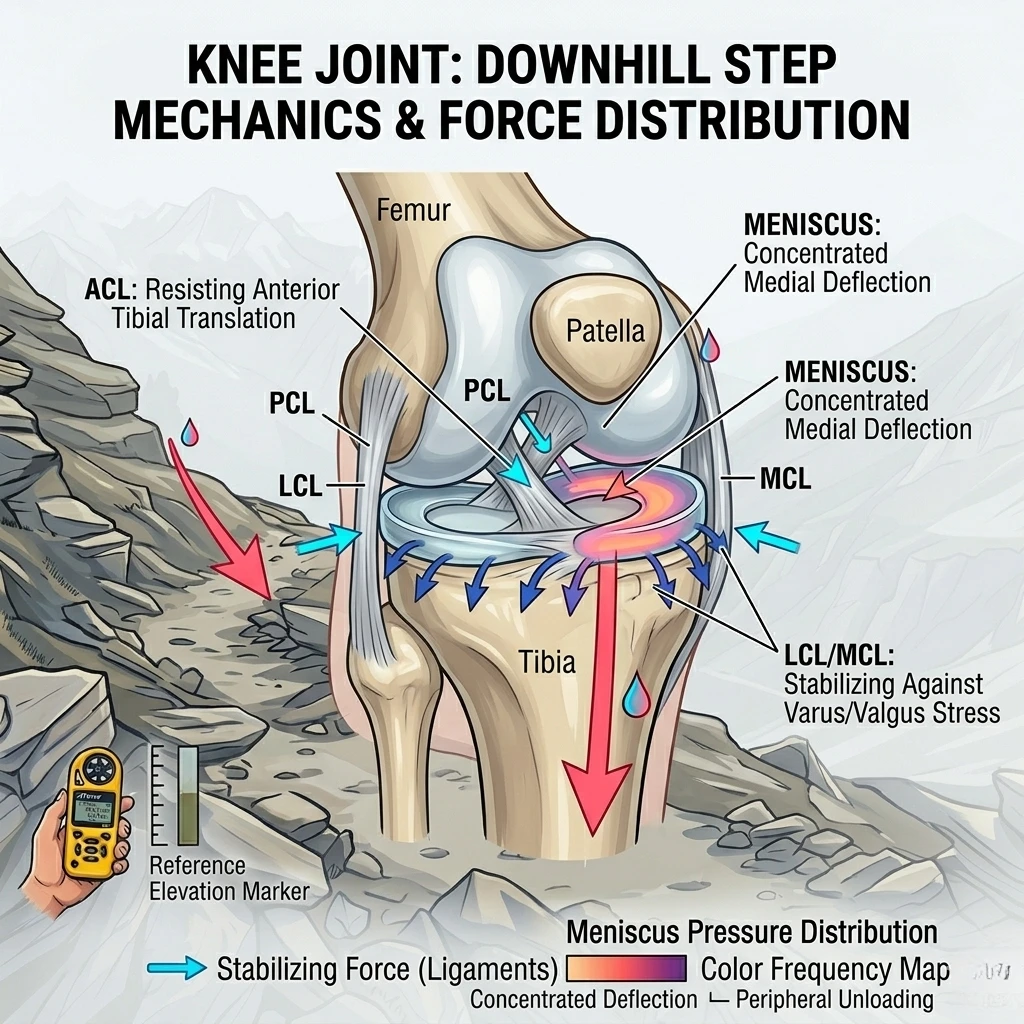
To protect the joints from this impact, the neuromuscular system improves its “proprioceptive feedback loops”—the body’s subconscious ability to sense its position in space. The stabilizer muscles around the ankle, knee, and hip joints undergo significant hypertrophy and neural recruitment. This increased motor unit synchronization allows the muscles to absorb the shock of each step before it reaches the articular cartilage of the joint. If joint pain or instability develops on technical terrain, the hiker should implement the clinical safety protocols detailed by NOLS Wilderness Medicine to manage inflammation and prevent further damage.
Muscle fibers also undergo transition. The sustained, low-tension demand of thru-hiking primarily recruits Type I (slow-twitch) muscle fibers, which are rich in myoglobin and mitochondria. These fibers adapt by increasing their density of oxidative enzymes, allowing them to burn fat and carbohydrates more efficiently. Conversely, Type II (fast-twitch) fibers, which are optimized for explosive power, may experience slight atrophy to conserve metabolic energy. This fiber transition optimizes the body for long-term endurance, although it temporarily reduces the explosive sprinting power used in high-speed sports.
Neurochemical Shift: Psychological Adaptation on the Trail
The science of thru-hiking extends beyond physical mechanics into the realm of neurobiology and cognitive psychology. Sustained immersion in natural environments induces a profound neurochemical shift that directly impacts stress levels, mood regulation, and cognitive capacity. This mental transition is the neurological foundation of the Bikepacking Mindset Guide.
When a hiker departs from urban environments, the brain’s prefrontal cortex is relieved of “directed attention fatigue”—the cognitive exhaustion caused by processing high-frequency digital inputs, traffic, and screens. This relief allows the brain to enter a state of “soft fascination,” which stimulates the default mode network (DMN). The DMN is associated with creative problem-solving, self-reflection, and long-term memory integration.
- Phytoncides and Cortisol Reduction: Trees emit organic compounds called phytoncides to protect themselves from insects. When inhaled by humans, these compounds reduce salivary cortisol levels and increase natural killer (NK) immune cell activity.
- Monoamine Regulation: The continuous, low-level physical output of hiking increases the baseline levels of dopamine, serotonin, and norepinephrine in the brain, mitigating symptoms of anxiety and depression.
- Endorphin and Anandamide Release: The “runner’s high” experienced on long days is triggered by the release of endocannabinoids (such as anandamide) and endorphins, which act as natural analgesics to block muscle pain.
- Circadian Realignment: Exposure to natural light patterns resets the suprachiasmatic nucleus, aligning the body’s cortisol and melatonin cycles with the sun.
This neurochemical reset is why thru-hikers often report a feeling of profound mental clarity and a shift in their perception of time. By disconnecting from digital stimuli, the brain is allowed to return to its evolutionary baseline of sensory awareness. This psychological resilience is a vital asset when navigating the isolation and physical discomfort of long-distance wilderness travel. To ensure that these remote spaces remain preserved for future research and enjoyment, hikers must strictly adhere to Leave No Trace Principles to minimize their ecological footprint.
Conclusion: The Ultimate Biological Transformation
The science of thru-hiking reveals that the human body is not a static machine, but an incredibly adaptive biological organism. From the metabolic shifts that optimize energy efficiency to the cardiorespiratory remodeling that increases oxygen delivery, every system of the body adapts to support the journey. While the physical toll of the trail is high, the physiological rewards—increased bone density, superior aerobic capacity, and a restored neurochemical balance—are profound.
These physical adaptations are not permanent; they are temporary responses to environmental demand. When the thru-hike concludes and the individual returns to a sedentary lifestyle, the body will gradually reverse these changes to conserve resources. However, the psychological resilience and the expanded aerobic baseline developed on the trail remain as permanent foundations of physical health. By understanding the science behind the transformation, any hiker can approach their next wilderness mission with a deeper respect for the capability of their own body.
Discover more from Maive Verse
Subscribe to get the latest posts sent to your email.