
Discover the 10 best bike multi-tools for 2026. Master trailside fixes with technical reviews of high-torque, durable tools for remote bikepacking.
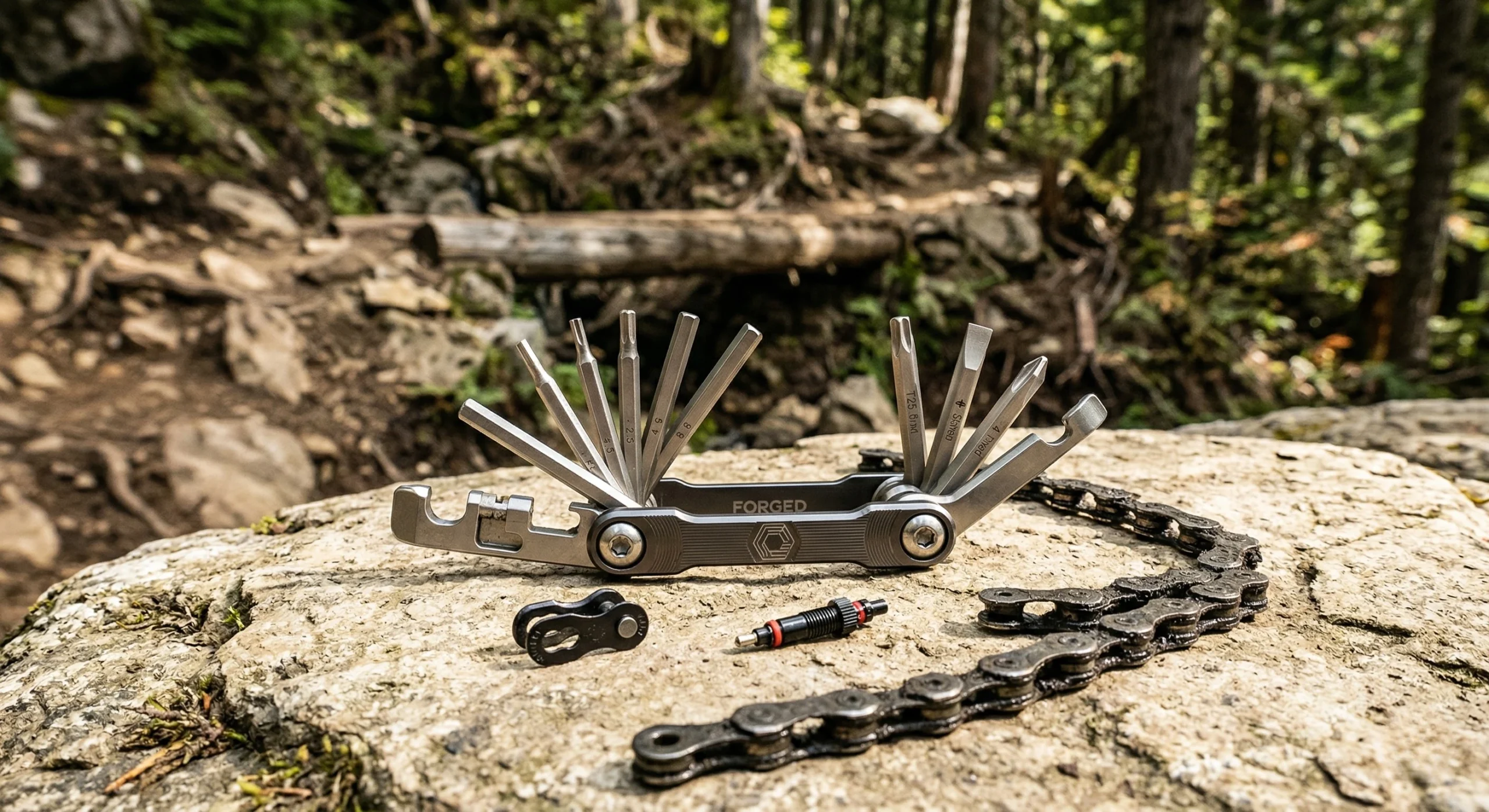
Table of Contents
Introduction: The Mechanical Mandate for Self-Sufficiency
Possessing the best bike multi-tool is a non-negotiable requirement for any rider entering the backcountry. In remote wilderness environments, a minor mechanical issue—such as a loose stem bolt or a snapped chain—can transform a high-performance expedition into a dangerous survival scenario. Unlike resort-based cycling, bikepacking demands a “moving workshop” mentality where the rider is the sole mechanic. For those following the 7 Proven Steps for Bikepacking for Beginners, mastering field repairs is the primary defense against being stranded.
The objective of a technical multi-tool is to provide the maximum number of functions with the minimum weight penalty, while maintaining enough leverage to break frozen bolts. In 2026, the industry has shifted toward modular designs and specialized bits that address the specific needs of modern Gravel Bike Benefits and technical mountain rigs. This guide provide a disciplined technical analysis of ten multi-tools that define mechanical readiness for the 2026 season. Understanding these tools is as critical as your Ultimate 3-Day Gear List.
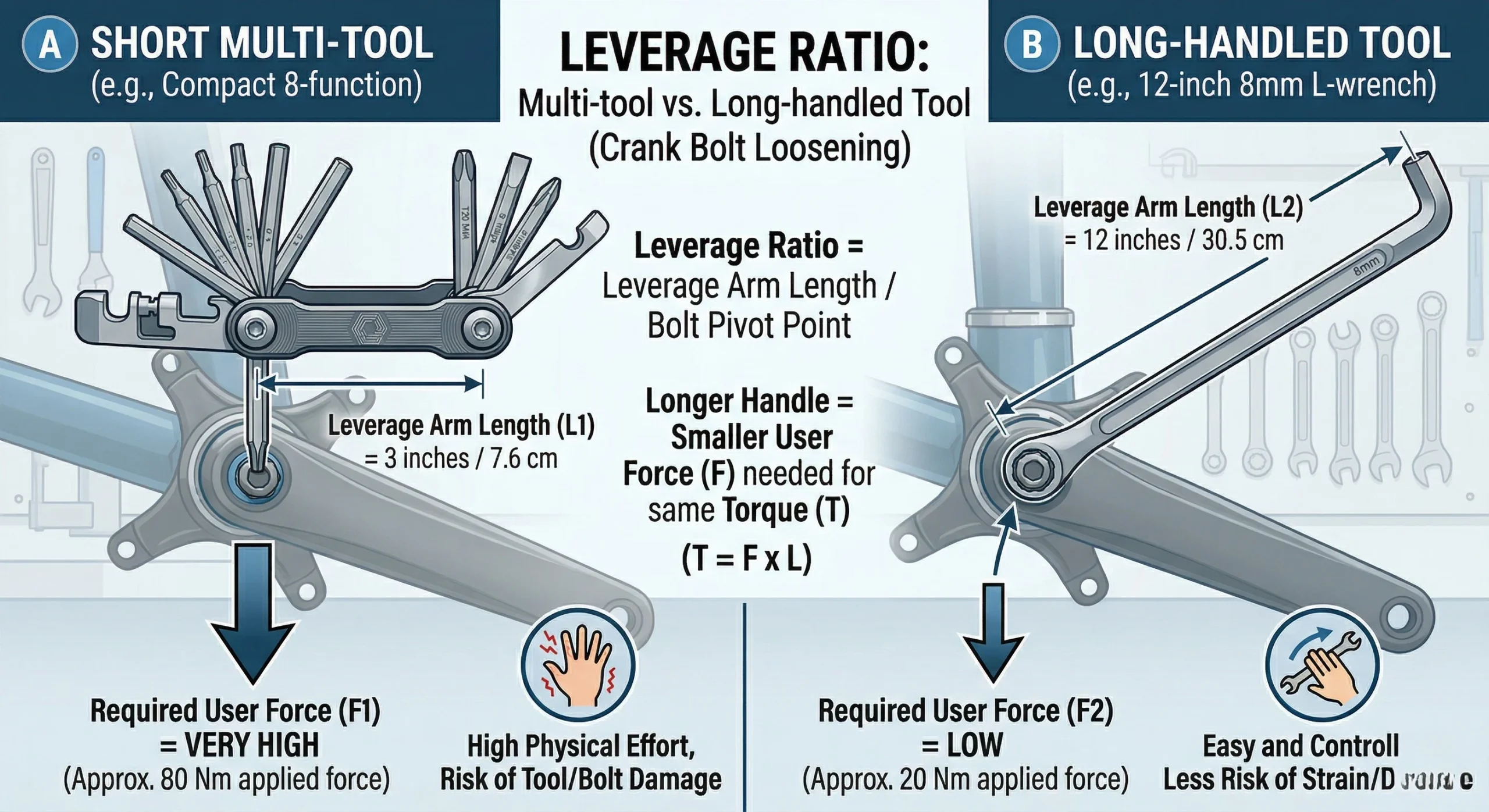
Technical Criteria for Wilderness Multi-Tools
Before selecting hardware, the rider must understand the mechanical stresses involved in trailside repair. A tool that fails under torque is a safety liability. These standards are established by mechanical experts at the Park Tool Repair Resource.
1. Metallurgy and Bit Hardness
The bits of the best bike multi-tool must be constructed from high-tensile materials, typically S2 tool steel or chrome-vanadium. S2 steel is preferred for bikepacking because it resists rounding off under high pressure, which is essential when adjusting Gravel Bike Pedals. Lower-quality alloys can deform, permanently damaging the bolt head and making future repairs impossible.
2. Corrosion Resistance for Remote Use
Remote travel often involves Wet Weather Bikepacking. Tools with stainless steel components or electrophoresis coatings prevent rust from seizing the pivot points. A rusted multi-tool loses its mechanical utility and can contaminate other gear in your Bikepacking Bag.
3. Ergonomics and Cold-Weather Handling
Repair scenarios often occur when the rider is fatigued or cold. The tool body must provide a secure grip, even when wearing gloves or when the tool is covered in chain lubricant. “Slim” tools are efficient for packing but often provide poor ergonomics for high-torque applications. This is a critical factor for maintaining a Bikepacking Mindset during stressful repairs.
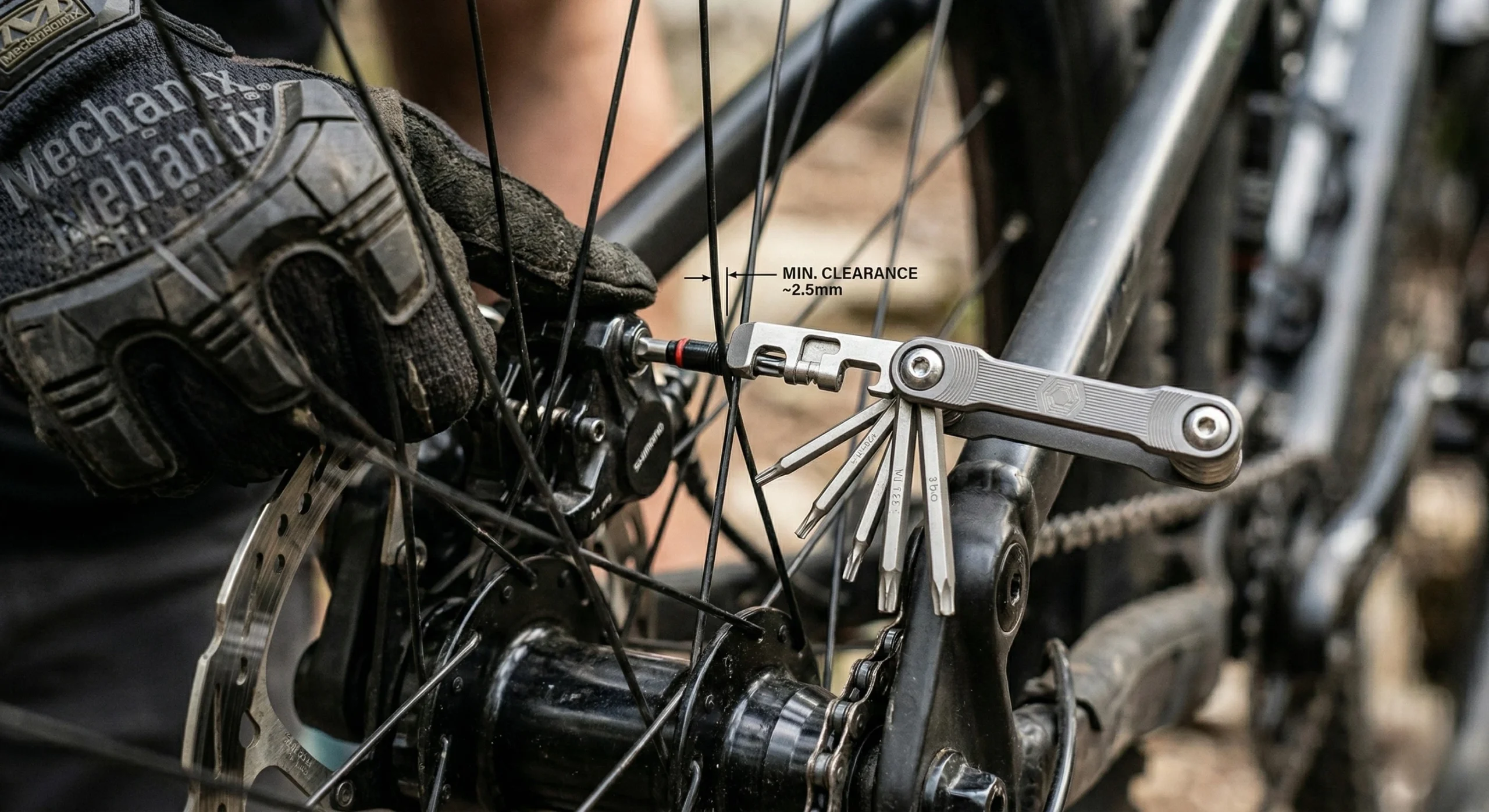
Essential Bits: The Core Functional Requirements
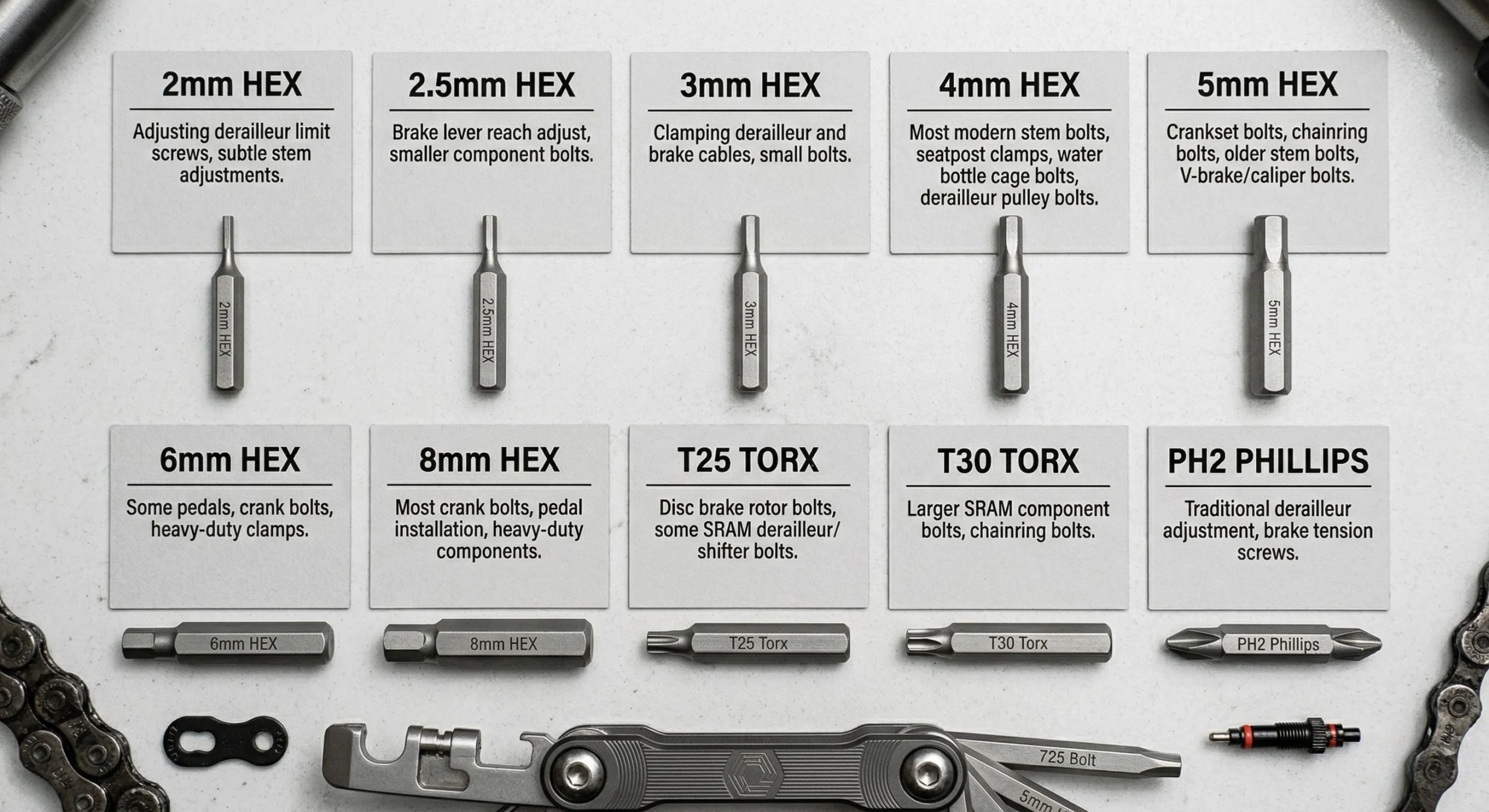
A bikepacking-specific tool must include a specific array of bits to address 95% of common failures. Missing a single 2.5mm hex key can render a tool useless if your Off-Road Navigation mount comes loose.
- Hex Keys (2mm – 8mm): The 4mm and 5mm are the most used, but an 8mm is required for pedal removal and crank arm tightening.
- Torx T10, T25, T30: T25 is the standard for disc rotor bolts. T30 is common on modern chainring bolts.
- Chain Breaker: A mandatory tool for Solo Bikepacking Safety to remove damaged links.
- Spoke Wrenches: Essential for truing a wheel after a high-impact rock strike on Rugged Terrain.
1. Crankbrothers M19 (Best Overall for Durability)
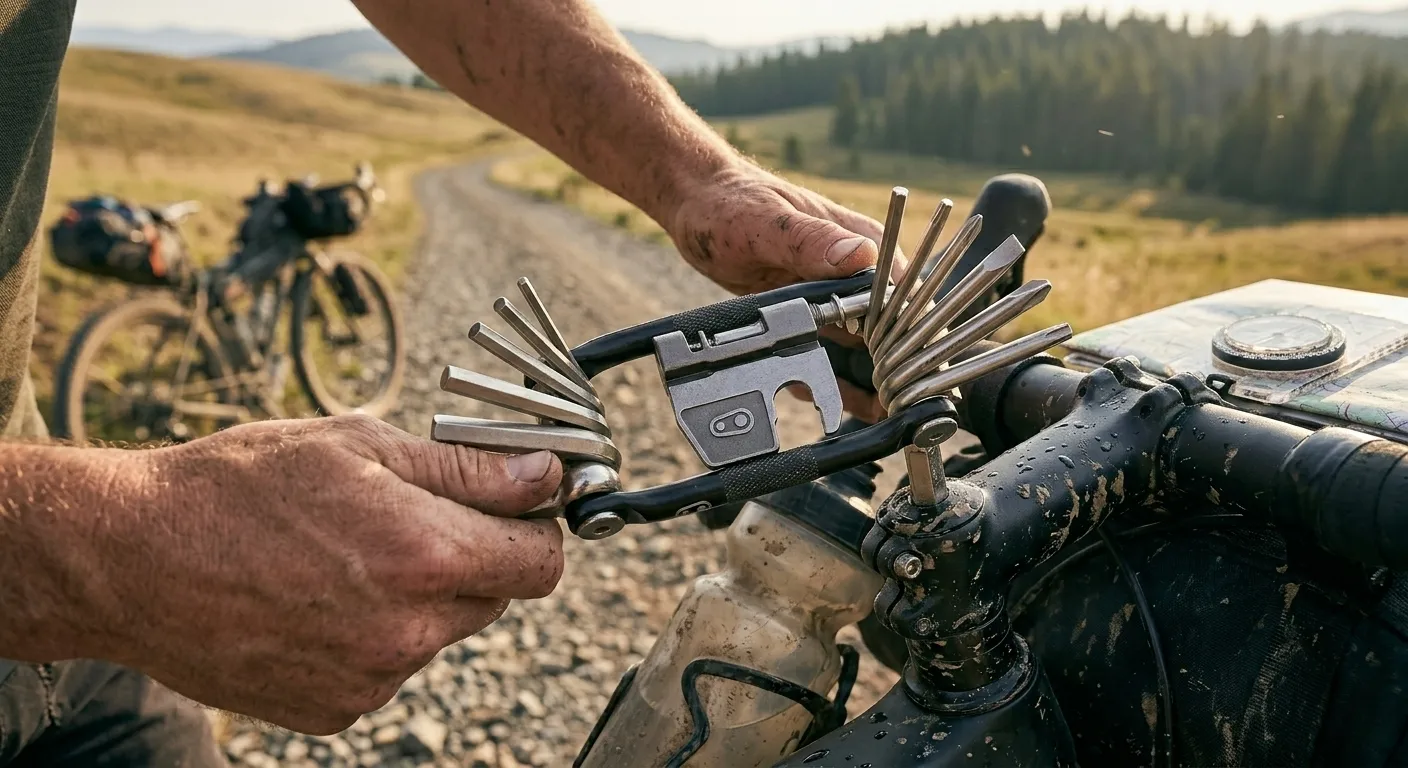
The Crankbrothers M series is a historical benchmark in the best bike multi-tool category. The M19 model offers a comprehensive selection of tools housed in a high-tensile steel frame.
Key Features
- Body: High-tensile steel frame with textured side grips.
- Chain Tool: 8/9/10/11/12-speed compatible.
- Case: Includes a stainless steel/polymer tool flask.
Pros
Cons
2. Topeak Alien III (Best for Complex Repairs)
The Alien III utilizes a unique two-piece design that allows the tools to be separated. This provides the functionality of two independent tools, which is helpful when one side must hold a nut while the other turns a bolt.
Key Features
- Design: Two-piece snap-together stainless steel frame.
- Specialty Tools: Includes a serrated knife and a pedal wrench.
- Bit Count: 31 total functions.
Pros
Cons
3. Lezyne Super SV 23 (Best for Weight-Conscious Racers)
Lezyne focuses on CNC-machined precision and minimalist design. The Super SV 23 is one of the best bike multi-tools for those using a Budget Bikepacking Setup who need a light but capable tool.
Key Features
- Construction: CNC-machined aluminum side plates and stainless steel bits.
- Integration: Features a built-in CO2 inflator head and tubeless plug tool.
- Dimensions: Ultra-slim profile.
Key Features
Pros
- Incredibly lightweight; virtually disappears in a Bikepacking Frame Bag.
- Stainless bits are 100% immune to trailside rust.
- Includes a T30 Torx bit, required for many modern Gravel Bike components.
Cons
- Short bits can make reaching recessed bolts difficult.
- The small size provides limited leverage for high-torque tasks.
Check Details: Lezyne CNC Engineering
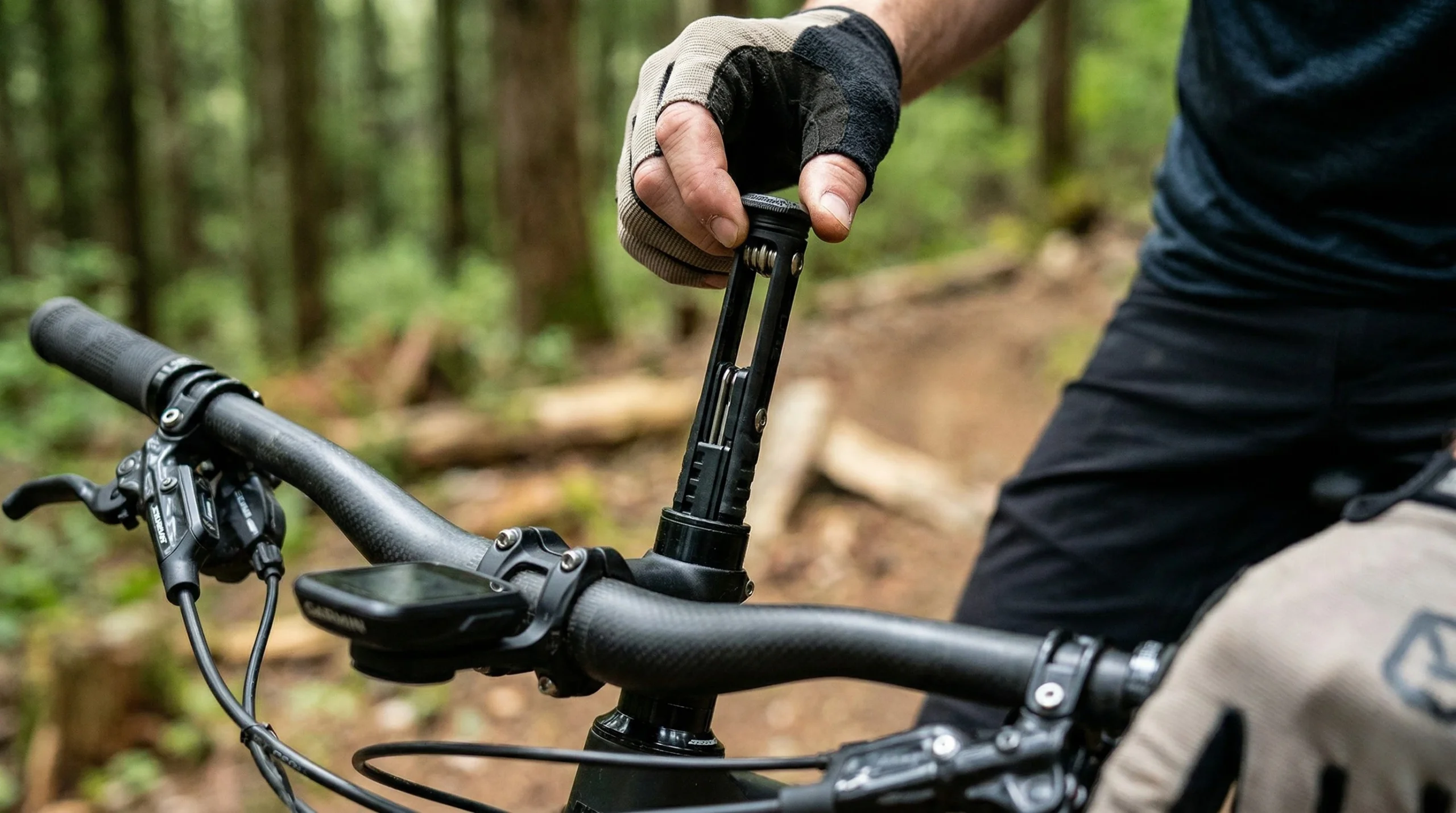
4. OneUp Components EDC V2 (Best for On-Bike Storage)
The Everyday Carry (EDC) system is a mechanical innovation that hides the tool inside the bicycle’s steerer tube. This ensures the best bike multi-tool is always with the bike and cannot be forgotten.
Key Features
- Storage: Fits inside the headset or a specialized pump.
- Bits: 10 functions including a chain breaker and quick-link storage.
- Weight: 227 grams (total system).
Pros
- Zero setup time; tool is always accessible at the cockpit.
- Leaves more room in your Bikepacking Bags for food and hydration.
- Integrated chain-link storage is a vital redundancy.
Cons
- Installation may require “tapping” the steerer tube (specialized mechanical skill).
- Not compatible with all carbon fiber forks.
Check Price on Amazon: OneUp EDC V2 Tool
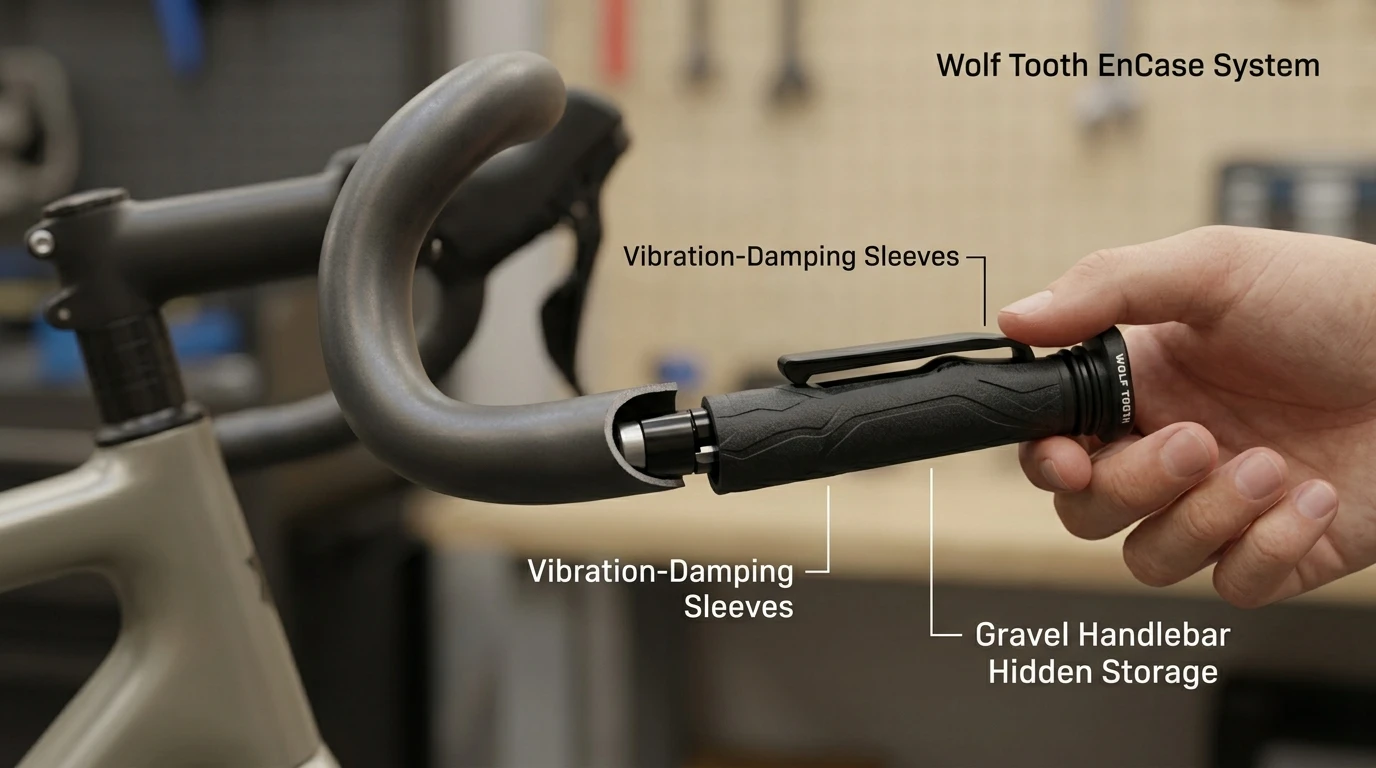
5. Wolf Tooth EnCase System (Best Modular Design)
The EnCase system utilizes the empty space inside your handlebars to store tools. This protects the multi-tool from the impacts and Wet Weather of the trail.
Key Features
- Modular: Two separate tool sleeves (Hex/Torx and Chain/Plug).
- Swivel Head: The 8mm hex bit swivels to provide a T-handle for extra torque.
- Storage: Fits inside standard mountain or gravel bars.
Pros
- The swivel head provides the best leverage of any tool in this category.
- Integrated tubeless plug kit is essential for Puncture Management.
- Protects the tool bits from grit and moisture.
Cons
- Requires bar-end plugs to be removed for access.
- Will not fit bars with extremely tight bends.
Check Details: Wolf Tooth EnCase Standards
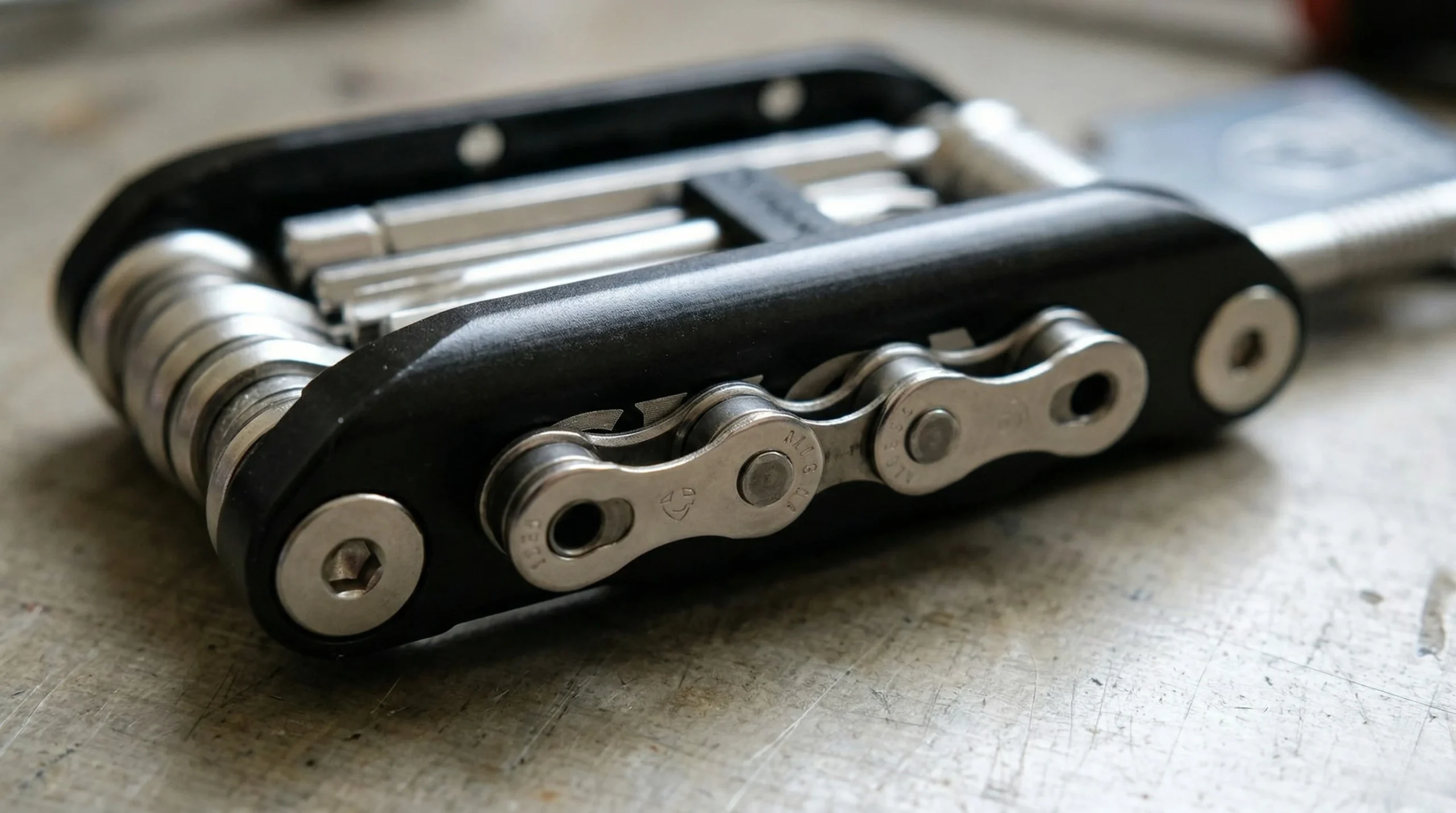
6. Silca Venti (Best for Precision and Finish)
Silca is known for professional-grade workshop tools. The Venti is their interpretation of the best bike multi-tool for travelers who prioritize bit precision and frame safety.
Key Features
- Bits: Cold-forged stainless steel.
- Magnetic Design: Side plates are magnetic to hold spare chain links.
- Leverage: Longer-than-average tool body.
Pros
- Tightest tolerances in the industry; bits will not slip in the bolt.
- Magnetic link storage prevents the loss of small parts in the dirt.
- Low profile prevents it from snagging in your Bikepacking Bag.
Cons
- Does not include a chain breaker (must be purchased separately).
- Highest price point for the number of tools provided.
Check Price on Amazon: Silca Venti Multi-Tool
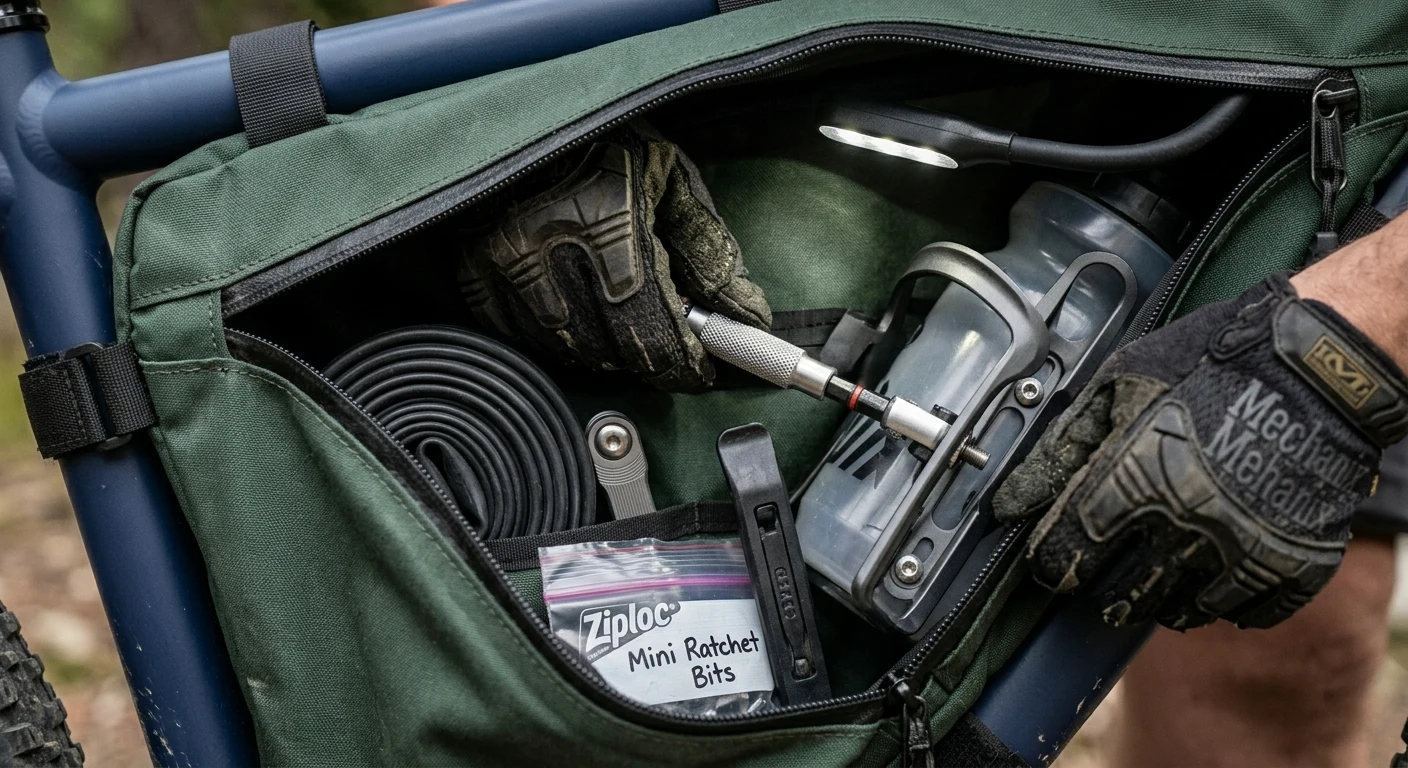
7. Topeak Ratchet Rocket Lite DX+ (Best for Tight Clearances)
For riders who struggle with the ergonomics of folding multi-tools, the Ratchet Rocket provides a miniature ratchet wrench and independent bits. This is the best bike multi-tool for reaching hidden bolts in Technical Suspension Systems.
Key Features
- Action: Fine-tooth ratchet with reverse lever.
- Storage: Includes a nylon carrying case.
- Leverage: Extensions provided for the ratchet handle.
Pros
- Much faster for adjusting multiple bolts (e.g., rack installation).
- Independent bits are easier to use in narrow gaps between the frame and bags.
- High-quality chrome-vanadium construction.
Cons
- Bits are easy to lose on the trail; requires a disciplined Trail Routine.
- Ratchet mechanism is susceptible to sand and grit failure.
Check Price on Amazon: Topeak Ratchet Rocket Lite
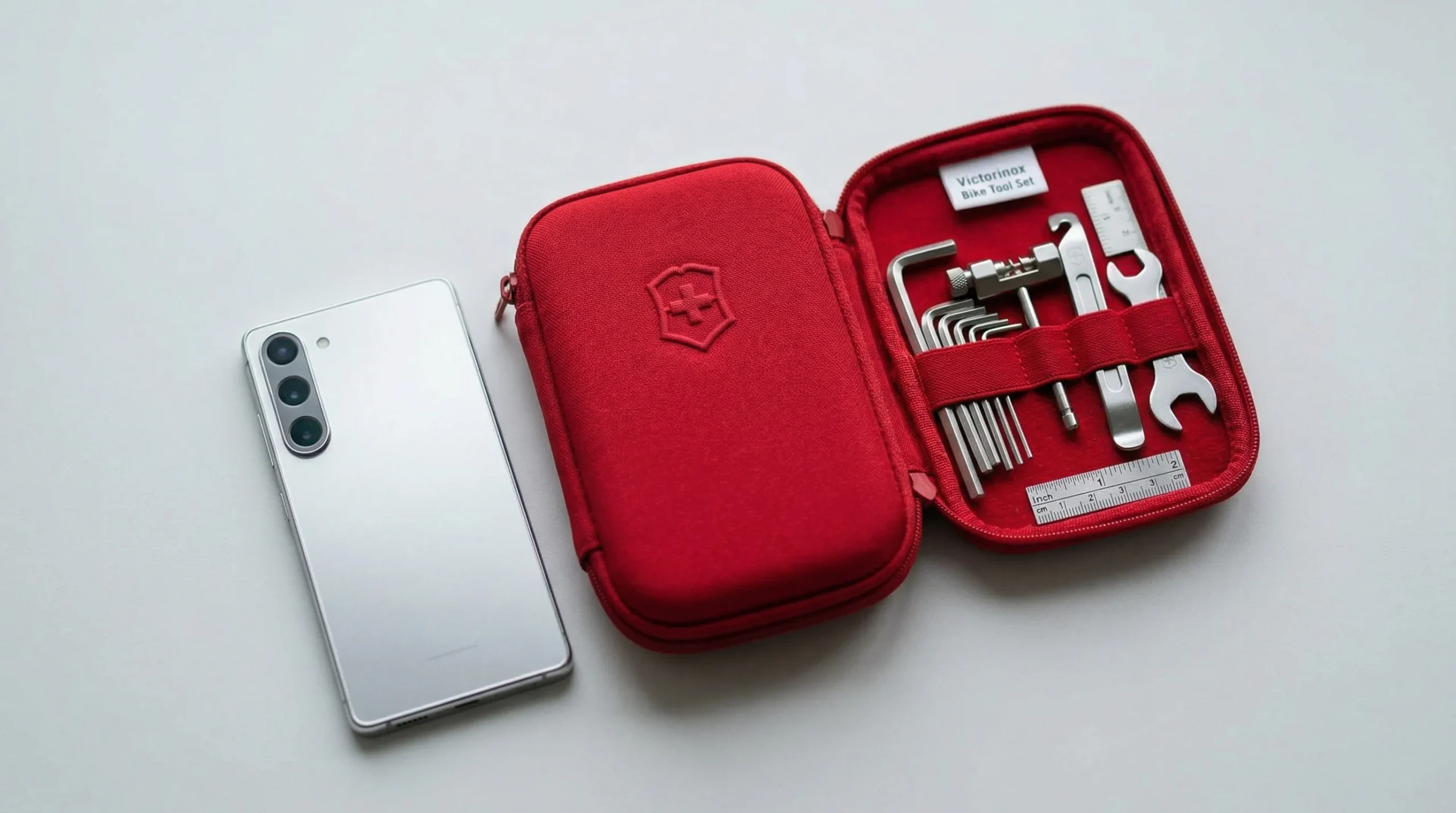
8. Victorinox Bike Tool (Best for General Utility)
Manufactured in Switzerland, this tool brings the quality of a Swiss Army Knife to the cycling world. It is a minimalist’s best bike multi-tool, focusing on the essentials with surgical precision.
Key Features
- Body: High-impact polymer casing.
- Mechanism: L-wrench bit holder and tire levers.
- Size: Smaller than a deck of cards.
Pros
- The L-wrench provides excellent feel for delicate torque settings.
- Included tire levers are strong enough for Mastering Every Snow Condition tire swaps.
- Incredibly durable and simple; no hinges to fail.
Cons
- Lacks a chain breaker and Torx T30.
- Bit storage can become loose over time.
Check Price on Amazon: Victorinox Bike Tool
9. Granite Design Stash Chain Tool (Best Chain Specialist)
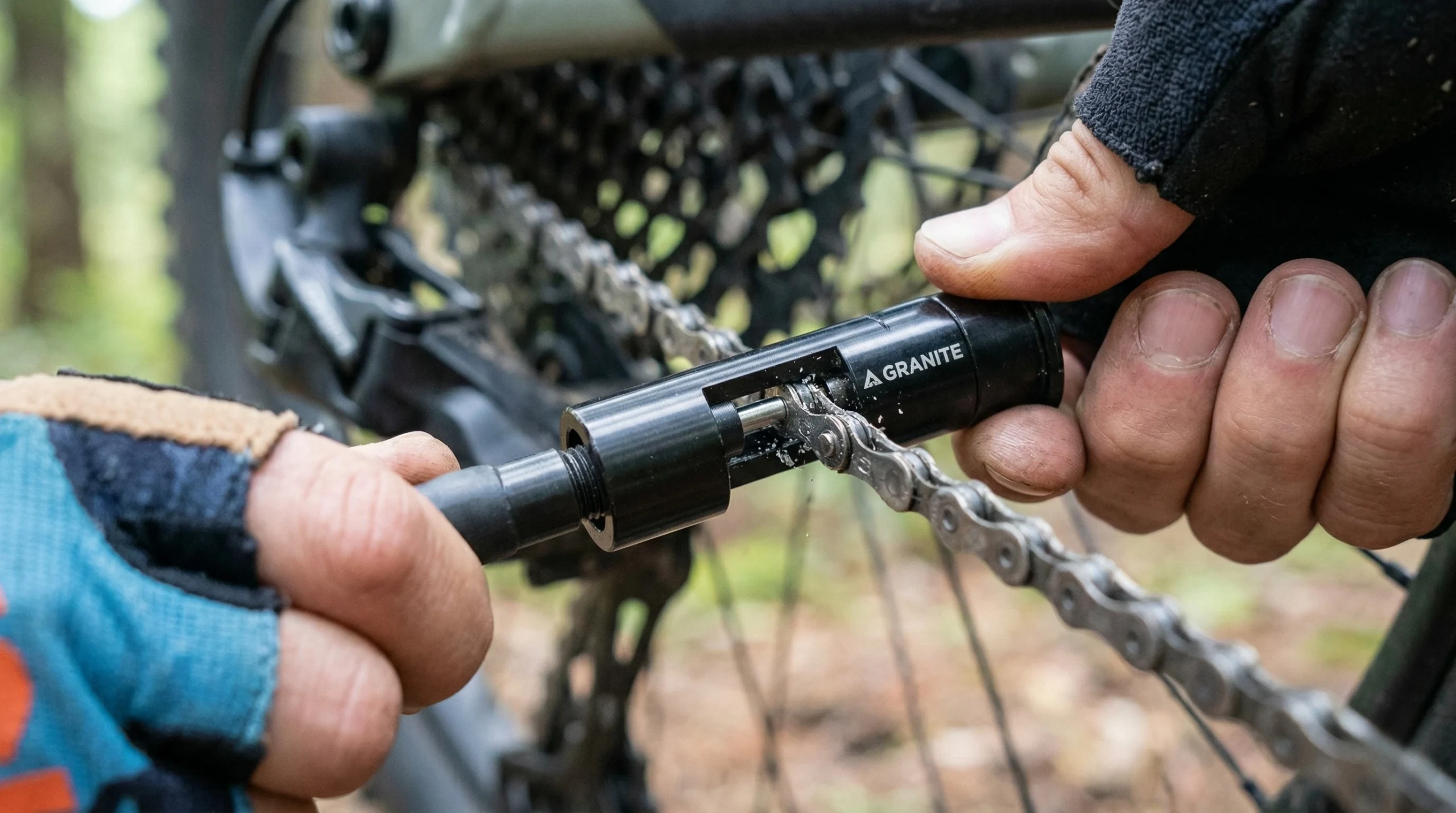
For riders who already have a basic set of hex keys, the Stash Chain Tool provides a professional-level chain breaker that hides in your handlebar. It is a critical component for Solo Safety Readiness.
Key Features
- Integration: Hides inside the handlebar or crank axle.
- Bits: Includes a 4mm hex to operate the breaker.
- Material: 7075 Aluminum alloy.
Pros
- Much more robust than the breakers found on standard multi-tools.
- Compatible with all chains up to 12-speed.
- Does not take up space in your Bikepacking Gear List.
Cons
- Only serves one function (chain repair).
- Adds weight to the ends of the bars, which can affect Bike Handling.
Check Details: Granite Design Technical Solutions
10. Blackburn Wayside (Best for Hydraulic Brakes)
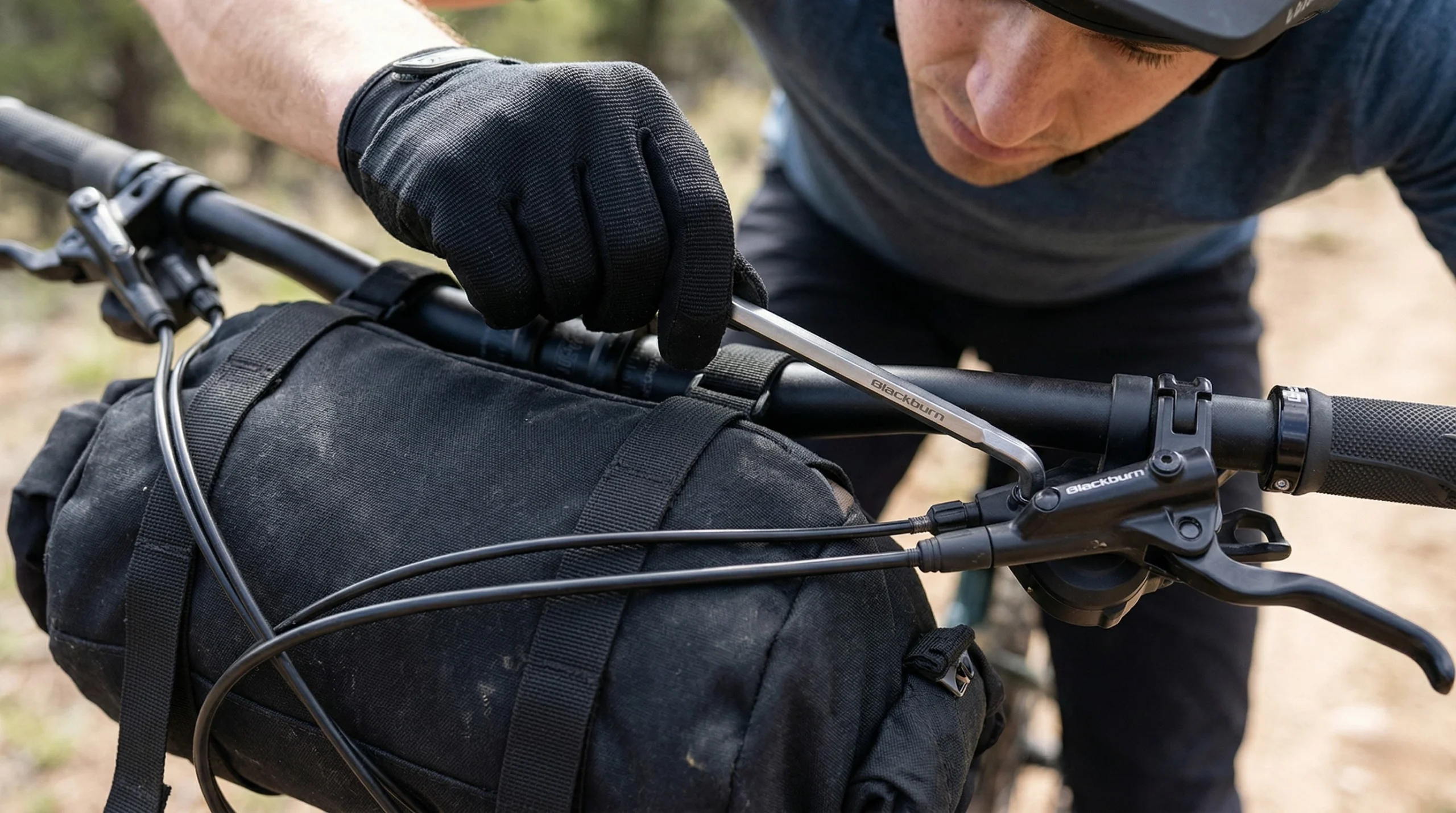
The Wayside includes a unique feature: five independent L-shaped hex keys. This provides the same usability as a workshop toolset in a portable package, making it the best bike multi-tool for adjusting hydraulic levers.
Key Features
- Design: Independent L-keys that snap into the tool body.
- Specialty Bits: Features a serrated blade and chain hook.
- Body: Rugged cast aluminum.
Pros
- Independent keys allow for reach that folding tools cannot achieve.
- The chain hook is a high-value item for solo chain repairs.
- Very high leverage for such a compact tool.
Cons
- Heavier than most folding multi-tools.
- The L-keys can become unseated if the tool is dropped.
Check Price on Amazon: Blackburn Wayside Multi-Tool (Affiliate)
Technical Comparison of the Best Bike Multi-Tools
To assist with your Bikepacking Training Plan preparations, the following table summarizes the performance metrics of the top models.
| Tool Model | Function Count | Weight (g) | Chain Breaker | Best Use Case |
|---|---|---|---|---|
| Crankbrothers M19 | 19 | 175 | Yes | All-Mountain Adventure |
| Topeak Alien III | 31 | 272 | Yes | Transcontinental Touring |
| Lezyne Super SV | 23 | 145 | Yes | Lightweight Gravel Racing |
| Wolf Tooth EnCase | 14 | 132 | Yes | Modular Hidden Storage |
| Topeak Ratchet | 12 | 164 | No | Technical Maintenance |
Logistical Repair Protocols for Remote Trails
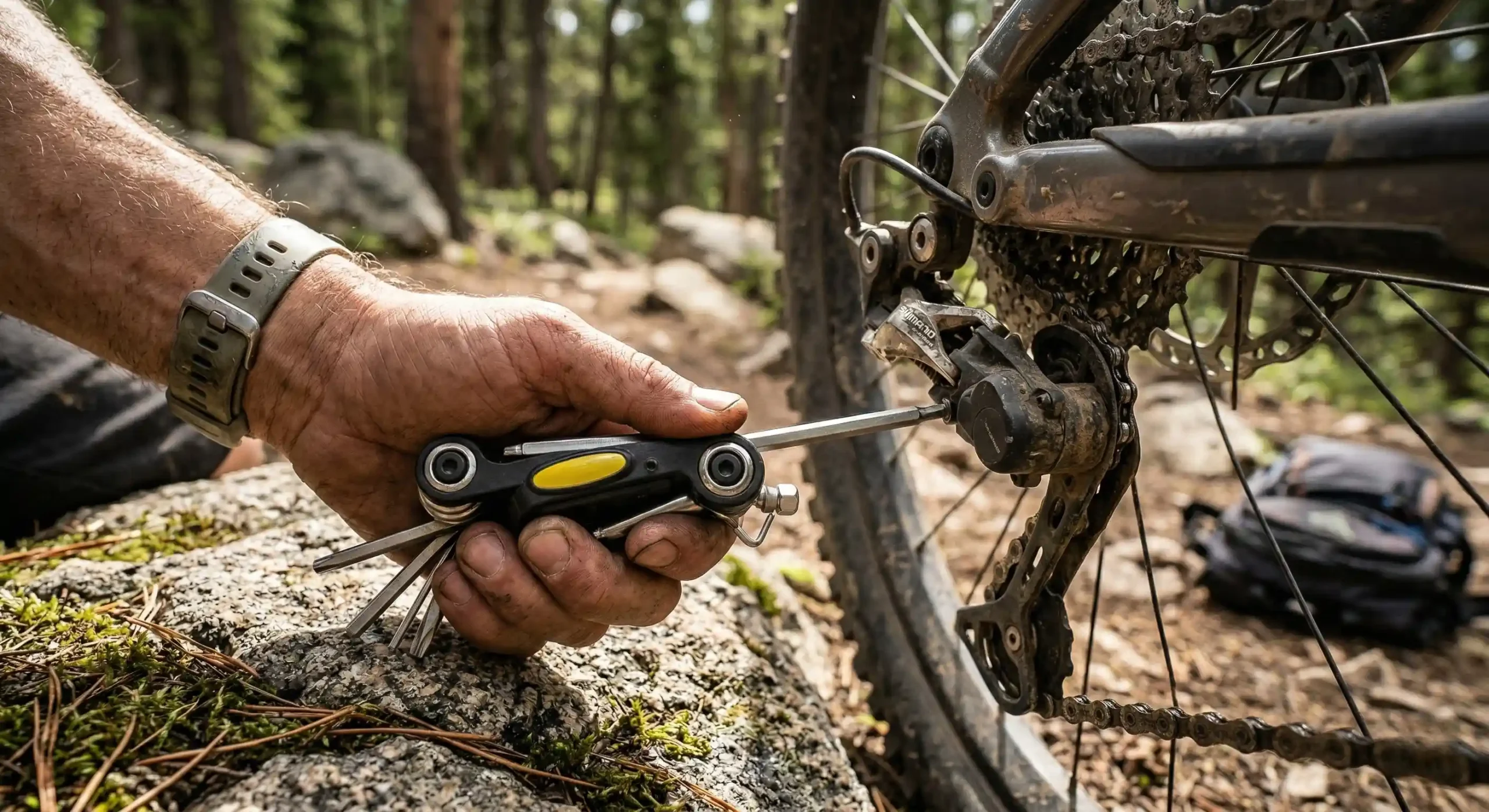
Owning the best bike multi-tool is only half of the requirement; the other half is the technical ability to use it under duress. High-frequency vibrations from Unpaved Roads can cause bolts to vibrate loose without the rider noticing.
The “Bolt Check” Protocol
Every morning before starting the ride, perform a systematic bolt check. Use your multi-tool to verify the tightness of the stem, saddle rails, and rack mounts. According to the International Mountain Bicycling Association (IMBA), preventative maintenance reduces the risk of mechanical failure by over 60%. This is a core part of the Bikepacking for Beginners safety training.
Managing Chain Failure Solo
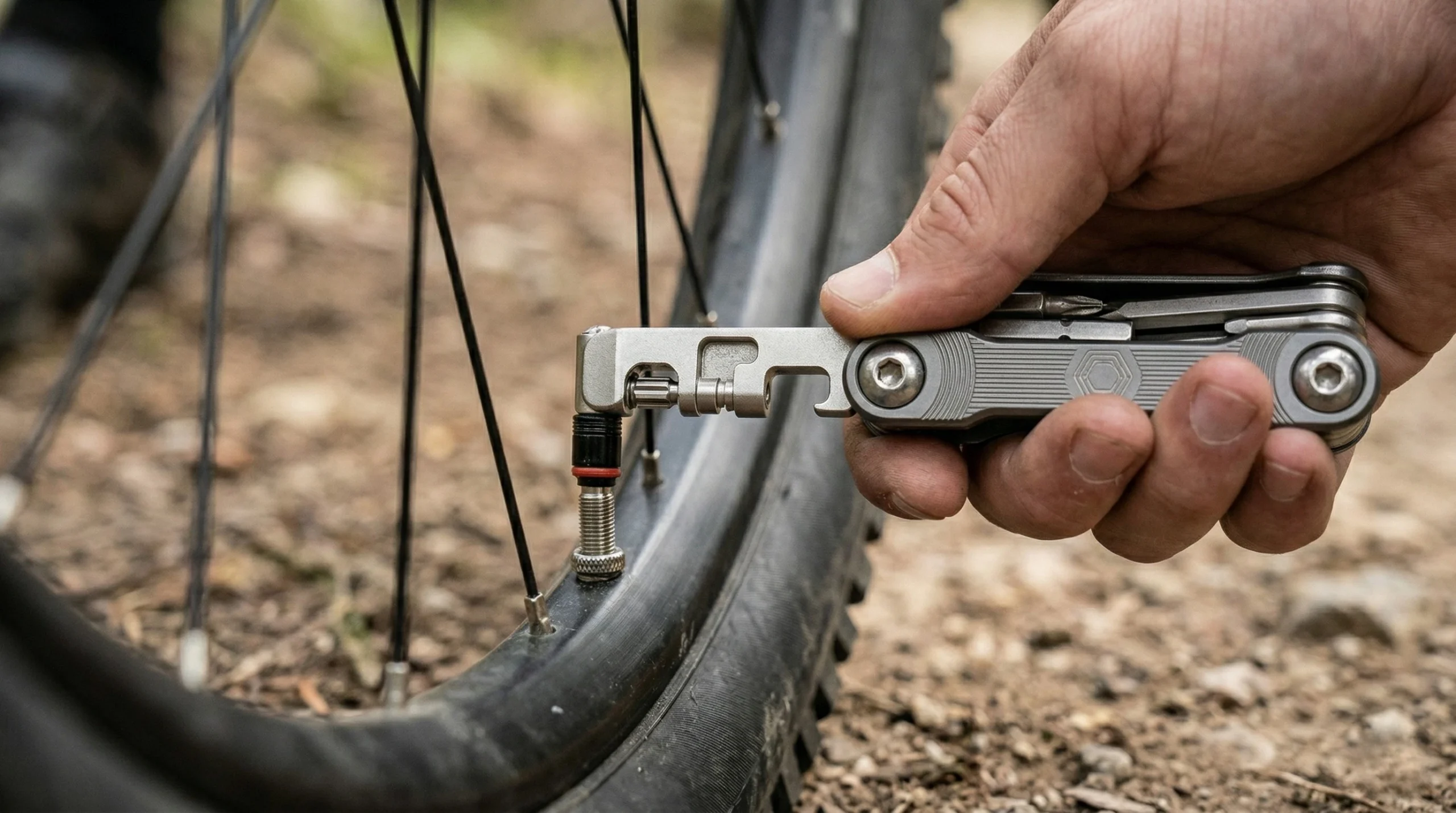
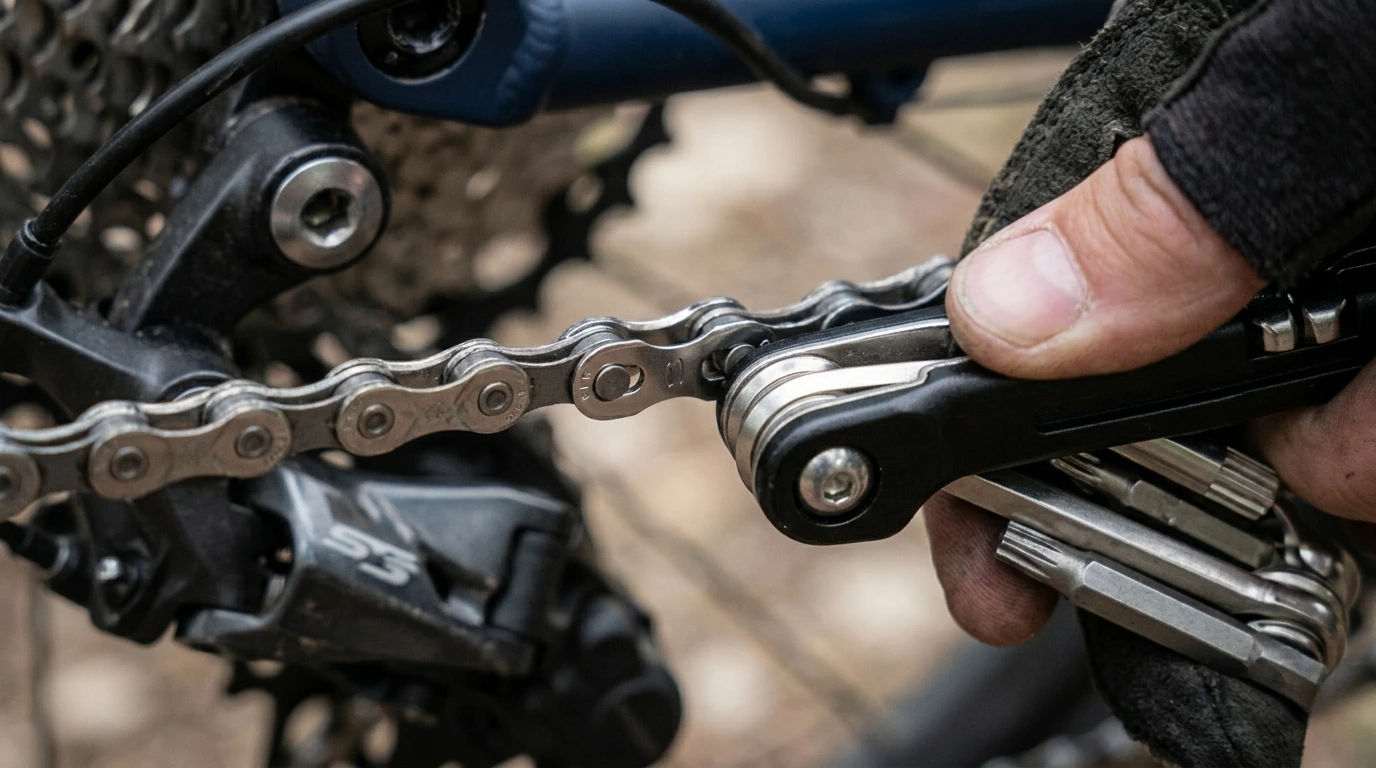
If a chain snaps, use the chain breaker to remove the damaged link. Insert a “Master Link” (Quick Link) to reconnect the chain. Carrying two spare Master Links is a mandatory safety redundancy, as emphasized in our Solo Safety Guide. Without a chain, the bike becomes a heavy “hike-a-bike” burden for the remainder of the Bikepacking Route.
Mechanical Maintenance for Multi-Tools
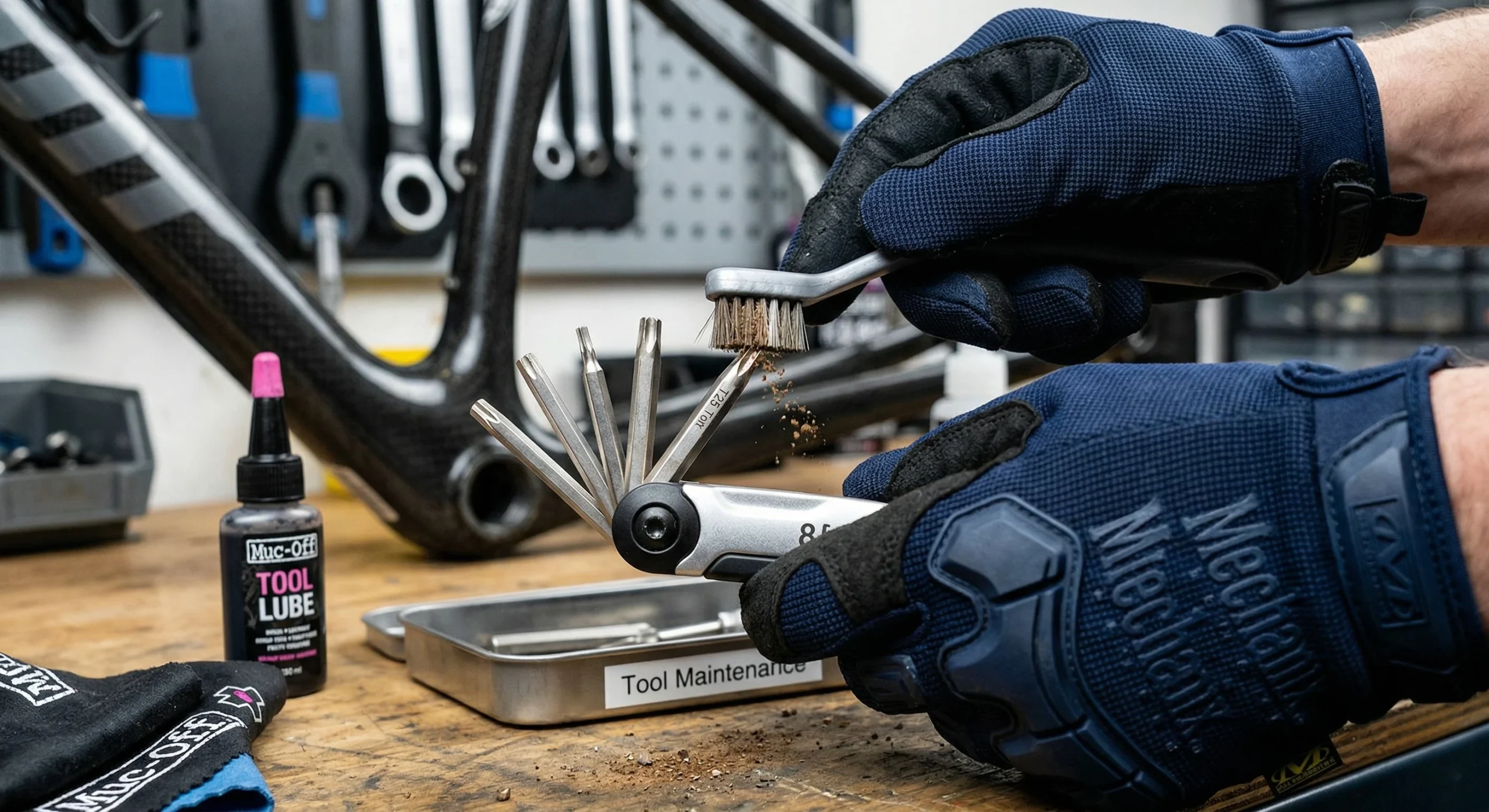
Owning a high-performance tool requires a disciplined approach to maintenance to ensure its longevity. High-vibration trails can accelerate wear at the tool’s pivot points.
- Rust Prevention: After any trip in Wet Weather, dry the tool completely and apply a light coat of WD-40 Specialist Corrosion Inhibitor to the bits.
- Pivot Tension: Periodically tighten the side plate screws to ensure the bits do not “flop” out during use.
- Bit Hygiene: Clean mud and grit from the hex heads with a soft brush to prevent “rounding” the bits during future repairs. This is a vital part of Off-Season Maintenance.
The “Redundancy” Rule: Tools Your Multi-Tool Needs
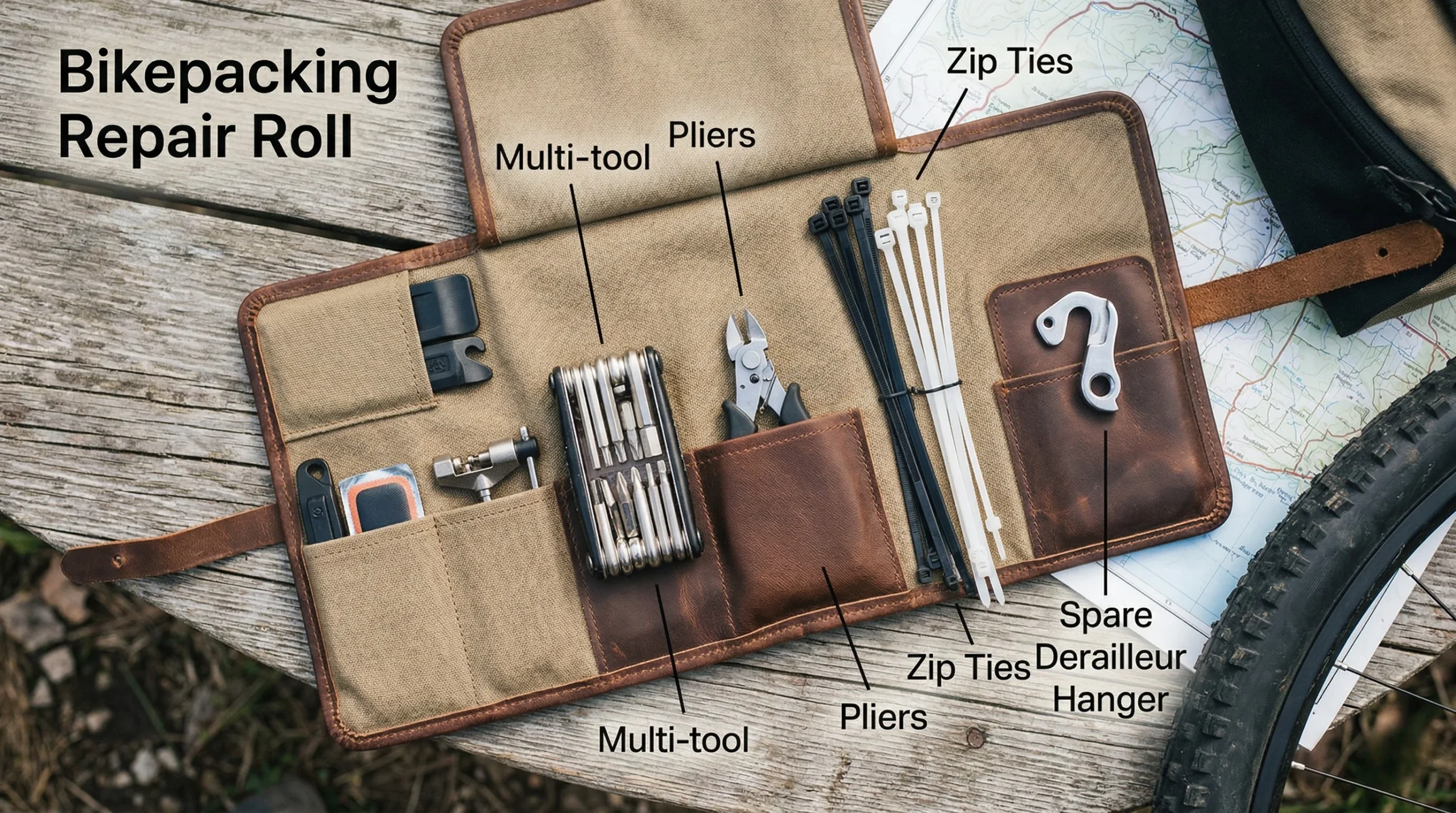
While the best bike multi-tool is powerful, it cannot fix everything. Remote self-sufficiency requires a three-tiered tool system.
- Primary Tool: Your high-quality multi-tool (e.g., Crankbrothers M19).
- Specialty Tools: Small pliers (for valve cores and Master Links) and a Water Filtration Systems for hydration.
- Repair Materials: Tire plugs, duct tape, zip ties, and a spare derailleur hanger.
According to the NOLS Wilderness Safety Standards, being over-prepared mechanically is better than being under-prepared physically. These materials should be stored in a waterproof roll inside the Bikepacking Frame Bag. This ensures that even catastrophic failures like a slashed sidewall can be managed in the field.
Ergonomics and Torque Application Technicality
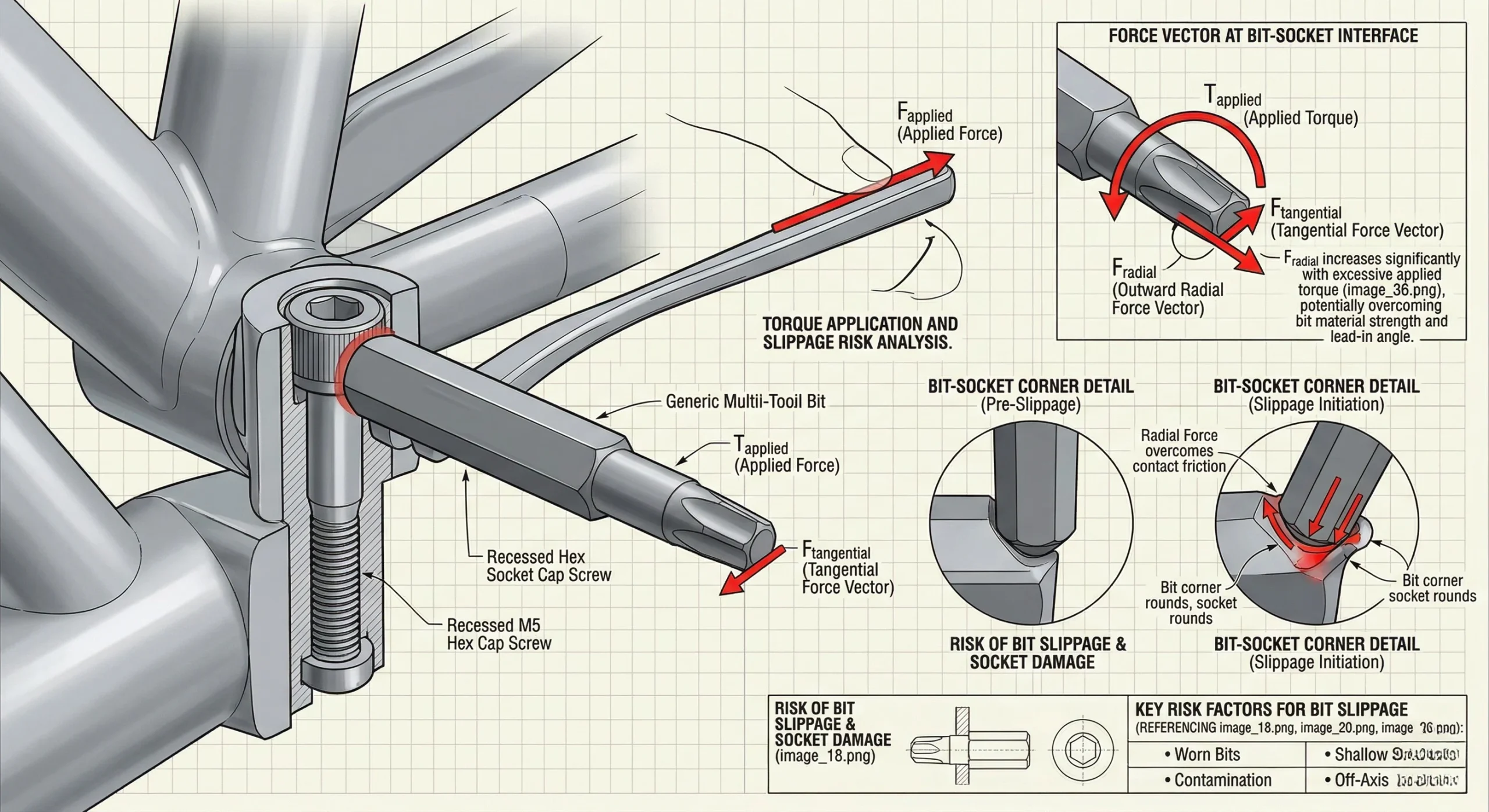
Applying high torque with a small multi-tool requires specific body mechanics to avoid slipping and injuring the hands. This is a vital safety skill for remote Bikepacking Routes.
- The “Push-Pull” Method: When loosening a tight bolt, pull the tool toward you rather than pushing away. This provides more control if the bit slips.
- Maintaining Perpendicularity: Ensure the bit is perfectly straight in the bolt head. Any tilt will increase the risk of stripping the bolt.
- Torque Awareness: For Carbon Fiber Frames, “hand-tight” is often too tight. If possible, carry a preset 5Nm torque key for critical components like seat posts.
Conclusion: Confidence through Mechanical Readiness
Mastering the selection and use of the best bike multi-tool is the final step in achieving professional-level independence. By prioritizing metallurgy (Section 1) and ensuring a comprehensive bit selection (Section 3), any rider can maintain their Bikepacking Mindset without the anxiety of equipment failure. The success of an expedition is measured by the reliability of its systems across diverse Wilderness Terrains.
Remember that a tool is only as effective as the Technical Training used to operate it. Keep your Mechanical Maintenance high and your repair skills current. As you progress from local rail-trails to remote mountain loops, your understanding of your machine’s capabilities will become your greatest asset. High-quality multi-tools allow you to focus on the trail rather than the stability of your equipment.
The wilderness is waiting, and with the right tool kit, you are ready to conquer it. Treat the environment with respect, follow Leave No Trace Principles , and enjoy the unique liberation of off-road cycling. The transition from a day-rider to a self-contained expert is a path paved with preparation. Step out with a plan, respect your machine’s limits, and embrace the unparalleled freedom of the bicycle.
Discover more from Maive Verse
Subscribe to get the latest posts sent to your email.