
Unlock perfect skiing posture with our 5-step exercise guide. Improve balance, reduce fatigue, and master the athletic stance for effortless control.
Table of Contents
Introduction: The Foundation of Control
In the world of skiing, efficiency is everything. The ability to turn smoothly, absorb bumps, and ski from first chair to last call without exhaustion relies entirely on one fundamental element: perfect skiing posture. Many intermediate skiers struggle to progress not because they lack strength or bravery, but because their stance is fundamentally flawed often sitting too far back (the “backseat”), standing too stiffly, or breaking at the waist.
Correct posture, often called the “athletic stance,” stacks the skeletal structure to support the skier’s weight effectively. This alignment allows the large muscle groups to relax and react dynamically to the terrain rather than fighting against gravity. It places the center of gravity directly over the middle of the ski, enabling instant edge engagement and powerful steering. Without this balance, even the most advanced skis will feel unresponsive and heavy.
This comprehensive guide deconstructs the biomechanics of the ideal stance, identifies common posture killers, and provides a targeted regimen of off-snow awareness exercises and on-snow drills. Whether you are preparing for your first ski day or looking to master steep black diamond terrain, these exercises are designed to lock in perfect skiing posture and dynamic balance.
Deconstructing the Athletic Stance
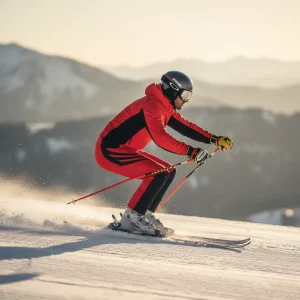
The ideal skiing posture is not a static yoga pose but a dynamic state of readiness. It allows the skier to move in any direction: up, down, forward, or lateral instantly to adjust to changing snow conditions.
The Stacked Alignment
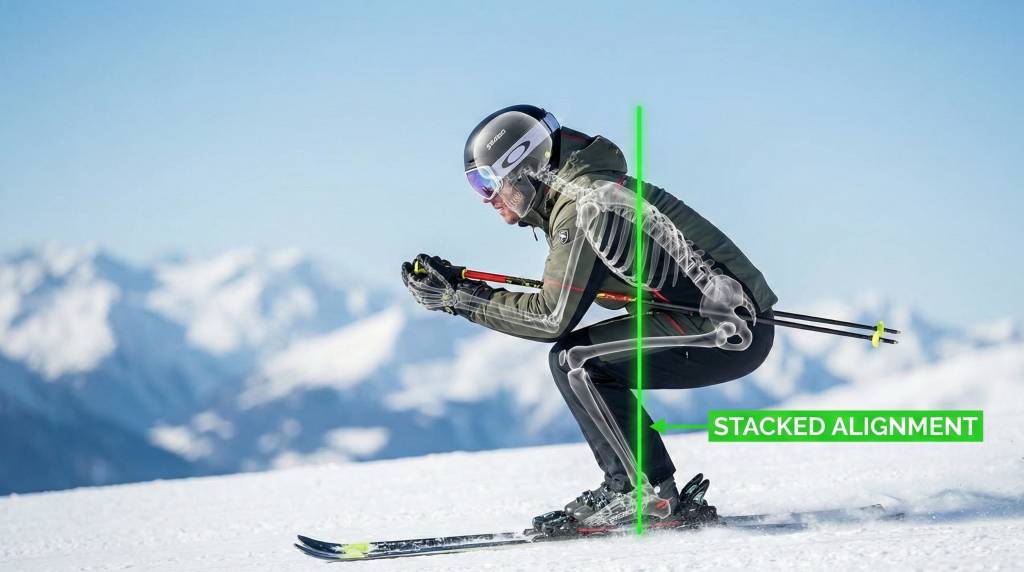
True balance is achieved when the body’s joints are “stacked” in alignment with gravity and the centrifugal forces of the turn. This stacking minimizes the muscular effort required to stand up.
- Ankles (Flexed): This is the most critical joint in skiing. The shins must press firmly against the front tongue of the boot. This “closed ankle” joint transfers energy directly to the shovel of the ski, initiating the turn.
- Knees (Flexed): The knees should be bent, positioned directly over the toes. They act as the primary suspension system, absorbing ruts and bumps.
- Hips (High and Forward): The hips should be centered over the heels, not dropped low like sitting in a chair. A common error is “sitting,” which locks the quadriceps and shifts weight to the tails, killing steering ability.
- Shoulders (Level): Shoulders should remain level to the horizon, resisting the urge to tip inside the turn.
Upper Body Discipline (The Steering Wheel)
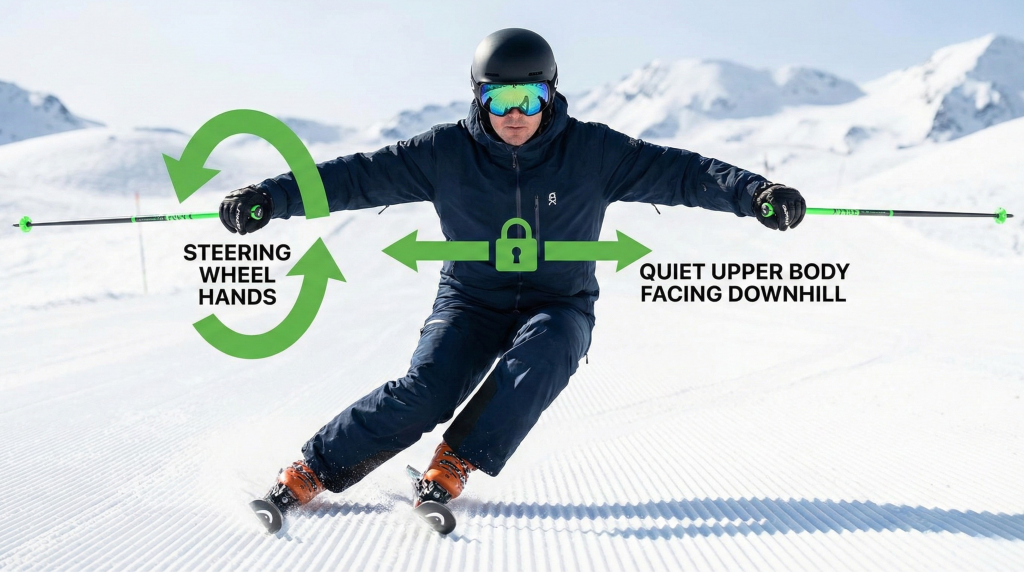
While skiing is steered with the feet, the upper body plays a crucial role in ballast and direction.
- Hands Forward: Hands should be held wide and forward, within peripheral vision, as if holding a large steering wheel or a tray of drinks. Dropping hands to the side drags the center of mass backward.
- Quiet Torso: The upper body should remain relatively quiet and facing downhill, allowing the legs to rotate independently beneath it. This separation is vital for Mastering Parallel Ski Turns.
The “Backseat” Problem: Diagnosis and Cure
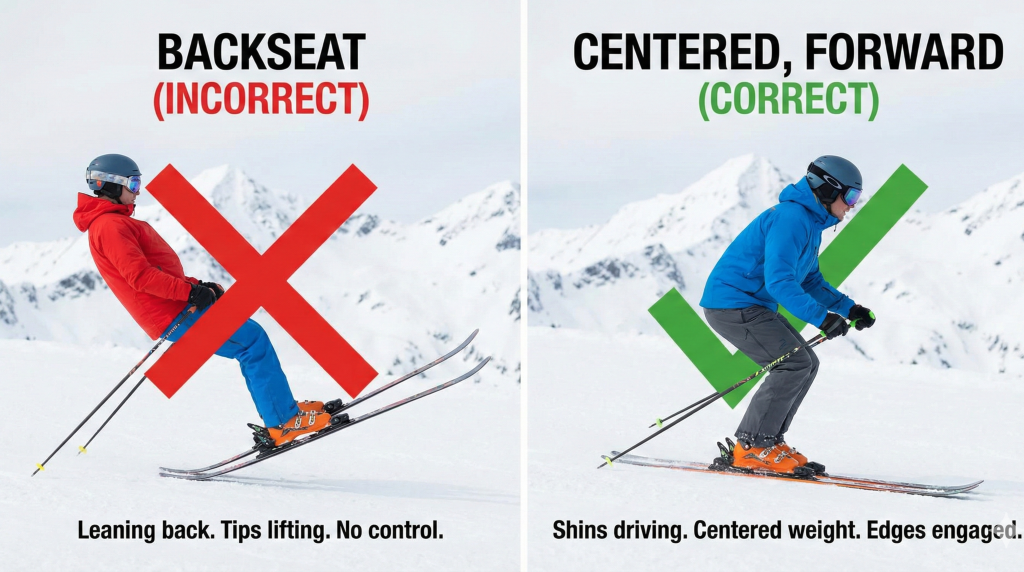
The most pervasive issue in skiing is the “backseat” posture where the skier leans back against the high-backs of the boots. This unweights the tips of the skis, making steering impossible and turning the thighs into burning brakes.
- The Cause: Fear often causes skiers to instinctively pull back. Additionally, boots that are too stiff can prevent ankle flexion, forcing the skier backward.
- The Fix: Achieving perfect skiing posture requires a conscious, constant effort to drive the center of mass forward, attacking the fall line rather than retreating from it.
Off-Snow Awareness & Strength
Building the neurological connection to good posture starts before clicking into the bindings. These exercises help identify what “center” truly feels like and build the specific stabilizer muscles needed.
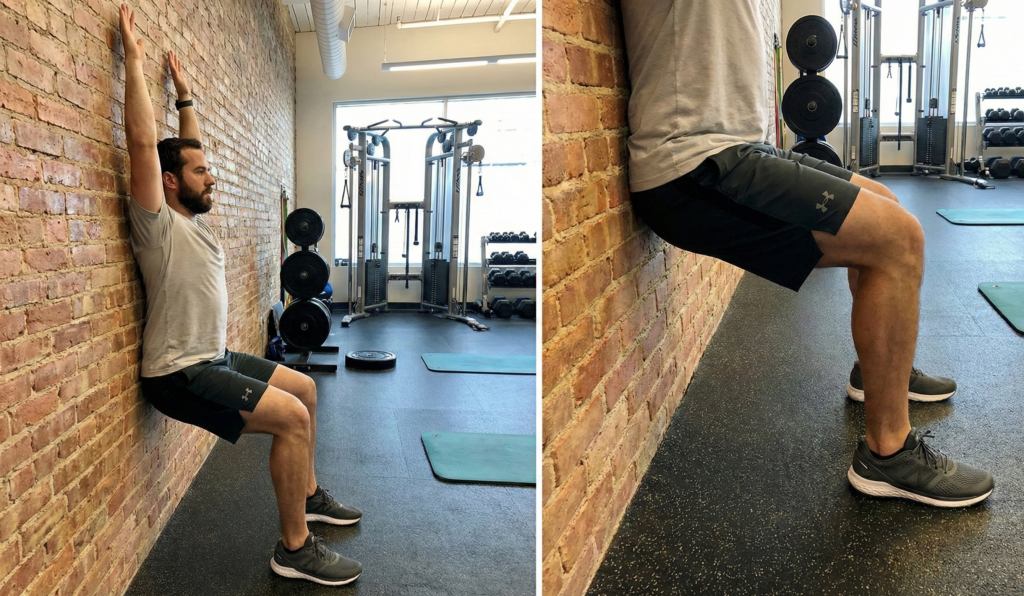
Exercise 1: The Wall Slide (Alignment Check)
This drill isolates the feeling of shin pressure, which is the gas pedal of skiing.
- Setup: Stand with your back to a wall, feet shoulder-width apart, and heels about 6 inches away from the baseboard.
- Action: Slowly flex your knees and ankles until your hips lightly touch the wall.
- The Check: Can you lift your toes inside your shoes? If yes, your weight is correctly balanced over your arches and heels, but your shins are driving forward. If you feel like you’re falling backward, you are not flexing your ankles enough.
Exercise 2: Single-Leg Balance (Proprioception)
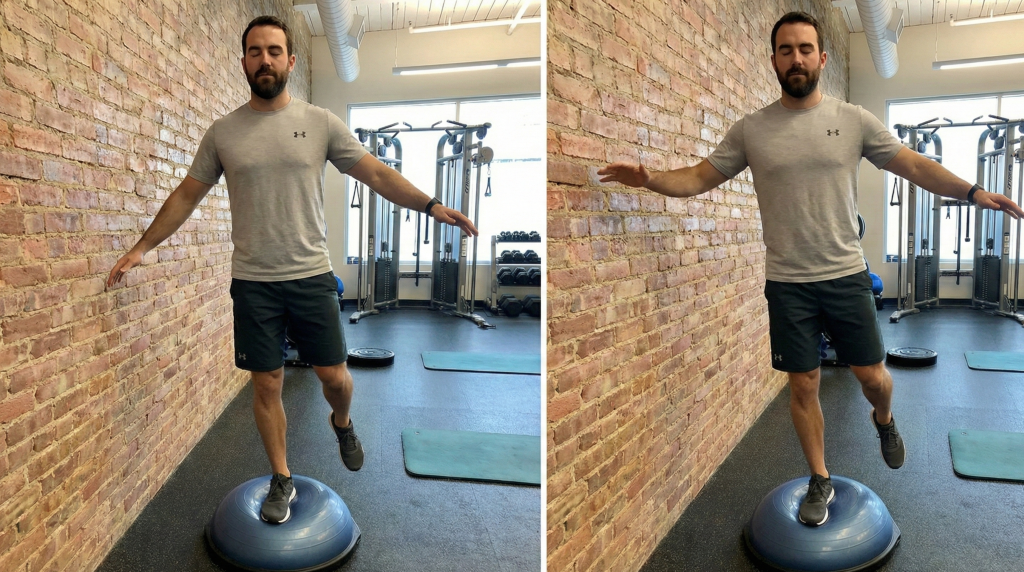
Skiing is essentially a series of rapid single-leg balances as weight transfers from one ski to the other. This exercise strengthens the stabilizer muscles required to maintain posture while moving.
- Action: Stand on one leg with the knee slightly bent. Close your eyes.
- Challenge: Attempt to maintain a stable, stacked posture for 30 seconds without putting the other foot down.
- Focus: Notice how the ankle makes micro-adjustments. This is the same mechanism used on snow to maintain an edge.
Exercise 3: Core Engagement for Stability
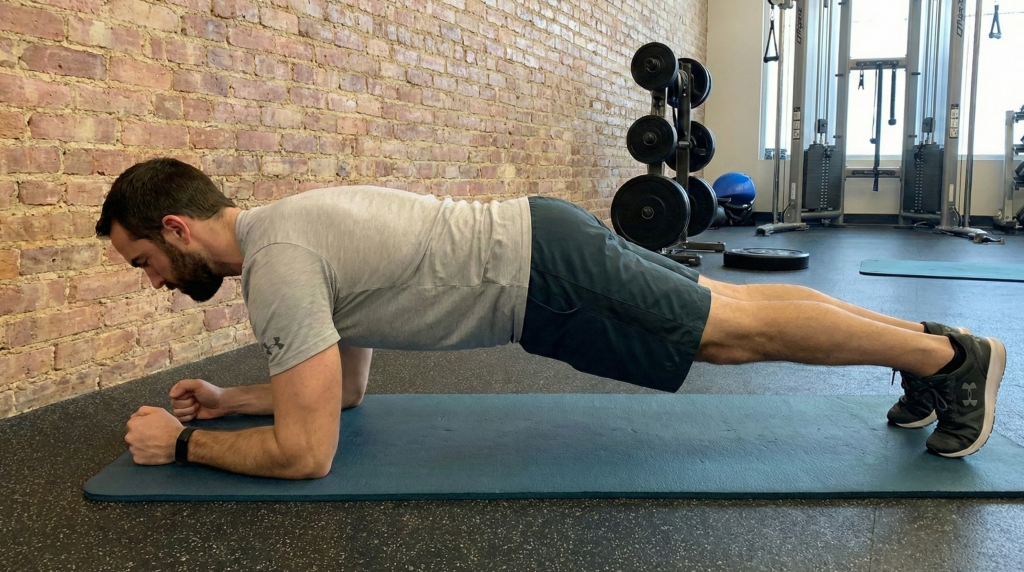
A weak core leads to a collapsing upper body. To maintain a “quiet” torso while the legs work, the core must be engaged.
- The Plank: Regular planking builds the endurance needed to hold a tuck or an athletic stance for long runs.
- Relevance: A strong core protects the lower back from strain, especially when navigating Moguls. For a full regimen, refer to our comprehensive Ski Fitness: 8-Week Plan.
On-Snow Drills for Dynamic Balance
The true test of posture is maintaining it while sliding. These drills are designed to exaggerate balance issues so they can be corrected immediately. They should be performed on a groomed Blue run where you feel comfortable.
Drill 1: The Hop Turn (Centering)
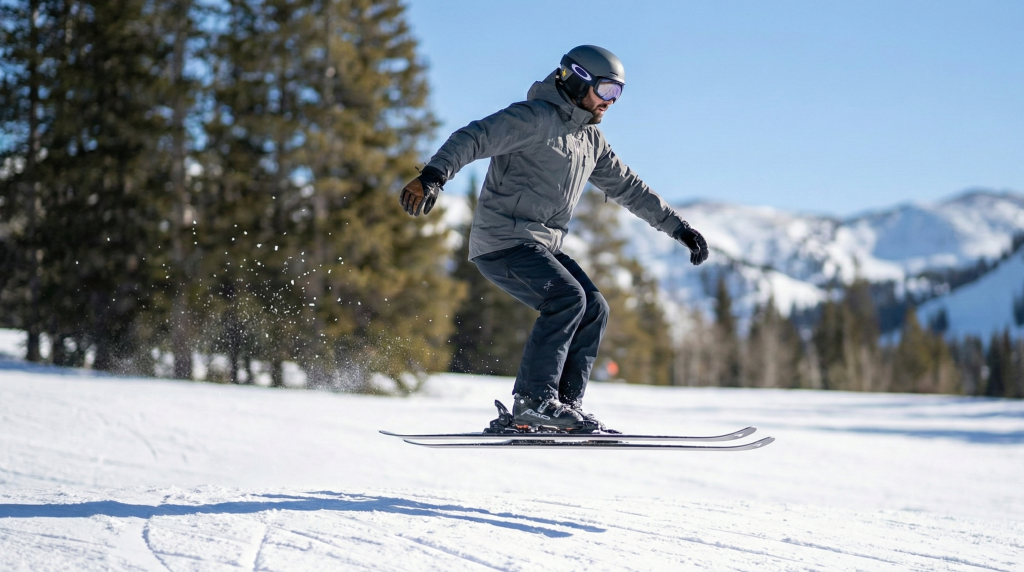
Nothing exposes a “backseat” stance faster than trying to jump.
- Goal: To force the body’s center of mass directly over the center of the skis.
- Execution: On a gentle Green run, while traversing, perform small hops, lifting both skis off the snow simultaneously.
- The Correction: If the tails land first, you are in the backseat. If the tips land first, you are too far forward. Aim for a flat, simultaneous landing. This requires the hips to be perfectly centered over the feet.
Drill 2: Thumper / The 1,000 Steps (Independence)
This drill trains the skier to balance on the outside ski while keeping the posture quiet and stable.
- Goal: To develop independent leg action and verify that weight is fully committed to the turning ski.
- Execution: While making medium-radius turns, constantly lift the inside ski off the snow and tap it down (thump it) throughout the entire arc of the turn.
- The Correction: If you cannot lift the inside ski, your weight is split (50/50), which is a weak stance. You must shift your hips and posture over the outside ski to free the inside leg. This is critical for mastering Ski Edge Control.
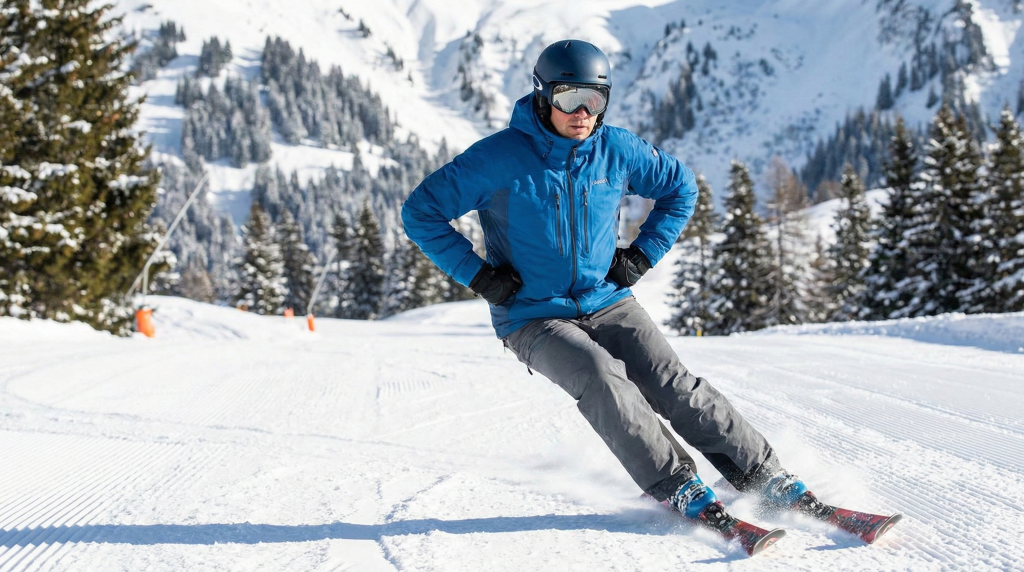
Drill 3: Hands-on-Hips (Upper Body Discipline)
Many skiers use their arms for balance, flailing them to recover from poor posture. This drill removes that crutch.
- Goal: To isolate the lower body and force the core to manage balance.
- Execution: Place your hands firmly on your hips. Ski a groomed Blue run using only ankle and knee movements to turn.
- The Correction: If you feel unstable or cannot initiate a turn, it confirms that your lower body joints (ankles/knees) are not flexing enough. Focus on driving the knees into the turn.
Drill 4: Skiing Without Poles (Balance Refinement)
Skiing without poles removes the timing crutch and forces you to rely on footwork.
- Goal: To enhance foot sensitivity and refine the Carving vs. Skidding transition.
- Execution: Leave the poles at the bottom. Ski a run focusing on smooth, round arcs. Without poles, any jerky movement or loss of balance becomes immediately obvious.
For detailed visuals on the alignment of the spine and pelvis during these drills, the Professional Ski Instructors of America (PSIA) offers excellent technical resources. You can explore their fundamentals at thesnowpros.org.
The Role of Equipment in Posture
Sometimes, the gear itself is the barrier to perfect skiing posture. Even the strongest skier cannot overcome equipment that forces them out of alignment.
Boot Flex and Ramp Angle
- Boot Flex: A boot that is too stiff will prevent the skier from flexing their ankle. If the ankle cannot flex, the skier is forced to stand tall and lean back. Ensure your boot flex matches your ability and weight—refer to our Ski Boot Guide for signs of a mismatch.
- Ramp Angle: The angle of the boot board (inside the boot) affects stance. Some skiers require a heel lift to help them get forward, while others may need the binding delta adjusted.
The Importance of Custom Footbeds
A generic factory insole offers zero support. When the arch collapses inside the boot, the knee collapses inward (knock-kneed), destroying alignment and edge control.
- The Solution: Custom or high-quality trim-to-fit footbeds support the arch, aligning the ankle and knee in a straight, powerful line. This small investment often yields the biggest improvement in posture. For detailed boot fitting advice, consult experts like Evo’s Boot Fitting Guide.
Additionally, ensuring you have the correct Ski Length prevents you from being “overpowered” by a ski that is too long or having to crouch on a ski that is too short.
Conclusion
Achieving perfect skiing posture is not about holding a rigid pose; it is about finding a neutral, stacked position from which movement is effortless. By driving the shins forward, keeping the hands up, and constantly testing balance through drills like the Hop Turn and Thumper, skiers can eliminate the fatigue of the “backseat” and unlock a new level of efficiency. Remember, good posture is the transmission that delivers your power to the snow, get it right, and the entire mountain opens up.