
This post may contain affiliate links. If you buy through them, we may earn a small commission at no extra cost to you.
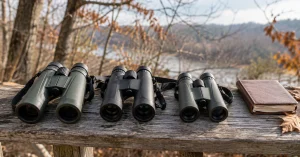
The best binoculars for birdwatching are almost never the most powerful ones. Past 8x or 10x magnification your hands shake enough to blur the view, the field of view narrows until finding a moving bird becomes a chore, and the image gets darker exactly when you need it brightest. Birdwatching rewards steady, bright and wide over big numbers.
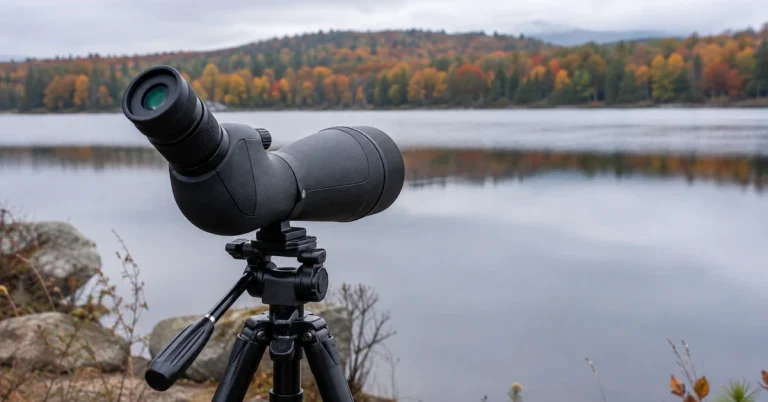
Six pairs below, every one checked for stock, rating and the specifications its listing publishes, spanning 623 to 4,063 reviews. If you are still working out what you are looking at, our beginner guide comes first, and spotting scopes cover the longer ranges these will not reach.
Table of Contents
What Separates the Best Binoculars for Birdwatching
The two numbers on the barrel are magnification and objective lens diameter in millimetres. An 8×42 magnifies eight times through a 42mm front lens. Divide the second by the first and you get the exit pupil, the width of the beam of light reaching your eye: 5.25mm on an 8×42, 4.2mm on a 10×42. Bigger exit pupil means a brighter image at dawn and dusk, which is when birds are active.
Field of view is the second thing, and the one beginners underrate. Eight power shows you a noticeably wider slice of the world than ten power does, and field of view is what lets you find a warbler moving through a hedge rather than hunting blindly through a narrow tunnel. Ten power earns its place over water, marsh and open ground.
Then glass and coatings. Fully multi coated means every air to glass surface is treated, which lifts light transmission and cuts internal reflections. Phase corrected roof prisms restore contrast that the prism design otherwise loses, and extra low dispersion glass reduces the colour fringing called chromatic aberration on high contrast edges, like a dark bird against a bright sky.
Last, sealing and eye relief. Nitrogen purged and O ring sealed means it will not fog internally when you carry it from a warm car into cold air, which is the ordinary failure. If you wear glasses, eye relief of roughly 16mm or more decides whether you see the whole field or a keyhole.
The Best Binoculars for Birdwatching at a Glance
| Model | Spec | Prism | Sealing | Best For |
|---|---|---|---|---|
| Celestron Nature DX | 8×42 | BaK-4 roof, phase coated | Waterproof, nitrogen | Best overall value |
| Vortex Crossfire HD | 8×42 | Roof, fully multi coated | Waterproof, nitrogen | Best warranty |
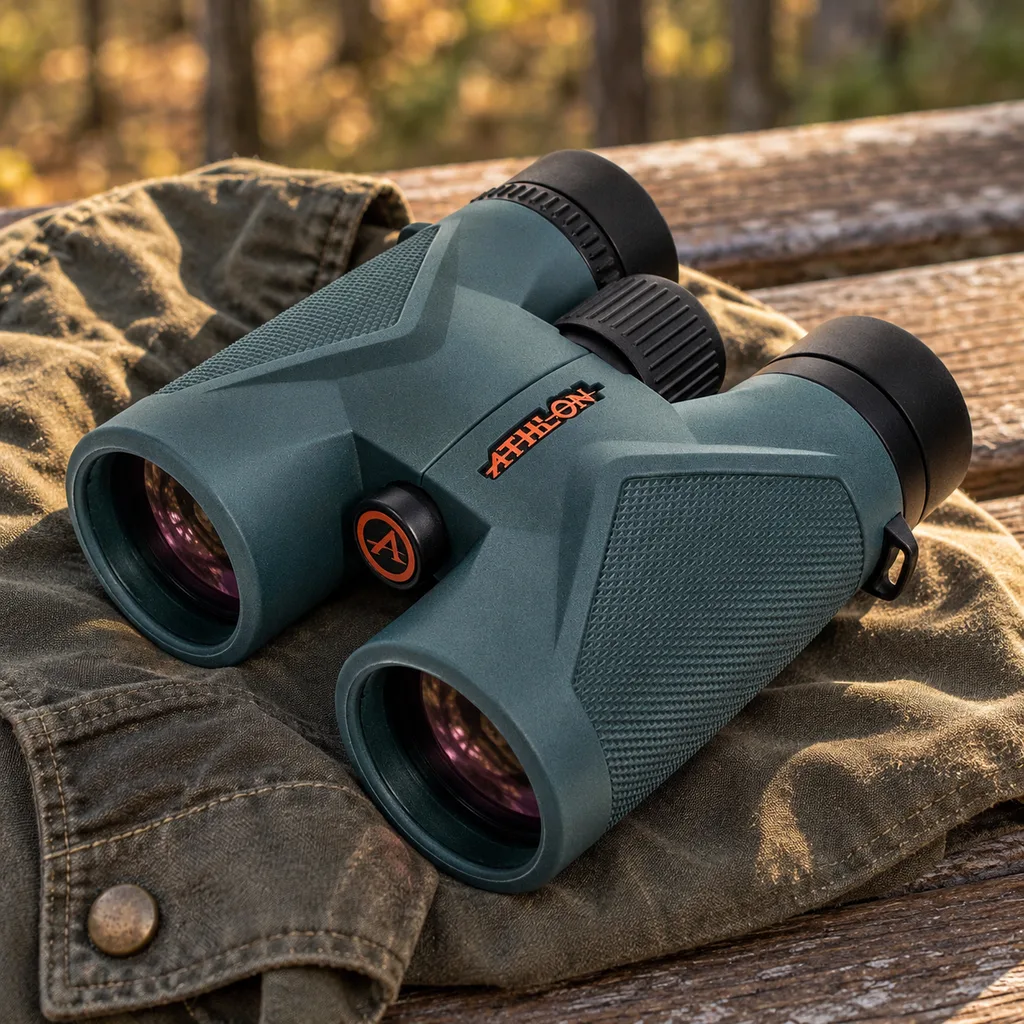
| Athlon Midas UHD | 8×42 | Roof, ED glass | Waterproof, argon | Best glass |
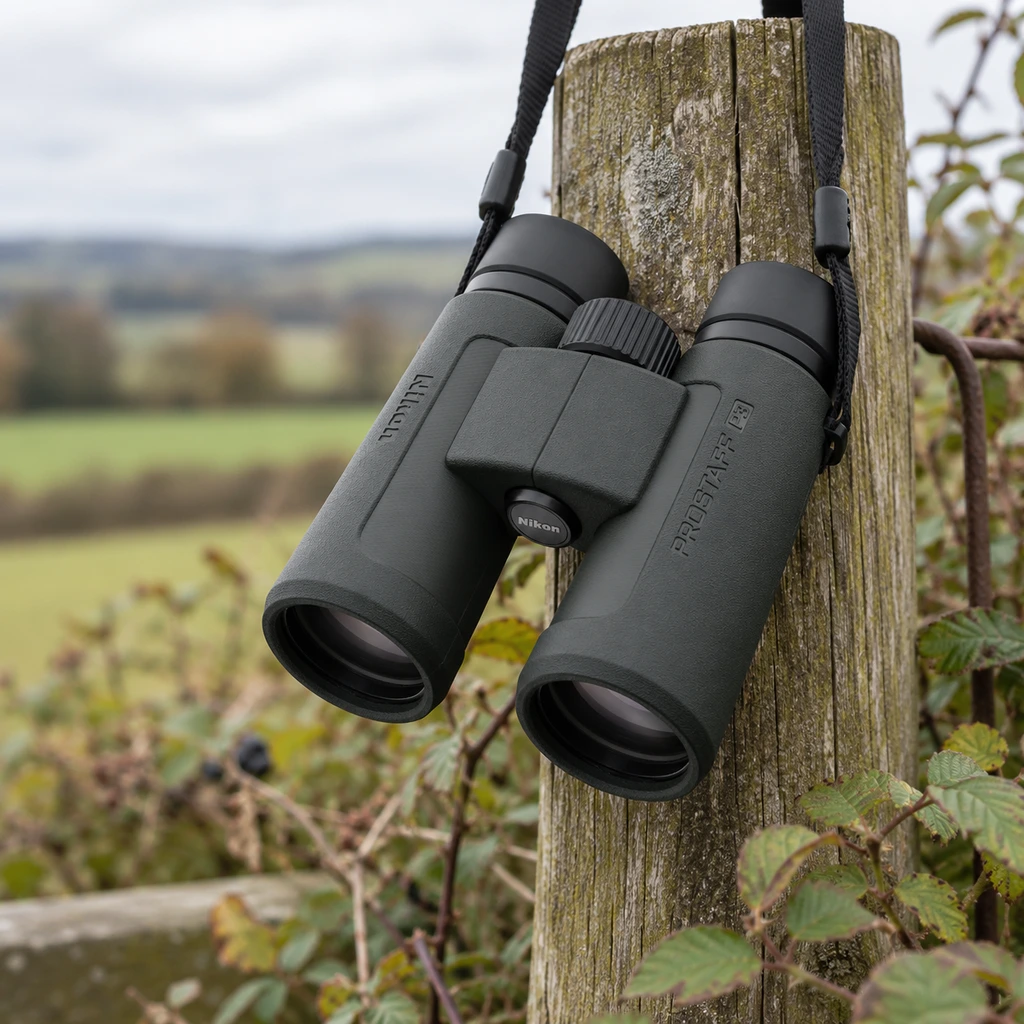
| Nikon PROSTAFF P3 | 8×42 | Roof, multi coated | Waterproof, fogproof | Glasses wearers |
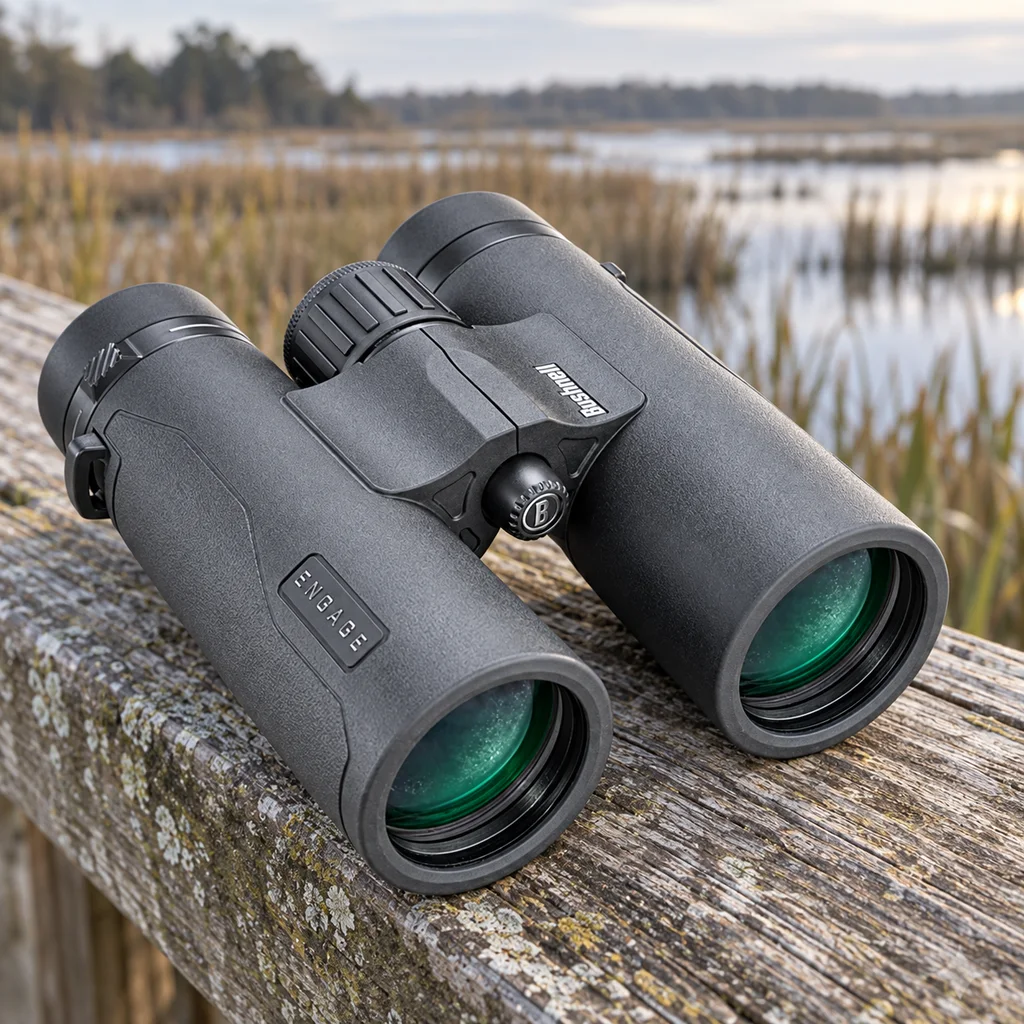
| Bushnell Engage X | 10×42 | Roof, fully multi coated | IPX7 waterproof | Open country |
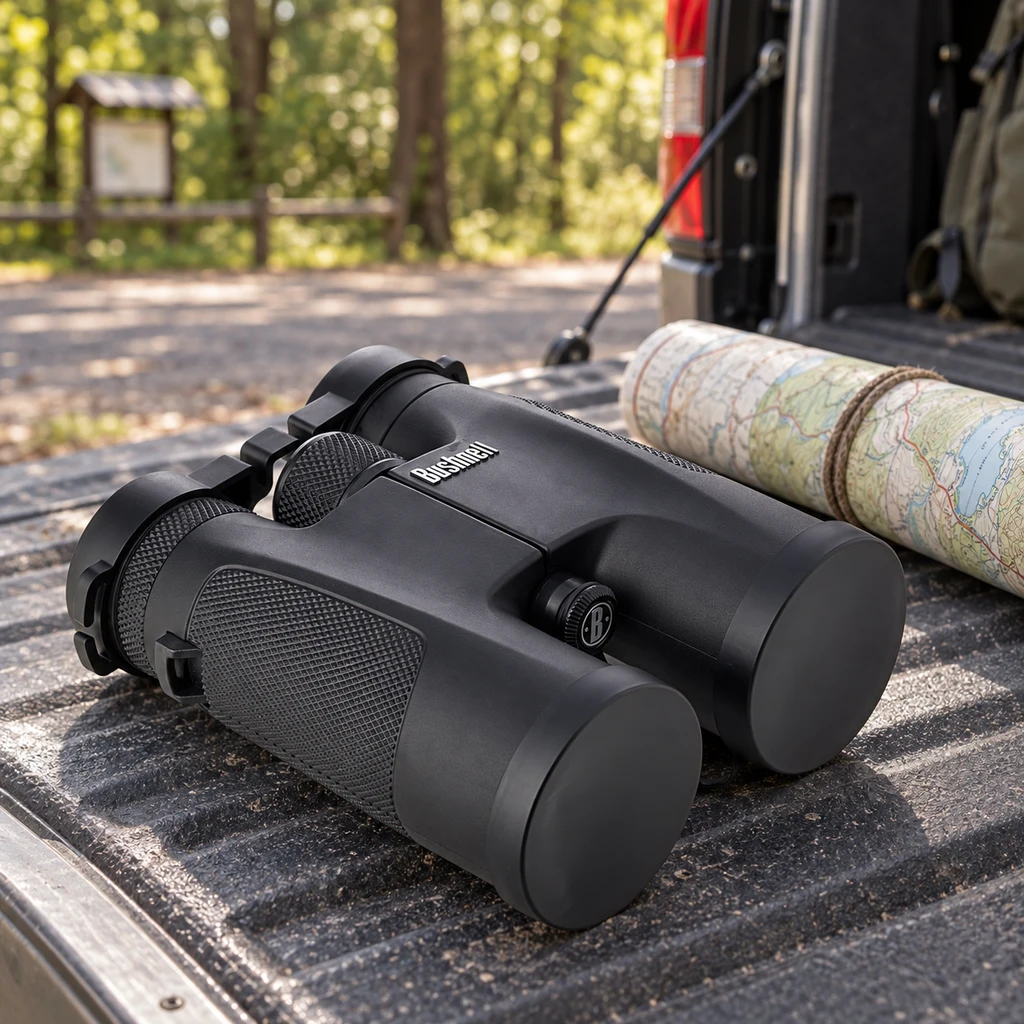
| Bushnell PowerView | 10×42 | Roof prism, compact | Standard | Tightest budget |
The Six Best Binoculars for Birdwatching in Detail
Celestron Nature DX 8×42: Best Overall Value
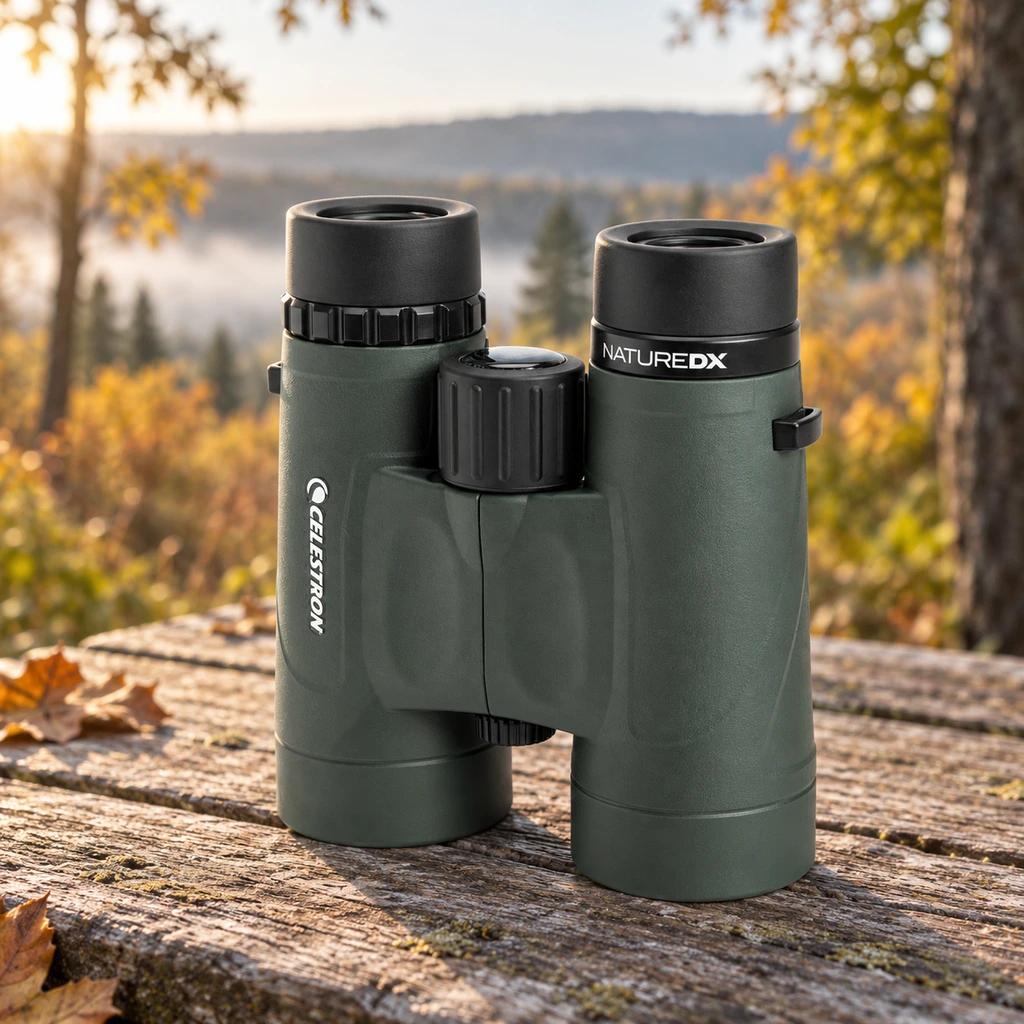
Four thousand reviews at 4.6 stars makes this the most bought birding binocular on Amazon, and it is the one to buy if you want to stop researching. BaK-4 roof prisms, phase coating and fully multi coated lenses are specifications that used to belong two price brackets higher.
Eight power through a 42mm objective gives a 5.25mm exit pupil, which is why it holds a usable image in the half hour before sunrise when most of the interesting behaviour happens. The close focus is short enough for butterflies and garden birds at arm’s length, which matters more than people expect once they own a pair.
Waterproof and nitrogen purged, so condensation stays outside the barrels. It is the default recommendation for a first serious pair and the hardest one on this list to argue with.
Specs That Matter
- Specification: 8×42, 5.25mm exit pupil
- Prisms: BaK-4 roof, phase coated
- Lenses: fully multi coated
- Sealing: waterproof and nitrogen purged
- Rating: 4.6 stars across 4,063 reviews
Who It Is For
Anyone buying their first proper birding binocular who wants the proven option rather than the cheapest one.
Vortex Crossfire HD 8×42: Best Warranty
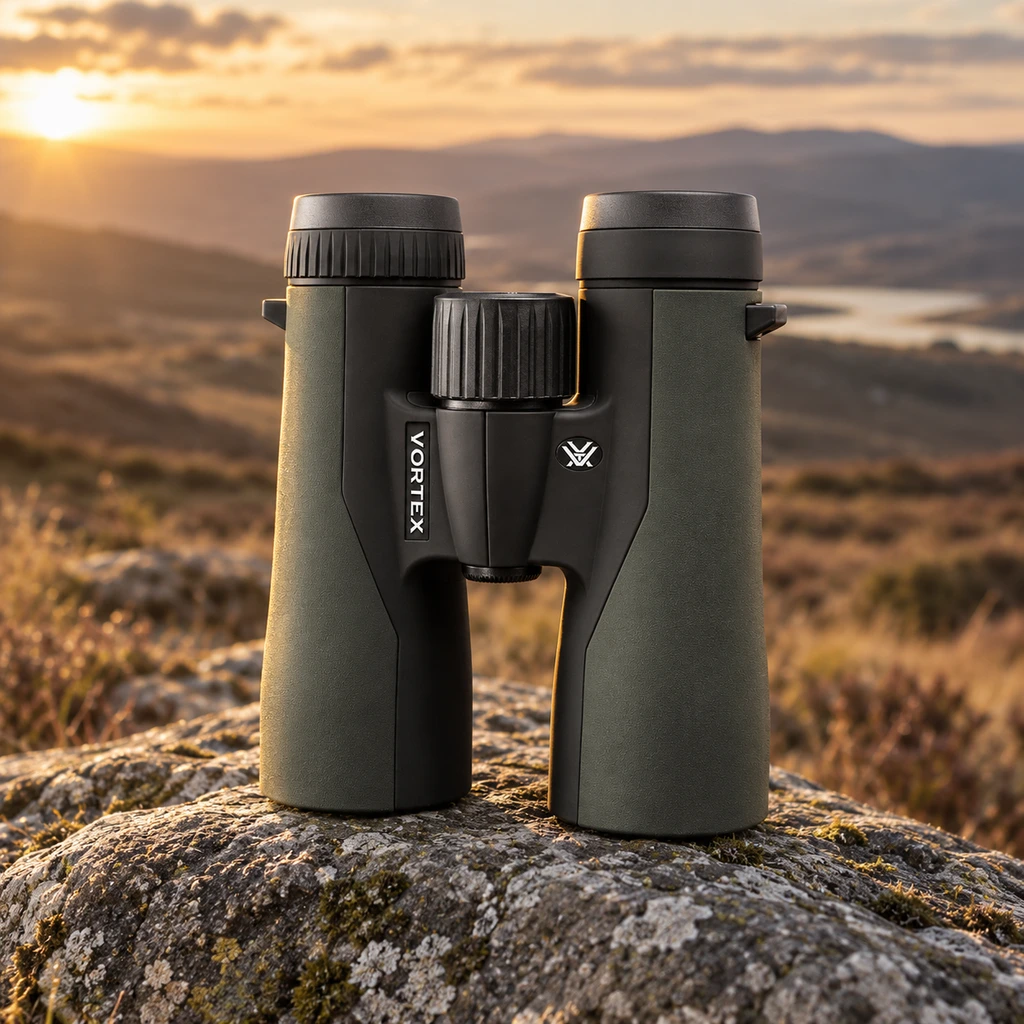
Four point eight stars across more than thirteen hundred reviews, and the highest rated pair here. The optics are a clear step up in contrast from entry level glass, but the reason people choose Vortex is the transferable unconditional lifetime warranty, which covers damage rather than just defects.
That matters for a tool you hang around your neck outdoors. Binoculars get dropped onto rock, sat on in cars and knocked against gates, and a warranty that treats those as covered changes the arithmetic on spending this much.
Optically it is a conventional 8×42: bright, wide, easy to hold steady, with adjustable eyecups and a right eye dioptre so you can match it to your own eyes. Nitrogen purged and O ring sealed throughout.
Specs That Matter
- Specification: 8×42 roof prism
- Lenses: fully multi coated, HD optical system
- Sealing: O ring sealed and nitrogen purged
- Warranty: unconditional lifetime, fully transferable
- Rating: 4.8 stars across 1,333 reviews
Who It Is For
Birders who take optics into rough country and want damage covered rather than argued about.
Athlon Midas UHD 8×42: Best Glass
The optical pick of the six. Extra low dispersion glass is the feature, and it is the one upgrade you can actually see: colour fringing along a dark wing against a white sky largely disappears, and fine detail like feather edging survives at the limit of what 8x can resolve.
Argon purged rather than nitrogen, which is a slightly larger molecule and holds the seal longer over years of temperature swings. Dielectric coated prisms lift light transmission further, so it is also the brightest pair here in poor light.
Four point eight stars across more than seventeen hundred reviews. Buy it if you already know you enjoy birding and want the view rather than the badge, and pair it with a scope for anything further out.
Specs That Matter
- Specification: 8×42 with ED glass
- Prisms: dielectric and phase coated
- Lenses: fully multi coated, ultra high definition
- Sealing: waterproof and argon purged
- Rating: 4.8 stars across 1,731 reviews
Who It Is For
Committed birders who want visibly better colour correction and low light performance.
Nikon PROSTAFF P3 8×42: Best for Glasses Wearers
Long eye relief is the headline, and if you wear glasses it is the only specification that matters first. Turn the eyecups down, keep your glasses on, and you still see the whole field rather than a bright circle in the middle of black.
Waterproof, fogproof and rubber armoured, with a wide field of view for its class. Four point seven stars across 640 reviews, and it is the official Nikon USA model rather than a grey import, which is worth checking on optics because the warranty follows the region.
Optically it sits between the Celestron and the Athlon: brighter and better corrected than entry level glass, without the ED elements. A sensible middle choice, and the obvious one if the last pair you tried blacked out at the edges.
Specs That Matter
- Specification: 8×42 full size roof prism
- Eye relief: long, designed for eyeglass wearers
- Field of view: wide for its class
- Build: waterproof, fogproof, rubber armoured
- Rating: 4.7 stars across 640 reviews
Who It Is For
Birders who wear glasses and keep losing the edges of the image.
Bushnell Engage X 10×42: Best for Open Country
Ten power is the right answer when the birds are far away and not in a hedge: estuaries, reservoirs, moorland, raptors over a ridge. You lose field of view and some brightness, and you gain the ability to identify something at three hundred metres.
IPX7 rated, which means full immersion rather than a promise about rain, and light enough at this size to hold up for more than a few seconds at a time. That weight matters more at 10x, because every gram of wobble is magnified too.
Four point seven stars across 623 reviews. If you mostly watch garden and woodland birds, buy an 8x instead. If you spend your time looking across water, this is the pair, and migration season is when it earns its keep.
Specs That Matter
- Specification: 10×42 roof prism
- Lenses: fully multi coated
- Sealing: IPX7 waterproof
- Build: lightweight for a full size 10×42
- Rating: 4.7 stars across 623 reviews
Who It Is For
Birders watching open water, marsh and moorland where reach beats field of view.
Bushnell PowerView 10×42: Tightest Budget
The entry point, and honest about it. Compact roof prism construction at 10×42, 4.6 stars across 893 reviews, and a price that makes it the pair to keep in a car or hand to a child rather than the one you build a hobby around.
You give up the sealing and the coatings that the others have, so expect less in low light and take more care in rain. What you get is a real 10×42 view for a fraction of the cost of the Engage X, which is genuinely useful as a second pair.
Buy it as a spare, a loaner or a first try at whether you enjoy this. If you find yourself using it every week, the Celestron is the upgrade.
Specs That Matter
- Specification: 10×42 compact roof prism
- Build: lightweight, rubberised
- Use: spare, loaner or first pair
- Finish: black
- Rating: 4.6 stars across 893 reviews
Who It Is For
Anyone who wants a usable pair in the car, or a second set for a companion.
How to Choose Between Them
One Pair, Garden and Woodland
The Celestron Nature DX 8×42. Wide, bright, phase coated and sealed, with four thousand reviews behind it. It is the default and it is hard to regret.
You Wear Glasses
The Nikon PROSTAFF P3. Eye relief is not a nice extra for you, it is the difference between seeing the field and seeing a circle. Try the eyecups down before buying anything else.
You Want the Best View Here
The Athlon Midas UHD. ED glass and dielectric prisms are visible improvements rather than marketing, particularly on high contrast edges and in the first light of the morning.
Open Water and Distance
The Bushnell Engage X 10×42. Accept the narrower field and the dimmer image in exchange for reach, and lean on song identification for the birds you hear but cannot resolve.
You Break Things
The Vortex Crossfire HD. The unconditional lifetime warranty covers damage, not just manufacturing faults, and it transfers if you ever sell them.
What the Specifications Actually Mean
Why 8x Beats 10x for Most Birders
Eight power gives a wider field, a brighter image and a steadier view, and those three things matter more than reach for birds in trees and hedges. Magnification also multiplies hand shake, so a 10x view is visibly less stable unless you brace against something.
BaK-4 and Phase Coating
BaK-4 is a barium crown glass used in the prisms that flip the image upright. Roof prisms let the barrels sit in a straight line, which makes for a slimmer pair than the older Porro prism design, but they split the light path and shift its phase. Phase correction coating puts it back, and its absence is why cheap roof prism binoculars look flat.
Nitrogen, Argon and Fogging
Purging the barrels with dry nitrogen or argon removes the water vapour that would otherwise condense inside when you move from warm to cold. It does not stop the outside of the lens fogging, which is what a lens cloth is for. IPX7 on the Bushnell is a formal immersion rating rather than a claim.
Close Focus Matters More Than You Think
The shortest distance a pair will focus decides whether you can use it on the feeder six feet from the window, on butterflies, or on a bird in the hedge beside you. Anything under two metres is good, and it makes the binocular useful in your own garden rather than only in the field.
Using Them Well and Making Them Last
Set the dioptre once. Cover the right barrel, focus on something with the centre wheel using your left eye only, then cover the left barrel and adjust the dioptre ring until the right eye matches. Most people never do this and spend years with a slightly soft image in one eye.
Find the bird with your eyes first, then bring the binoculars up to them without moving your head. Hunting for a bird through the eyepieces is the beginner habit that makes a narrow field of view feel unusable.
Brush grit off before you wipe a lens, use a lens cloth rather than a shirt, and let them dry open rather than sealed in a case after rain. A harness rather than a neck strap spreads the load, which matters on a long day, the same principle as carrying weight properly in cold conditions.
For anything beyond the range of these, a tripod and a scope replace them, and park birding guidance is a good source for where to point either. Logging what you see in eBird or joining the Christmas Bird Count turns casual watching into something useful, and Audubon runs the latter.
Frequently Asked Questions
What magnification is best for birdwatching?
Eight power for most birding, ten power for open water and long distances. Eight gives a wider field, a brighter image and a steadier view, which finds more birds than extra reach does.
Are 10×42 binoculars too shaky for birding?
Not too shaky, but noticeably less steady than 8x, because magnification multiplies hand movement as well as the image. Brace against a tree or a fence and the difference largely disappears.
Do I need ED glass?
No, but you can see what it does. Extra low dispersion glass reduces colour fringing on high contrast edges, which is most visible on a dark bird against a bright sky. It is the upgrade that rewards people who already bird regularly.
What binoculars work with glasses?
Any pair with roughly 16mm or more of eye relief and eyecups that twist down. The Nikon PROSTAFF P3 here is built around that. Without it you lose the edges of the field entirely.
How much should I spend on birding binoculars?
Enough for phase coated roof prisms, full multi coating and proper sealing, which is where the Celestron sits. Below that you are buying a toy; above it you are buying refinement rather than capability.
For most people the Celestron Nature DX 8×42 is the pick and four thousand reviews agree. Glasses wearers should take the Nikon, anyone watching open water the Bushnell Engage X, and birders who want the best view here the Athlon Midas UHD. Then read birdwatching for beginners for how to use them, our feeder round up for bringing birds close enough to matter, and identifying birds by song for everything you hear but never see.
Discover more from Maive Verse
Subscribe to get the latest posts sent to your email.