
This post may contain affiliate links. If you buy through them, we may earn a small commission at no extra cost to you.
The best fishing waders are the ones that fit the water you actually fish. Bootfoot waders in neoprene keep you warm standing still in a cold river; breathable stockingfoot waders let you walk two miles of bank without cooking. Buying the wrong one of those is the most common and most expensive wader mistake there is, and it is the same walk-or-stand question that decides footwear generally.
Six picks, all checked on their listings for stock, rating and real specifications, spanning 91 to 13,413 reviews. One candidate was dropped for being down to a single unit in stock. Before you buy, read how to read a river, because knowing where to stand matters more than what you are standing in, and the wading safety rules there are not optional in autumn.
Table of Contents
What Separates the Best Fishing Waders
The first decision is bootfoot or stockingfoot, and it is not a budget question. Bootfoot waders have the boots built in: you step in, you are done, and neoprene versions insulate well for standing in cold water. Stockingfoot waders end in a neoprene sock and need separate wading boots, which costs more and gives far better grip, ankle support and walking comfort.
Then the material. Neoprene is warm, heavy and sweaty, and it is what you want for cold water or duck season. Breathable multi ply nylon lets moisture out, which matters the moment you walk any distance, and it needs layers underneath for warmth rather than providing its own. Ply count, the 2-ply and 4-ply in the specs below, is roughly a durability rating, much like denier on a pack.
Then seams and the belt. Every wader here has taped or welded seams, because that is where leaks start. A wading belt is not an accessory: it stops the legs filling if you go in, and it is the difference between a soaking and a genuine emergency. Some of these include one, some do not. Treat it the way you would any safety item on the water.
Fit last, and it is why waders get returned. Sizing runs by boot size and height together, so check both against the chart rather than guessing, and try them on over the layers you will actually wear, the way you would with any cold weather layering.
The Best Fishing Waders at a Glance
| Waders | Type | Material | Boots | Best For |
|---|---|---|---|---|
| TIDEWE Chest Waders | Bootfoot | 420D 2-ply nylon/PVC | Attached | Best overall |
| FISHINGSIR Chest Waders | Bootfoot | 2-ply nylon/PVC | Attached | Best value |
| Foxelli 4mm Neoprene | Bootfoot | 4 mm neoprene | Attached PVC | Cold water |
| FROGG TOGGS Canyon II | Stockingfoot | 4-ply nylon | Separate | Best breathable |
| Foxelli Breathable | Stockingfoot | Breathable nylon | Separate | Walking the bank |
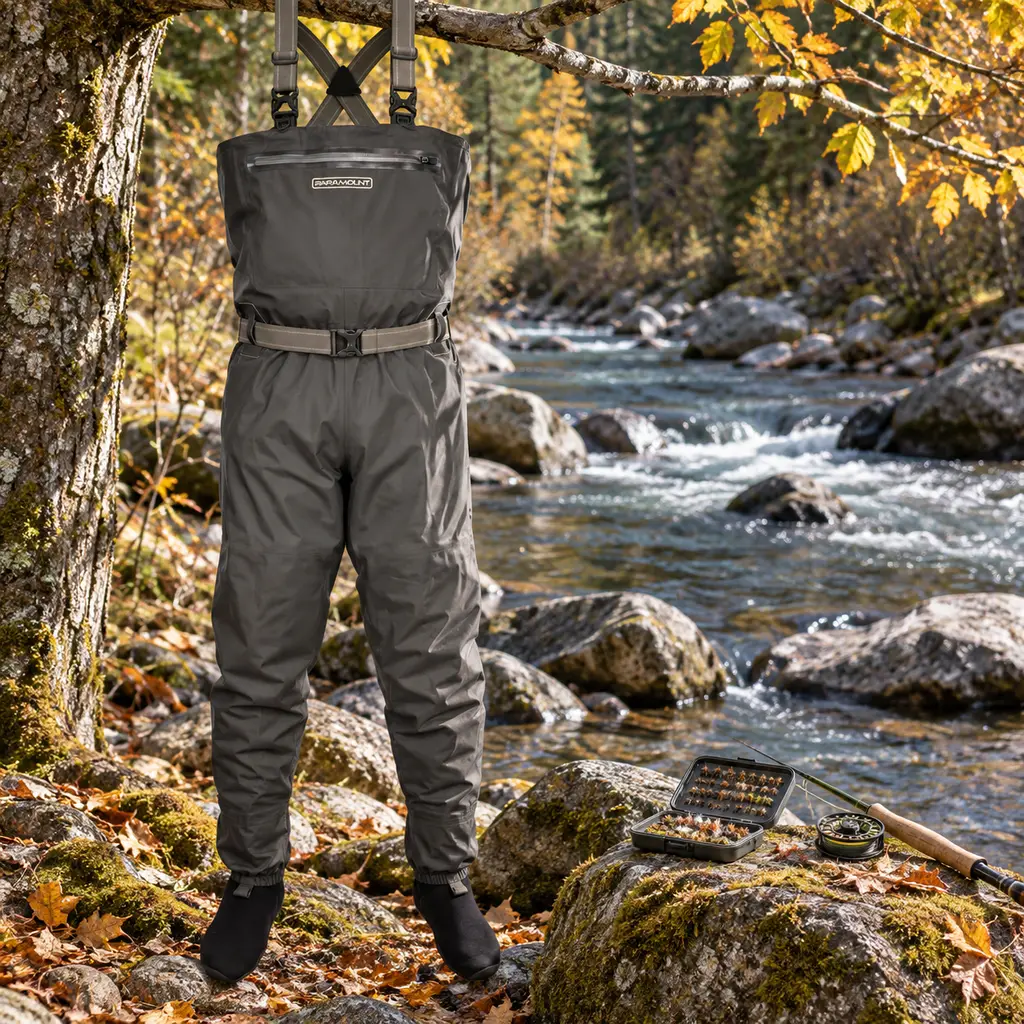
| Paramount Stonefly | Stockingfoot | 4-ply nylon | Separate | Fly fishing setup |
The Six Best Fishing Waders in Detail
TIDEWE Chest Waders: Best Overall
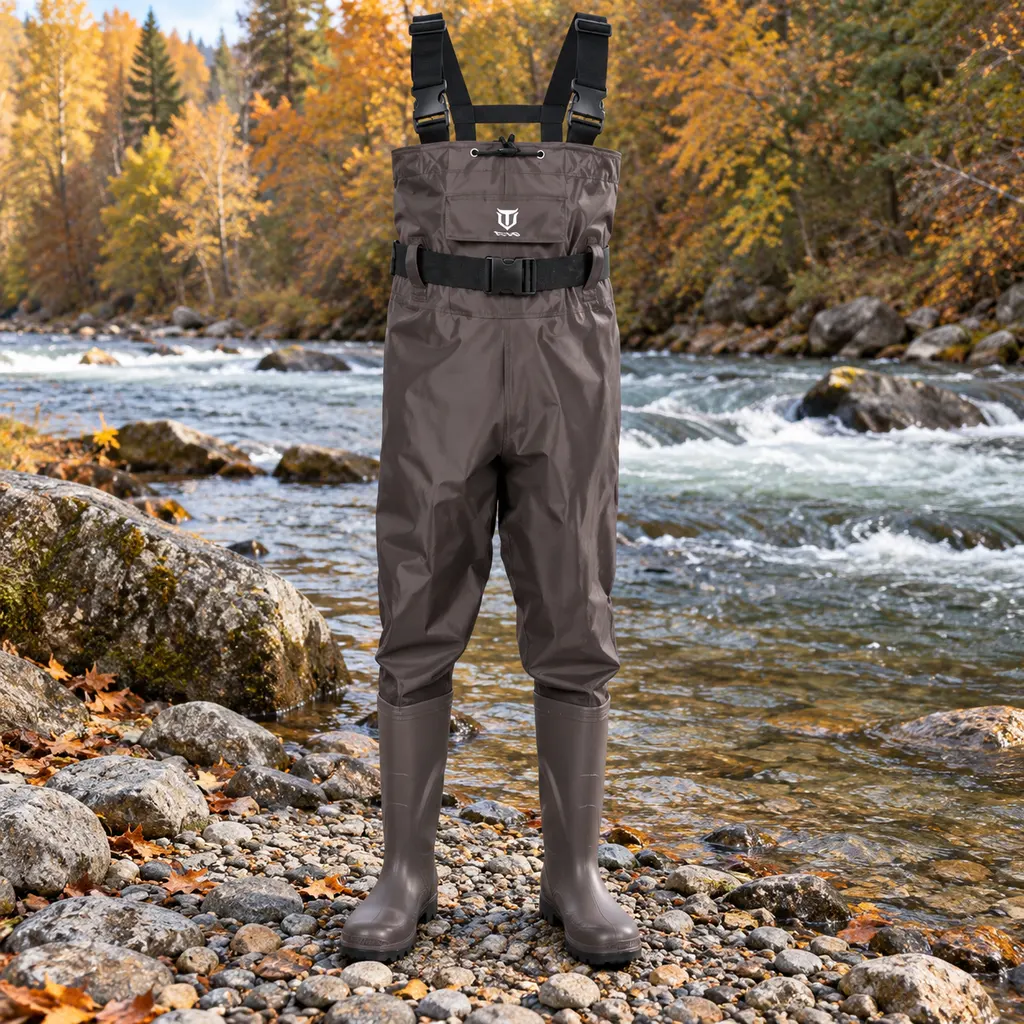
Thirteen thousand reviews at 4.4 stars makes this the most tested wader on Amazon by an enormous margin, and the specification is sensible rather than flashy. A 420 denier two ply nylon and PVC construction with welded boot attachments and taped seams, which are the two places waders leak first.
TIDEWE claim it is 35 percent lighter than traditional rubber waders, and that is the practical difference. Rubber bootfoot waders are punishing to walk in; these are the version you will still be wearing at the end of a long session rather than abandoning on the bank.
The fit details are the ones you use every trip: adjustable H-back suspenders with quick release buckles, a top drawcord to close out splash, and a flip out chest pocket. Nothing exotic, all of it functional.
Specs That Matter
- Construction: 420D 2-ply nylon and PVC with welded boot attachments and taped seams
- Weight: around 35 percent lighter than traditional rubber waders
- Fit: adjustable H-back suspenders, quick release buckles, top drawcord
- Storage: flip out chest pocket
- Rating: 4.4 stars across 13,413 reviews
Who It Is For
Anyone buying one pair of bootfoot waders for general fishing who wants the most proven option available.
FISHINGSIR Chest Waders: Best Value
Seven and a half thousand reviews at 4.4 stars and usually a little cheaper than the TIDEWE. The upper is an upgraded two ply nylon and PVC fabric with a higher knitting density than the previous generation, which is the sort of claim that usually means little and here shows up as a wader that holds up.
Waterproofing follows the same recipe that works: nylon PVC upper, waterproof boot attachment, visibly taped seams. If the seams are taped and you can see it, that is a good sign rather than a marketing line.
H-back adjustable suspenders with quick release buckles make it easy to get in and out, and there are two front D-rings for hanging tools plus a built in pocket. For a first pair of waders where you are not yet sure how much you will use them, this is the sensible spend.
Specs That Matter
- Material: upgraded 2-ply nylon and PVC with high knitting density
- Waterproofing: waterproof boot attachment with visible taped seams
- Fit: H-back adjustable suspenders with quick release buckles
- Extras: two front D-rings for accessories, built in pocket
- Rating: 4.4 stars across 7,574 reviews
Who It Is For
First pairs, occasional anglers, and anyone who wants the proven bootfoot formula for less.
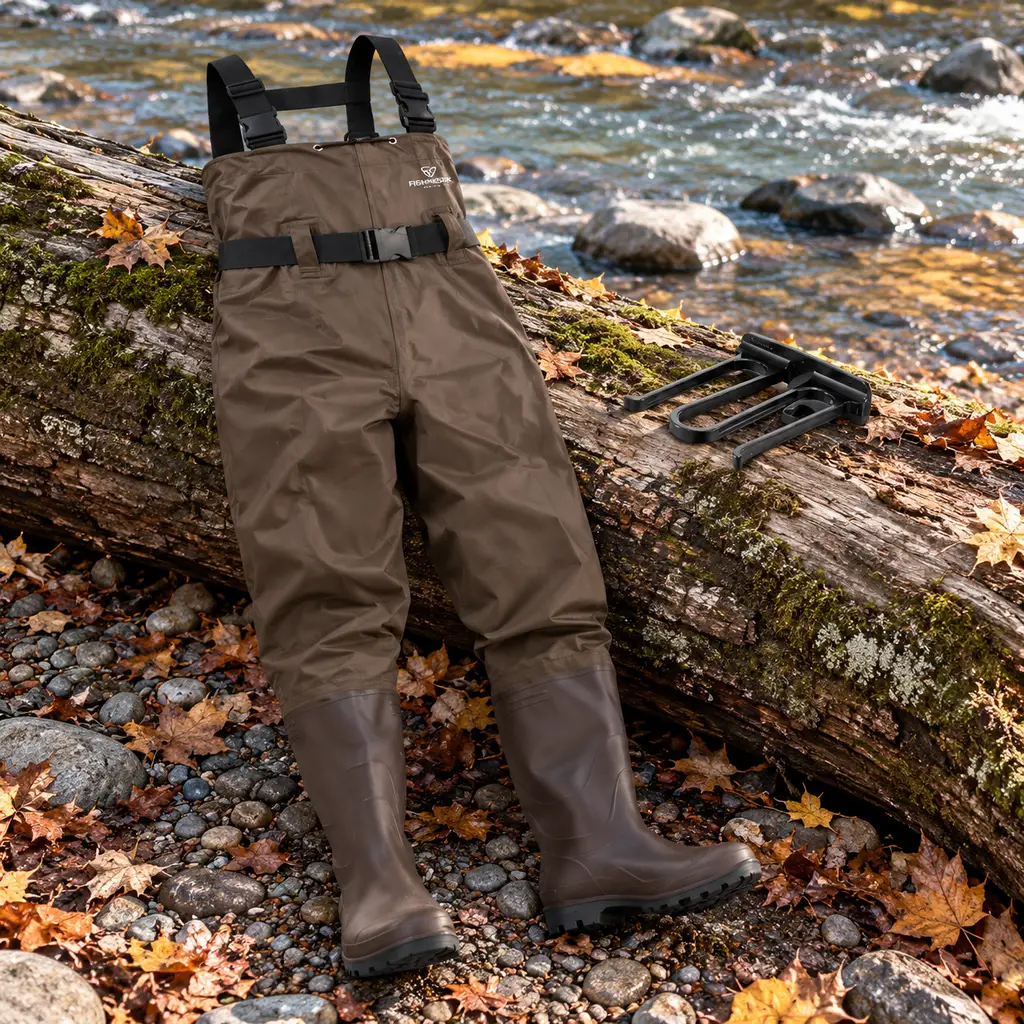
Foxelli 4mm Neoprene: Best for Cold Water
When the water is genuinely cold and you are standing in it rather than walking, neoprene is the right answer and this is the pick. Four millimetres of it, insulating rather than merely waterproof, which is a different job from what breathable waders do.
The construction is thorough: double stitched, taped and sealed seams, reinforced knee pads for kneeling on gravel or in a boat, and lightweight PVC bootfoot boots with anti slip soles that handle mud better than they handle slick rock. Bootfoot means on and off in seconds.
The details are aimed at cold days. A chest pocket that doubles as a hand warmer, an interior mesh pocket, D-ring attachments and a nylon belt with two carabiners. That belt matters for safety as much as for gear, and it is good to see it included.
Specs That Matter
- Material: 4 mm neoprene for insulation in cold water
- Seams: double stitched, taped and sealed, with reinforced knee pads
- Boots: attached lightweight PVC with anti slip soles
- Extras: hand warmer chest pocket, interior mesh pocket, nylon belt with carabiners
- Rating: 4.5 stars across 4,691 reviews
Who It Is For
Late autumn and winter fishing, duck hunting, and anyone standing still in cold water rather than covering ground.
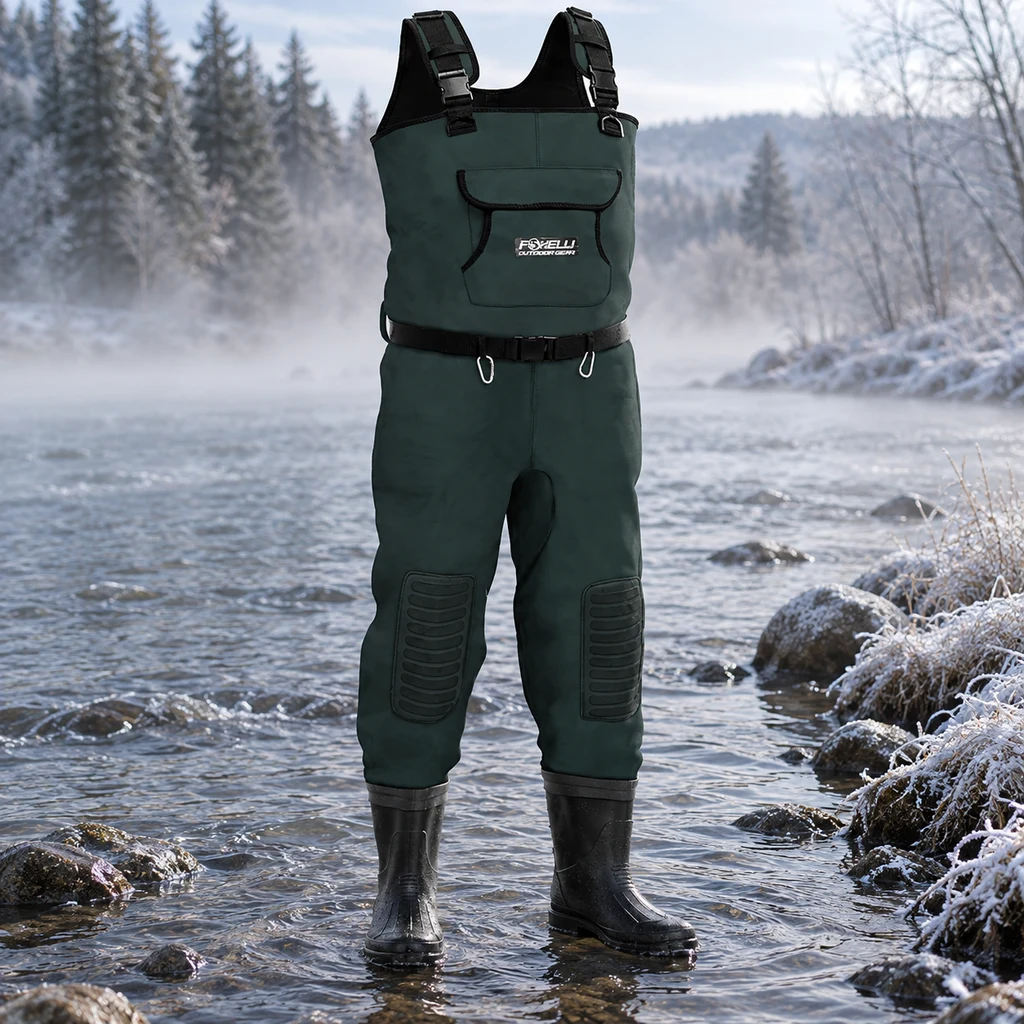
FROGG TOGGS Canyon II: Best Breathable Stockingfoot
The step into proper stockingfoot waders, and the one that changes how far you are willing to walk. A four ply nylon upper is the most abrasion resistant fabric in this round up, and breathable construction means the sweat from the walk in leaves rather than collecting around your legs.
It includes the wading belt, with a quick release locking buckle, which is the single most important safety item on this page and is often sold separately. Attached gravel guards with integral lace hooks keep grit out of your wading boots, a detail only stockingfoot users appreciate.
Remember you still need boots. Stockingfoot waders end in a neoprene sock, so budget for wading boots on top, and in exchange you get real grip on slick rock and ankle support that bootfoot waders cannot match.
Specs That Matter
- Upper: 4-ply nylon, the most abrasion resistant here
- Included: adjustable wading belt with quick release locking buckle
- Details: attached gravel guards with integral lace hooks
- Fit: adjustable Y-back suspenders with quick release locking buckles
- Rating: 4.3 stars across 1,315 reviews
Who It Is For
Anglers who walk to their water, and anyone who has slipped on rock in bootfoot waders and wants real boots.
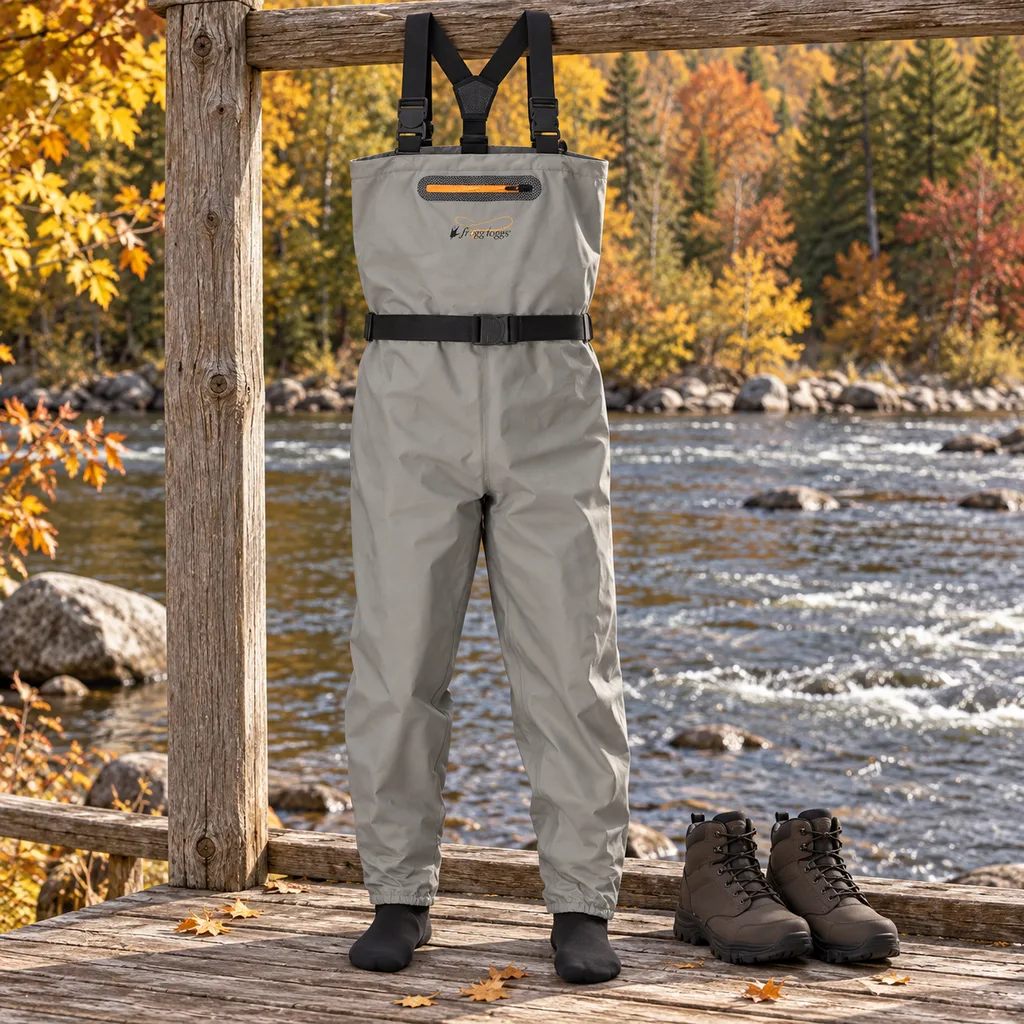
Foxelli Breathable: Best for Walking the Bank
The lightest way into breathable stockingfoot waders. Foxelli’s argument is comfort across a full day rather than maximum durability, and for anyone whose fishing involves more walking than standing that is the right priority.
Seams are glued, stitched and taped, which is the full three step treatment, and the company leans on damage resistance to rips and tears. An external chest pocket takes accessories and an inner pocket keeps small things dry.
As with any stockingfoot pair, the flexibility is the point: you pick your own wading boots and can match the sole to your river, felt or rubber or studded, rather than accepting whatever is moulded on. At 428 reviews it has less evidence behind it than the bootfoot picks, though the rating holds up.
Specs That Matter
- Type: breathable stockingfoot, boots chosen separately
- Seams: glued, stitched and taped
- Storage: external chest pocket plus an inner pocket
- Advantage: choose your own wading boot sole for the river you fish
- Rating: 4.3 stars across 428 reviews
Who It Is For
Anglers covering ground on foot, warmer months, and anyone wanting to pick their own boots without paying premium prices.
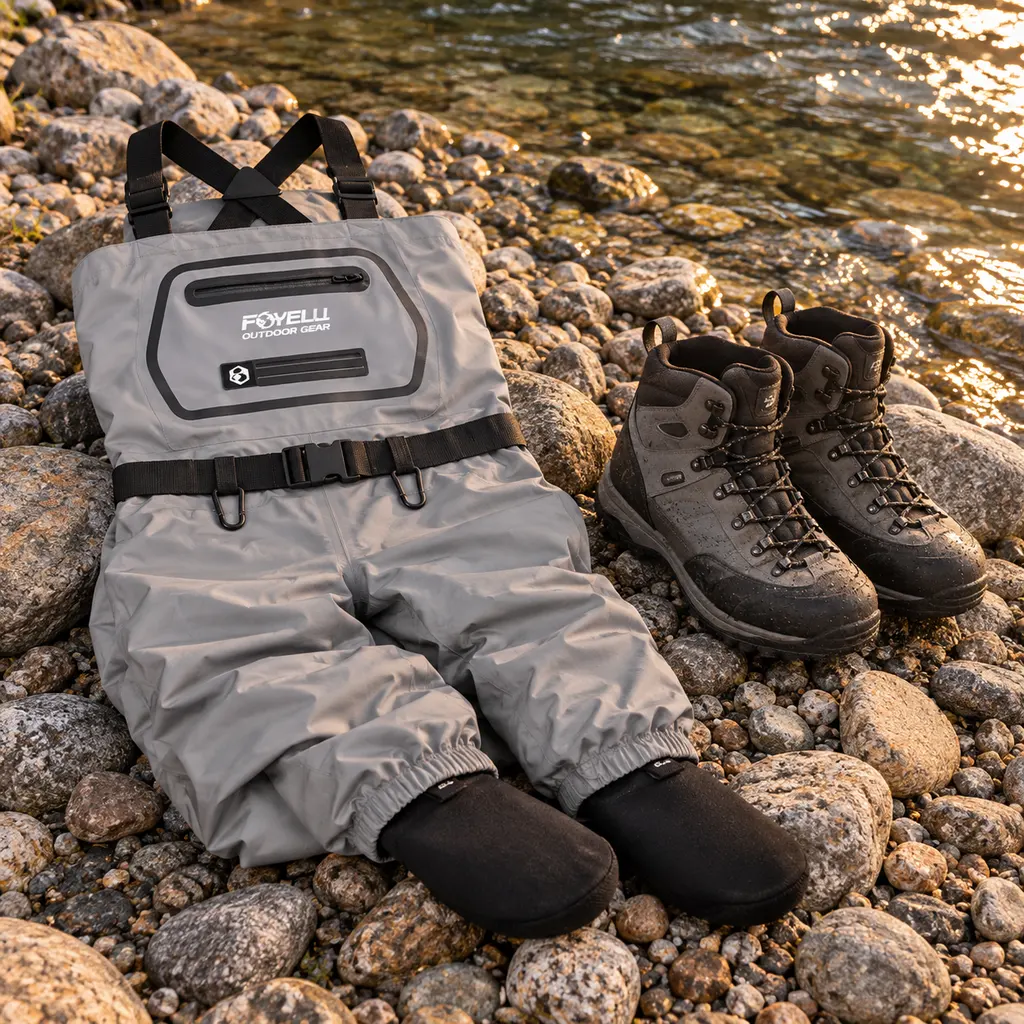
Paramount Stonefly: Best Fly Fishing Setup
Built with fly fishing specifically in mind, and the pocket layout gives it away. A zippered fly box pocket sized for actual fly boxes plus tippet, leaders, indicators, hemostats and nippers, rather than a general purpose chest pocket that fits none of it properly.
The fabric is four ply abrasion resistant nylon with fully stitched and taped seams, matching the Canyon II for toughness, and the attached booties are 4 mm neoprene, glued and taped, with useful stretch. Attached gravel guards with a lace hook finish it off.
Two inch elastic suspenders carry two attachment points for tools you want within reach. The one caveat is evidence: 91 reviews is the thinnest support of the six here, so you are buying on specification more than on consensus, even though the rating is the joint highest.
Specs That Matter
- Fabric: 4-ply abrasion resistant nylon, fully stitched and taped seams
- Pockets: zippered fly box pocket sized for fly boxes and tippet
- Booties: 4 mm neoprene, glued and taped, ergonomic fit
- Details: attached gravel guard with lace hook, 2 inch suspenders with two attachment points
- Rating: 4.5 stars across 91 reviews
Who It Is For
Fly anglers who want the pockets to match their kit, with the caveat that the review base is small.
How to Choose Between Them
One Pair, General Fishing
The TIDEWE. Thirteen thousand reviews, taped seams, welded boot attachments and noticeably lighter than rubber. It is the default answer for a reason, and it pairs with the water reading in our river guide.
Cold Water, Standing Still
The Foxelli neoprene. Four millimetres of insulation, a hand warmer pocket and the belt included. Breathable waders cannot do this job, and the seasonal logic is the same as in any cold weather kit.
You Walk to Your Water
The Canyon II or the Foxelli breathable, both stockingfoot. Budget for wading boots on top and you get grip and ankle support that no bootfoot wader matches, which matters on the wet rock described in our river reading guide.
Fly Fishing Specifically
The Paramount Stonefly, for the fly box pocket and the tool attachment points, on the understanding that its review base is small.
Spending as Little as Possible
The FISHINGSIR. The same bootfoot recipe as the TIDEWE with seven and a half thousand reviews behind it, usually for less. Pair it with an entry rod and reel combo and you are fishing. Add a headlamp for the walk out, because autumn evenings close in fast.
Bootfoot, Stockingfoot and Ply: What the Specs Mean
Bootfoot Versus Stockingfoot
Bootfoot has the boot built in: quicker, warmer in neoprene, cheaper overall, and worse for walking and for grip. Stockingfoot ends in a neoprene sock and needs separate wading boots: more expensive, far better on slick rock, much better for covering distance. Choose by how far you walk, not by price.
Ply Is Durability, Not Warmth
Two ply and four ply describe how many fabric layers are laminated together. Four ply resists abrasion better and lasts longer against gravel and brush; two ply is lighter and cheaper. Neither number says anything about insulation, which comes from neoprene thickness or the layers you wear underneath, exactly as with a sleeping bag and its pad.
Neoprene Thickness Is the Warmth Number
Measured in millimetres, and 4 mm is a genuine cold water rating. Breathable nylon waders have no insulation value at all by themselves, which surprises people: they keep water out and let sweat escape, and the warmth is whatever you wear inside them, the same division of labour as a shell over insulation.
The Wading Belt Is Safety Equipment
Worn outside the waders at the waist, it limits how much water can fill the legs if you fall in. Waders do not drag you under the way folklore claims, but full legs make it very hard to stand up in current. Wear it every time, and buy one if your waders do not include it.
Wearing Them Safely and Making Them Last
Belt on, always, and tight. Then check the water before you step in: smooth fast water is deeper than it looks, and the outside of a bend is the deep side. Face slightly upstream and shuffle rather than stepping over rocks.
Know your limit. Above mid thigh in real current you have very little grip, and cold water drains strength faster than most people expect. If you are unsure of a crossing, do not make it: the fish are not worth it and there is almost always a shallower line at the tail of a pool. Cold saps strength faster than people expect, as cold weather guides keep pointing out.
Dry them inside and out after every trip, hung upside down or over a broad rail, never folded on a crease. Folded waders delaminate along the fold and that is where the first leak appears. Store them hanging, out of sunlight, the same discipline as any coated fabric gear, and per our gear storage guide.
Find leaks with a torch in a dark room: put the light inside and look for pinholes from outside. Patch small punctures with the manufacturer’s repair kit rather than replacing a whole pair, and rinse salt or silt off the boots before it dries hard.
Frequently Asked Questions
Bootfoot or stockingfoot waders?
Bootfoot if you mostly stand in one place, want them warm in cold water, and value getting in and out quickly. Stockingfoot if you walk to your spots and want proper grip on slick rock, accepting the extra cost of wading boots.
Are neoprene waders warmer than breathable?
Considerably. Four millimetres of neoprene is insulation in itself, whereas breathable nylon waders have no warmth of their own and rely entirely on the layers you wear underneath. The trade is that neoprene is hot and sweaty the moment you start walking.
Do I need a wading belt?
Yes, every time. It limits how much water fills the legs if you go in, which is what makes standing up in current possible. Some waders here include one; if yours does not, buy one before your first trip.
What size waders should I buy?
Size by boot size and height together against the maker’s chart, and allow room for the layers you will wear underneath in cold weather. Waders that fit over a base layer in July will be tight over fleece in November.
How long do fishing waders last?
Two to five seasons of regular use. They almost always fail at seams or along a fold rather than in open fabric, which is why hanging them to store and drying them properly matters more than the price you paid.
If you want one pair and no research, the TIDEWE is the pick on both specification and the weight of thirteen thousand reviews. If your water is cold and you stand in it, the Foxelli neoprene. If you walk, go stockingfoot with the Canyon II and budget for boots. Whatever you buy, wear the belt. Our river reading guide covers where to stand, and the fall fishing guide covers when to go.
Discover more from Maive Verse
Subscribe to get the latest posts sent to your email.