This post may contain affiliate links. If you buy through them, we may earn a small commission at no extra cost to you.
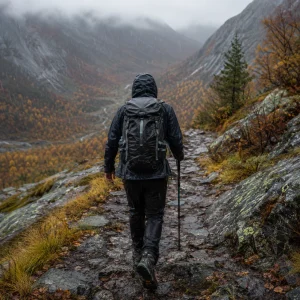
The best rain jackets for hiking are the ones you will actually carry on a day that looks fine. A jacket that is too bulky stays in the car, and a jacket in the car keeps nobody dry. Packability matters as much as the waterproof rating, and it is the specification least often quoted.
The second thing that separates them is ventilation. Every waterproof jacket is a trade between keeping rain out and letting sweat out, and on a climb you will generate more moisture than any membrane can shift. Pit zips solve that mechanically, which is why they matter more than a higher-spec fabric on most hikes.
Below are six genuinely stocked on Amazon right now, chosen for different conditions and budgets rather than ranked one to six. Ratings and specifications were checked at the time of writing. If you are still working out the rest of the system, our guide to how to layer for hiking covers what goes underneath.
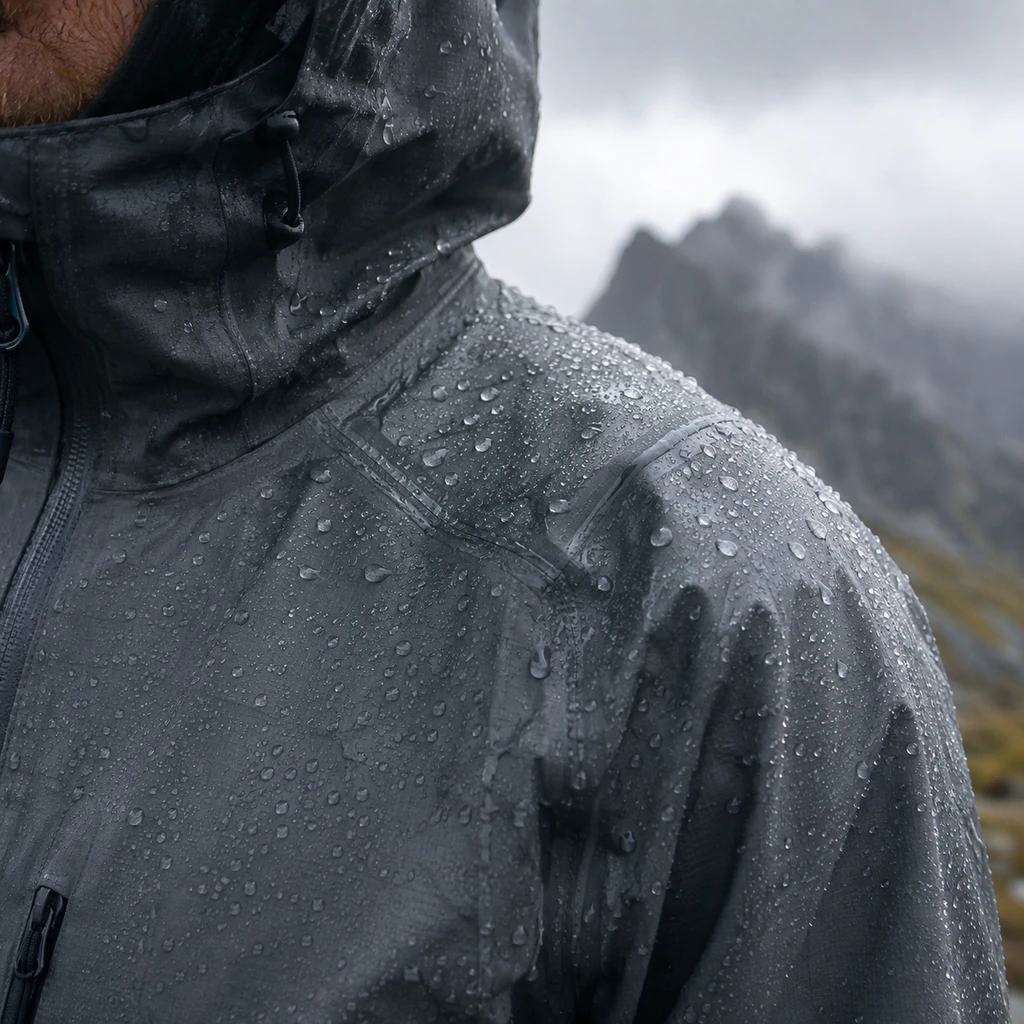
Table of Contents
What Makes the Best Rain Jackets for Hiking
Four things, in the order they affect a real day out.
- Taped seams. The single dividing line between a waterproof jacket and a shower-resistant one. Stitching makes holes; tape covers them. If a listing does not mention seam sealing, assume it has none.
- Ventilation. Pit zips let you dump heat without taking the jacket off. No membrane keeps up with a hard climb, so mechanical venting beats fabric specification most of the time.
- Packability. A jacket that stuffs into its own pocket gets carried on doubtful days. One that does not gets left behind, which is the same as not owning it.
- Hood adjustment. A hood that will not stay up in wind is decoration. Look for a drawcord and a stiffened brim rather than a plain elasticated hem.
Layer counts are worth understanding but easy to over-weight. A 2-layer jacket has a mesh lining, is cheaper and less breathable. A 2.5-layer has a printed inner and packs smaller. A 3-layer bonds all three and is the most durable and breathable, at a price. Most hikers are well served by 2 or 2.5. The rest of the system is covered in our guide to what to wear on the trail, and the kit list in our guide for beginner hikers.
The Best Rain Jackets for Hiking at a Glance
| Jacket | Construction | Pit zips | Packs into pocket | Best for |
|---|---|---|---|---|
| Columbia Watertight II | 2 layer nylon | No | Yes | Best value |
| The North Face Antora | DryVent 2L | No | No | Best all rounder |
| Marmot PreCip Eco | NanoPro 2.5 layer | Yes | Yes | Best ventilation |
| Columbia Arcadia II | Omni-Tech 2 layer | No | Yes | Best for women |
| Outdoor Research Foray 3L | AscentShell 3 layer | Hem to bicep vents | No | Best premium |
| Frogg Toggs All-Sport suit | 3 layer nonwoven | No | No | Best budget, jacket and trousers |
The Six Best Rain Jackets for Hiking in Detail
Columbia Watertight II: Best Value
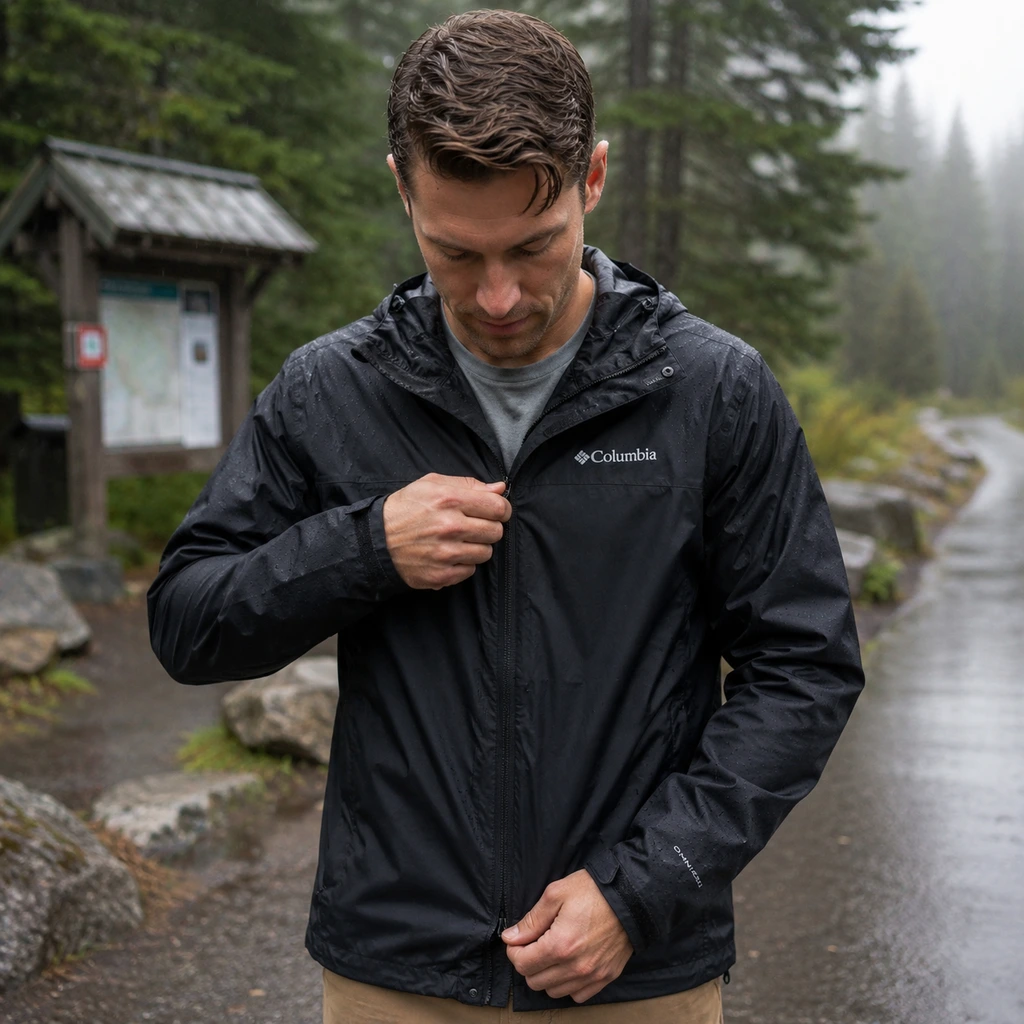
The Watertight II is the jacket that turns up in more day packs than anything else on this list, and the reason is that it does the basic job properly at a price that makes carrying it an easy decision. A waterproof 100 percent nylon shell handles everything from drizzle to a genuine downpour.
The useful details are small ones. It packs into its own hand pocket, so it lives permanently in a daypack without taking real space. An abrasion resistant chin guard stops the zip pull rubbing your neck raw, which sounds trivial until a wet afternoon. Elastic cuffs and hem keep draughts out without fiddly adjusters.
Columbia’s Omni-Shield finish resists absorption rather than soaking up water, so the shell stays light rather than gaining weight through a wet day. There are no pit zips, which is the honest limitation: on a hard climb you will need to unzip the front. At 4.7 stars it is the best value jacket here.
Specs That Matter
- Waterproof 100 percent nylon shell with Omni-Shield finish
- Packs into its own hand pocket
- Abrasion resistant chin guard at the top of the zip
- Elastic cuffs and hem, two zippered side pockets
- 4.7 stars, the highest rated Columbia shell on this list
Who It Is For
A first waterproof, a permanent daypack jacket, and anyone who wants reliable protection without paying for features they will not use.
The North Face Antora: Best All Rounder
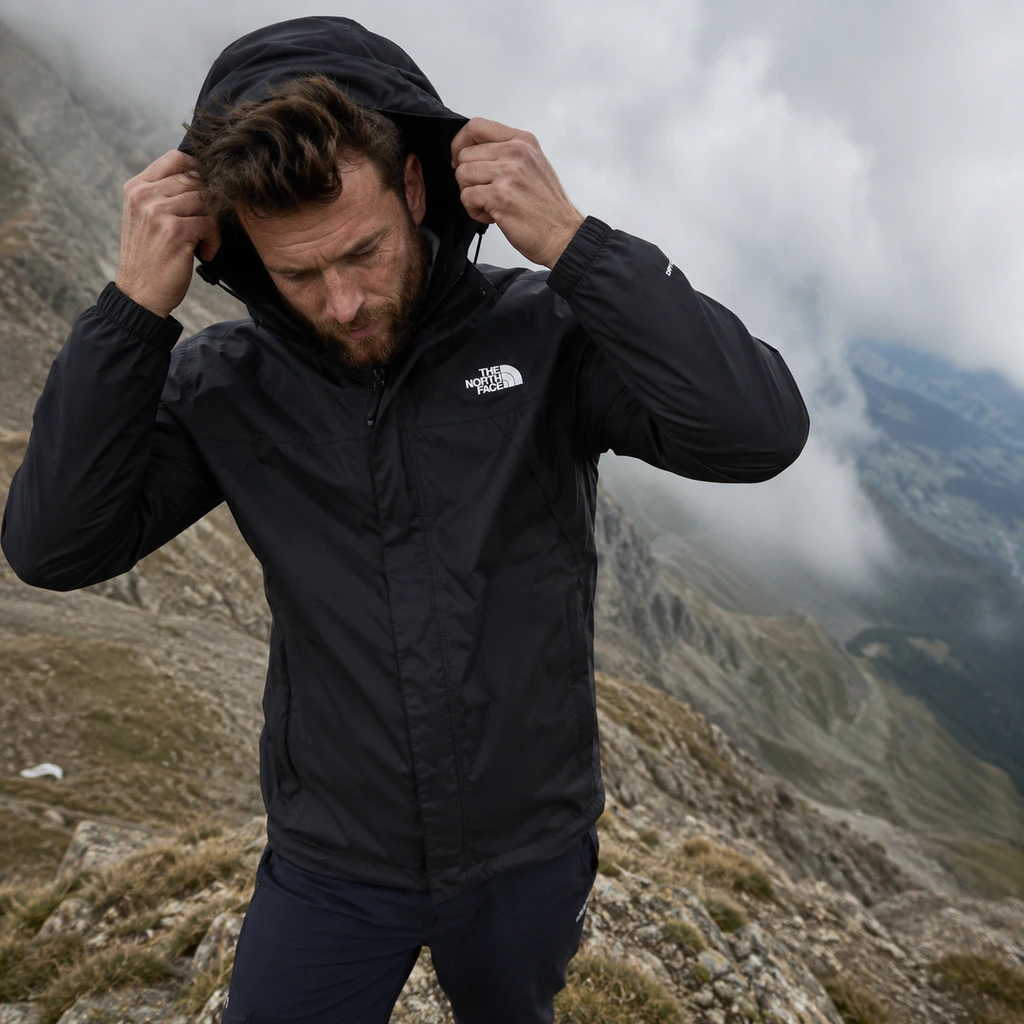
The Antora is built around DryVent 2L, a seam-sealed waterproof and breathable membrane with a non-PFC durable water repellent finish on the face fabric. That combination is the mainstream sweet spot: properly waterproof, windproof, and breathable enough for everything short of a sustained climb.
The hood is the standout. A three-piece adjustable design gives genuine coverage and holds its shape in wind rather than collapsing across your face, which is where cheaper hoods fail. Alpine-style zips and a standard fit leave room to layer a fleece underneath without the shell pulling across the shoulders.
The fabric is recycled, and the jacket carries The North Face’s sustainability badge, which requires 75 percent or greater recycled content. It does not pack into its own pocket, so it takes a little more room than the Columbia. At 4.8 stars from over six hundred ratings, it is the highest rated jacket here.
Specs That Matter
- Seam-sealed DryVent 2L waterproof and breathable membrane
- Non-PFC durable water repellent finish
- Adjustable three-piece hood that holds shape in wind
- Standard fit with room to layer underneath
- 4.8 stars, the highest rated jacket on this list
Who It Is For
One jacket for hiking, travel and everyday use, and anyone who wants a hood that works in real wind.
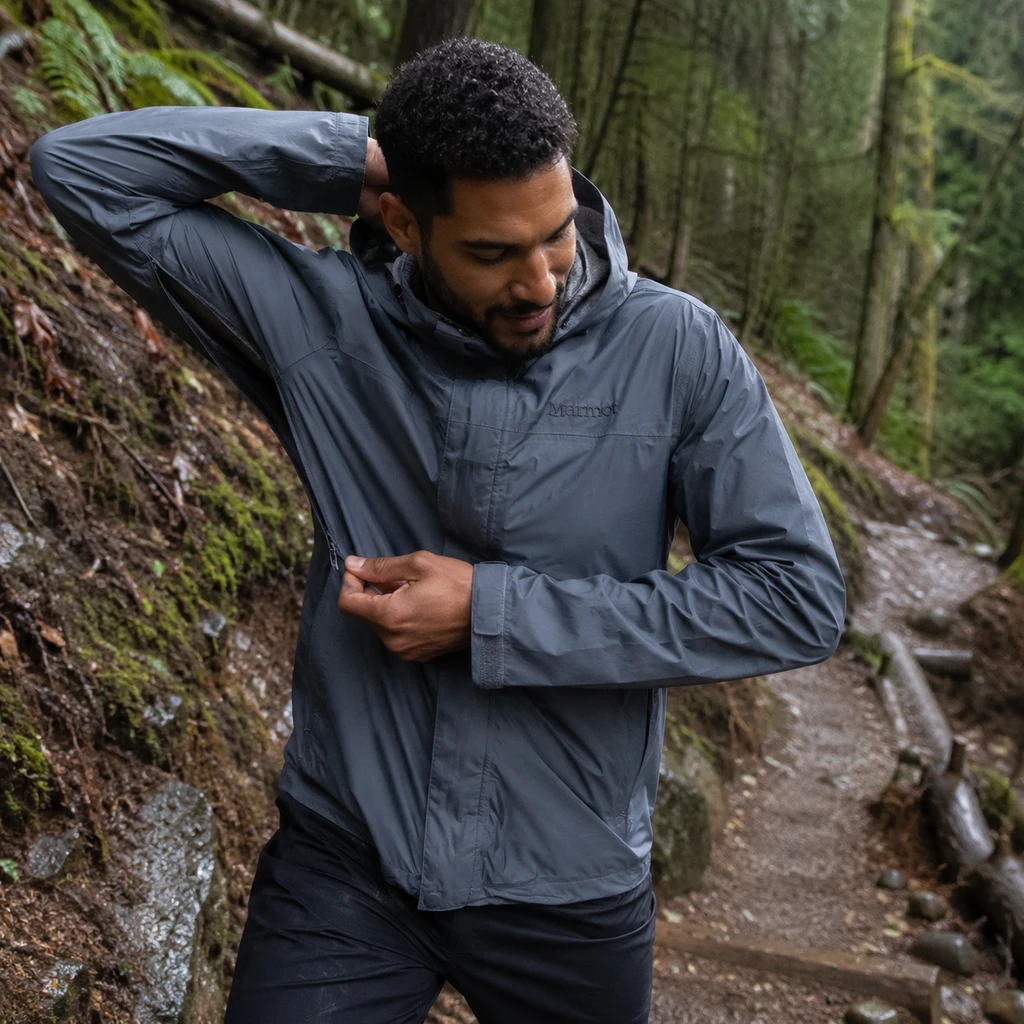
Marmot PreCip Eco: Best Ventilation
Pit zips are the reason to buy this one. Underarm vents let you dump a large amount of heat without removing the jacket, which is exactly what you need halfway up a climb in the rain, and no other jacket at this price offers them. Once you have hiked with them, going back is genuinely annoying.
Underneath, Marmot’s NanoPro membrane does the waterproofing across a 2.5-layer build, with 100 percent seam-taped construction and a PFC-free DWR treatment on the face fabric. The shell is 100 percent pre-consumer recycled nylon ripstop with a recycled polyester mesh lining.
The rest is well judged: a DriClime lined chin guard that does not irritate, zippered hand pockets, an adjustable drawcord hem, and it stows into its own pocket. At 4.5 stars from nearly four thousand ratings, this is the most capable hiking-specific jacket here for the money.
Specs That Matter
- Underarm pit zips for ventilation on climbs
- Marmot NanoPro waterproof breathable membrane, 2.5 layer
- 100 percent seam-taped construction with PFC-free DWR
- 100 percent recycled nylon ripstop shell, stows into its own pocket
- DriClime lined chin guard and adjustable drawcord hem
Who It Is For
Hikers who climb and sweat, warm wet conditions, and anyone who has overheated inside a waterproof.
Columbia Arcadia II: Best for Women
The Arcadia II is the women’s counterpart to the Watertight, built on Columbia’s Omni-Tech membrane, which they describe as air-permeable protection that is waterproof and breathable. In practice it is a well proven 2-layer shell with a 100 percent nylon face and a polyester mesh lining.
It is better adjusted than the men’s Watertight in one meaningful way: the hood is an adjustable storm hood rather than a fixed one, and there is a drawcord adjustable hem. Those two together let you seal the jacket down in wind instead of just wearing it.
Like the Watertight it packs into its own hand pocket, which is what makes it a jacket you carry rather than one you consider carrying. With over eight thousand ratings at 4.6 stars it is by a wide margin the most reviewed women’s shell on this list.
Specs That Matter
- Omni-Tech waterproof breathable 2-layer construction
- Adjustable storm hood and drawcord adjustable hem
- Packs into its own hand pocket
- 100 percent nylon shell with polyester mesh lining
- 4.6 stars from over 8,400 ratings
Who It Is For
Women wanting a proven packable shell, and anyone who values a properly adjustable hood over a higher fabric specification.

Outdoor Research Foray 3L: Best Premium
Three-layer construction is the meaningful upgrade here. AscentShell Dry bonds the face fabric, membrane and backer into one, which is more durable, more breathable and less clammy against the skin than a 2-layer jacket with a mesh lining. The fabric is 100 percent recycled 40D nylon with mechanical stretch, so it moves rather than binding across the shoulders.
Ventilation is unusually thorough: breathable hem-to-bicep vents run much further than a standard pit zip, so you can open the jacket up almost completely without taking it off. A single-separating centre front zip, an interior storm flap and hook-and-loop cuffs handle the weather sealing.
The hood is fully adjustable with a reinforced bonded brim, which is the detail that keeps rain off your face rather than funnelling it there. The honest caveat is the review count: 45 ratings at 4.6 stars, which reflects a recent listing rather than a weak product, and stock was limited when checked.
Specs That Matter
- AscentShell Dry 3-layer waterproof breathable membrane
- 100 percent recycled 40D nylon with mechanical stretch
- Hem-to-bicep vents for far more airflow than standard pit zips
- Fully adjustable hood with a reinforced bonded brim
- Interior storm flap and hook-and-loop cuff closures
Who It Is For
Sustained bad weather, mountain days, and anyone who wants a jacket that breathes properly and lasts.

Frogg Toggs Classic All-Sport: Best Budget
Over seventeen thousand ratings tells you what this is: the jacket and trousers people buy when they need to stay dry and do not want to spend. It is a full suit, so you get waterproof legs as well, which none of the other options here include at any price.
The fabric is Frogg Toggs’ own nonwoven polypropylene blend with a DriPore GEN 2 middle layer, fully seam taped across both pieces. It is genuinely waterproof and surprisingly breathable for the money. The jacket has an adjustable removable hood, a front zip with a snap-down storm flap and elastic cuffs, and the parka length sits over the trousers so water cannot run in at the waist.
The trade is durability. Nonwoven fabric tears more easily than ripstop nylon, particularly against brambles and rock, so treat it as a several-season jacket rather than a lifetime one. At 4.2 stars it rates lower than the rest, and for the price of one sleeve of a premium shell that is a reasonable bargain.
Specs That Matter
- Full suit: waterproof jacket and trousers together
- Nonwoven polypropylene with a DriPore GEN 2 waterproof breathable layer
- Fully seam taped across both pieces
- Adjustable removable hood, snap-down storm flap, elastic cuffs
- Parka-length jacket sits over the trousers to stop run-off at the waist
Who It Is For
Tight budgets, occasional use, and anyone who wants waterproof legs as well without buying overtrousers separately.

How to Choose Between Them
Your First Waterproof
The Columbia Watertight II, or the Arcadia II on a women’s fit. Both pack into their own pocket, both are properly waterproof, and both cost little enough that carrying one on a doubtful day is not a decision. Spend the difference on a decent base layer, which our guide to layering explains matters more.
If You Climb and Overheat
The Marmot PreCip Eco for the pit zips, or the Outdoor Research Foray 3L if the budget stretches, for vents that run from hem to bicep. Ventilation is the problem that fabric specifications do not solve, and mechanical venting does. The same overheating issue shows up faster when running, as our guide to trail running for beginners covers.
One Jacket for Everything
The North Face Antora. It is the best-rounded jacket here, it looks like normal clothing off the hill, and the hood works. It does not pack quite as small as the Columbias, which is the only real compromise, and it packs fine into anything from our round up of hiking daypacks.
Sustained Mountain Weather
The Foray 3L. Three-layer construction earns its cost on the days you are out for hours in it rather than putting it on for a shower. Pair it with the seasonal planning in our guide to fall hiking, and the footwear advice in how to choose hiking boots, because wet feet undo a dry torso.
Spending as Little as Possible
The Frogg Toggs suit, and accept it will not last forever. You get waterproof trousers included, which otherwise cost about as much again. It is also the right answer for a spare set kept in the car, as our notes on camping in the rain suggest, and a sensible thing to have along for cooking at camp in poor weather.
Waterproofing, Breathability and Layers: What the Specs Mean
Taped Seams Are the Real Dividing Line
Every stitch is a hole through the waterproof layer. Seam tape covers them from the inside, and a jacket without it will leak along the shoulders and hood no matter how good the fabric is. Fully seam-taped is what you want; critically taped means only the worst seams are covered.
Two, Two and a Half, or Three Layers
A 2-layer jacket hangs a separate mesh lining inside; cheap and slightly clammy. A 2.5-layer prints a protective pattern onto the membrane instead, saving weight and bulk. A 3-layer bonds a fabric backer to the membrane, which is tougher, more breathable and more expensive. Most hiking is well served by 2.5. The same buy-for-use logic runs through our guide to ultralight packing.
DWR Wears Off and Is Not the Waterproofing
Durable water repellent is a surface treatment that makes water bead. It is not what keeps you dry; the membrane does that. When DWR wears off the face fabric wets out, the jacket feels clammy and people assume it has failed. Wash it properly and reproof it and most jackets come back, in much the way the maintenance advice in our guide to storing outdoor gear keeps the rest of a kit working.
Breathability Has Limits Worth Knowing
No membrane moves sweat as fast as you produce it going uphill. Manufacturer breathability figures are measured in still laboratory conditions and do not describe a climb in humid air. This is why pit zips matter more than the number, and why our advice on predicting trail weather is worth following: often the answer is to time the climb rather than out-spec the rain.
Fit, Care and Keeping It Waterproof
Fit it over a fleece, not over a t-shirt. A shell that fits perfectly in the shop will bind across the shoulders once there is a mid layer underneath, and restricted movement is what makes people leave the jacket off. Check you can reach across your body and raise both arms fully.
Wash it more often than feels right. Dirt and body oils clog the membrane and stop it breathing, and a jacket that has never been washed performs worse than a clean older one. Use a technical wash rather than detergent, and never fabric softener, which coats the fabric and destroys the DWR.
Reproof when water stops beading on the face fabric. A wash-in or spray-on treatment plus a warm tumble dry, where the care label allows it, reactivates most finishes. Store it hung and dry rather than stuffed, and see our guide to storing outdoor gear. On multi-day trips the shell doubles as windproofing, which our guide to backpacking for beginners assumes.
Frequently Asked Questions
What waterproof rating do I need for hiking?
Anything genuinely seam-taped will keep out normal rain, and the millimetre ratings manufacturers quote matter less than construction and fit. Breathability and ventilation are the specifications that change your day. The best rain jackets for hiking are the ones you can climb in without soaking yourself from the inside.
Are pit zips worth it?
Yes, more than almost any fabric upgrade. No membrane can move sweat as fast as you generate it on a climb, so being able to open the jacket without removing it is the practical fix. If you are choosing between a better fabric and pit zips, take the pit zips.
Why does my rain jacket feel wet inside?
Usually condensation rather than leakage. When the face fabric wets out, breathability drops sharply and your own moisture condenses on the inside. Reproofing the DWR and washing the jacket fixes it far more often than the membrane has actually failed.
Can I wear a rain jacket as a windbreaker?
Yes, and it is one of the main reasons to carry one. A waterproof shell is windproof by definition, and wind strips heat faster than cold air alone. Many hikers put the shell on for wind long before any rain arrives, which matters most on exposed ground and after dark, as our night hiking guide notes.
How often should I reproof a rain jacket?
When water stops beading and starts soaking into the outer fabric, which for regular use is usually once or twice a season. Wash first, because reproofing over dirt does not work. It is a twenty minute job that restores most of the performance people assume they have lost permanently.
Buy for how you hike rather than for the specification sheet. If you want one answer: the Columbia Watertight II or Arcadia II if this is your first shell, the Marmot PreCip Eco if you climb and overheat, and the North Face Antora if it needs to work everywhere else too. Then read our guide to how to layer for hiking, because the shell is only the outermost third of staying comfortable.
Discover more from Maive Verse
Subscribe to get the latest posts sent to your email.


