

This post may contain affiliate links. If you buy through them, we may earn a small commission at no extra cost to you.
Pickleball is played almost entirely sideways, and running shoes are built to go forwards. That single mismatch is behind most of the rolled ankles, shredded outsoles and bruised toes on public courts, and it is why the best pickleball shoes are court shoes: flatter, wider through the forefoot, reinforced where you drag your toe, and stiff enough through the midfoot to resist a hard lateral push.
Below are six pairs that each win a clear job, from a genuinely pickleball specific shoe to a forty dollar tennis shoe with nearly four thousand reviews, plus two wide fitting options because foot width is the single most common reason a court shoe feels wrong. Prices and ratings were checked on Amazon while writing, so treat them as a snapshot.
Before the picks, the four things that decide whether a shoe survives outdoor concrete: the outsole compound, the fit through the forefoot, how much cushioning you trade for court feel, and whether the toe is reinforced where you drag it.
Why Court Shoes and Not Running Shoes
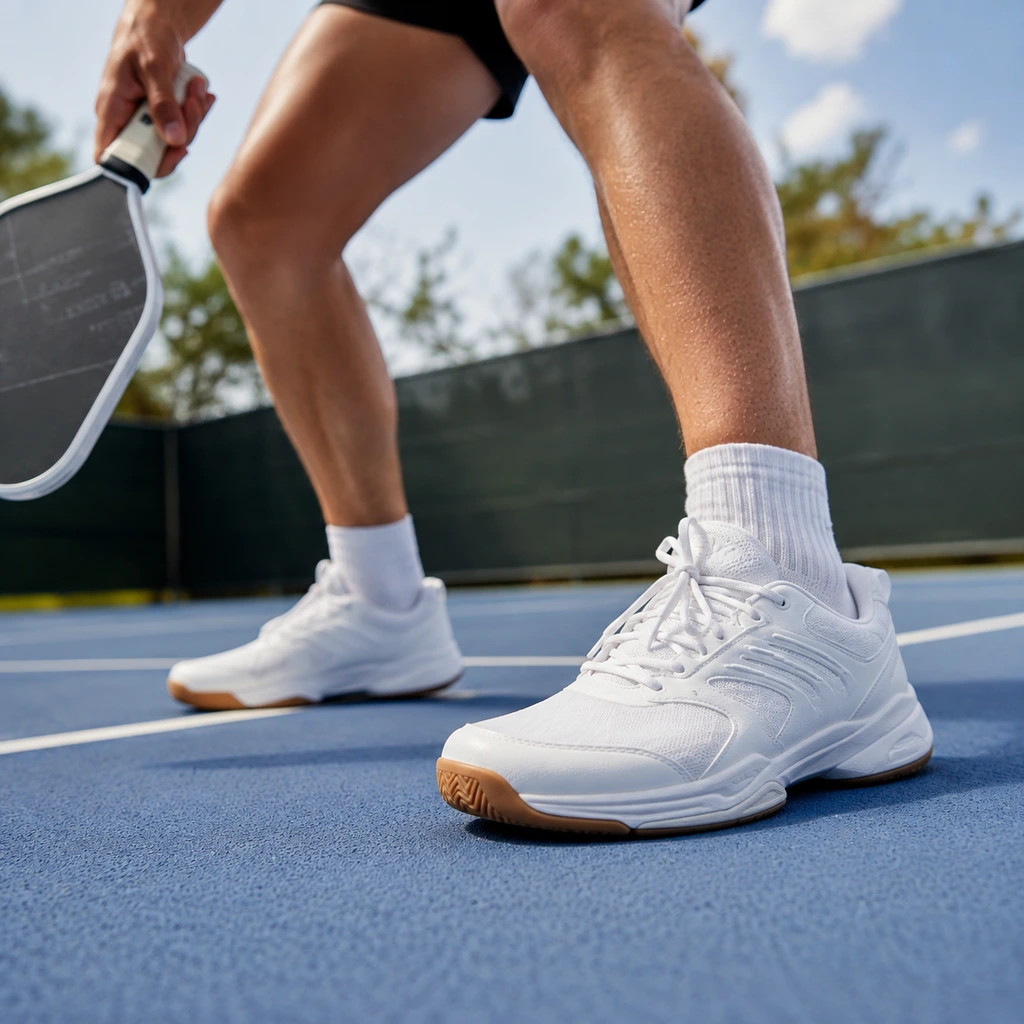
Every one of the best pickleball shoes below is a court shoe, so it is worth being specific about why rather than repeating that court shoes are safer.
Lateral Support Is a Structural Thing
A running shoe has a narrow, often rockered sole and a soft upper, both tuned for repeated forward strides. Push hard sideways in one and the foot slides toward the edge while the sole keeps tipping, which is how ankles roll. A court shoe sits lower, spreads wider than the foot at the forefoot, and adds a stiffer midfoot cage so the shoe resists rather than follows. On a small court where every third shot involves a sideways push, that is not a marginal difference.
The Outsole Compound Decides Grip and Lifespan
Outdoor pickleball is usually played on textured concrete or asphalt, which chews soft rubber. Look for a harder outdoor or all court rubber with a herringbone or modified herringbone pattern. Gum rubber, the tan coloured soles you see on volleyball and indoor court shoes, grips beautifully on a gym floor and wears fast outdoors. Indoor players should want the opposite, which is why the list below includes both.
Toe Drag Is Where Shoes Die
Watch your own serve and you will probably see the back toe scuff the court. Over a season that wears a hole in an unreinforced upper, usually on the inside of the big toe. Court shoes add a rubber toe wrap or a moulded bumper there. If you are hard on shoes, this feature matters more than cushioning.
Non Marking Matters Indoors
If you ever play in a gym or a community centre, check for a non marking outsole, which is normally stated on the listing. Many facilities enforce it, and a dark hard rubber that leaves streaks will get you moved outside. Anyone building their own surface can skip this, and our guide to building an outdoor pickleball court covers the surface side.
How To Choose the Best Pickleball Shoes
Shoes are the one piece of kit where fit beats brand, unlike the paddle decision, which is mostly about weight and grip size. Four decisions and one honest measurement. Get the width right and almost any decent court shoe will work; get it wrong and the best shoe here will still hurt.
Measure Your Width, Not Just Your Length
Most court shoes come in a standard D width for men and B for women, which leaves a lot of people quietly uncomfortable. If your little toe presses the mesh, if you loosen the laces over the forefoot, or if you have ever bought a half size up for room rather than length, you probably need a wider fit. New Balance is the mainstream brand that actually offers 2E and 4E widths, which is why two of the six picks below are theirs.
Cushioning Versus Court Feel
More foam is more comfortable standing at the kitchen line and slower to respond when you need to change direction. Less foam gives you a connected, stable feel and beats up your knees on concrete over three hours. Pick by your session length and your joints: an hour of singles rewards court feel, three hours of social doubles rewards cushioning. The same trade off runs through the rest of your kit, from the clothing you play in to the hat you wear against the glare.
Weight, Within Reason
Weight follows from everything else, so treat it last, the way you would when dressing for a hot outdoor session. Court shoes usually land between about 11 and 15 ounces per shoe. The lighter end feels quick and wears out sooner, the heavier end is usually leather or heavily reinforced and lasts. Do not chase grams here the way runners do, because the durability you give up on outdoor concrete is real.
Six Month Outsole Warranties Tell You Something
Some court shoe lines carry a six month outsole guarantee. Even when you never claim it, its presence tells you the manufacturer expects the sole to survive abrasive outdoor use, which is a useful signal in a category full of shoes that look sporty and are not.
Replace Them Before They Fail
Sixty to eighty hours of play is a realistic life for a court shoe on outdoor concrete, which for three sessions a week is roughly one season. The tell is not the tread, it is the upper creasing and the midsole feeling dead. Playing on a shoe past that point is how the ankle work in our pickleball warm up routine gets undone, and it quietly slows the footwork you built in our court drills.
The 6 Best Pickleball Shoes for Outdoor Courts
These are the six best pickleball shoes for the season, and each owns a category rather than a vague overall crown. Where two look similar, the difference is usually width or outsole compound.
Skechers Viper Court Pro: Best Overall
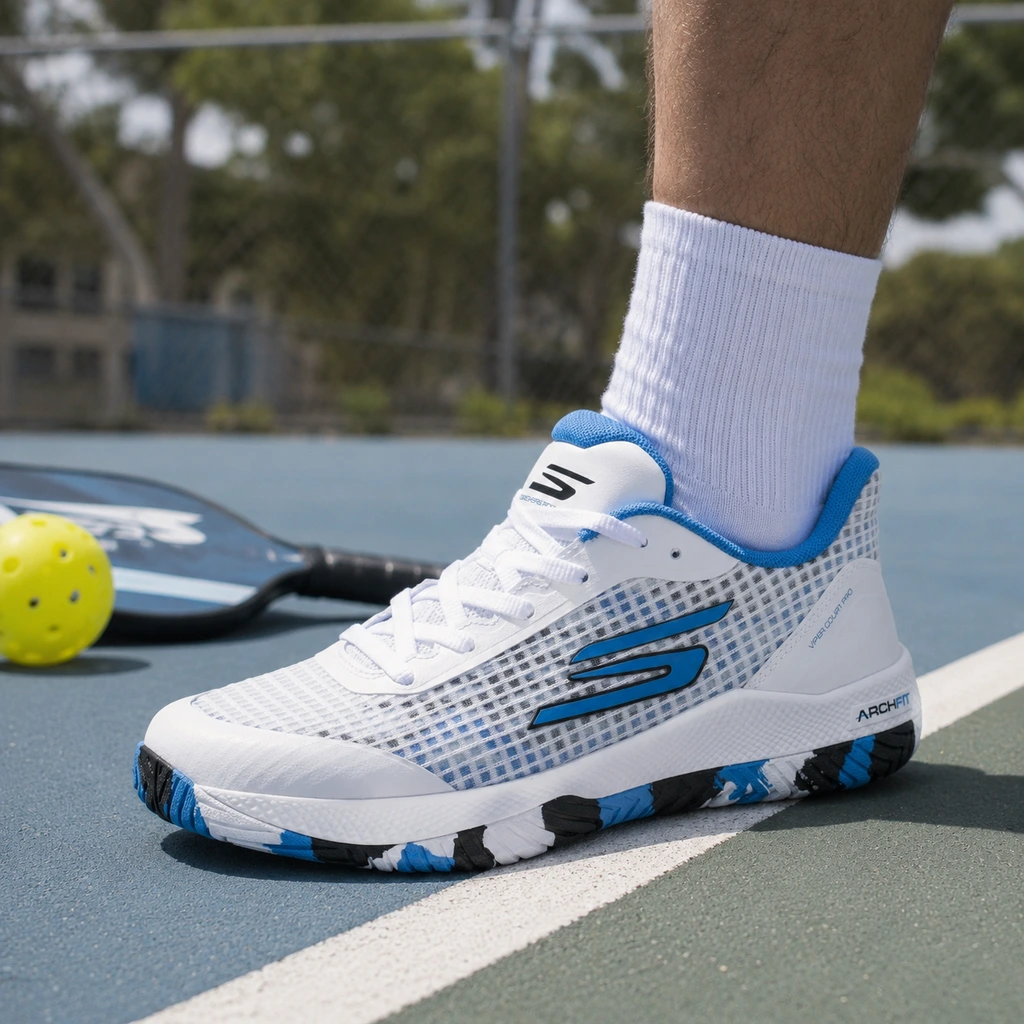
This is the only shoe here designed for pickleball rather than adapted from tennis, and it shows in the details: a court tuned outsole with a mottled pattern that grips textured concrete, a wide stable platform, and an ArchFit insole that suits players who stand at the kitchen line for hours. The white and blue mesh upper breathes well in summer heat.
It rates 4.3 stars across more than 900 reviews and lands around ninety five dollars, which is the middle of the court shoe market. The trade off is that mesh is less abrasion resistant than leather, so if you scuff your toe hard on every serve, check the wrap after the first month. Skechers also sells a non Pro version at a lower price with less support.
Who It Is For
Players who want a shoe built for this sport, and anyone who plays long social sessions and wants cushioning without losing lateral stability.
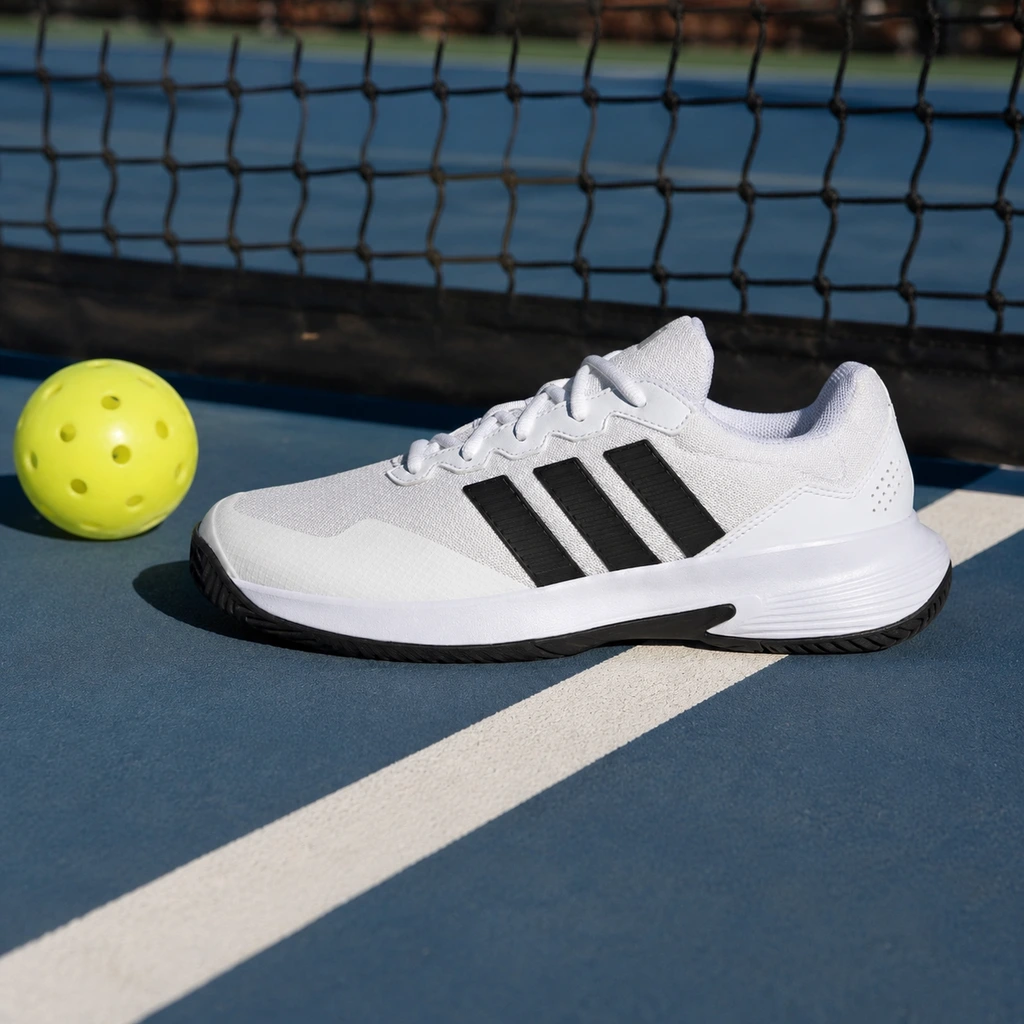
adidas Gamecourt 2: Best Value
Around forty two dollars for a real tennis shoe with an Adiwear outsole is the best value in this category, and the near four thousand reviews at 4.4 stars say it is not a fluke. It is a plain white shoe with black three stripes, a textile upper and a flat, wide court sole. Nothing clever, nothing missing.
You give up the plush cushioning of the ASICS options and the width choices of New Balance, and the upper is fairly stiff out of the box, so give it two sessions. For a first pair of court shoes, or a second pair to rotate so each dries out between games, it is very hard to argue with the price.
Who It Is For
Anyone buying their first court shoe, players on a budget, and anyone who wants a cheap second pair to rotate.
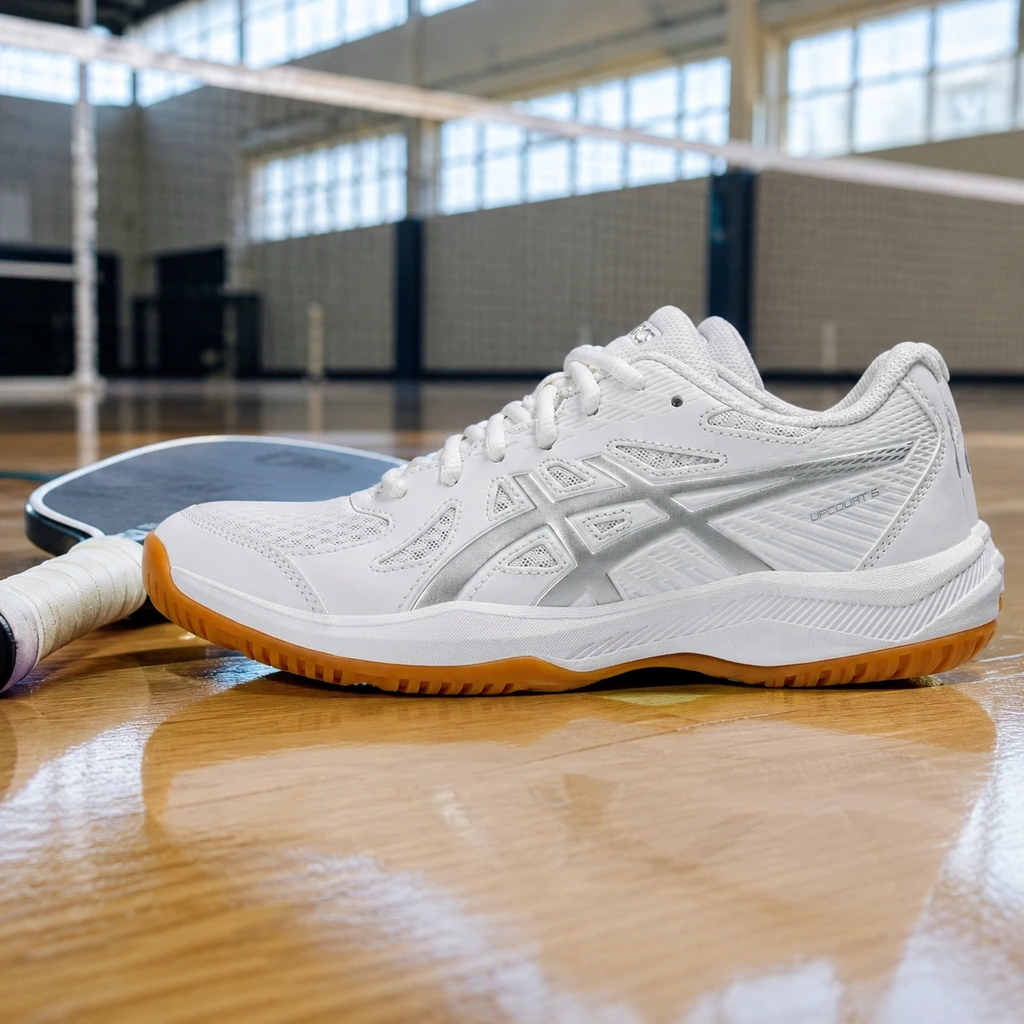
ASICS Upcourt 6: Best for Indoor and Gym Courts
The Upcourt is a volleyball shoe, which makes it excellent for indoor pickleball: a gum rubber outsole that grips a wooden or coated gym floor, a low profile that keeps you connected to the surface, and a light flexible build that suits quick footwork at the kitchen line.
It holds 4.4 stars across roughly 2,500 reviews at about sixty five dollars. Be clear about the compromise, because it is the whole point of this pick: gum rubber wears noticeably faster on outdoor concrete than a hard court compound. Buy this if most of your play is indoors, and buy something else if you live on outdoor courts.
Who It Is For
Indoor and gym players, plus anyone who wants maximum grip on a smooth surface and the lightest shoe in this list.
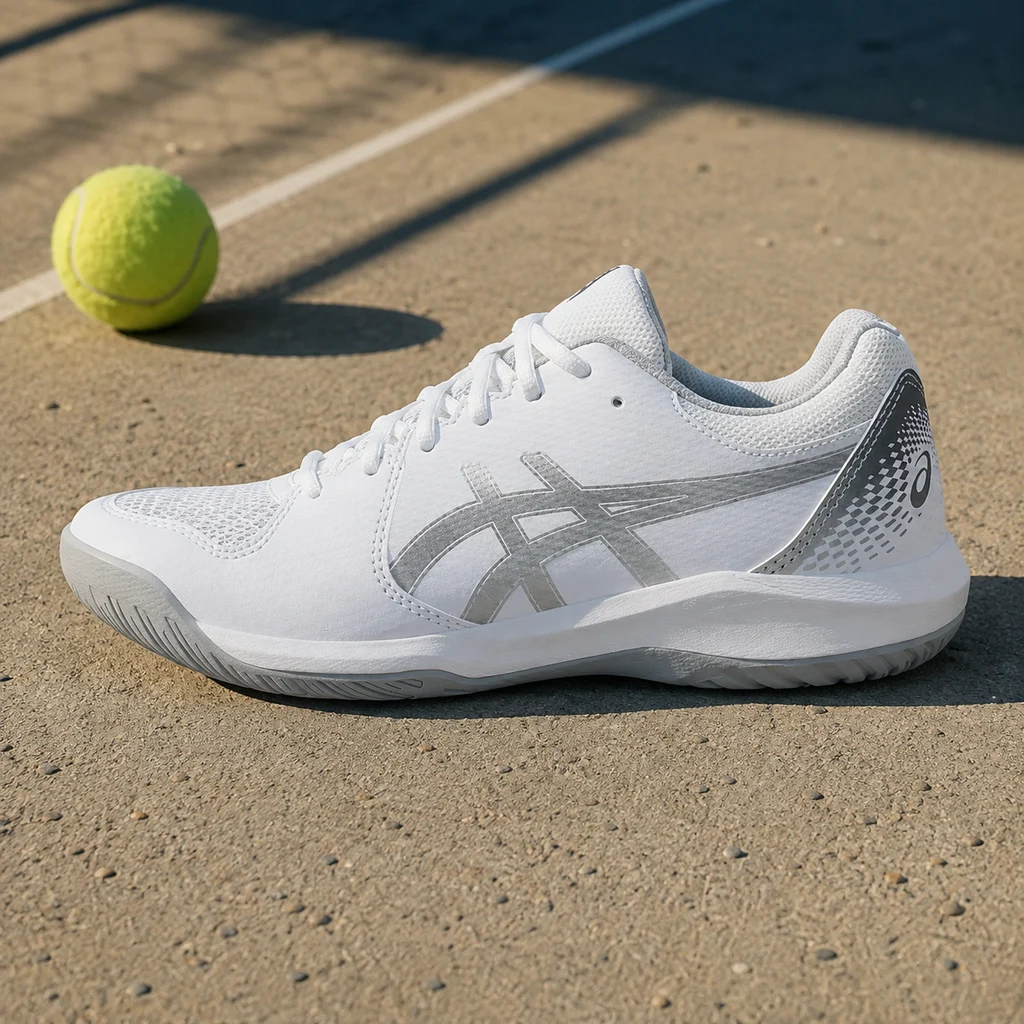
ASICS Gel-Dedicate 8: Best Cushioning Under $80
The Gel-Dedicate is the budget end of the ASICS tennis line, and it brings the thing ASICS is known for: gel cushioning in the heel that takes the sting out of three hours on concrete. The white and silver upper is synthetic leather over mesh, which handles toe drag better than pure mesh, and the outsole is a durable all court pattern.
It rates 4.1 stars across nearly 2,000 reviews at around seventy dollars, the lowest rating in this group, and the reason is fit: it runs narrow and slightly short, so most people size up half a size. If you have a wide forefoot, skip to the New Balance picks instead of hoping.
Who It Is For
Players with knee or heel complaints, long doubles sessions on hard concrete, and narrow to standard width feet.
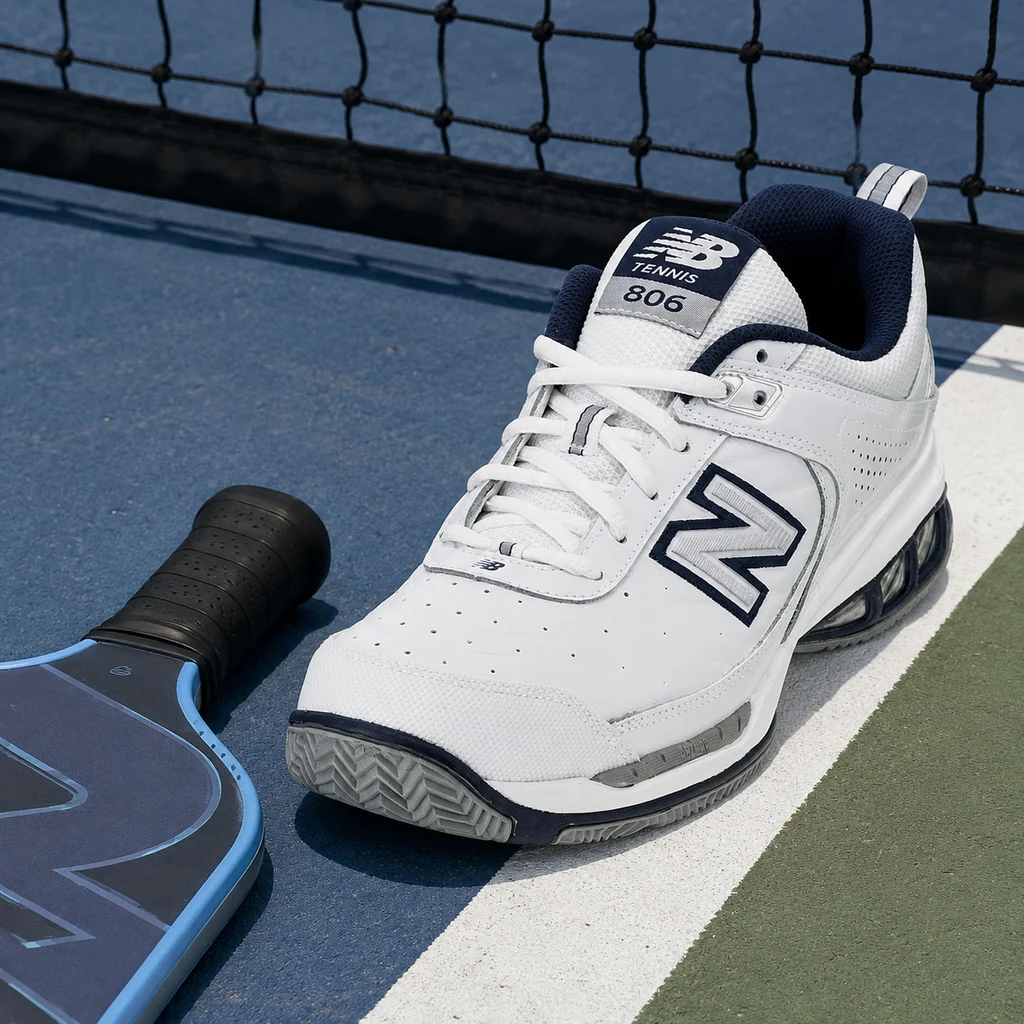
New Balance 806: Best for Wide Feet
A leather tennis shoe that has been sold for years for one reason: it comes in widths that other brands do not, up to 4E, and the leather upper moulds to an awkward foot instead of fighting it. There is real ABZORB cushioning in the heel, a proper reinforced toe, and a herringbone outsole meant for hard courts.
It costs about ninety dollars, rates 4.3 stars, and has a thinner review pool than the rest of this list at roughly 120 ratings. It is also heavier and warmer than any mesh shoe here, which is the honest cost of leather. In exchange you get a shoe that lasts and a fit most wide footed players cannot get anywhere else.
Who It Is For
Anyone with a wide or high volume foot, players who wear shoes out quickly, and people who prefer leather support to mesh.
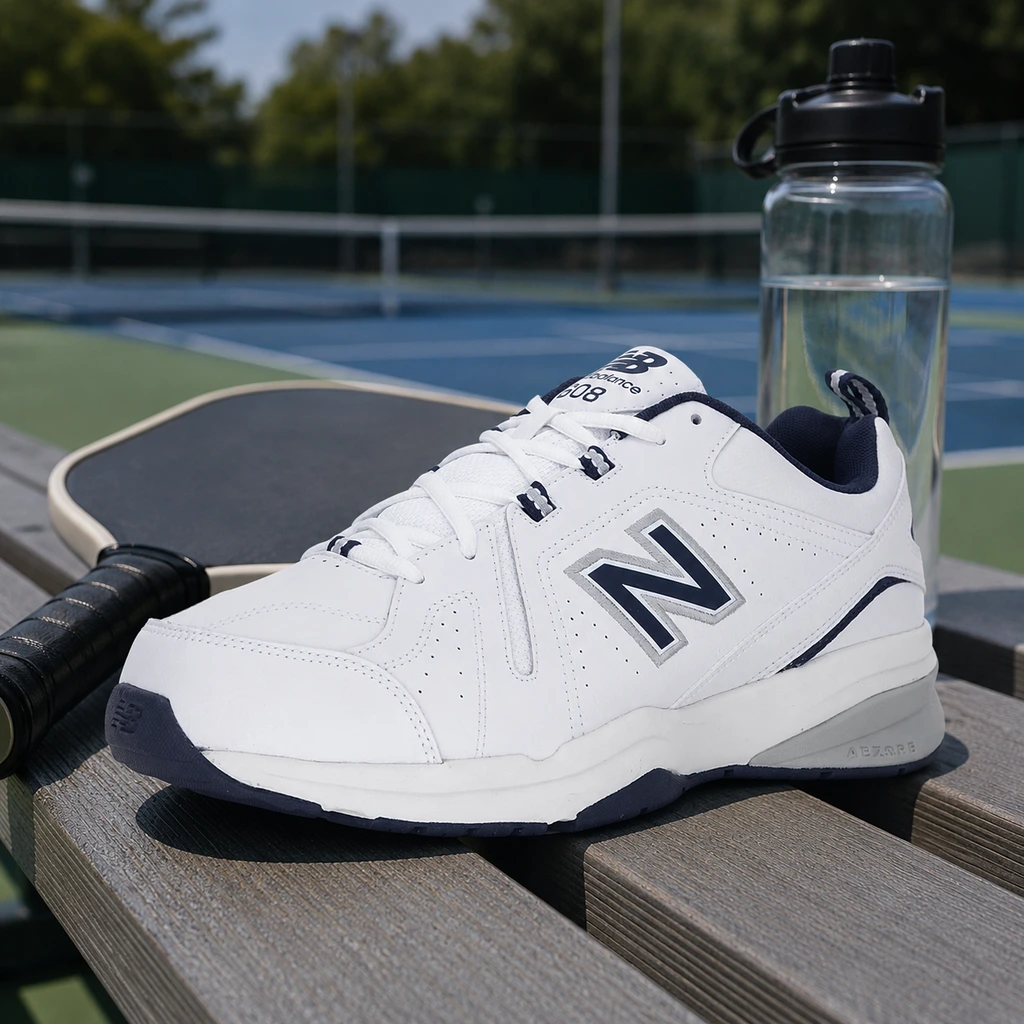
New Balance 608 V5: Best Budget Wide Fit
Seventy six thousand ratings at 4.6 stars makes this one of the most reviewed shoes on Amazon, and it turns up on rec courts constantly. It is white leather, available in multiple widths including 4E, with ABZORB cushioning, a reinforced toe and a flat non marking sole, all for around sixty dollars.
Here is the caveat, and it matters: the 608 is a cross trainer, not a court shoe. It is flatter and more stable than a running shoe and fine for social doubles, but it does not have the midfoot cage or the outsole pattern of a dedicated court shoe, so hard lateral play asks more of your ankle. Treat it as the comfortable, wide, inexpensive option for casual play rather than the shoe for competitive singles.
Who It Is For
Casual and social players with wide feet, anyone on a tight budget, and players who want one shoe for the court and the gym.
Comparison at a Glance
Here are the best pickleball shoes side by side. Prices are the Amazon listing at the time of writing and move constantly. The surface column is the one most buyers get wrong.