

This post may contain affiliate links. If you buy through them, we may earn a small commission at no extra cost to you.
Sunset moves earlier by a minute or two every day through September, and it catches people out. You arrive at camp in daylight, start cooking, and suddenly you are chopping onions by the light of a phone screen propped against a water bottle. The best camping lanterns fix that for the price of a takeaway, and the right one depends almost entirely on how many people you are feeding and how far you carry it.
Below are six lanterns that each own a clear job, from a 1000 lumen light for a family site to a pocket sized tent globe and an inflatable solar lantern that weighs almost nothing. What separates the best camping lanterns from the cheap ones is rarely the headline brightness, it is how low they dim, how long they run at the setting you actually use, and whether they survive a wet night hanging off a guy line. Before the picks, the four numbers on the box that decide all of that.
Why Camp Lighting Gets Harder in Autumn
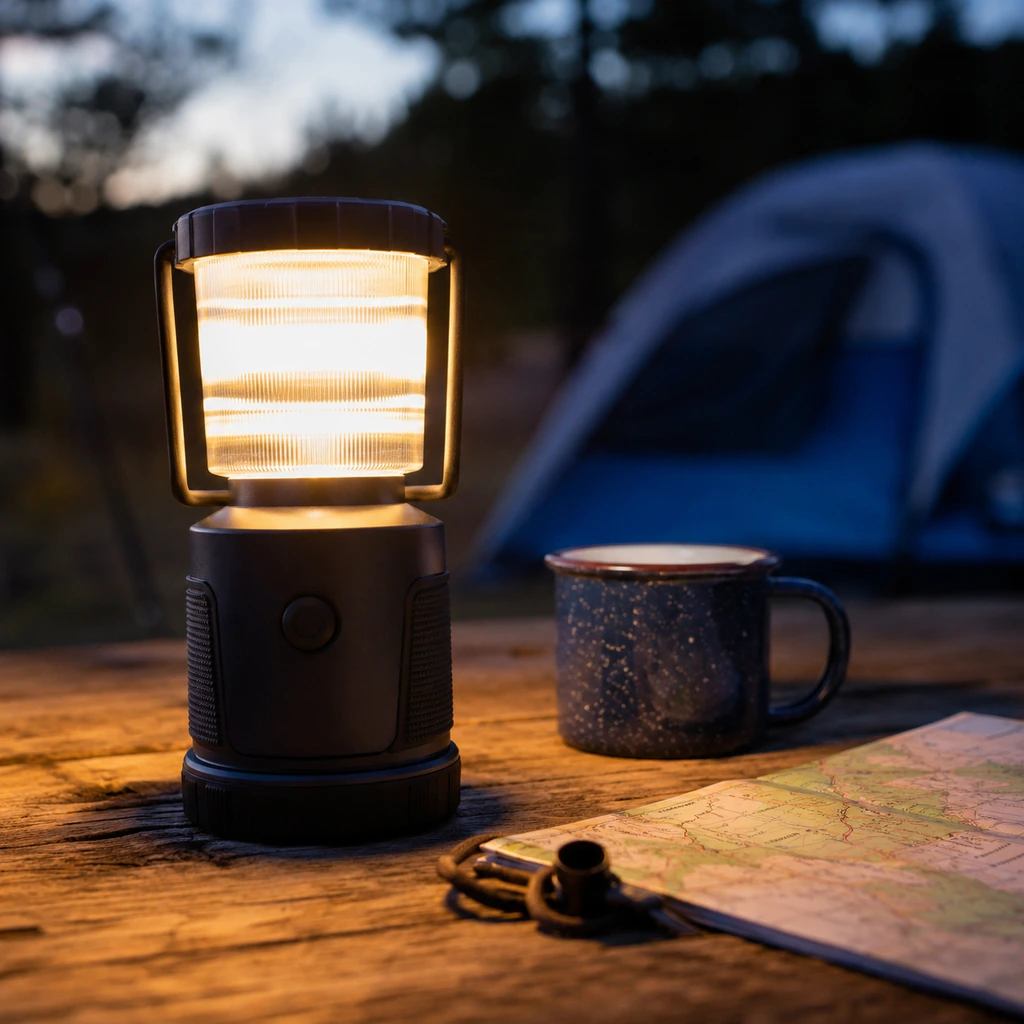
In midsummer you can eat dinner at eight and still see your plate. By late September the same meal happens in the dark, and the gap between a pleasant evening and a miserable one comes down to whether you can see what you are doing. Cooking, washing up, finding a head torch, reading a map, keeping an eye on children: all of it needs light that stays where you put it.
Phones are the default fallback and the worst option. They throw a hard, narrow beam in one direction, they blind everyone at the table, and they drain the battery you may need in the morning. A lantern does the opposite job, spreading soft light in every direction from a fixed point above head height, and that difference in shape is why even the best camping lanterns at modest brightness beat a phone torch outright.
The Three Jobs a Lantern Has To Do
It helps to stop thinking about brightness and start thinking about jobs. Most camps need three kinds of light, and one lantern rarely does all three well.
Area Light
This is the lantern hung over the table or from the tarp ridge, lighting the whole living space so nobody needs a torch to pass the salt. It wants to be bright, diffused and high up, and it will run for hours at a time, so runtime matters more than raw output.
Task Light
Task light is for the stove, the cool box and the tent floor. It can be much dimmer, and it needs to sit close to what you are doing without rolling off a picnic table. Small lanterns with magnets or a flat base do this better than a big one on a hook.
Emergency Light
The third job is the one you hope not to need: a light that still works when everything else is flat, ideally with a red mode and a distress flash. Alkaline and solar lanterns are strong here, because a lantern in a car boot with fresh batteries is ready months later.
Why One Lantern Is Rarely Enough
Two modest lanterns beat one bright one almost every time. Light from a single source casts hard shadows, so somebody is always working in the dark, and if that one unit fails the whole camp goes black. Splitting the job across a bright area light and a small tent light also lets you run each at a lower setting, which stretches both batteries considerably. If your evenings usually revolve around a campfire, you still want a lantern for the jobs that happen away from it, because firelight is beautiful and almost useless for finding a tent peg or reading a label.
What Changed in Camping Lanterns for 2026
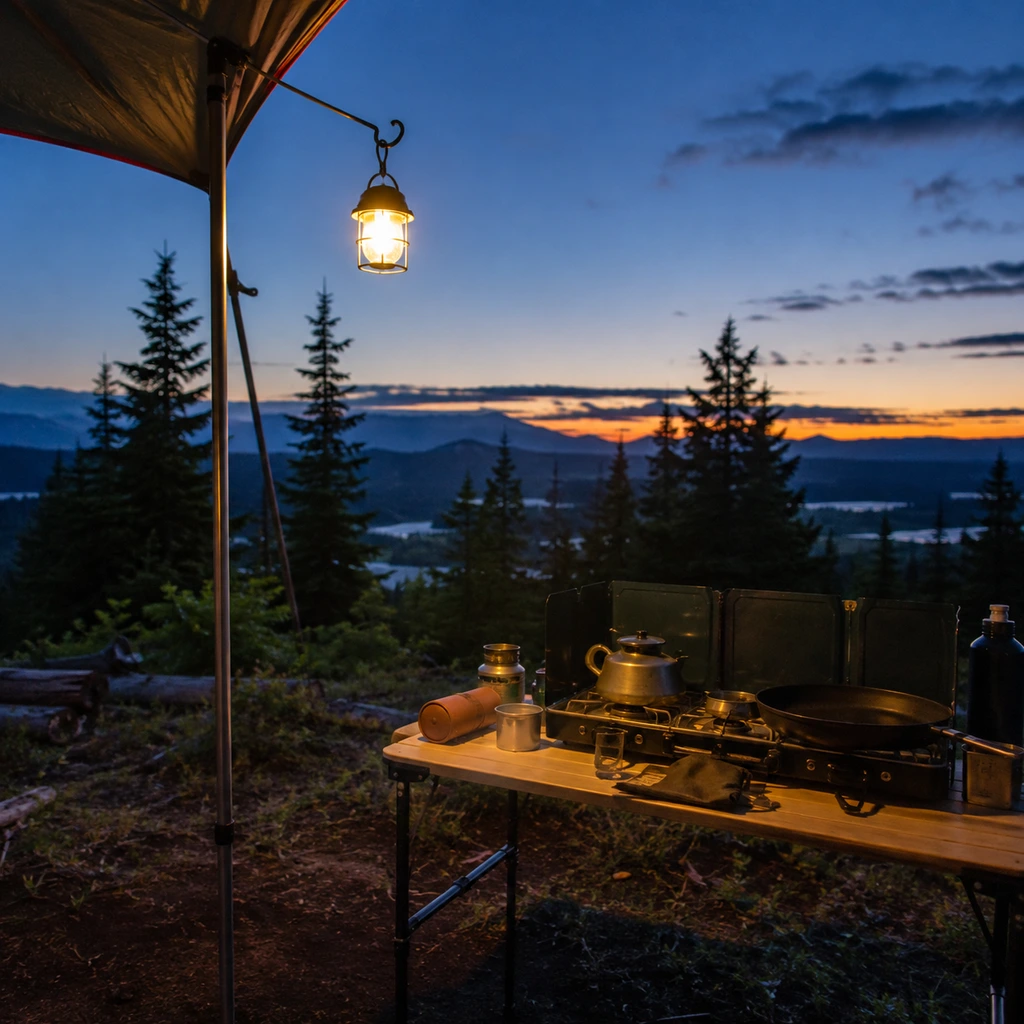
Lighting is one of the few categories where the cheap end genuinely caught up. A decade ago a bright lantern meant gas, weight and a mantle you could break with a thumbnail. Now the best camping lanterns are all LED, and the interesting differences have moved to power, dimming and how the light is shaped.
Rechargeable Went Mainstream, Alkaline Refused To Die
Most new models charge over USB, and many now push power back out to a phone, which quietly replaced a separate battery pack for a lot of weekend campers. What surprises people looking at the best camping lanterns by review count is how many of the most trusted models still take disposable cells. Runtime is the reason. A lantern with three fresh D cells in a car boot is ready in February with no thought at all, and you can extend it by buying batteries at any petrol station.
Dimming and Warm Light Beat Raw Brightness
Manufacturers spent years competing on maximum lumens, and the market has largely moved on. A stepless dimmer, a warm white option and a red night mode now matter more to how a lantern feels to live with than another 200 lumens nobody uses. The best camping lanterns in 2026 tend to be the ones that go low and warm gracefully rather than the ones that go brightest.
How To Choose the Best Camping Lanterns
Four numbers do most of the work: lumens, runtime, what powers it, and how well it survives weather. Everything else is convenience. Work through them in that order and the shortlist of best camping lanterns for your own camping shrinks to two or three quickly.
Lumens: How Bright Is Bright Enough
Lumens measure total light output, and manufacturers quote the maximum setting, which is usually the one you will almost never use. Brightness needs are smaller than people expect, and a lantern that is too bright at close range is genuinely unpleasant, so a good dimmer matters more than a big headline number.
Tent and Reading Light: 100 to 300 Lumens
Inside a tent, anything above about 300 lumens bounces off the fabric and turns the whole space into a lightbox. One hundred to 300 lumens is enough to read, sort gear and find a sock, and at that level a small lantern will run for many nights on one set of batteries.
Cooking and Social Space: 500 to 1000 Lumens
An area light over a table wants 500 to 1000 lumens. That covers a family sized pitch, lights faces well enough for conversation, and gives you enough to cook safely. Most of the time you will run it at half.
Group Sites and Power Cuts: 1000 Lumens and Up
Above 1000 lumens you are lighting a group shelter, a car park or a room at home during an outage. It is useful headroom rather than a setting you live at, and it is the reason a bright lantern with good dimming is a better buy than a dim one you cannot turn up.
Runtime and What Powers It
Runtime figures are quoted at the lowest setting unless stated otherwise, which is why a lantern can claim hundreds of hours and still fade in an evening on full power. Read both ends of the range, because the honest question is how many nights it lasts at the level you actually use.
Rechargeable Lithium
Rechargeable lanterns are cheaper to run, usually lighter for the brightness, and many double as a power bank for a phone. The catch is that they need a charging plan. A weekend is fine, a week off grid is not, unless you can top them up from a car or a solar panel.
Alkaline D and AA Cells
Disposable cells are heavier and less green, but they are the reason so many of the most trusted lanterns still use them. They sit in a cupboard for a year and work, spares cost very little in any supermarket, and you can carry the exact amount of extra runtime you want. Cold weather saps alkaline cells noticeably, so keep spares somewhere warm.
Solar and Hybrid
Solar lanterns charge whenever they are strapped to the outside of a pack, which makes them close to free to run on long trips. Output is modest, and a run of grey days means you rely on the backup socket, so treat solar as a second lantern rather than the only one.
Light Colour, Dimming and Red Mode
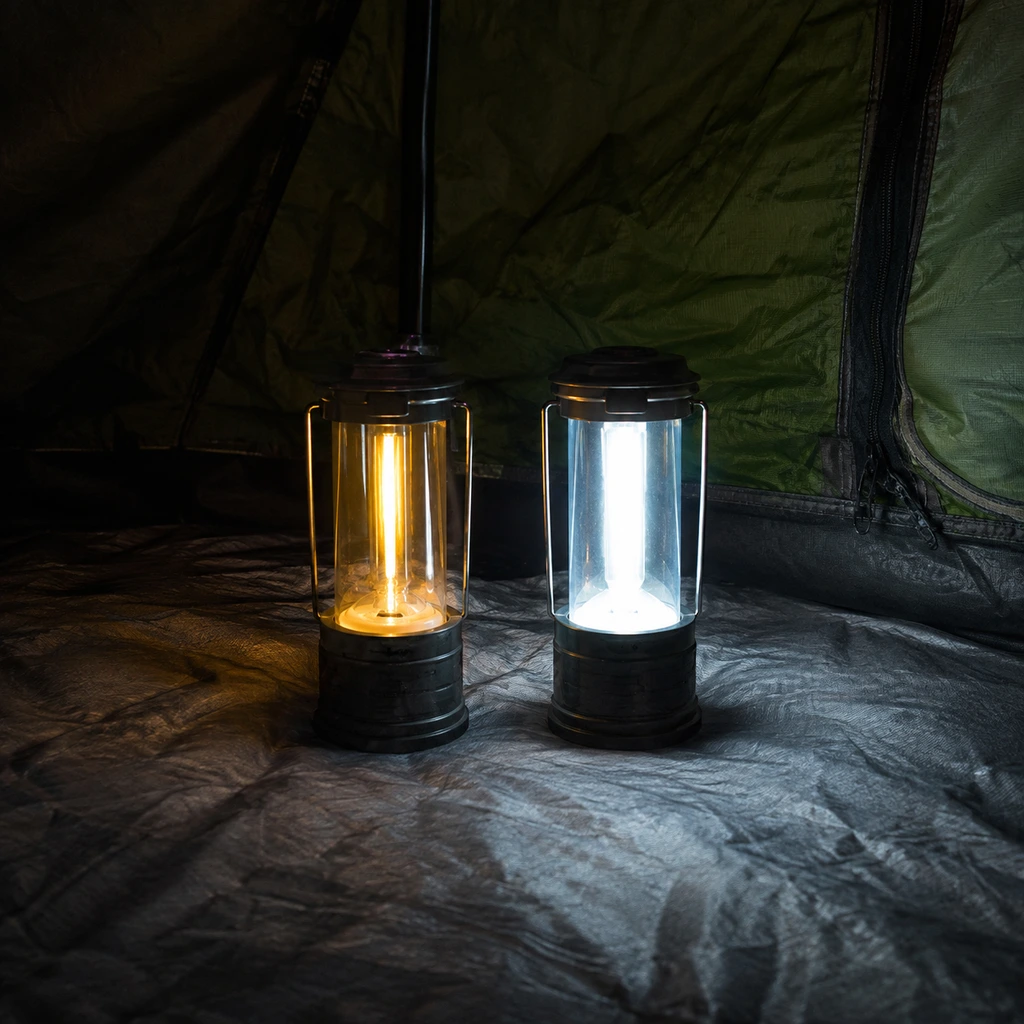
Warm white light is far more comfortable to sit under and shows food properly. Cool daylight white cuts through rain and is better for tasks that need contrast, which is why several lanterns give you both. A stepless dimmer is worth more than extra modes, because it lets you set the light exactly low enough to save power.
A red mode is not a gimmick. Red light preserves the dark adaptation your eyes take twenty minutes or more to build, so you can walk to the toilet block and still see stars afterwards. It is also much less annoying to anyone camped nearby, and it is the setting to use if you are up in the night with a child.
Water Resistance and Toughness
Ratings are simple once you know the pattern. IPX4 means splash resistant from any angle, which covers rain and a drink knocked over the table. IP67 means dust tight and briefly submersible. A few lanterns are rated to survive a metre of water and still float, which sounds excessive until one goes into a lake off a boat.
Drop resistance matters just as much on a family pitch. A lantern hanging from a guy line will be knocked down, and the ones that survive are moulded polymer with a recessed switch rather than shiny plastic with an exposed slider. Wet weather is where cheap lanterns die, and our notes on camping in the rain cover the rest of that problem.
Hanging, Standing and Mounting
How a lantern attaches to your camp decides where the light lands. A single top hook is the minimum. A D-ring at both ends is much better, because hanging a lantern upside down under a tarp throws light down onto the table rather than into everyone’s eyes. Magnets in the base stick to a car door, a cooker or a tent pole clip, and a threaded socket lets you put the lantern on a small tripod at exactly the height you want.
Check the hanging loop inside your tent before you buy, since some lanterns are far too heavy for a thin fabric tab and need a carabiner on a proper attachment point.
Weight and Packed Size
If the lantern travels by car, ignore weight entirely and buy the brighter, tougher unit. If it goes in a pack, the calculation flips: a collapsible or inflatable lantern that weighs a few ounces is worth far more than a heavy one you leave at home. This is the same trade you make with sleeping pads, where the car version and the carried version are simply different products.
Anyone building a kit from scratch will find a lantern on our camping packing list, and it is worth deciding early whether one light or two suits how you camp.
The 6 Best Camping Lanterns for 2026
Each of these wins a clear category rather than a vague overall crown, which is the only sensible way to rank the best camping lanterns: a light that suits a family pitch is the wrong buy for a solo backpacker. Specifications come from the current listings, and every one of them is a light we would be happy to hang over a table in October.
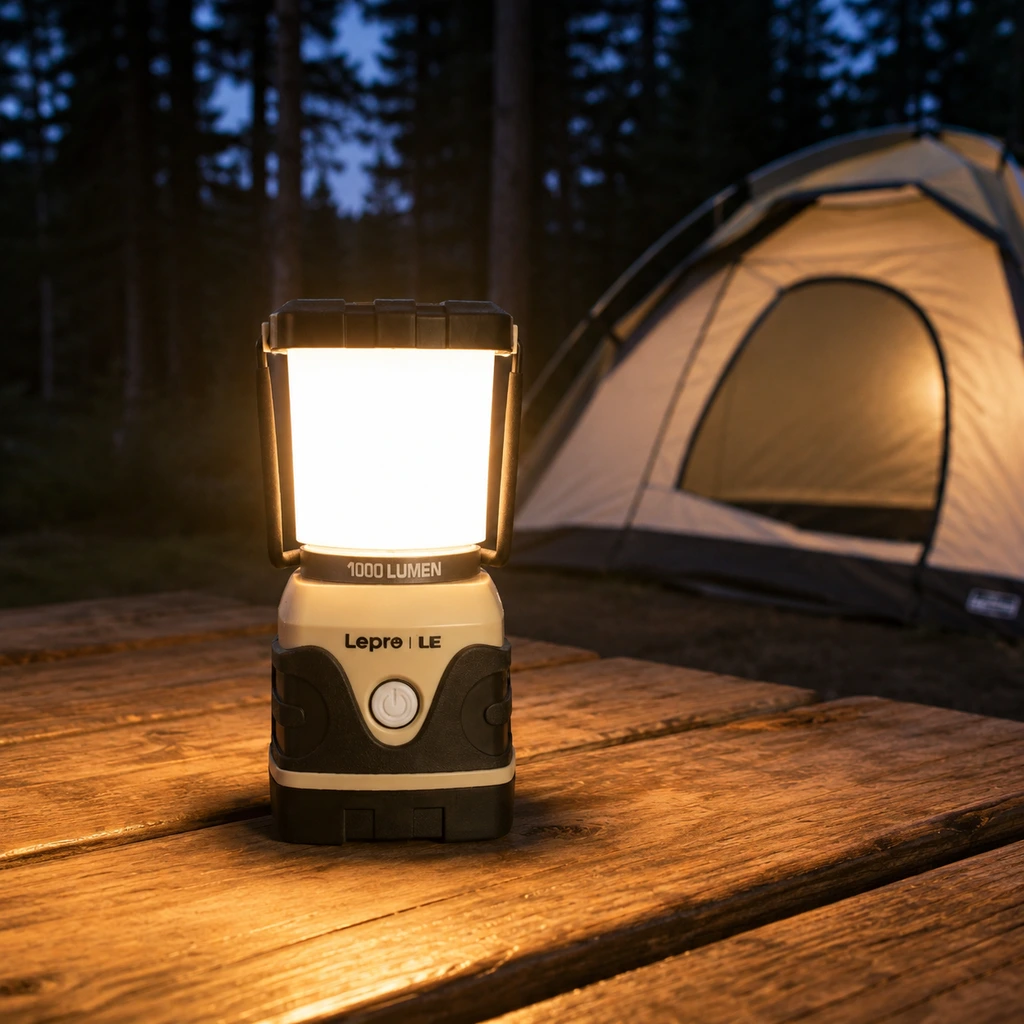
Lepro 1000LM LED Camping Lantern: Best Overall
This is the lantern most family sites actually need. It dims smoothly up to 1000 lumens with a long press, and short pressing cycles four modes: daylight white, warm white, full brightness and a flashing signal. Warm white for dinner and daylight white for cooking covers almost everything an evening throws at you.
It runs on three D alkaline cells, which are not included, and Lepro rates it at twelve hours even at the full 1000 lumen setting, so at a realistic half power it comfortably covers a long weekend. There is a hook on the bottom and a metal handle on top, so you can hang it under a tarp or invert it over a table, and the cover comes off if you want the bare bulb to throw light further. IPX4 rating handles rain and spilled drinks.
Who It Is For
Car campers, families and anyone who wants one bright, dimmable light that works out of a cupboard months later without a charging cable.
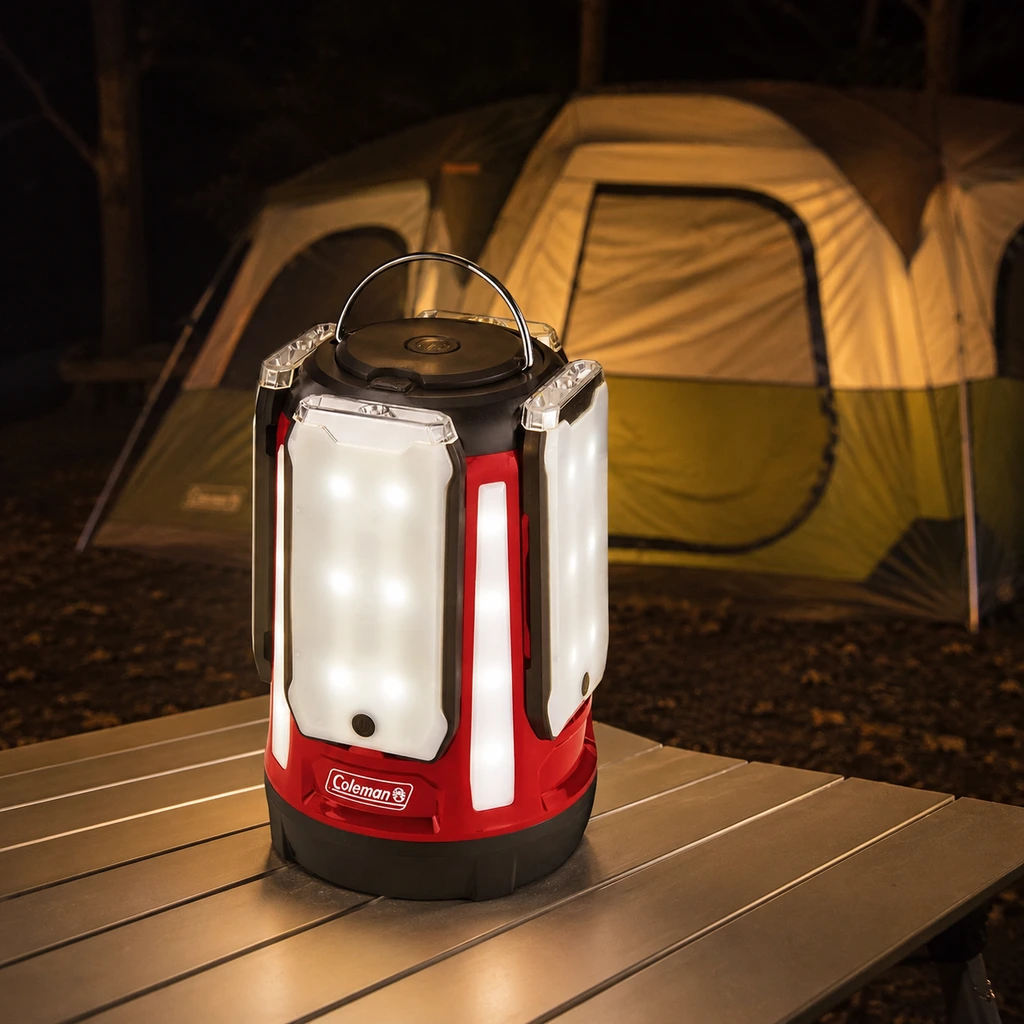
Coleman Multi-Panel LED Lantern: Best for Families
The clever part here is that the lantern comes apart. The base puts out up to 800 lumens, and four magnetic light panels detach and give 100 lumens each, so one person can take a panel to the toilet block, one can stick a panel inside the tent, and the base still lights the table. On a pitch with children that solves an argument before it starts.
The panels recharge on the base, the base itself is rechargeable, and there is a USB port that will put a useful amount of charge back into a phone. Coleman quotes up to twenty hours of runtime for the base and around three hours per panel, with a beam reaching roughly eighteen metres from the base. It is IPX4 water resistant and carries a three year warranty, which tells you something about how it is built.
Who It Is For
Families and groups who keep splitting up around camp, and anyone who wants a lantern that also tops up a phone.
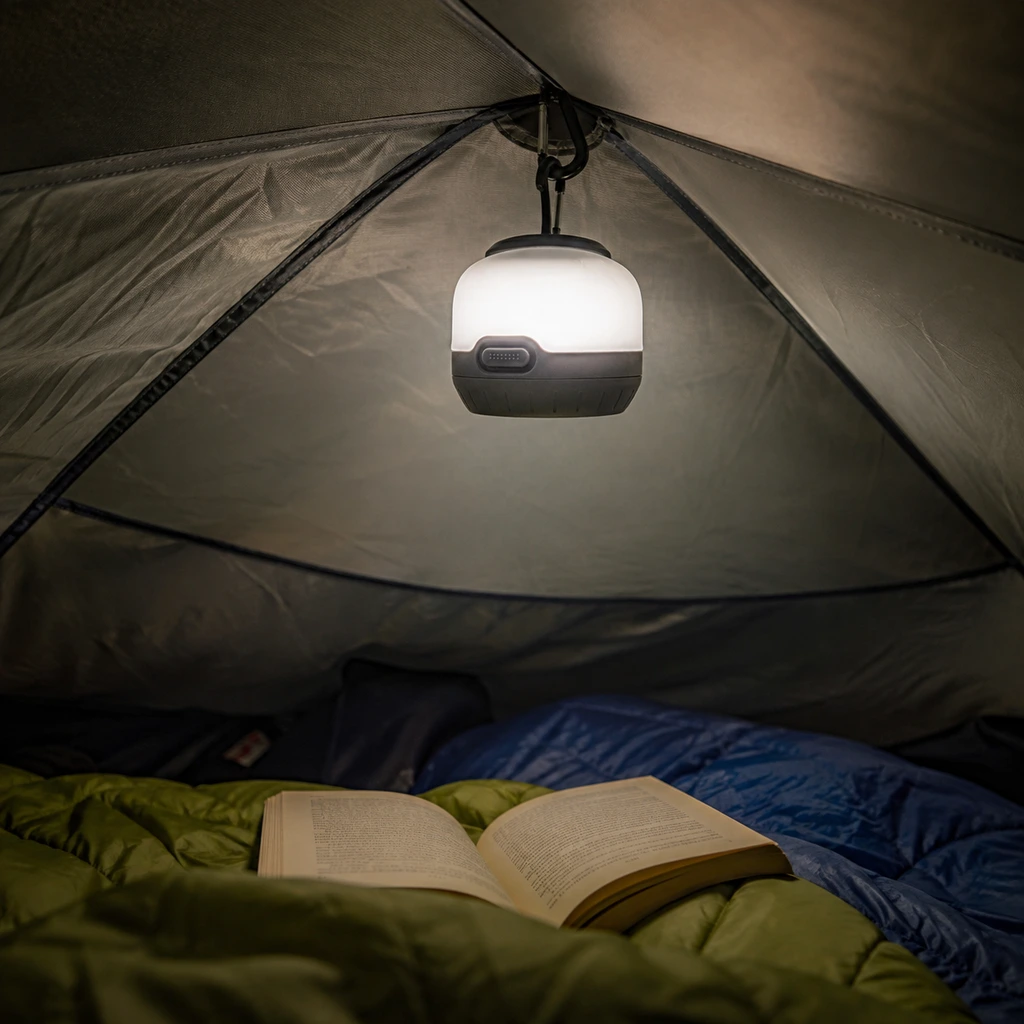
Black Diamond Moji Lantern: Best for Tents
The Moji is the light that lives in a tent and never comes out. A frosted globe spreads a clean, even glow with no hot spot, which is exactly right a foot above your head when you are reading or sorting gear, and a single button dimmer means nobody has to learn a mode sequence in the dark.
It runs on AAA cells, weighs almost nothing, and the double hook loop clips to a tent ceiling tab, a branch or a guy line without a carabiner. It is not an area light and it is not pretending to be one, but as the second lantern in a two lantern setup it is the piece most people are missing.
Who It Is For
Tent light for couples and families, backpackers counting ounces, and children who want their own lamp they cannot break.
Streamlight Siege Compact: Best Rugged Lantern
If your camping season runs into storm weather, this is the one. It gives 540 lumens of 360 degree light with high, medium and low white modes, plus a red LED with steady and SOS flash settings for keeping night vision or signalling for help. On low, Streamlight quotes up to 295 hours of runtime, which is the kind of figure that