
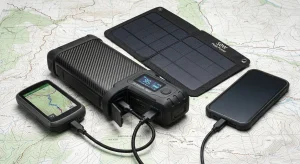

Master portable power for bikepacking with our technical guide. Compare the 11 best solar chargers and power banks for self-sufficient wilderness travel.
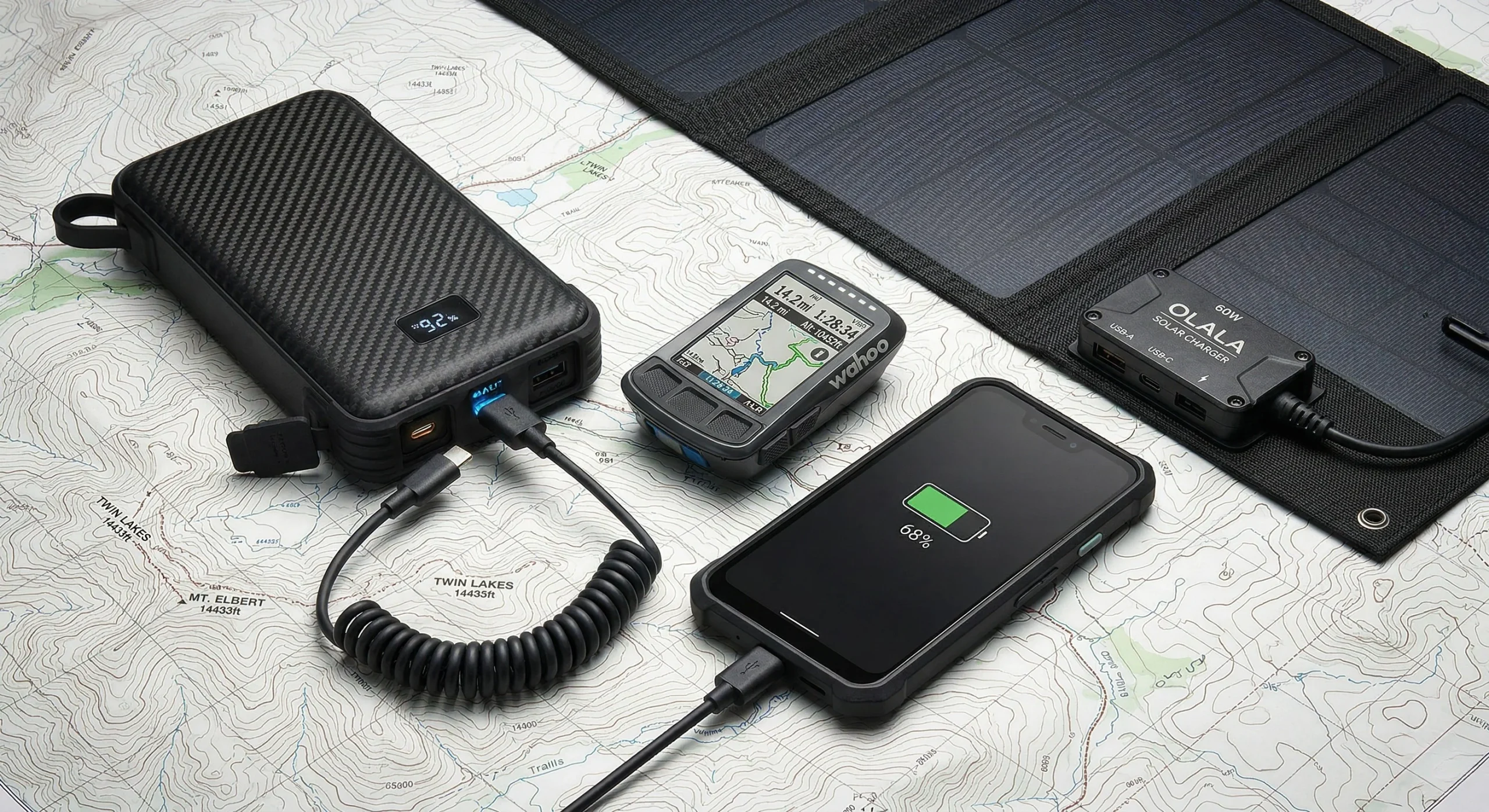
Table of Contents
Introduction: The Technical Requirement for Energy Autonomy
Establishing a reliable system for portable power for bikepacking is a mechanical necessity for any multi-day wilderness expedition. In 2026, the reliance on digital Off-Road Navigation, satellite communication, and high-lumen lighting has transformed electricity into a critical survival resource. A total loss of power in remote terrain compromises the rider’s ability to follow vetted Bikepacking Routes (Internal Link) or signal for assistance during a Solo Safety Emergency. This guide analyzes the mechanical trade-offs between energy storage (power banks) and energy generation (solar chargers).
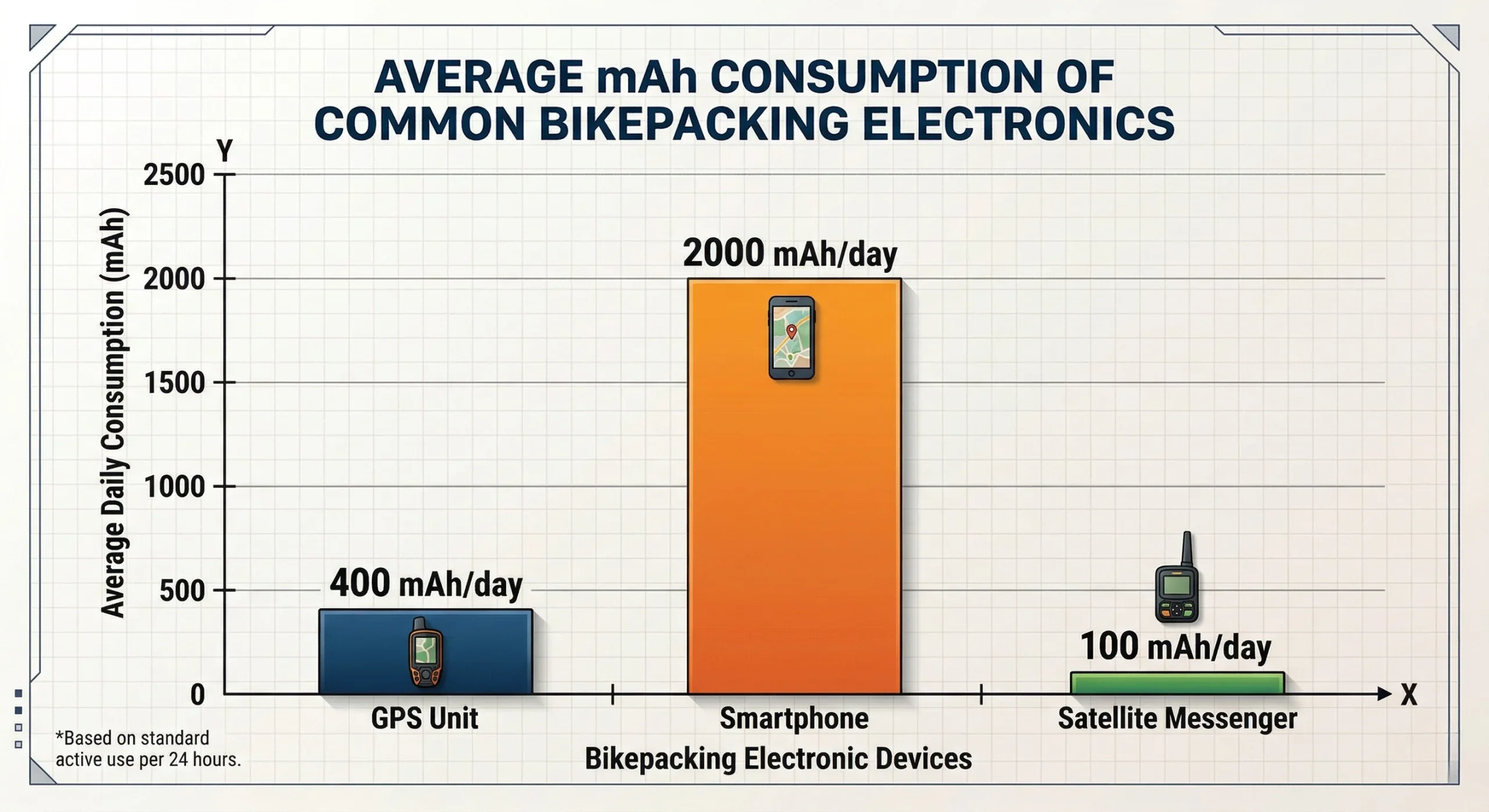
The objective of an energy strategy is to maintain a positive “power balance” throughout the journey. For those following the 7 Proven Steps for Bikepacking for Beginners, understanding your daily milliamp-hour (mAh) consumption is the first step toward self-sufficiency. Proper energy management ensures that weight is minimized while redundancy is maximized, adhering to the principles found in our Bikepacking Packing Guide. This guide provide a disciplined technical analysis of eleven portable power options defining the 2026 season.
Technical Fundamentals of Energy Storage and Generation
Before selecting hardware, the rider must understand the physics of energy transfer. Efficiency is dictated by the chemical composition of batteries and the surface area of solar cells.
Power Bank Chemistry and Efficiency
Most modern portable power for bikepacking solutions utilize Lithium-Polymer (LiPo) or Lithium-Ion (Li-Ion) cells. For 2026, carbon-fiber reinforced shells have become the industry standard for reducing weight while protecting the cells from high-impact vibrations common on Rugged Terrain. Total capacity is measured in mAh, but “Usable Capacity” is typically 20-30% lower due to voltage conversion heat loss.
Solar Photovoltaic Physics
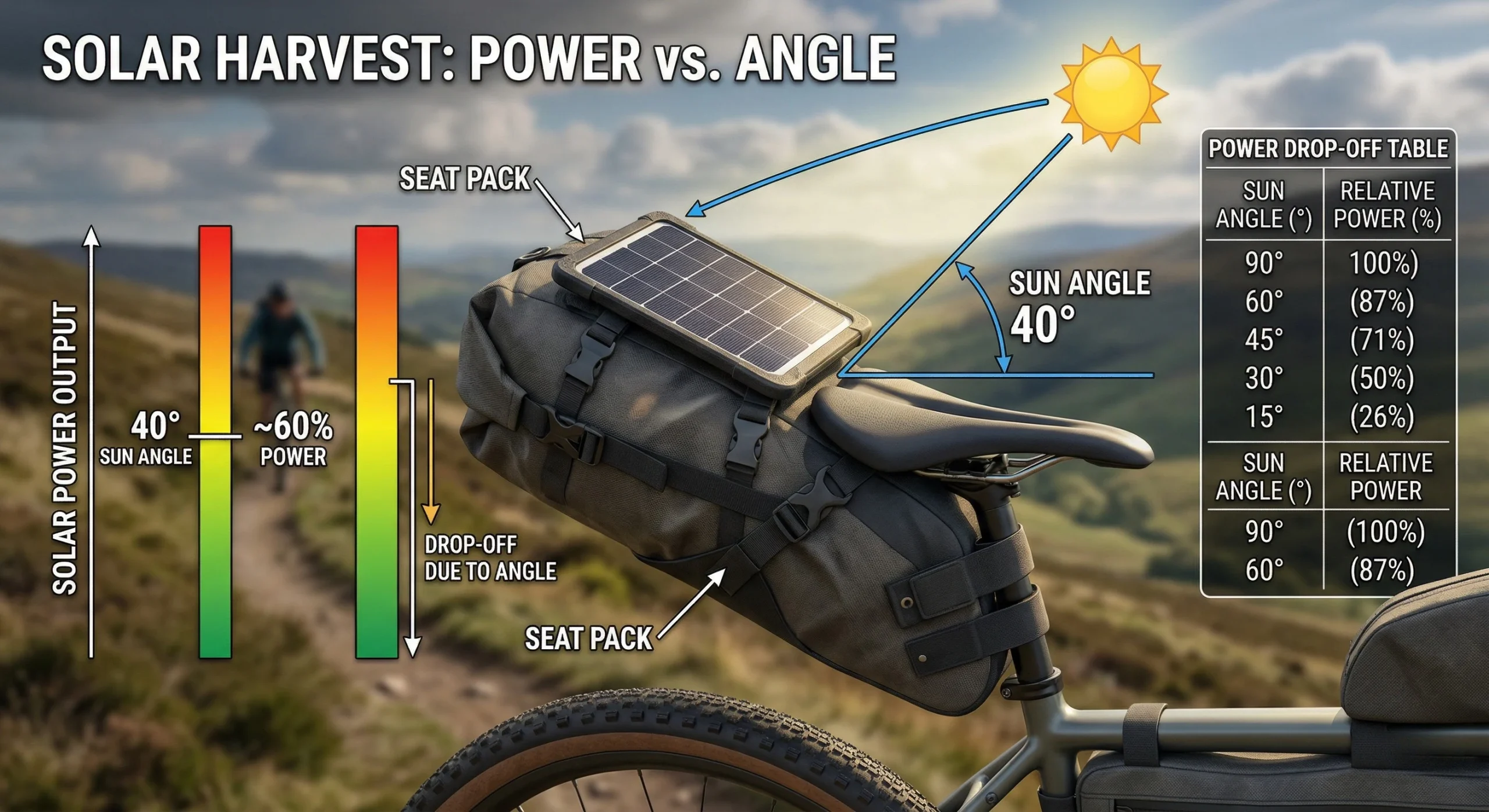
Solar generation for cyclists depends on “insolation”—the amount of solar radiation reaching the panel. Efficiency is highest when panels are perpendicular to the sun. For bikepackers, panels are often strapped to a Seat Pack or Handlebar Roll, meaning they operate at sub-optimal angles. High-efficiency monocrystalline cells are required to generate meaningful wattage in these variable conditions.
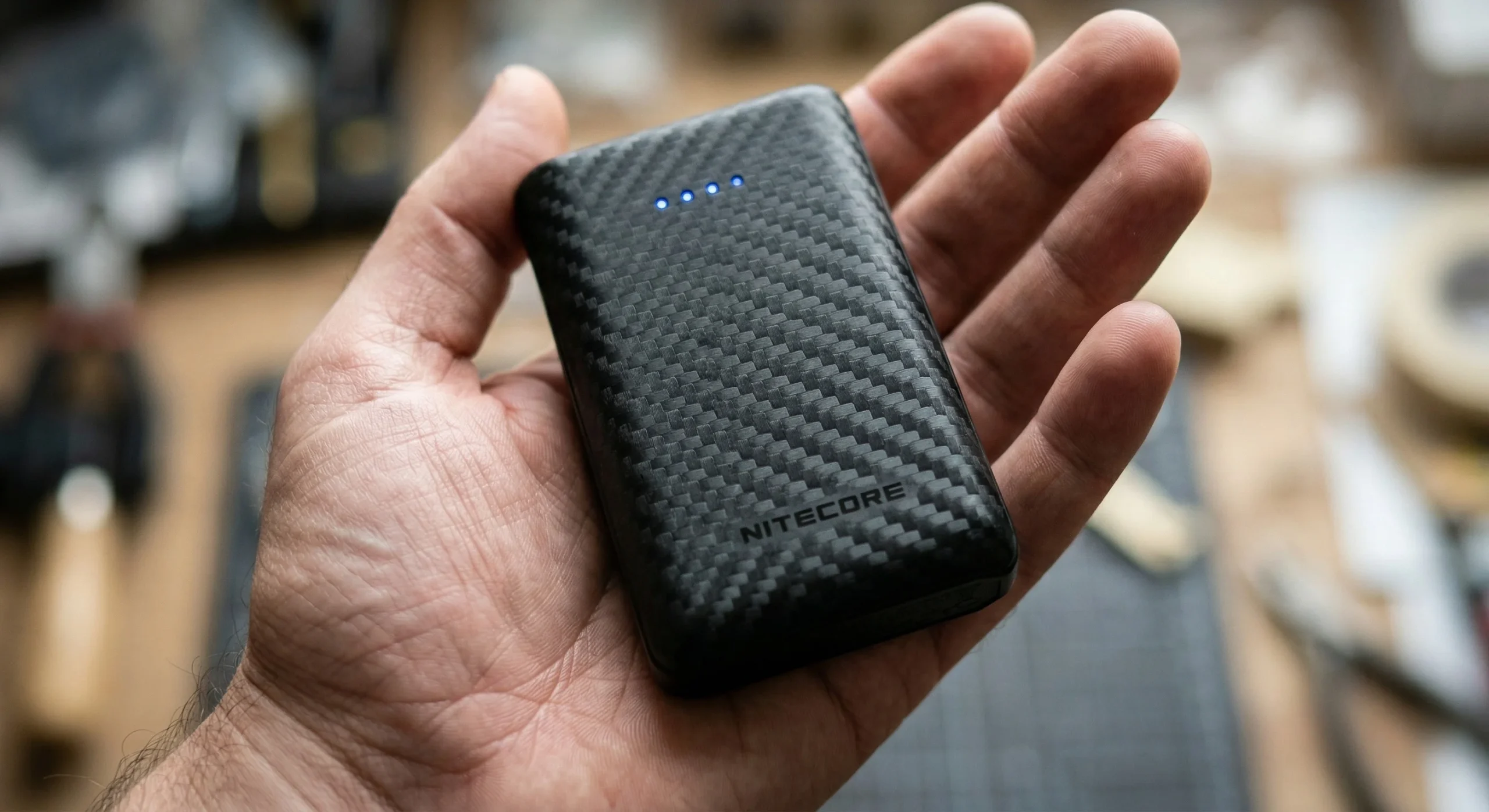
1. Nitecore NB10000 Gen 3 (Best Overall Power Bank)
The Nitecore NB series is the benchmark for weight-conscious riders. It utilizes a carbon-fiber frame to achieve the highest energy-to-weight ratio in the portable power for bikepacking category.
- Key Features: 10,000mAh capacity, carbon fiber shell, IPX5 water resistance, dual USB-C ports.
- Pros: World’s lightest 10k bank (approx. 150g); incredibly slim profile fits in any Bikepacking Bag.
- Cons: Premium price; limited to 22.5W output (insufficient for some laptops).
- Check Price on Amazon: Nitecore NB10000 Gen 3
2. BigBlue 28W SunPower (Best Value Solar Charger)
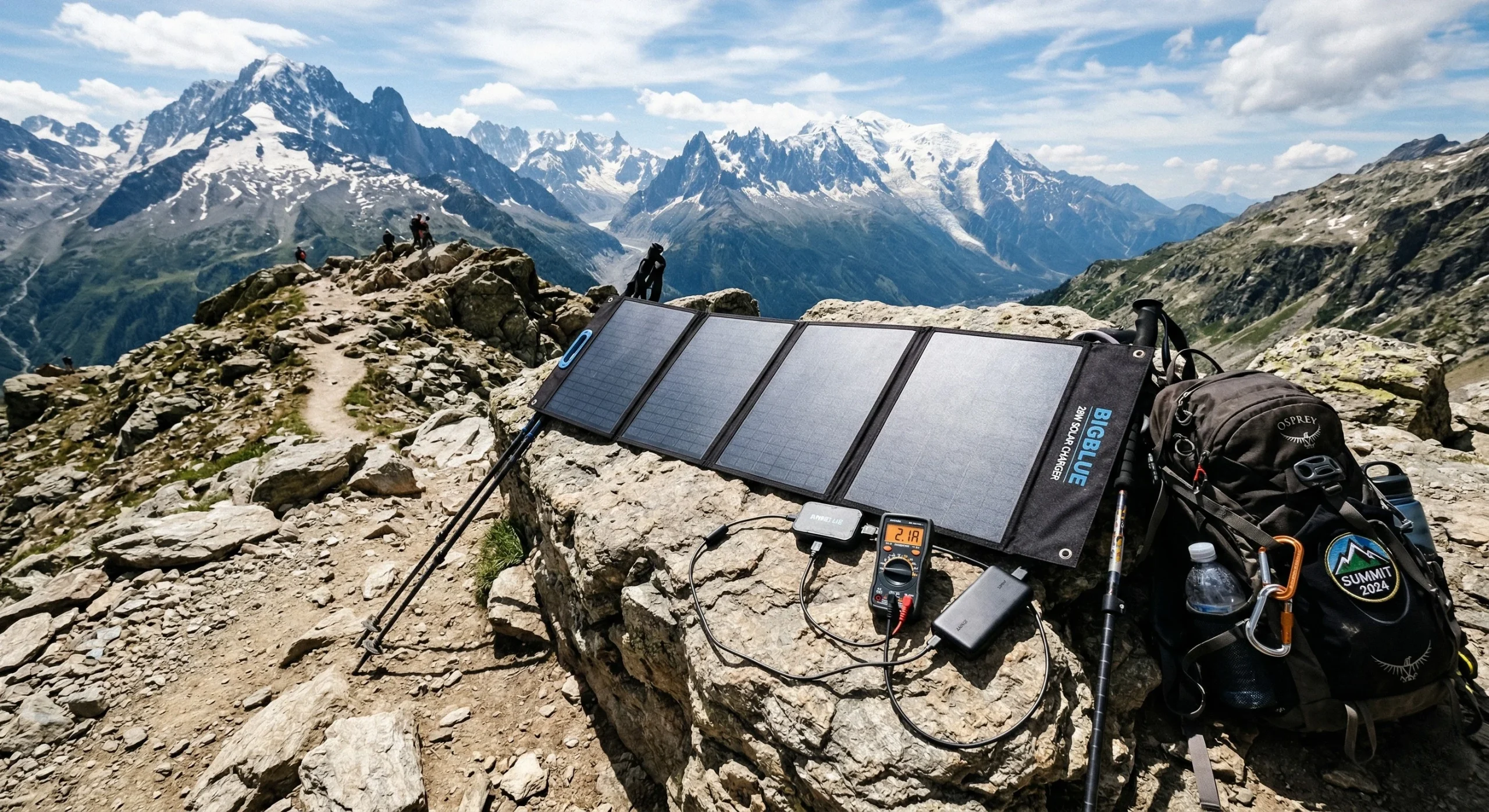
For riders exploring arid Bikepacking Routes with high solar exposure, the BigBlue 28W offers the best wattage-to-dollar ratio. It is a foldable array designed for stationary or low-speed use.
- Key Features: Four monocrystalline panels, three USB-A ports, integrated ammeter.
- Pros: Reliable auto-restart technology for intermittent clouds; high conversion efficiency (24%).
- Cons: Bulky when folded; too heavy for ultra-minimalist setups.
- Check Price on Amazon: BigBlue 28W Solar Charger
3. Anker 737 Power Bank (PowerCore 24K)
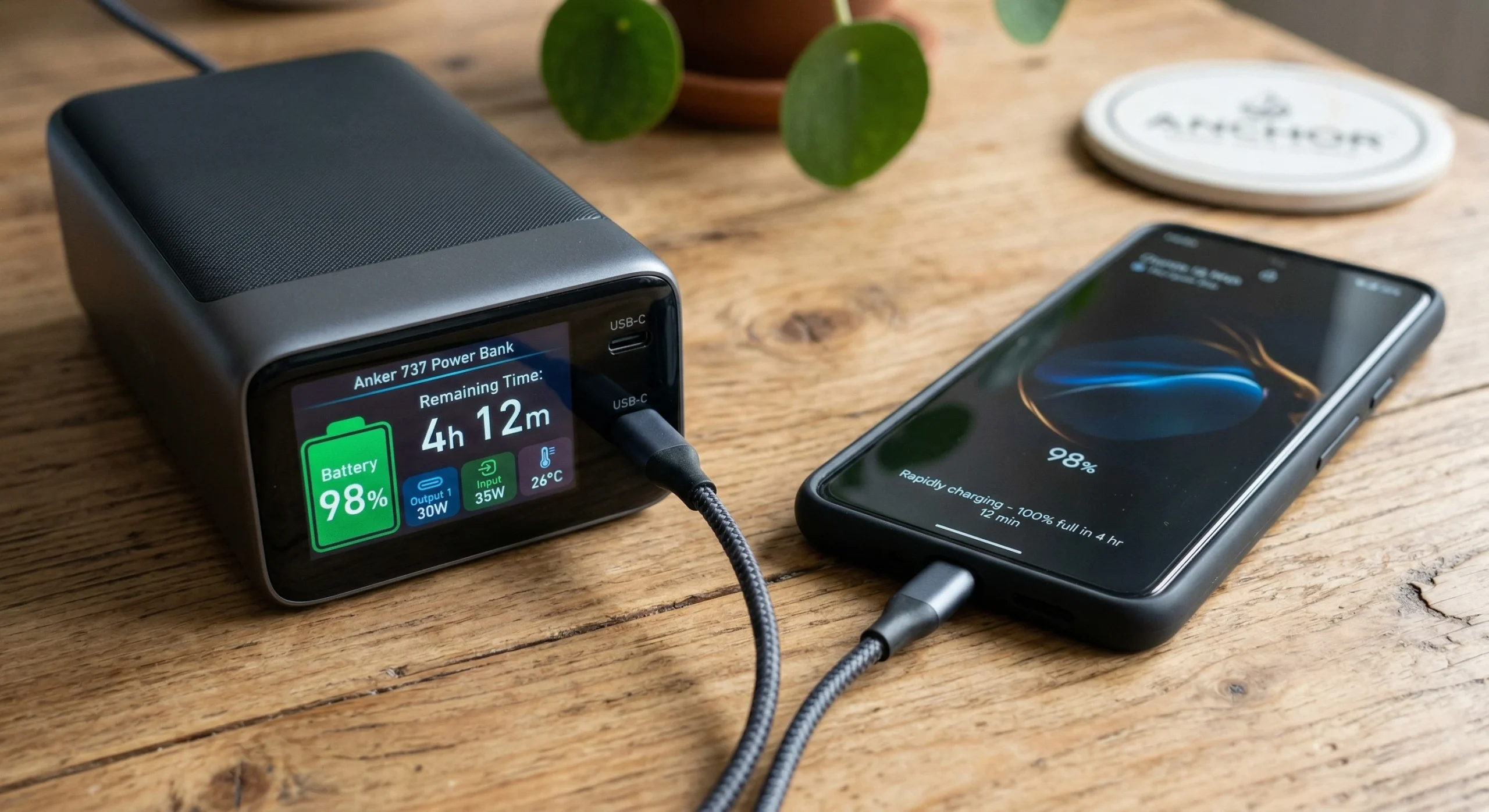
When following a Bikepacking Training Plan that involves drone usage or high-drain cameras, the Anker 737 provides the necessary high-wattage output.
- Key Features: 24,000mAh capacity, 140W fast charging, smart digital display.
- Pros: Massive capacity for 3-Day Adventures; display shows real-time input/output data.
- Cons: Heavy (630g); takes up significant space in a frame bag.
- Check Price on Amazon: Anker 737 Power Bank
4. BioLite SolarPanel 10+ (Best Integrated System)
BioLite offers a hybrid solution for portable power for bikepacking by integrating a small 3,200mAh battery directly into the solar panel frame. This buff