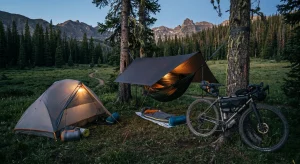

Master your bikepacking sleeping system choice. Compare tents, hammocks, and bivvies with technical pros, cons, and essential gear recommendations for 2026.
Table of Contents
Introduction: The Biomechanics of Wilderness Recovery
Selecting a bikepacking sleeping system is a critical decision that influences both physical recovery and mechanical efficiency. Unlike traditional camping, bikepacking demands a system that satisfies strict volume constraints while providing adequate thermal insulation. A poor night’s sleep leads to cognitive fatigue, which increases the risk of navigational errors on complex Bikepacking Routes. This guide analyzes the mechanical trade-offs between tents, bivvies, and hammocks to ensure your setup matches your terrain.
The goal of a technical sleep system is to manage the “Big Three”: weight, packability, and weather protection. For those following the 7 Proven Steps for Bikepacking for Beginners, understanding these trade-offs is essential for a successful first mission. Each system offers a different level of psychological comfort and environmental adaptability. Successful integration into your Ultimate Gear List requires a disciplined assessment of your typical climate and trail conditions.
1. The Ultralight Tent: Maximum Environmental Shielding
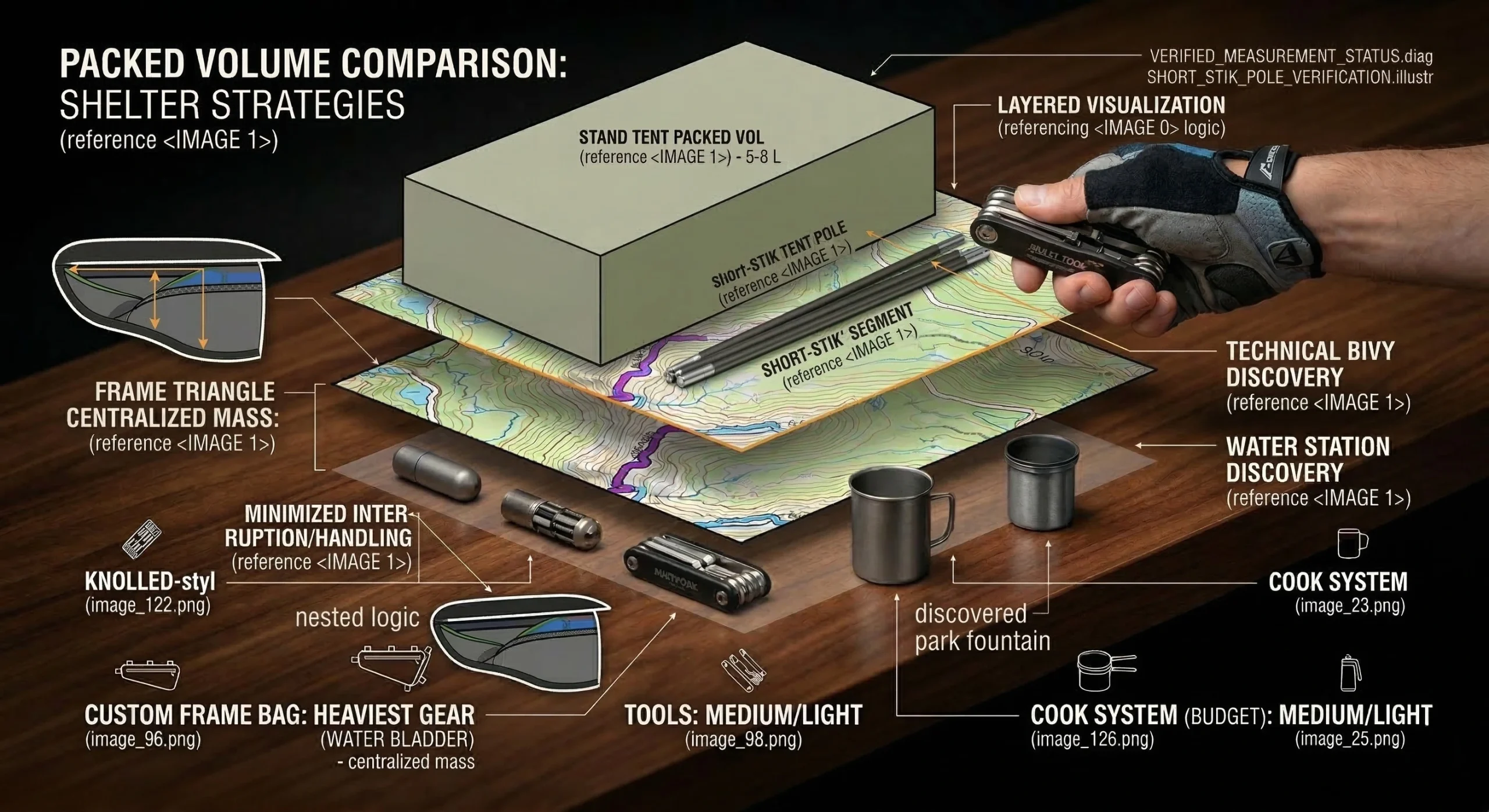
A tent remains the most versatile component of a bikepacking sleeping system for multi-day expeditions. It provides a complete physical barrier against insects and precipitation while offering enough internal volume for gear organization. Modern bikepacking-specific tents utilize “short-stik” poles to fit between drop bars or inside a Bikepacking Frame Bag.
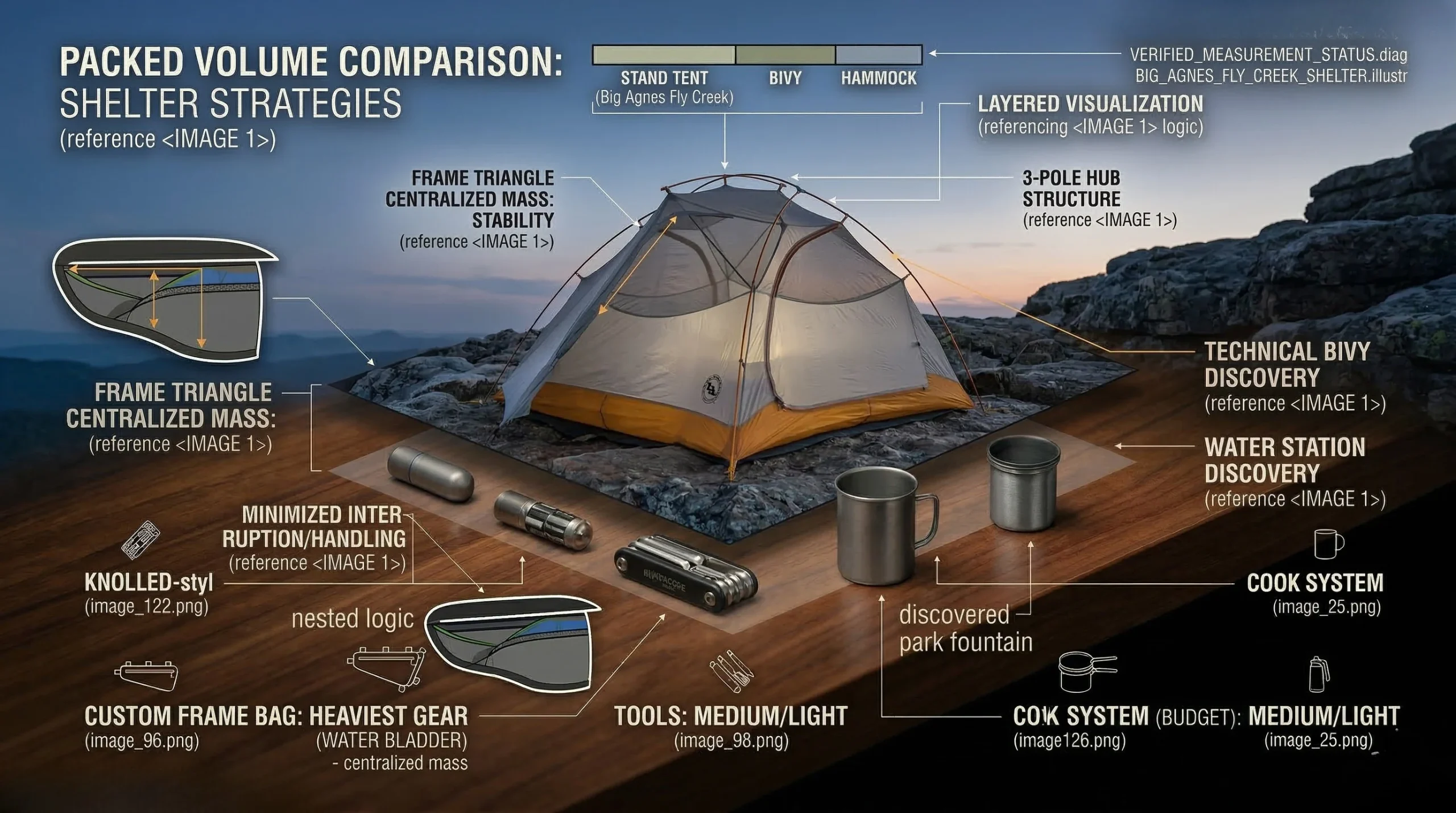
Recommendation: Big Agnes Fly Creek HV UL1 Bikepack
- Key Features: Solution-dyed fabric for UV resistance, 12-inch pole segments, integrated helmet storage.
- Pros: Exceptional interior space; 100% bug-proof; incredibly easy to pitch on any flat surface.
- Cons: Requires a larger footprint than a bivy; the floor fabric is thin and requires a groundsheet.
- Check Price on Amazon: Big Agnes Fly Creek UL1
Technical Performance in Tents
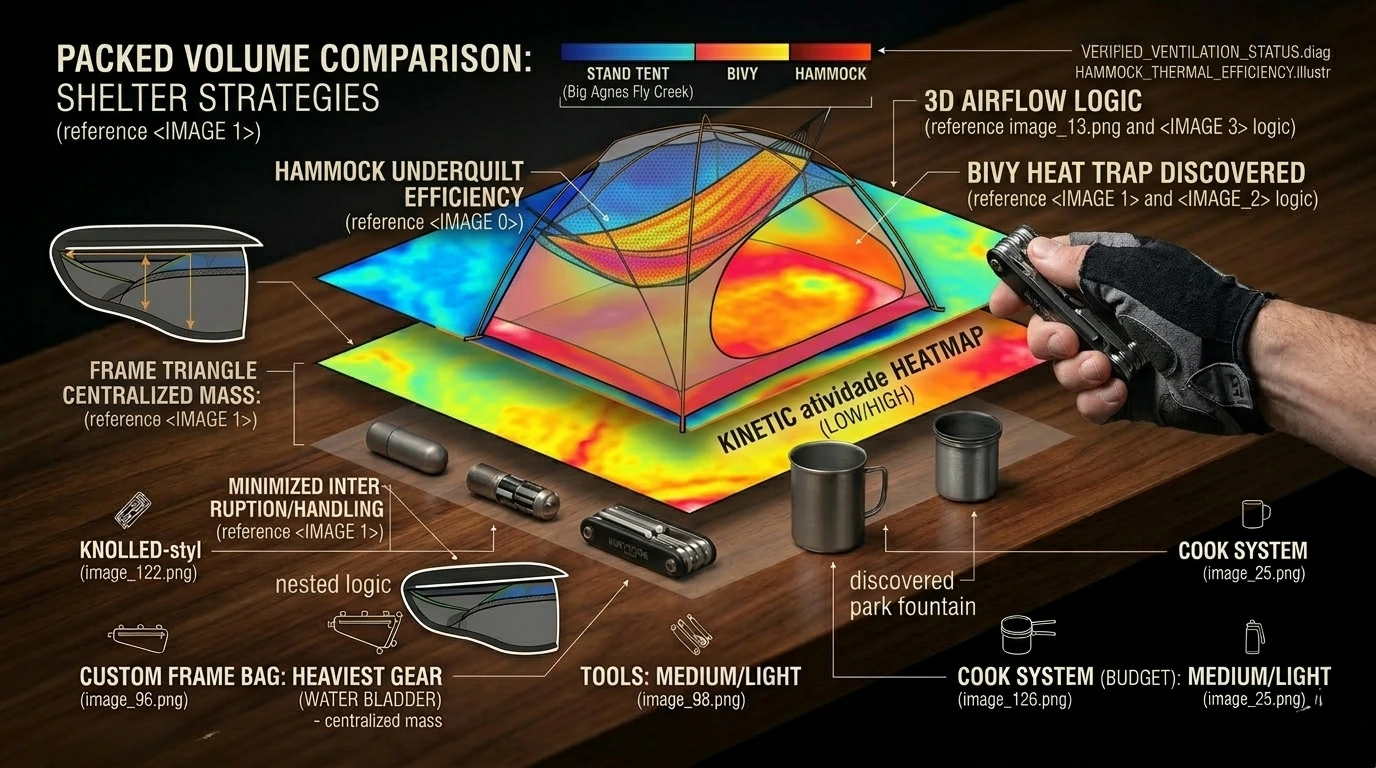
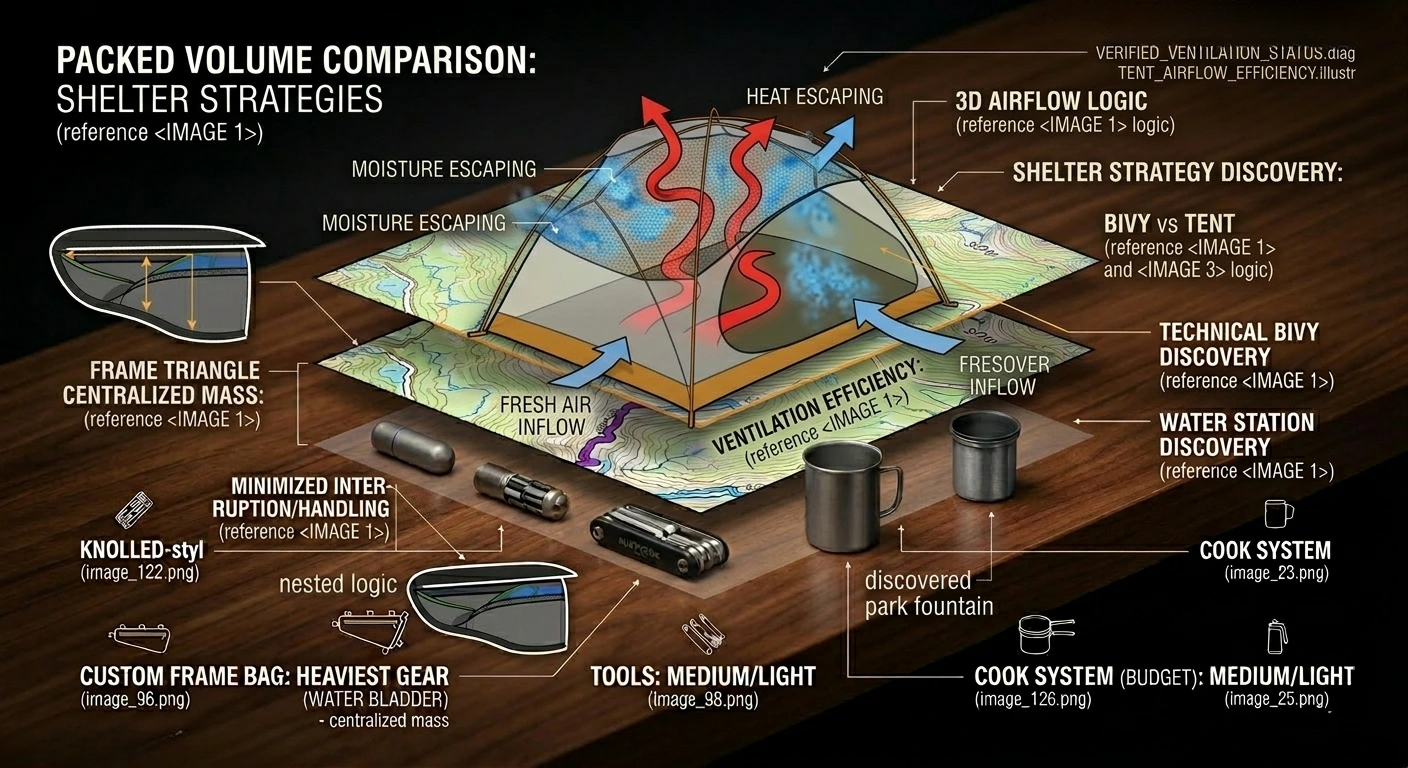
Tents excel in environments with high humidity or heavy bug pressure. The double-wall construction minimizes condensation buildup by allowing airflow between the mesh body and the waterproof fly. This moisture management is a core requirement for 3-Day Wilderness Adventure. For technical data on fabric waterproof ratings, consult MSR Tent Engineering.
2. The Technical Bivvy: Minimalist Mechanical Advantage
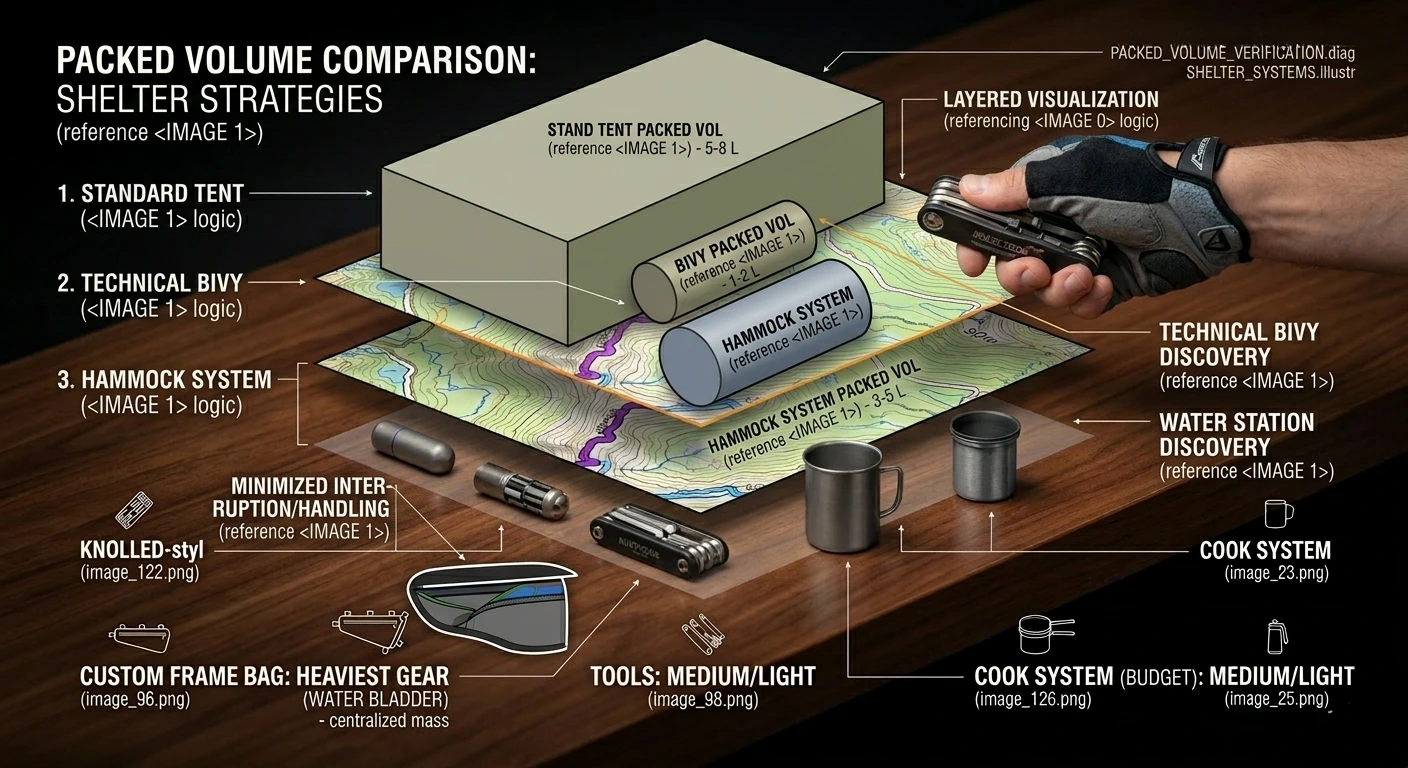
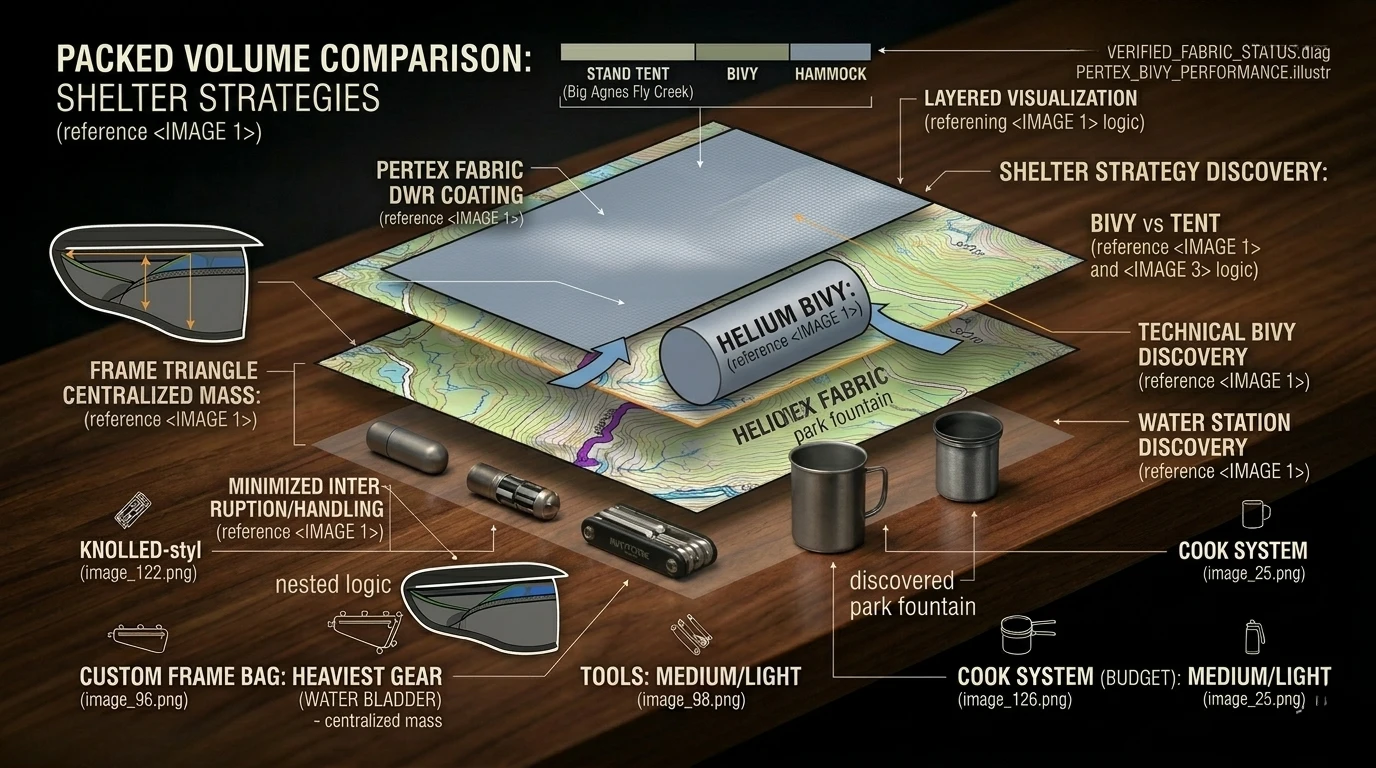
The bivy sack is the most packable bikepacking sleeping system for riders prioritizing speed and minimalist weight. It is essentially a waterproof, breathable sleeve for a sleeping bag. Bivvies allow for “stealth camping” in tight locations where a tent footprint would be impossible. This maneuverability is vital when exploring remote Bikepacking Routes.
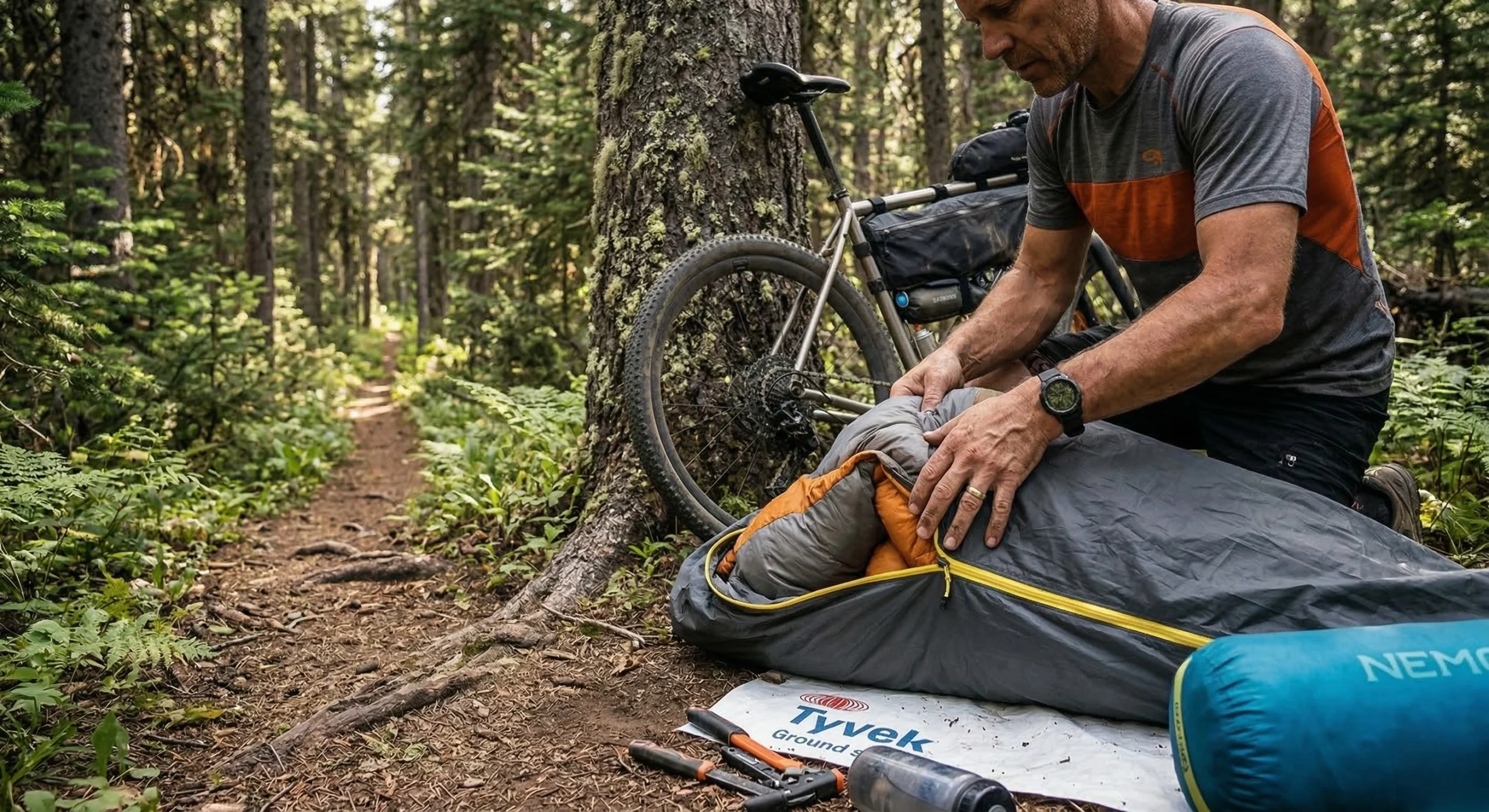
Recommendation: Outdoor Research Helium Bivy
- Key Features: Pertex Shield Diamond Fuse fabric, single-pole head hoop, fully taped seams.
- Pros: Packs down to the size of a burrito; sets up in under 60 seconds; adds 5-10 degrees of warmth to a bag.
- Cons: Highly prone to internal condensation in cold, wet weather; very restricted movement.
- Check Price on Amazon:* Outdoor Research Helium Bivy.
Managing Condensation in Bivvies
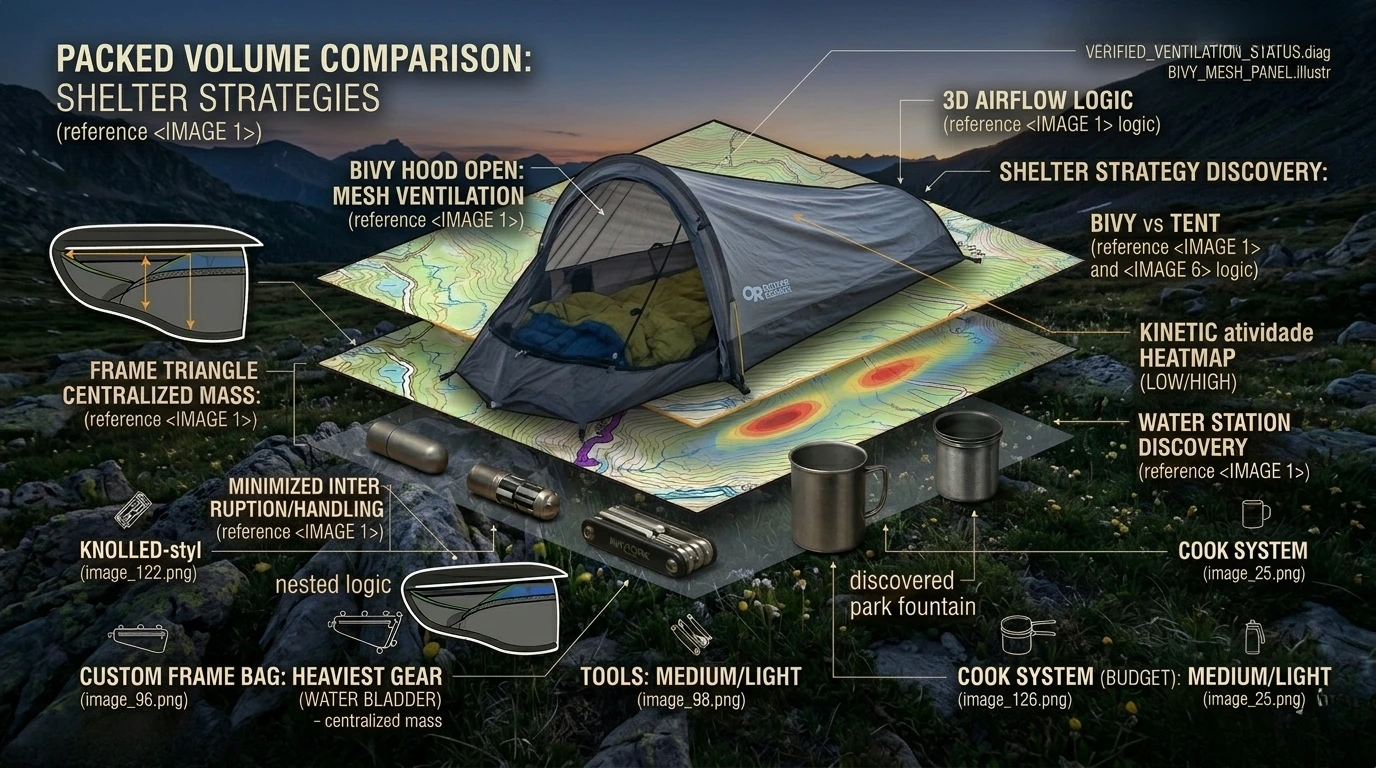
The primary technical challenge of a bivy is managing the moisture expelled by the rider’s breath. In sub-freezing conditions, this vapor can freeze to the inside of the fabric. Choosing a bivy with a large mesh opening at the head is a proactive safety measure. For insights into breathable membrane technology, refer to Gore-Tex Performance Standards. This system is preferred by racers following Self-Sufficiency Protocols.
3. The Camping Hammock: Comfort for Technical Terrain
In forested regions, a hammock is often the superior bikepacking sleeping system. It eliminates the need for level ground, allowing the rider to camp on steep hillsides or rocky terrain. Hammocks provide unparalleled comfort by eliminating pressure points on the hips and shoulders. This ergonomic benefit is essential for maintaining Physical Conditioning.
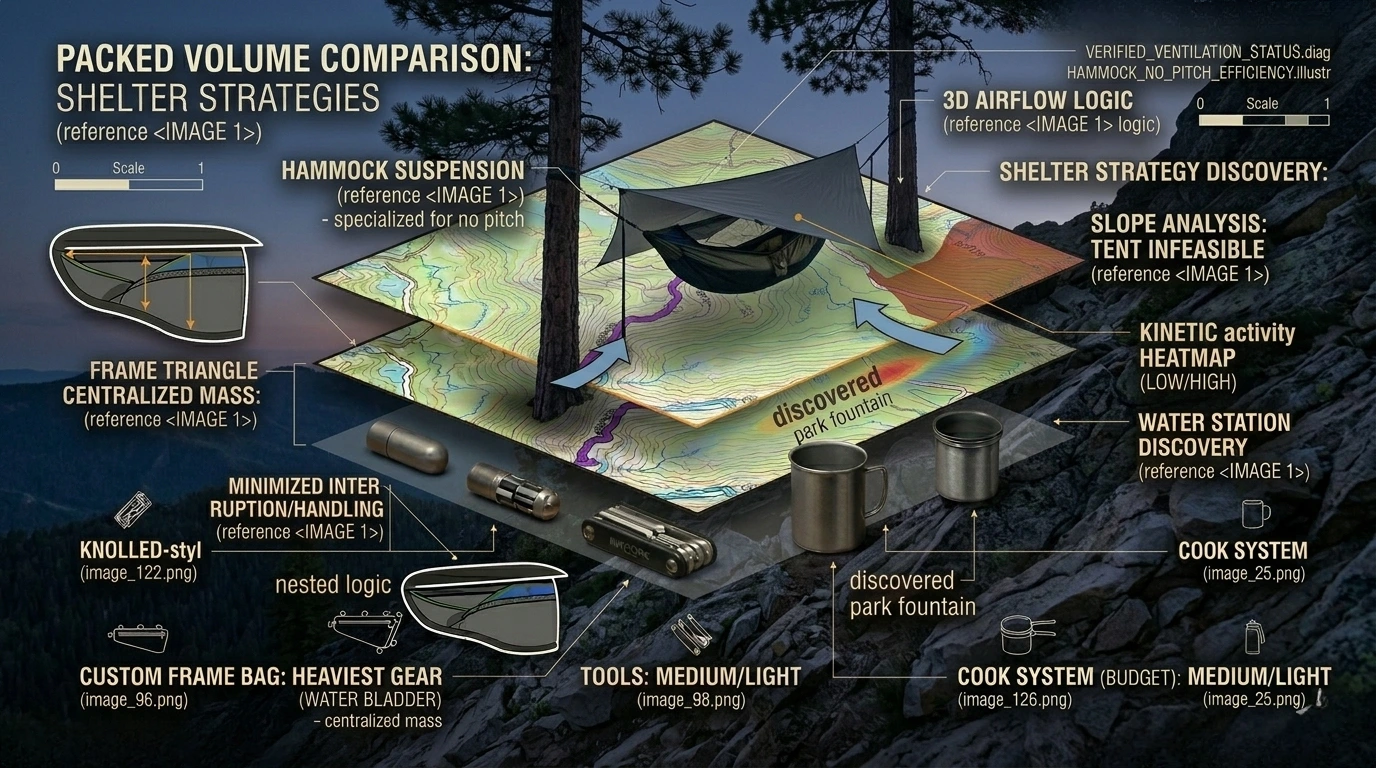
Recommendation: ENO SkyLite Hammock
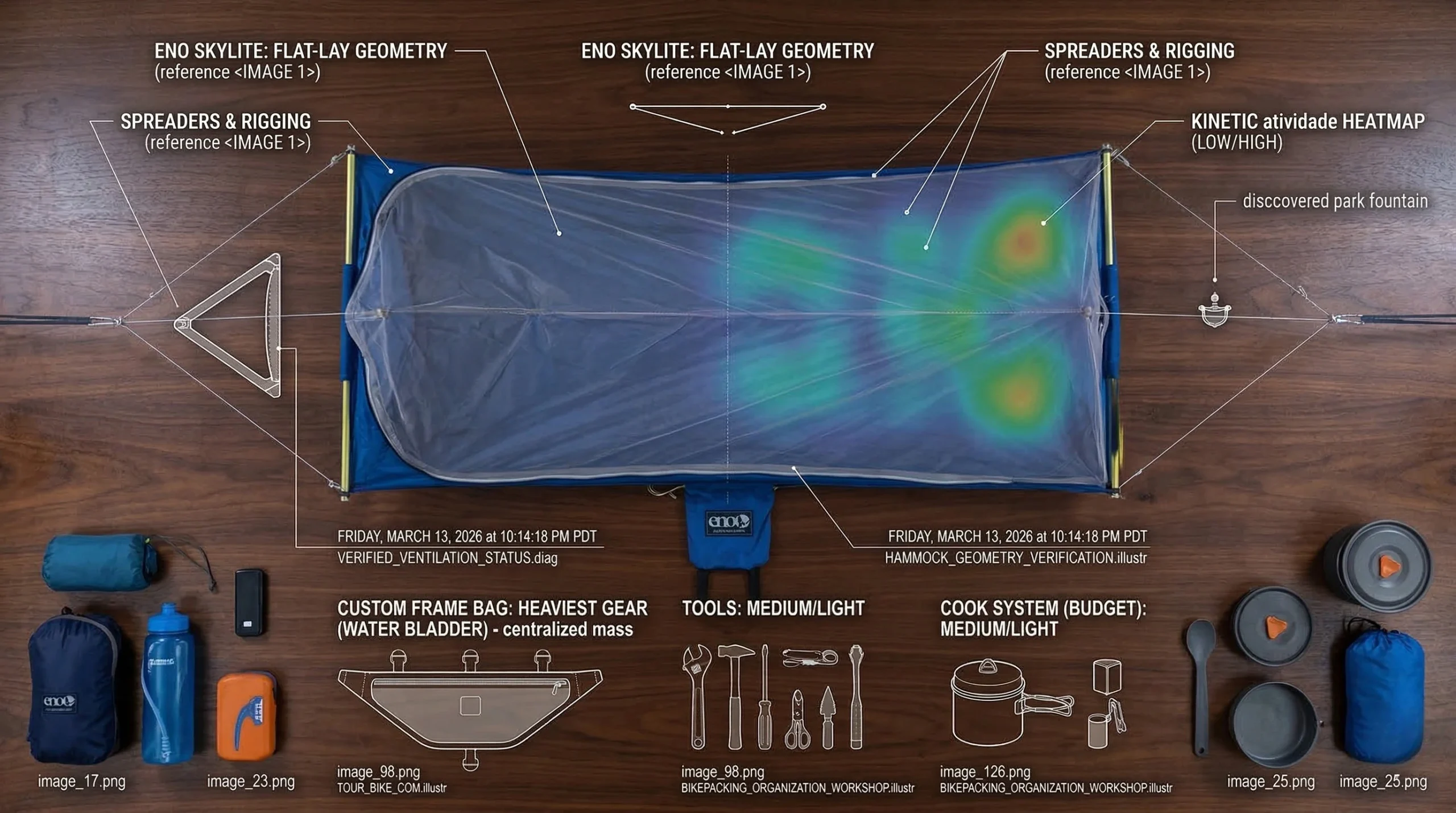
- Key Features: Integrated spreader bars for a flat lay, built-in bug net, lightweight DAC poles.
- Pros: Provides a near-flat sleeping surface; no “banana” curve; incredibly comfortable for side sleepers.
- Cons: Requires two trees of appropriate distance; requires an “underquilt” for insulation below 60°F.
- Check Price on Amazon: ENO SkyLite Hammock.
The Insulation Requirement: Underquilts
Because air circulates beneath the hammock, the rider can suffer from “cold butt syndrome” even in moderate temperatures. A hammock-based bikepacking sleeping system must include an underquilt to maintain core temperature. This thermal management is as critical as the 3-Layer Clothing System discussed in our gear guides. For technical sizing on insulation, Therm-a-Rest Underquilt Data provides excellent metrics.