
Master the slopes with our guide on skiing in powder vs groomed runs. Learn the 6 essential technique adjustments to stay in control on all terrain.
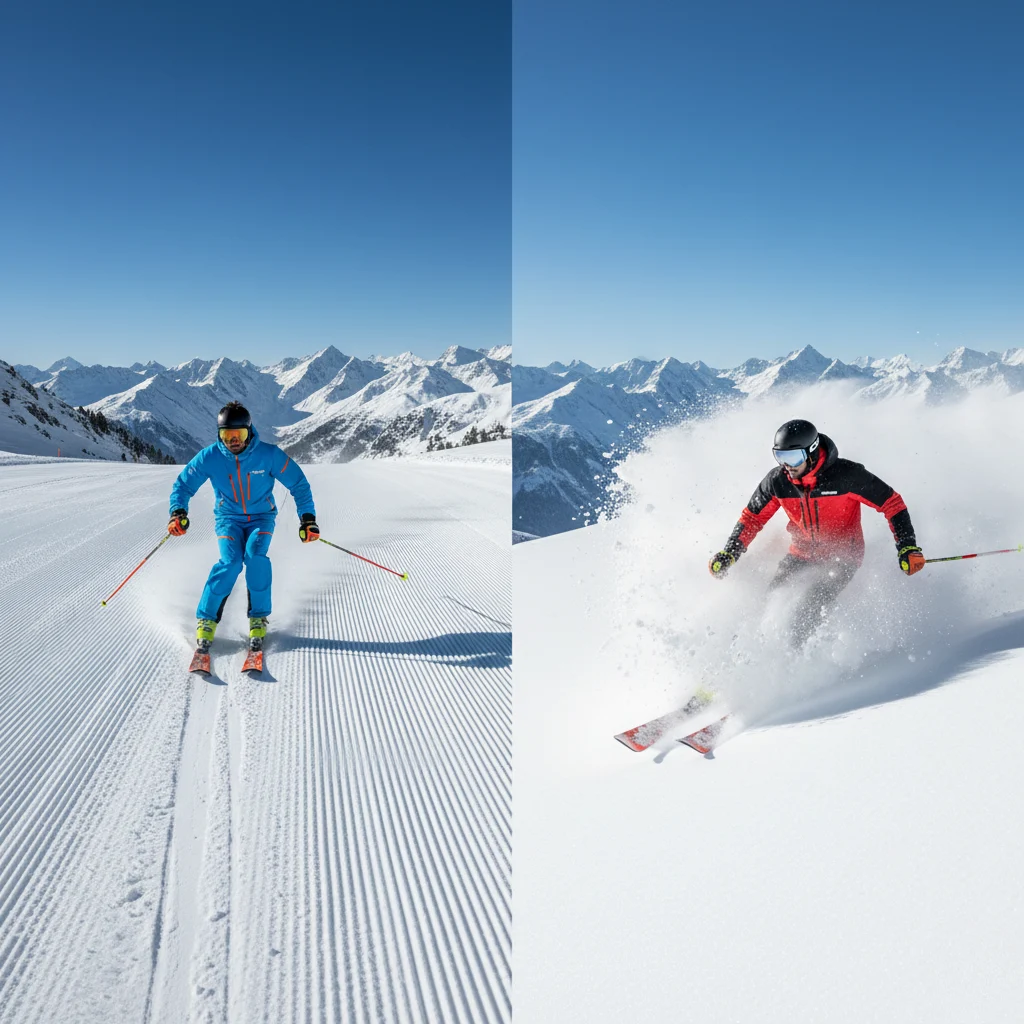
Table of Contents
Introduction: The Fundamental Shift in Snow Dynamics
Understanding the physics of skiing in powder vs groomed runs is the hallmark of a versatile winter athlete. Groomed runs, often referred to as “piste” or “hardpack,” provide a predictable, firm surface where the ski edge can bite effectively. Conversely, powder is uncompressed, deep snow that requires the skier to manage buoyancy rather than just friction. For those on their First Ski Day, the transition between these surfaces can feel like moving from a paved road to a deep sand dune.
The primary technical challenge involves shifting from a “cutting” mentality to a “floating” mentality. On groomed runs, the ski creates a platform by displacing a tiny amount of snow. In powder, the entire ski is submerged, and the snow acts as a fluid medium. This guide breaks down the six critical adjustments needed to transition seamlessly between these environments. Mastering these shifts is as vital as following a Complete Winter Skiing Equipment Guide 2026.
The goal of this guide is to demystify the sensory and mechanical differences of skiing in powder vs groomed runs. Whether navigating a steep Black Diamond or cruising a gentle blue square, your success depends on adaptability. Professional instructors from the Professional Ski Instructors of America (PSIA) emphasize that technique must be a dialogue with the snow surface.
1. Adjusting Your Stance: The Neutral Center
The most common error when skiing in powder vs groomed runs is an incorrect weight distribution. On groomed trails, a strong forward lean is required to engage the ski tips and initiate a carve. In deep snow, that same forward pressure will cause the tips to dive, resulting in a sudden forward fall (the “tomahawk”).
- Groomed Run Stance:
- Pressure: Heavy pressure on the shins against the boot tongues.
- Alignment: Hips are driven forward over the bindings.
- Goal: Maximum edge engagement for precise steering.
- Powder Stance Adjustment:
- Neutral Balance: Weight is distributed evenly across the whole foot, or slightly toward the heels.
- Shin Pressure: Shins should stay in contact with the boots but without the aggressive forward drive used on piste.
- The “Sweet Spot”: The goal is to keep the ski tips above the snow level, requiring a more upright torso.
- Posture Maintenance: Developing the core strength for this upright stance is covered in our Ski Fitness 8-Week Plan.
Achieving this neutral balance requires an honest assessment of Mastering Every Snow Condition. In powder, the snow provides its own resistance, so gravity works differently on your momentum. If you lean too far back (the “backseat”), your leg muscles will fatigue instantly. Finding the middle ground ensures longevity and control during long powder days. Expert resources like Ski Magazine suggest focusing on the “arch” of the foot as the primary pressure point.
2. Mastering Turn Initiation: The Power of Unweighting
Turn initiation is fundamentally different when skiing in powder vs groomed runs. On hardpack, you can simply roll your ankles to engage the sidecut of the ski. In deep snow, the skis are effectively “locked” in place by the surrounding snow mass. You must create a moment of weightlessness to change direction.
- Hardpack Initiation:
- Technique: Lateral ankle and knee movements.
- Action: The ski is tipped onto its edge, and the shape of the ski does the work.
- Powder Initiation Adjustment:
- Vertical Movement: Utilize a “pop” or “hop” motion by extending the legs at the start of the turn.
- Retraction: As you finish one turn, quickly flex your knees to bring the skis up, releasing them from the snow’s grip.
- The Rhythm: This creates a rhythmic “bounce” that is essential for linking turns in deep terrain.
- Technique Link: This verticality is similar to the movements found in our Beginner Mogul Guide.
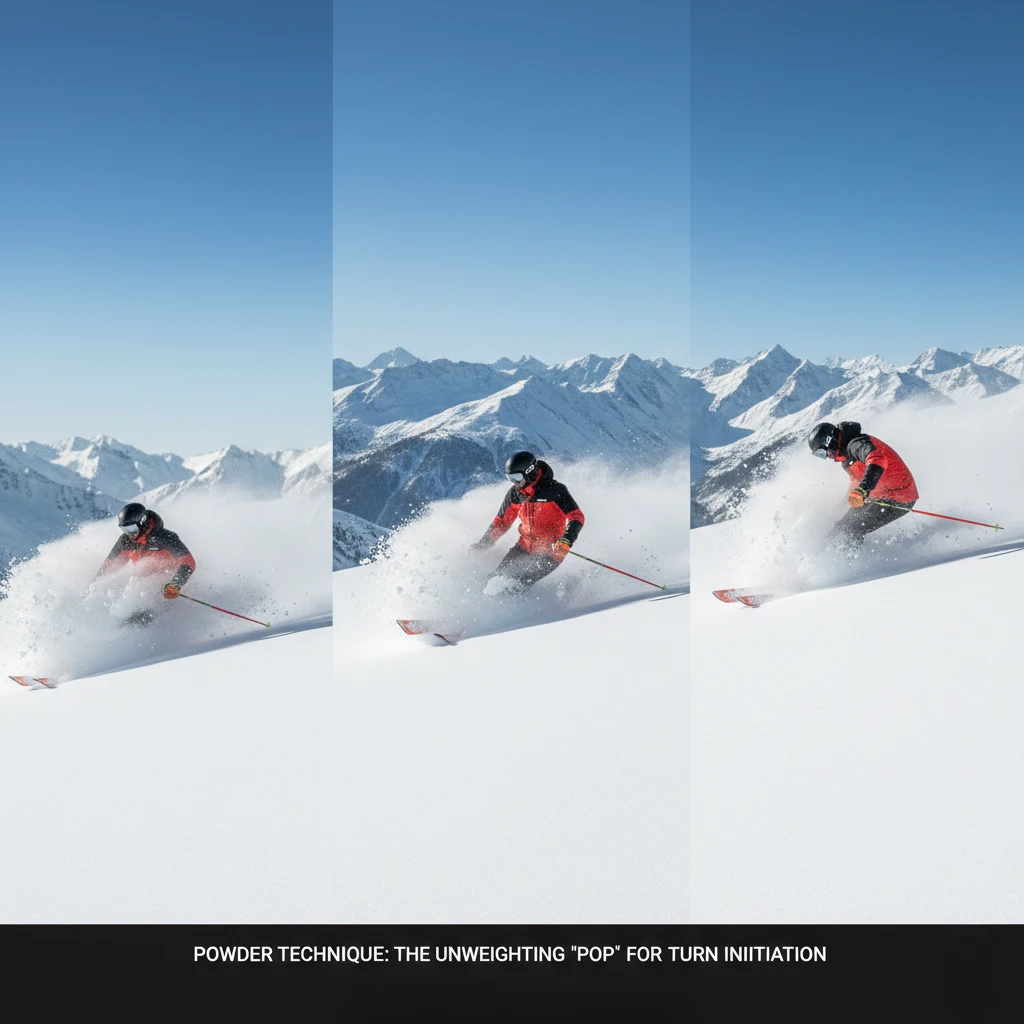
This “unweighting” technique is what allows for the effortless, floaty feel associated with expert powder skiing. Without it, you will find yourself struggling to “wrestle” the skis through the snow, leading to rapid exhaustion. For more on the physics of unweighting, consult the NSAA Safety Standards which touch upon terrain-specific control. Proper timing is a skill that takes years to master but starts with this simple vertical adjustment.
3. Managing Speed and Resistance: Friction vs. Depth
Speed control is perhaps the most surprising adjustment when comparing skiing in powder vs groomed runs. On groomed slopes, you control speed by turning across the hill or skidding your tails. In powder, the snow itself acts as a massive braking system through displacement resistance.
- Speed on Groomed Runs:
- Control: Provided by the friction of the metal edge against the hard snow.
- Braking: Achieved through the Parallel Turn Progression or a hockey stop.
- Speed in Powder Adjustment:
- Terrain Braking: Speed is managed by the depth of the snow; deeper snow naturally slows the skier down.
- Turn Shape: In powder, you can often ski more directly down the “fall line” because the resistance prevents excessive acceleration.
- Conserving Momentum: The danger in powder is actually losing too much speed, which causes you to sink and get stuck.
- Visual Awareness: In low light, speed management becomes harder; refer to Skiing in Flat Light for visibility tips.
Understanding this resistance allows you to tackle steeper terrain with more confidence. Many skiers find that a slope that feels terrifying on hardpack is manageable in 2 feet of fresh powder because the braking is automatic. This is why specialized Best Ski Jackets 2026 are designed with high-breathability; you work harder in powder even if you are going slower. Authorities like Evo provide excellent guides on managing this specific type of momentum.
4. Edge Control: Aggressive Bite vs. Subtle Banking
The concept of “edging” undergoes a radical transformation when skiing in powder vs groomed runs. On a groomed run, the edge is your lifeline to the mountain. In powder, the edge is secondary to the surface area of the ski base.
- Edging on Groomed Runs:
- Mechanism: Tipping the ski to a high angle (angulation).
- Result: The metal edge “bites” into the corduroy, creating a carved track.
- Edging in Powder Adjustment:
- Banking: Instead of tipping the skis, you “bank” your whole body into the turn, similar to a motorcycle on a racetrack.
- Pressure: Keep both skis closer together to create a single “platform” of surface area.
- Inside Ski Role: On groomed runs, the outside ski does all the work. In powder, the weight is split more evenly (roughly 50/50 or 60/40) to prevent the outside ski from sinking too deep.
- Edge Protection: Proper maintenance is still required for the transition back to the lodge.
This “two-ski platform” is critical for flotation. If you try to ski powder with a wide, groomed-run stance, your skis will act independently, often diverging and causing a fall. Learning to bank the turns rather than carve them is a mental hurdle that requires trusting the snow to support your weight. For technical sizing that helps this flotation, check How to Choose Ski Length.
5. Equipment Selection for Variable Snow
While technique is the primary driver, your equipment dictates the “ceiling” of your performance when skiing in powder vs groomed runs. A ski designed for racing will never perform optimally in 30cm of fresh snow, regardless of the skier’s skill.
- Groomed Run Equipment:
- Waist Width: Narrow (under 85mm) for fast edge-to-edge transitions.
- Profile: Traditional camber for maximum “pop” and edge grip.
- Powder Equipment Adjustment:
- Waist Width: Wide (100mm to 120mm+) for a larger surface area to promote flotation.
- Rocker: “Tip and tail rocker” (a reverse-camber shape) helps the skis plane on top of the snow like a boat.
- Flex: A softer flex allows the ski to bend easily, making short turns in deep snow less demanding.
- Transit Protection: Keep these expensive wide skis safe during travel using the Ski Bag Buying Guide.
Selecting the right tool for the day is a major part of the mountain experience. Many resorts offer “demo” programs where you can swap between carvers and powder skis as conditions change. Technical specs from REI Expert Advice highlight the importance of matching waist width to your typical snow depth. Always ensure your Best Ski Goggles 2026 have the correct lens for the snowy conditions often found in powder.
6. Safety and Terrain Awareness: Hidden Hazards
The final adjustment when skiing in powder vs groomed runs is your mental approach to safety. Groomed runs are patrolled, cleared of debris, and relatively predictable. Powder fields, especially off-piste, contain hidden obstacles and different risks.
- Groomed Run Safety:
- Focus: Avoiding other skiers and maintaining speed control.
- Risks: Collisions and icy patches.
- Powder Safety Adjustment:
- Tree Wells: In deep snow, stay away from the base of trees, as a hollow space (tree well) can trap and suffocate a skier.
- Hidden Obstacles: Rocks, stumps, and downed trees can be just inches below the surface of “perfect” powder.
- Avalanche Risk: On steep terrain, untracked snow is inherently unstable. Never venture into the Backcountry without proper training and gear.
- Communication: Always ski with a partner in powder; if you fall and lose a ski, it can take an hour to find it in the deep snow.
This shift in awareness is why intermediate skiers should progress slowly into the deep stuff. The exhilaration of powder is unparalleled, but it requires a higher degree of respect for the environment. Organizations like Teton Gravity Research provide excellent resources on mountain safety and hazard identification. Always check the resort’s official boundary signs before dropping in.
Conclusion: The Joy of Adaptability
Mastering skiing in powder vs groomed runs is the ultimate goal for any developing skier. The ability to look at a mountain and see a playground, regardless of the snow quality, transforms your experience from a simple sport into a lifelong passion. By adjusting your stance to a neutral center, utilizing vertical unweighting for turns, and selecting the appropriate equipment, you unlock the entire mountain.
Remember that every great powder day ends on a groomed run back to the base area. The mark of an expert is not just how they ski the deep snow, but how they can immediately re-engage their edges when they hit the hardpack. Keep your Ski Fitness high, your equipment tuned, and your mind open to the different sensations of the snow.
The mountain is a dynamic environment that rewards those who are willing to learn its different languages. Whether you are carving a perfect rail on the piste or surfing a deep wave in the glades, the fundamental principles of balance and pressure remain your guides. Step out with confidence, respect the conditions, and enjoy the unique thrill that only skiing can provide.
Discover more from Maive Verse
Subscribe to get the latest posts sent to your email.