
Master the choice between bikepacking vs cycle touring. Discover the 11 technical differences in terrain, gear, and bike handling to plan your perfect adventure.
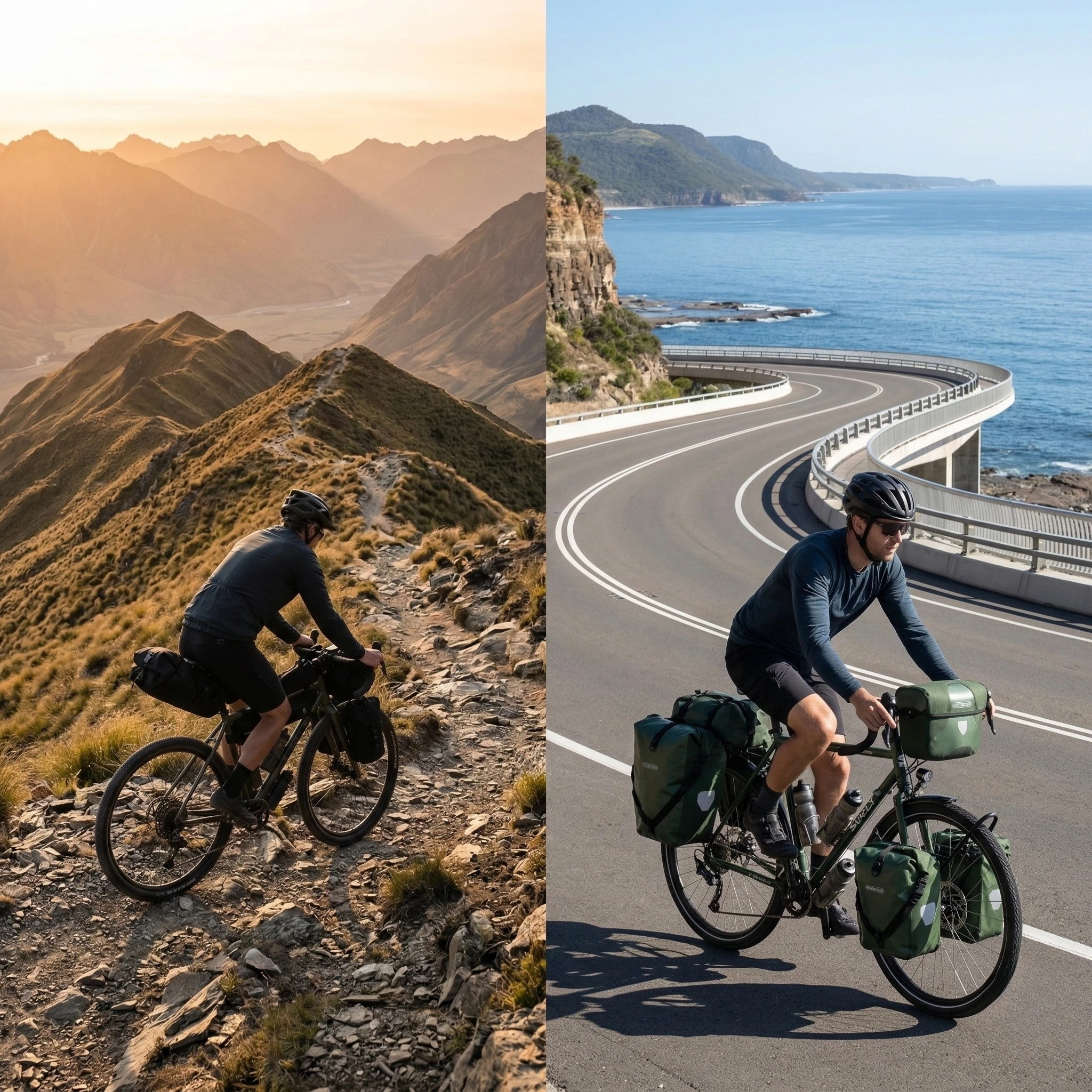
Table of Contents
Introduction: Defining the Two Pillars of Bicycle Adventure
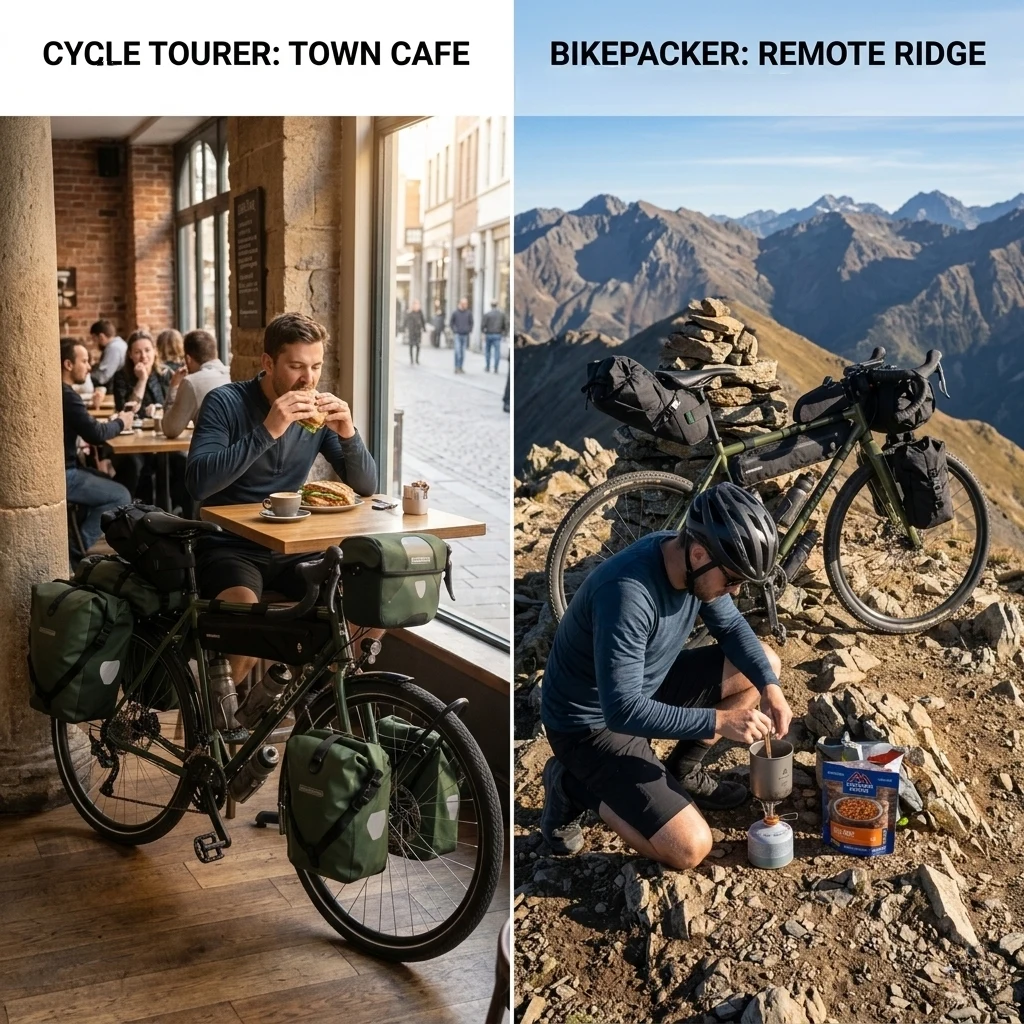
The debate between bikepacking vs cycle touring is essentially a question of terrain and mechanical philosophy. While both activities involve traveling long distances by bicycle with overnight gear, the methods of execution are fundamentally different. Cycle touring is the traditional predecessor, relying on paved roads, high-capacity racks, and heavy-duty panniers. Bikepacking is the modern evolution, prioritizing off-road capability, minimalist soft-bag systems, and technical trail navigation. Understanding these distinctions is the first step toward self-sufficiency in the wilderness.
Choosing the right style depends on the desired level of isolation and the technicality of the intended route. For those who have already consulted our Ultimate Bikepacking Gear List, the shift toward off-road travel requires a specific mindset regarding weight and volume. Conversely, cycle touring offers a higher degree of creature comfort and logistical simplicity. Both disciplines demand a high level of physical readiness and mechanical knowledge. Transitioning between them requires a calculated adjustment in equipment and expectations.
Successful multi-day travel is a dialogue between the rider, the machine, and the environment. This guide analyzes the technical nuances of bikepacking vs cycle touring across 11 critical decision points. Whether you are aiming for a transcontinental road odyssey or a rugged mountain mission, the following analysis provides the objective data needed for mastery. Following a standardized adventure cycling protocol ensures a baseline of safety and efficiency.
1. Terrain and Surface Selection: Off-Road vs. Pavement
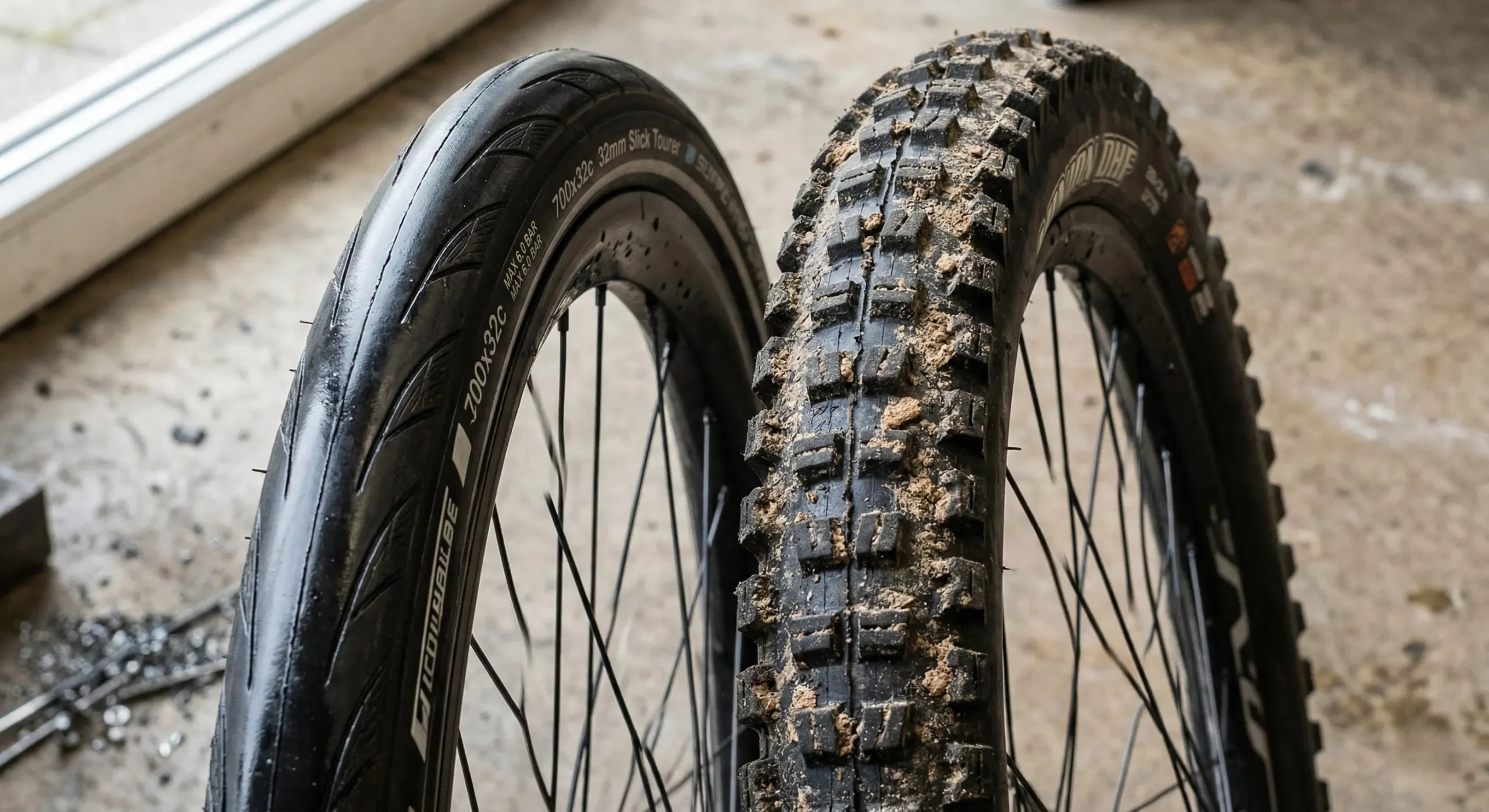
The primary differentiator in the bikepacking vs cycle touring comparison is the intended riding surface. Cycle touring is optimized for smooth, predictable surfaces where efficiency and speed are prioritized. Bikepacking thrives on unpredictability, designed to conquer surfaces that would be impassable for a traditional touring rig. For beginners, understanding surface dynamics is as vital as the advice found in our Bikepacking for Beginners Guide.
The Paved World of Cycle Touring
Cycle touring routes typically follow state highways, country lanes, and paved bike paths. This allows for a narrower tire and a higher average speed, making it easier to cover 60 to 100 miles per day. The infrastructure surrounding these routes often includes frequent towns, campgrounds, and mechanical support. For detailed route planning on paved surfaces, the EuroVelo Network provides the gold standard for international touring. This style emphasizes the journey through human landscapes rather than pure wilderness.
The Technical Wilderness of Bikepacking
Bikepacking focuses on the “unpaved” world, including gravel roads, fire trails, and technical singletrack. This requires a bicycle with significant tire clearance and suspension components to manage high-frequency vibrations and impacts. Routes are often remote, requiring higher levels of self-reliance and navigational skill. For those exploring remote US regions, the USGS Topographic Maps are essential for assessing gradient and terrain difficulty. This discipline is about accessing landscapes that are otherwise only reachable on foot.
2. Luggage Mechanics: Soft Bags vs. Rigid Racks
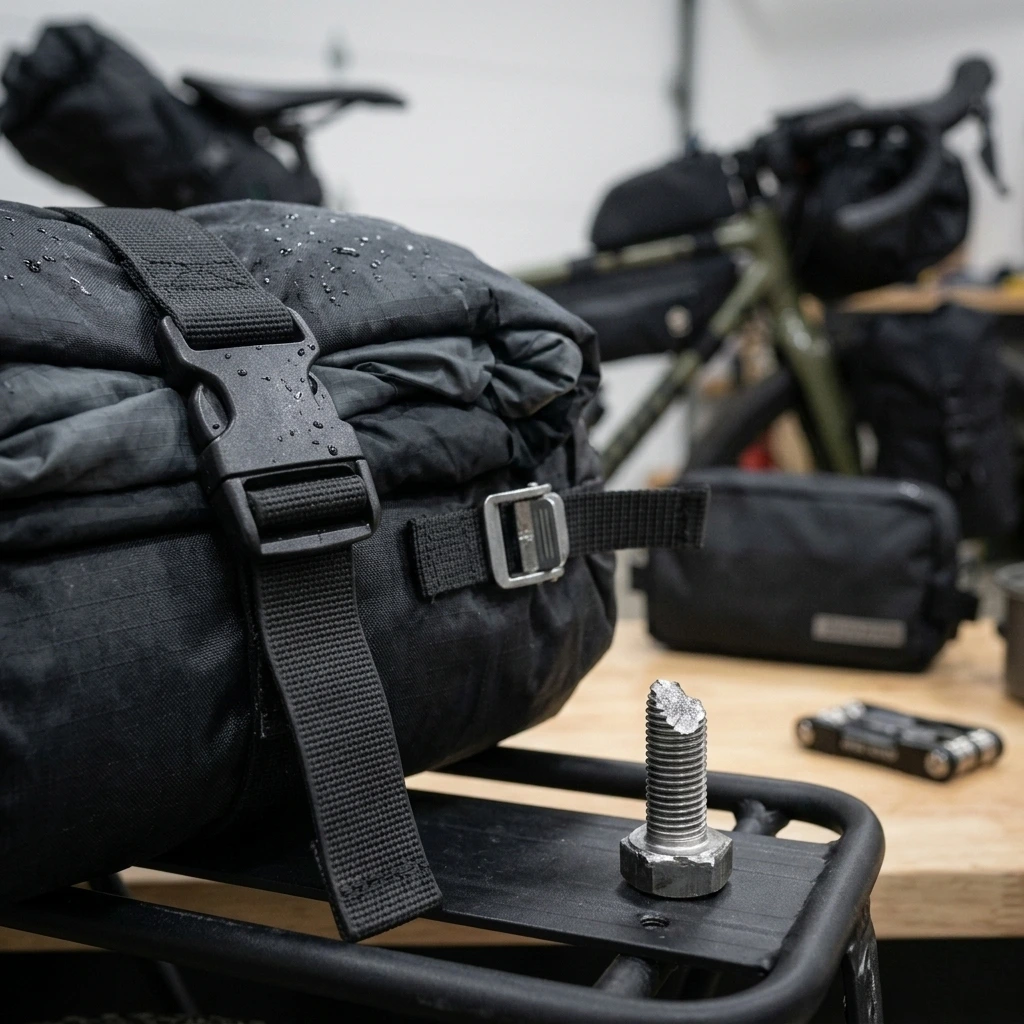
The mechanical interface between the gear and the bicycle frame is the most visible difference in bikepacking vs cycle touring. Traditional touring uses rigid metal racks bolted to the frame, while bikepacking uses soft-sided bags that strap directly to the tubing. This choice impacts the bike’s durability and its ability to handle technical obstacles.
The High-Capacity Rack and Pannier System
Cycle touring relies on a rack and pannier system that can carry upwards of 50 to 80 liters of volume. This allows the rider to carry luxury items, fresh food, and heavy camping equipment. However, rigid racks are prone to mechanical failure over rough terrain due to constant rattling. For high-quality rigid systems, the Ortlieb Back-Roller Design s the industry benchmark for waterproofing and capacity. This system is ideal for long-duration trips where comfort is prioritized over technical speed.
The Minimalist Integrated Bag System
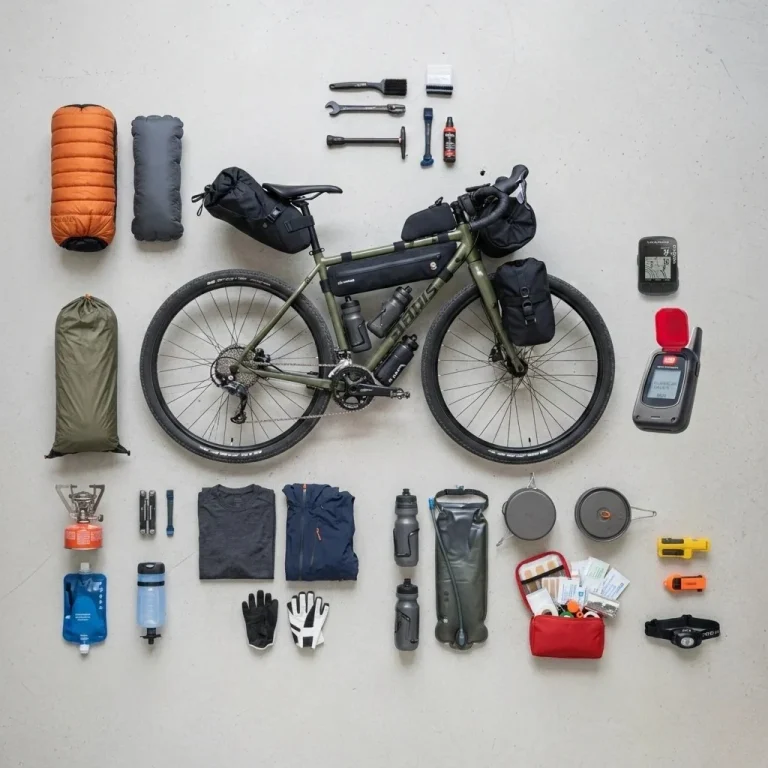
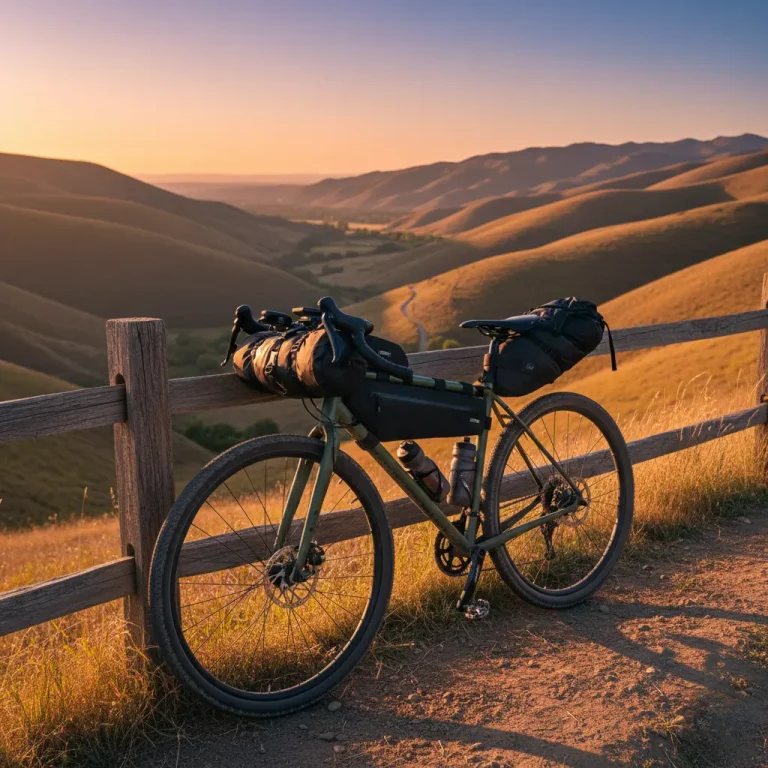
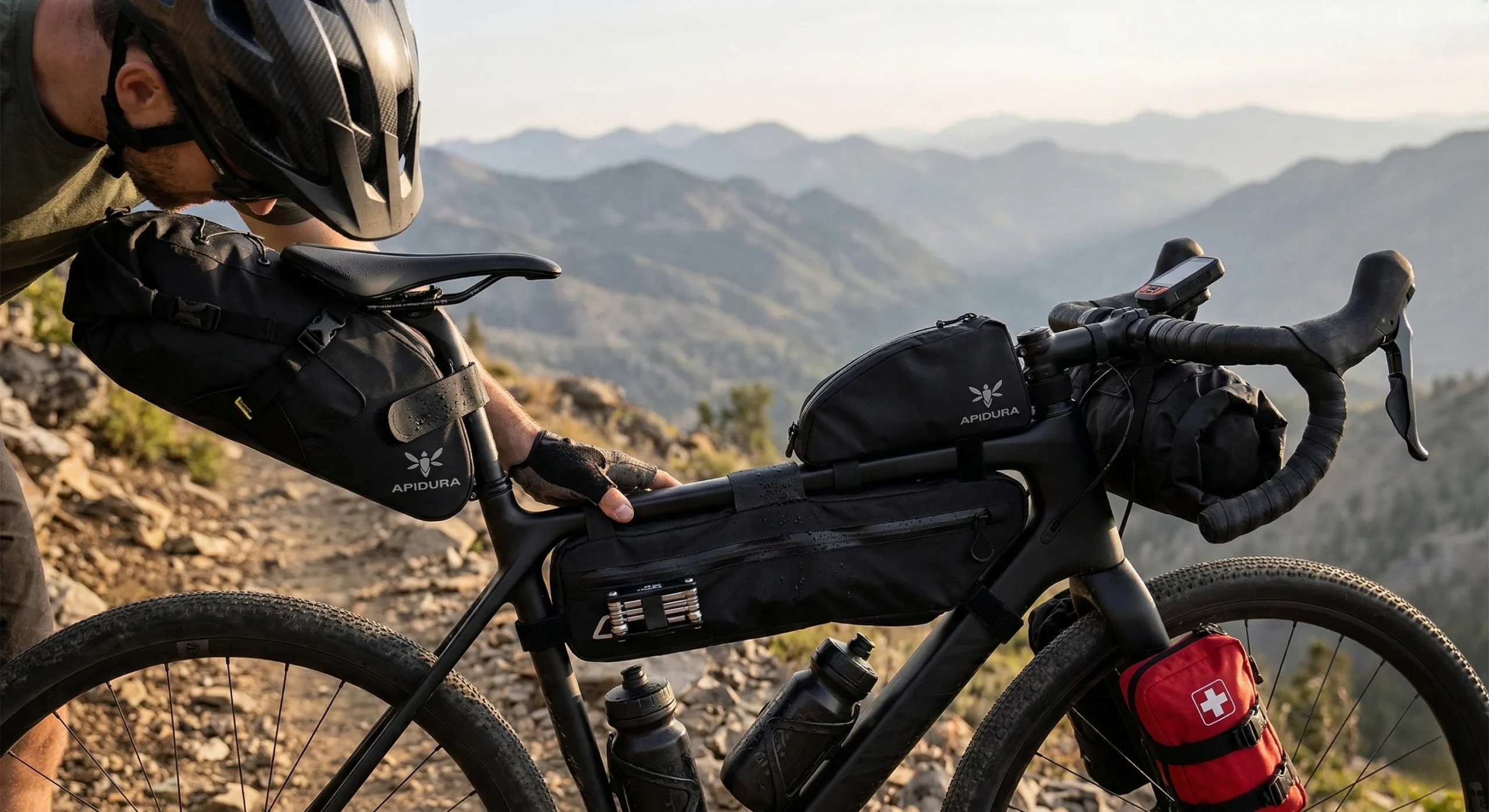
Bikepacking bag systems typically cap out at 30 to 45 liters of volume. By strapping bags directly to the frame, the rider eliminates the weight of metal racks and prevents mechanical breakage on rough trails. This integrated approach ensures the bike remains narrow, allowing for better clearance through tight trees or rock gardens. For a specific recommendation on soft systems, the Revelate Designs Sweetroll offers a technical, rackless solution for carrying sleep systems. Mastery of this system is a core skill for any Wilderness Adventure.
3. The Physics of Bicycle Handling and Dynamics
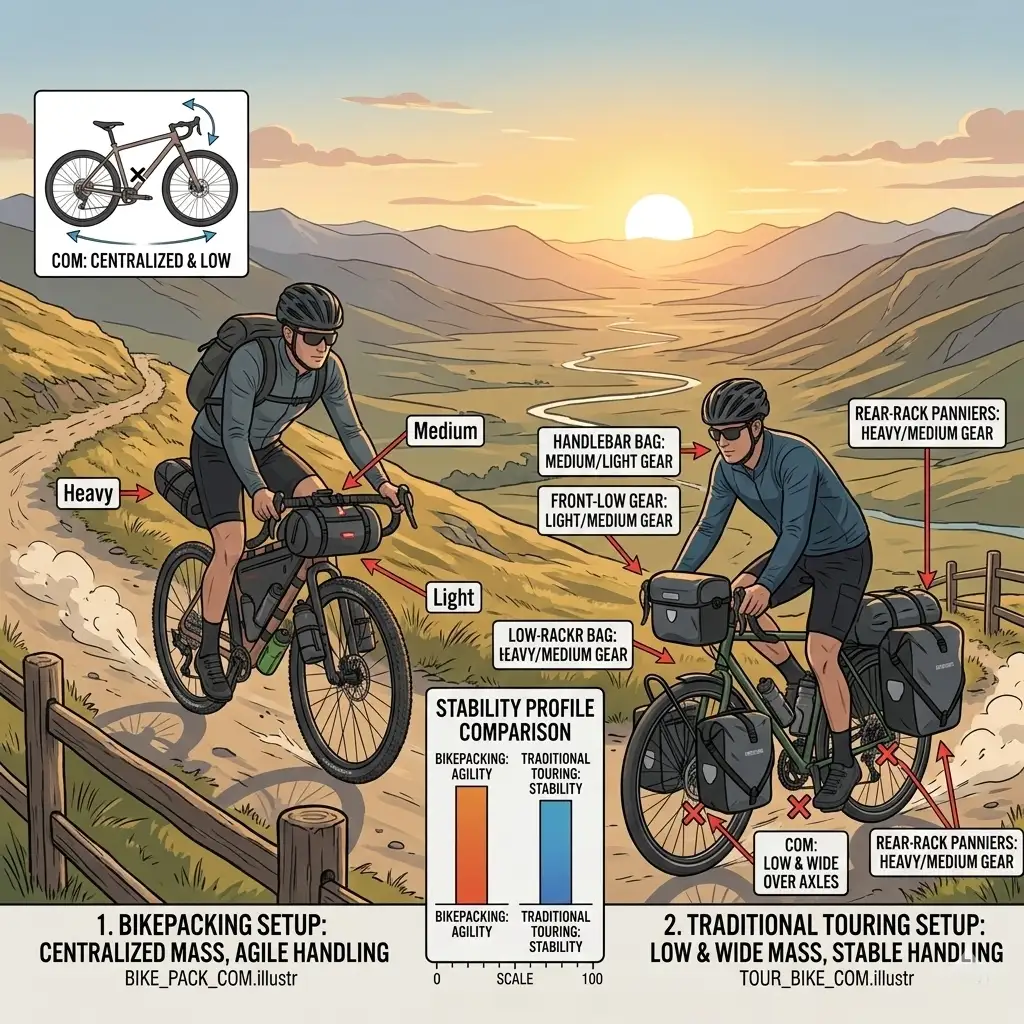
The way a bicycle handles when loaded is a critical safety consideration in the bikepacking vs cycle touring debate. Weight distribution affects steering speed, braking distance, and the rider’s ability to maintain balance on steep gradients. Proactive management of these forces is required to avoid accidents in remote areas.
Center of Gravity and Stability
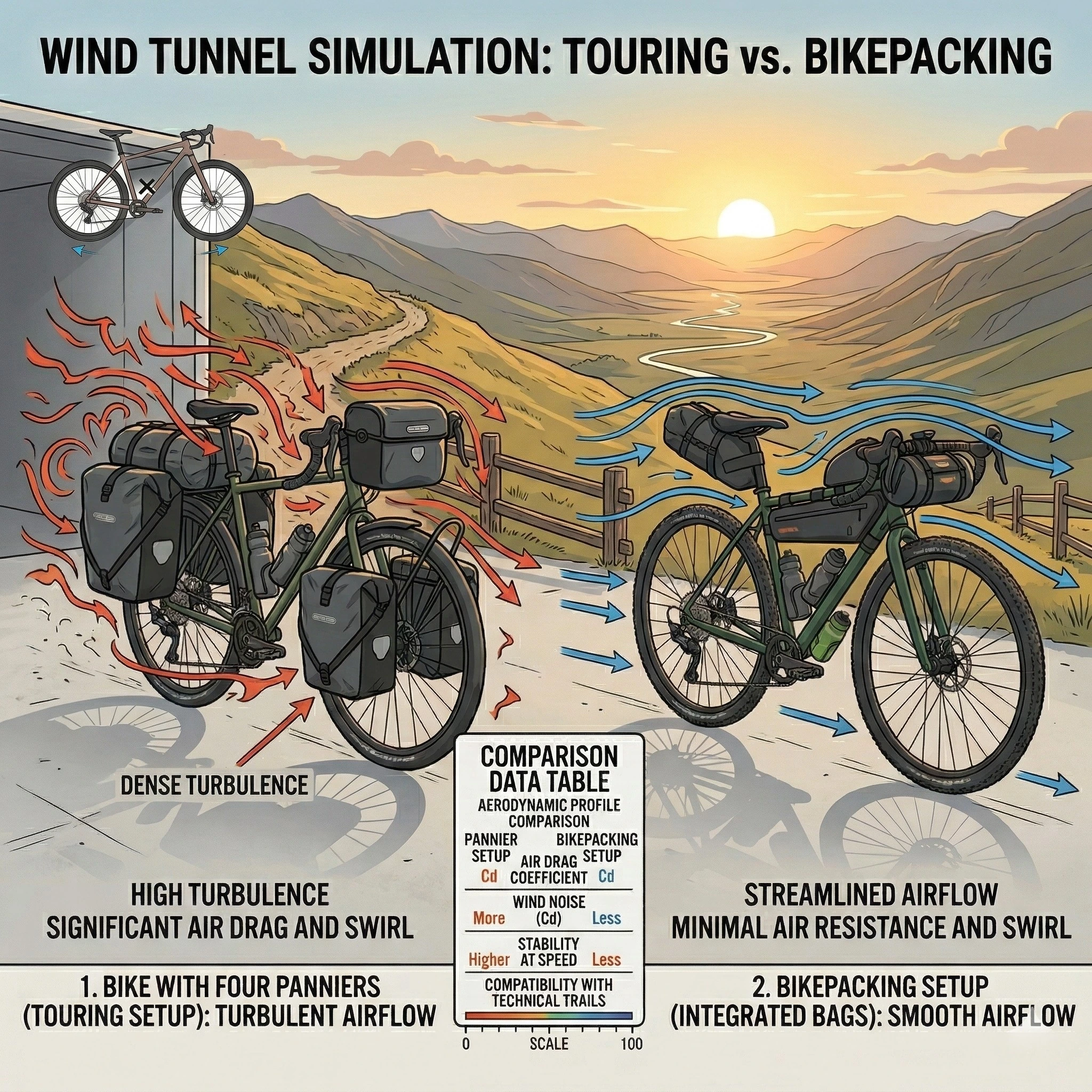
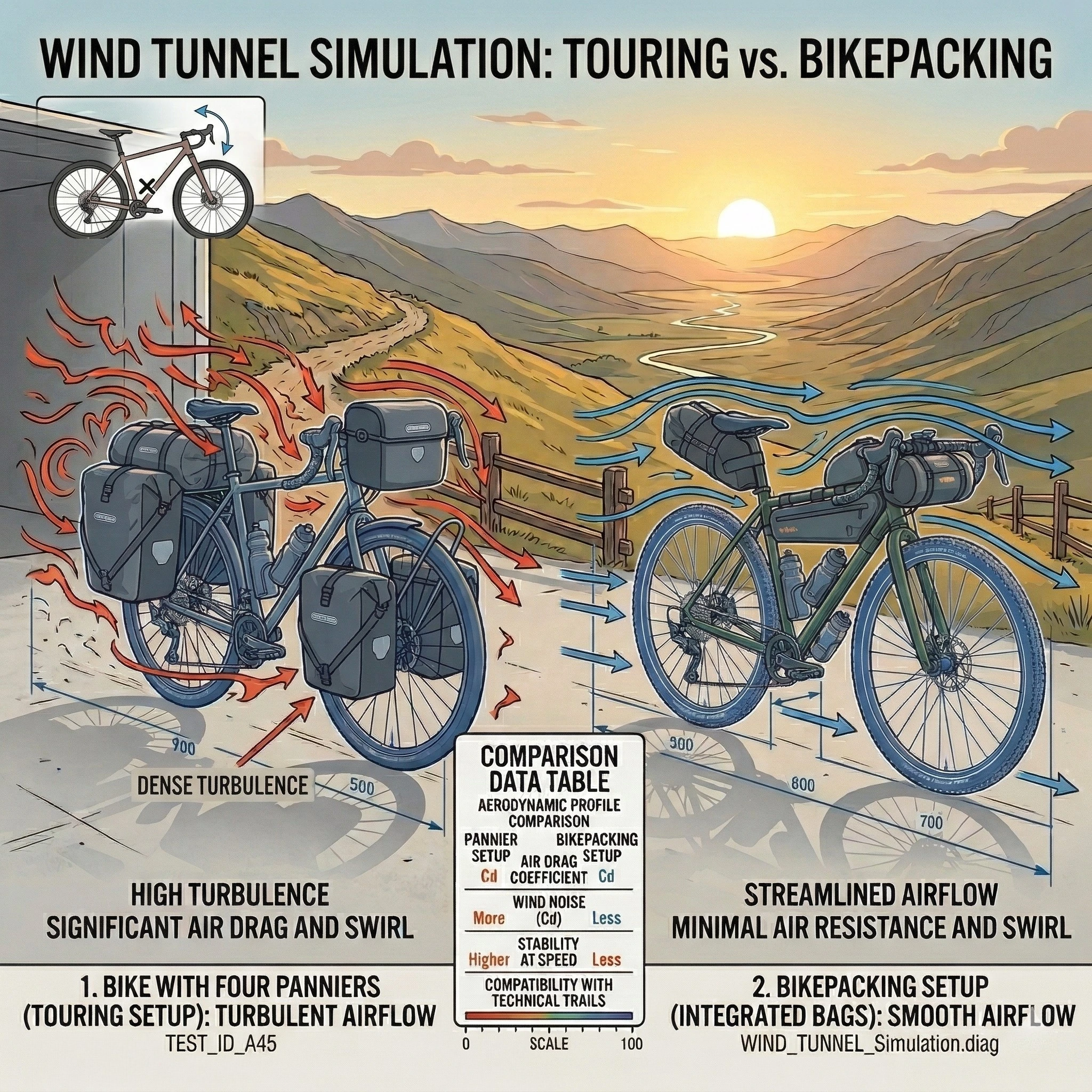
In cycle touring, the weight is typically carried low to the ground in front and rear panniers. This creates a very stable platform that tracks well on straight roads but makes the bike feel heavy and difficult to lean in corners. This “low-center” approach is explained in detail by the Bicycle Quarterly Technical Blog . Conversely, bikepacking weight is centralized and higher on the frame. This keeps the bike nimble and easier to lift over obstacles like fallen trees or boulders.
Aerodynamics and Drag Coefficients
At road speeds, wind resistance is the primary obstacle for the cycle tourer. Large panniers act as air brakes, significantly increasing the energy required to maintain speed. The streamlined, “inline” nature of bikepacking bags reduces the frontal surface area, making the bike more aerodynamic. This energy efficiency is vital for riders following a Bikepacking 3-Day Plan where caloric conservation is key. For those interested in the math of cycling drag, the NASA Aerodynamics Guide provides the foundational physics of fluid dynamics.
4. Frame Geometry and Material Science
The mechanical engineering of the frame determines how well it can support weight while providing rider comfort. In bikepacking vs cycle touring, frame geometry is tailored to the specific stresses of the riding surface.
Touring Geometry: Stability and Comfort
Touring bikes, such as the Surly Long Haul Trucker , feature long wheelbases and relaxed headtube angles. This geometry is designed for “all-day” comfort and prevents the rider’s heels from striking the rear panniers. Steel is the preferred material for its ability to be welded in remote areas and its natural vibration-damping properties. For a technical analysis of steel versus aluminum in long-distance travel, consult the Sheldon Brown Bicycle Technical Archive .
Bikepacking Geometry: Clearance and Agility
Bikepacking bikes often share geometry with modern mountain bikes or gravel racers. They feature shorter wheelbases for tighter turns and increased bottom bracket height for clearing rocks and roots. Carbon fiber and titanium are frequently used to reduce the “base weight” of the bike before gear is added. This agility is necessary for the technical skills discussed in our Beginners Overview . Frame designers like Salsa Cycles ) focus specifically on “adventure geometry” that balances loading and trail feel.
5. Camping Philosophies: Stealth vs. Infrastructure
The logistical planning for sleep and recovery differs greatly between bikepacking vs cycle touring. One style relies on organized support, while the other prioritizes total isolation from human structures.
The Touring Approach: Campsites and Hostels
Cycle touring often follows routes that lead to established campgrounds, motels, or hostels. This allows the rider to carry less food and rely on town infrastructure for water and charging electronics. The social aspect of touring is often a primary draw, with riders meeting at designated hiker/biker sites. For locating these sites, the Warmshowers Community is a vital resource for cycle tourists worldwide. This style provides a safety net that is ideal for those less comfortable with total wilderness isolation.
The Bikepacking Approach: Wild Camping and Stealth
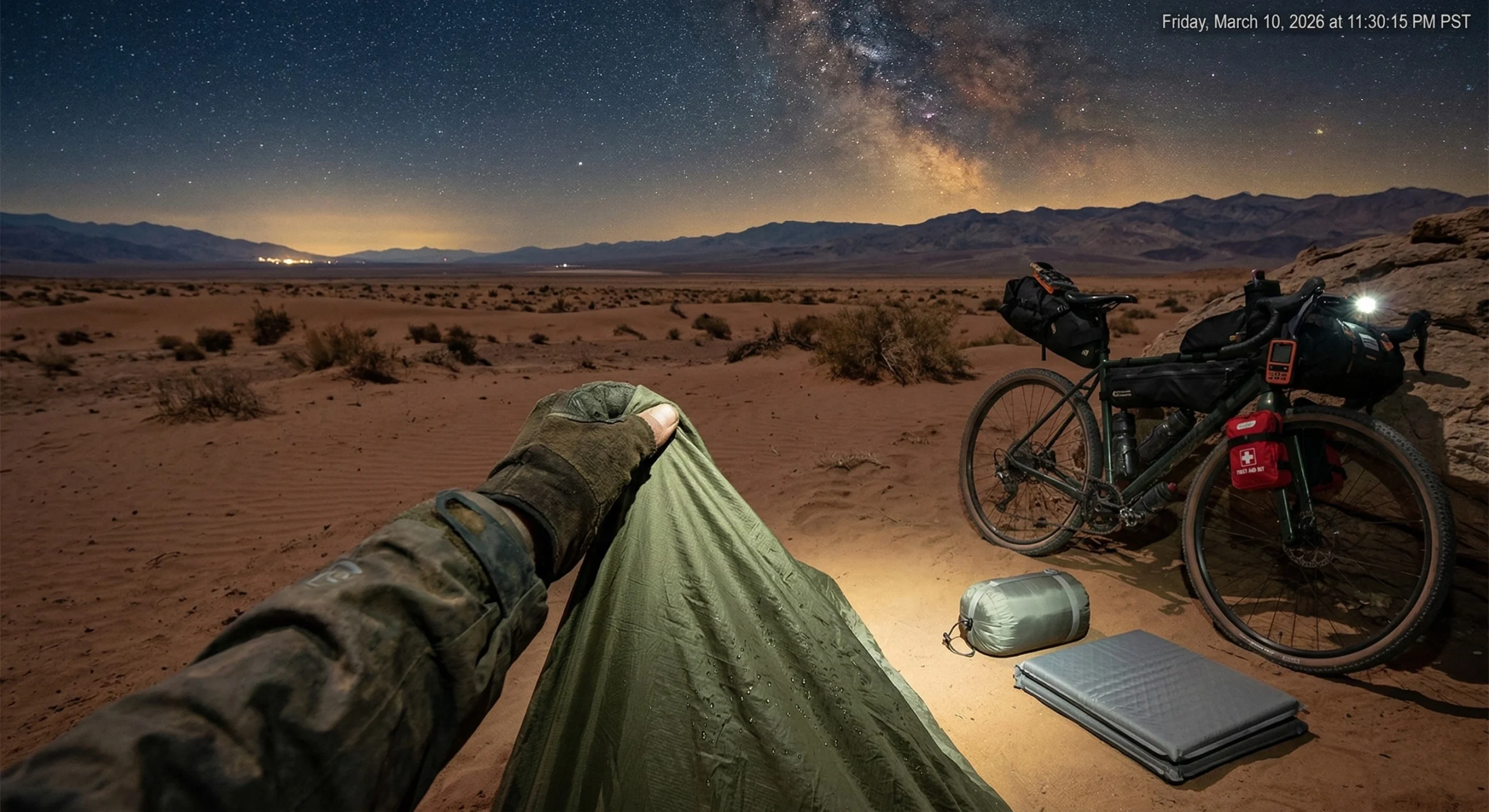
Bikepacking often involves “wild camping,” which is the practice of setting up camp in remote areas where no facilities exist. This requires a higher degree of knowledge regarding Leave No Trace Principles and water filtration. This style allows for a deeper connection with the environment and a more flexible schedule. Beginners should refer to our 3-Day Essentials List for the specific ultralight shelters needed for this approach. Mastering stealth camping ensures that the rider can rest whenever fatigue sets in, regardless of the map.
6. Mechanical Self-Sufficiency and Toolkit Variation
In both bikepacking vs cycle touring, a mechanical failure can end a trip. However, the types of failures and the tools required to fix them vary based on the terrain and the bicycle’s complexity.
Tools for the Road Tourer
Cycle touring bikes often use more traditional components that are easier to service at a standard bike shop. A touring toolkit should prioritize long-term wear items and spoke replacement. For a comprehensive road-focused kit, the Park Tool AK-5 Advanced Mechanic Kit provides every necessary tool for overhauling a drivetrain. Since touring bikes are often ridden in wet road conditions, chain hygiene and brake pad wear are the primary concerns.
Tools for the Off-Road Bikepacker
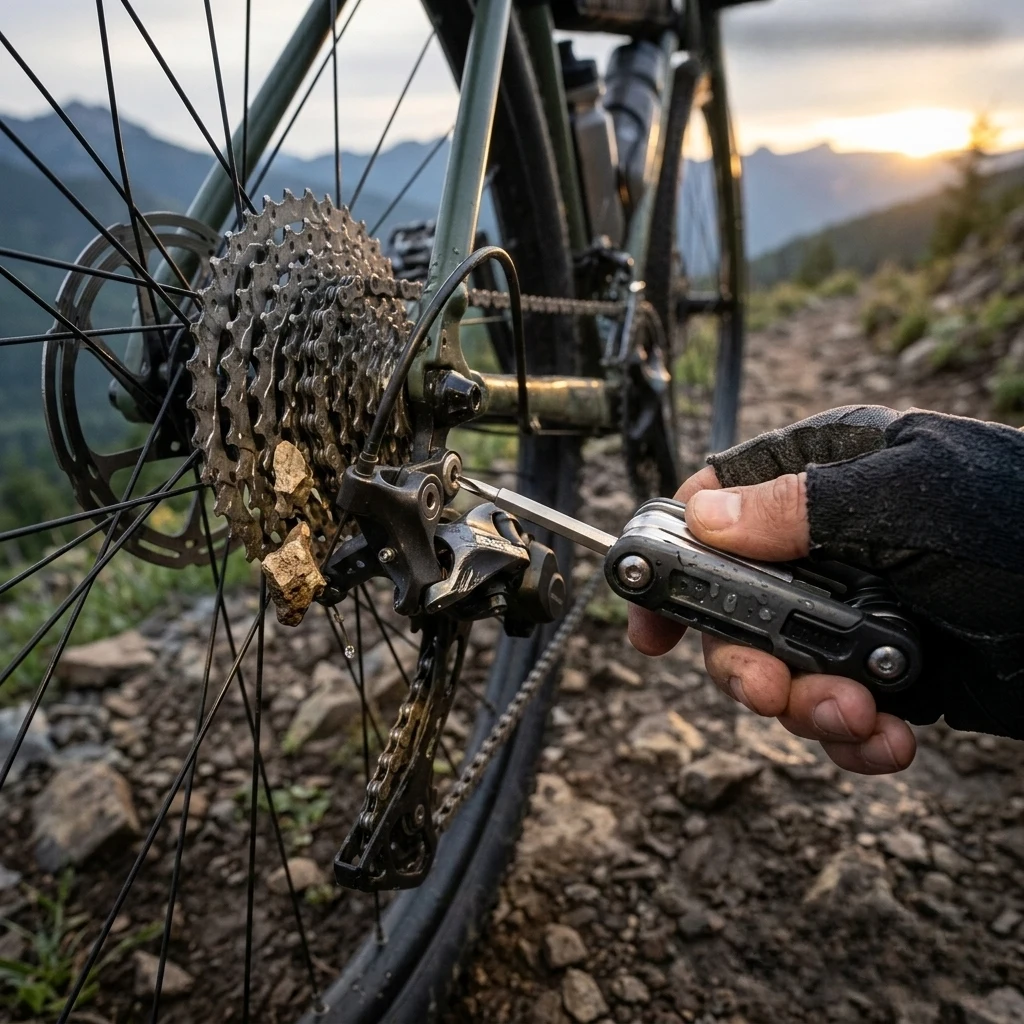
Bikepacking toolkits must focus on trailside emergencies like slashed sidewalls, broken chains from torque, and mud-clogged drivetrains. The use of tubeless tire repair kits is mandatory for this discipline. Because weight is a factor, tools must be multi-functional and lightweight. For technical tutorials on field repairs, the Global Mountain Bike Network (GMBN) offers excellent visual resources.
7. Nutritional Strategy and Caloric Density
Maintaining energy levels is a biological requirement that shifts based on intensity. In the bikepacking vs cycle touring comparison, the metabolic demands are influenced by the rolling resistance of the terrain.
- Cycle Touring Nutrition:
- Intensity: Moderate and sustained; focus on steady endurance.
- Access: Regular access to grocery stores and restaurants allows for fresh food and “luxury” meals.
- Strategy: Carbohydrate loading for consistent road speed.
- Bikepacking Nutrition:
- Intensity: High and variable; steep climbs and technical maneuvers burn more calories.
- Access: Resupply points may be 48 to 72 hours apart, requiring high caloric density food.
- Strategy: High-fat, high-protein dehydrated meals. For elite planning, consult the Bikepacking.com Nutrition Guide.
8. Luggage System Review: Best Gear for Your Style
To help you decide, we have categorized the top-rated luggage solutions for 2026. These products have been selected for their technical durability and mechanical reliability.
1. Ortlieb Back-Roller Classic (Best for Touring)
- Key Features: QL2.1 mounting system, 40L capacity (pair), 100% waterproof polyester.
- Pros: Industry-standard durability; extremely easy to remove from the rack; massive internal volume.
- Cons: Heavy; creates significant wind drag; requires a rigid metal rack.
- Check Price on Amazon: Ortlieb Back-Roller Classic.
2. Apidura Expedition Saddle Pack (Best for Bikepacking)
- Key Features: Reinforced base, hands-free air release valve, waterproof TPU laminate.
- Pros: Lightweight; aerodynamic; straps directly to the seat post.
- Cons: Limited capacity (17L max); can sway if not packed correctly; requires specific tire clearance.
- Check Price on Amazon: Apidura Expedition Pack.
3. Thule Tour Rack (The Hybrid Solution)
- Key Features: Patented attachment system, fits almost any bike (including suspension), adjustable deck.
- Pros: Allows you to use panniers on a mountain bike; very stable on rough roads.
- Cons: Adds significant weight to the bike; complex installation.
- Check Price on Amazon: Thule Tour Rack
9. Footwear and Apparel: The Interaction with Pedals
The bikepacking vs cycle touring choice also dictates your wardrobe and footwear choices. Efficiency on the bike must be balanced with comfort at the campsite or in town.
- Touring Apparel:
- Shoes: Road-style cycling shoes with stiff soles for maximum power transfer are common.
- Clothing: Lycra and road jerseys are favored for their aerodynamic benefits and moisture-wicking properties.
- Bikepacking Apparel:
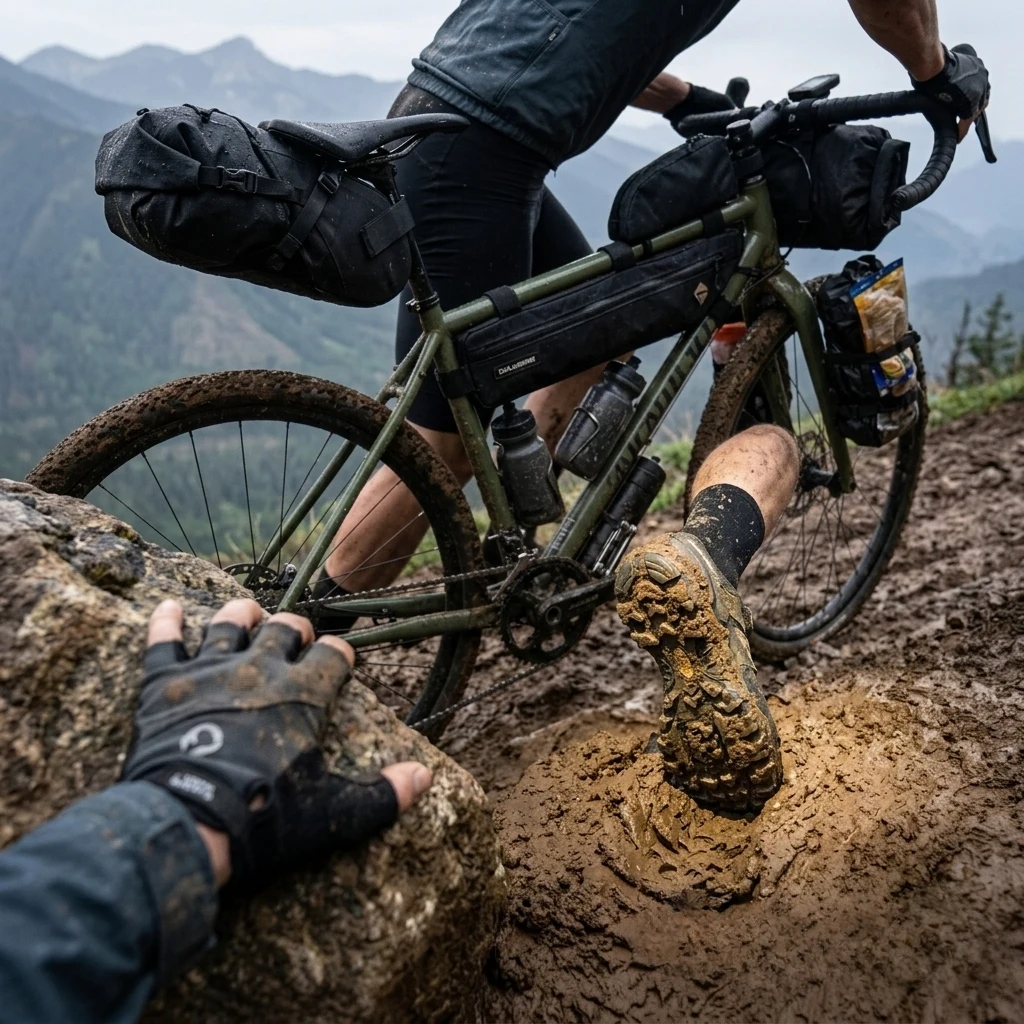
- Shoes: Mountain bike shoes with “walkable” soles are mandatory for “hike-a-bike” sections.
- Clothing: Technical flannels and baggy shorts offer durability against brush and a more casual look for towns.
- Requirement: For a list of essential fabrics, see the 3-Day Adventure Gear List. For footwear tech, check Shimano’s Adventure Shoe Range.
10. Navigational Complexity and Redundancy
Navigation is the cognitive backbone of any trip. In the bikepacking vs cycle touring world, the risk of getting lost increases as you move away from paved signage.
- Cycle Touring Navigation: Often relies on road signs and well-mapped highways. A standard smartphone with Google Maps is often sufficient.
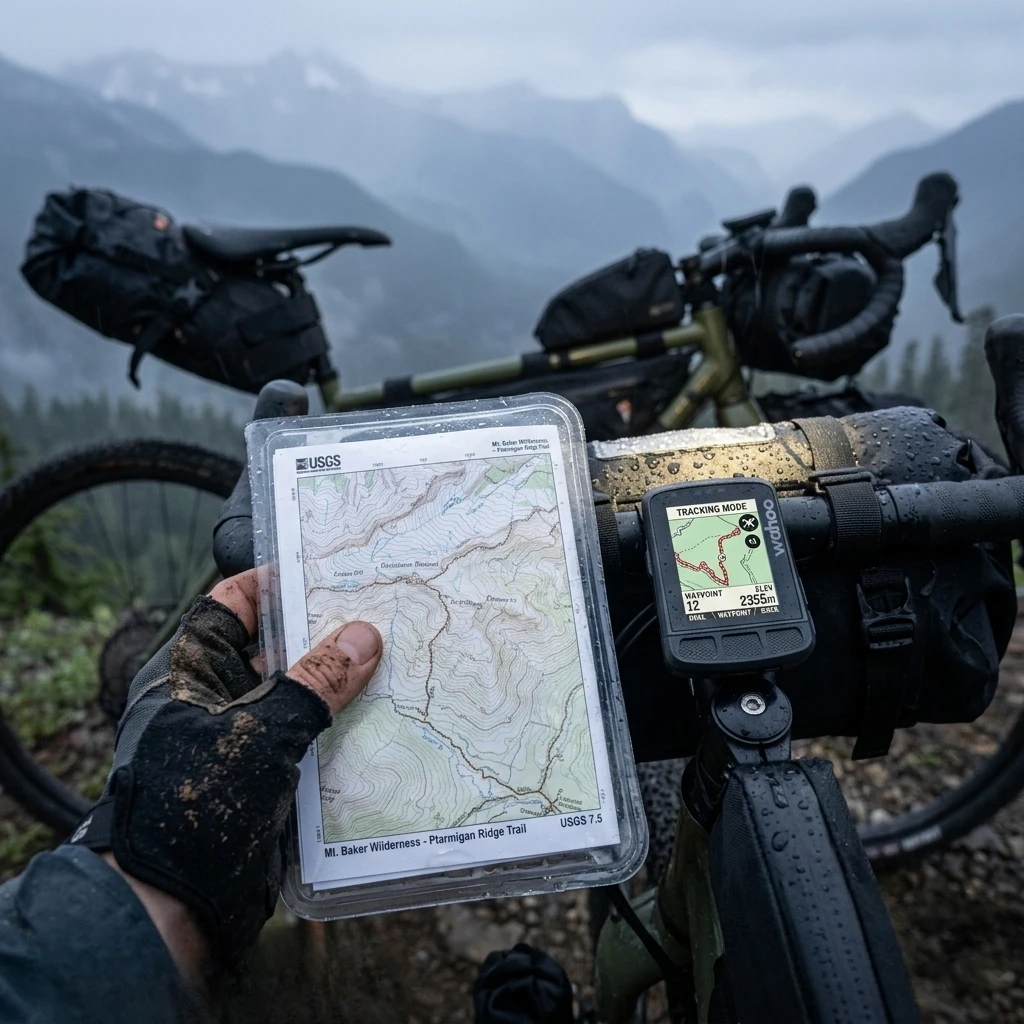
- Bikepacking Navigation: Requires specialized GPS head units and high-resolution topographic data. Redundancy is a safety requirement.
- Digital Tools: Use Ride with GPS for route creation.
- Satellite Safety: For remote bikepacking, carrying a Garmin inReach is a non-negotiable safety protocol.
- Analog Skills: Always carry a paper map of the primary corridor, as discussed in our Bikepacking for Beginners guide.
11. Cost Analysis: Entry Barriers and Long-Term Value
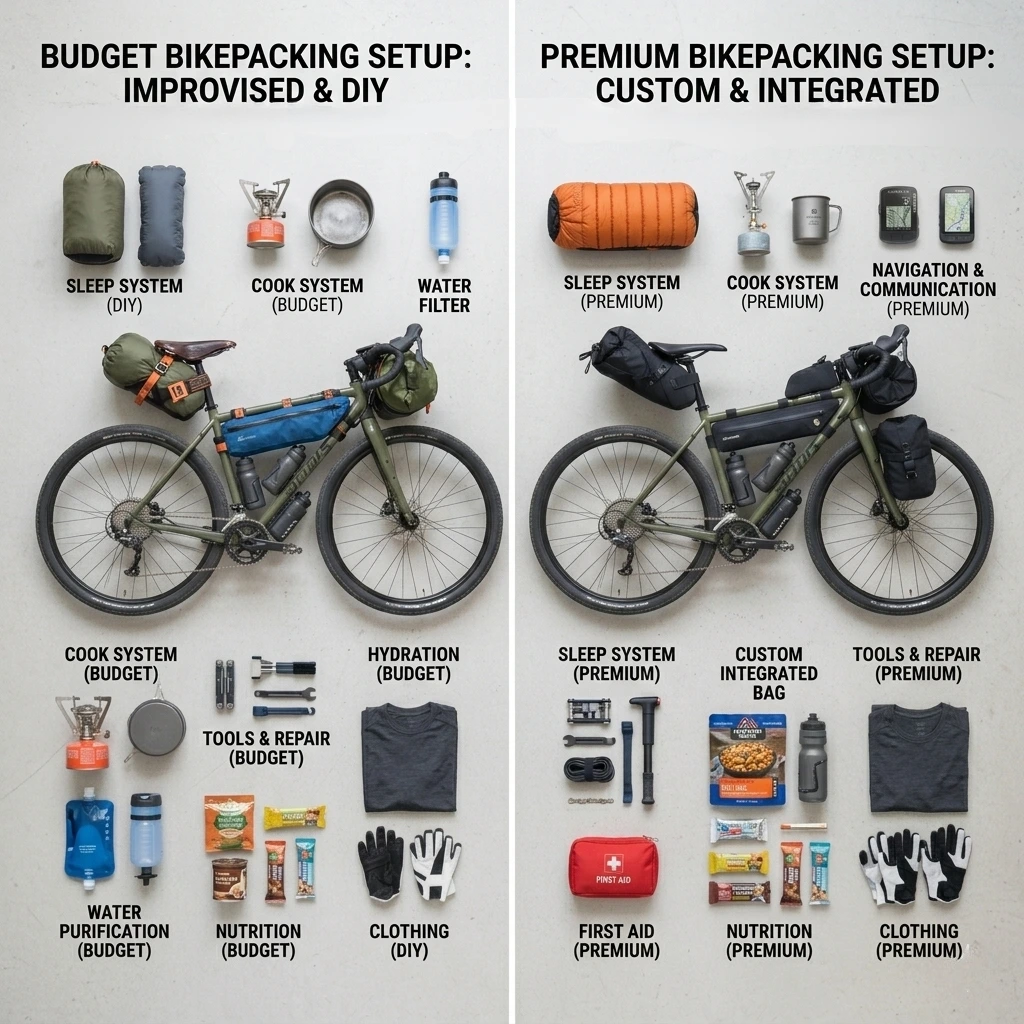
The financial investment required for bikepacking vs cycle touring depends on the level of technicality desired. Both can be done on a budget, but pro-level gear offers significant performance gains.
- Touring Costs: High initial cost for racks and quality panniers, but low maintenance costs due to road-standard components. A quality steel touring bike can last 20+ years.
- Bikepacking Costs: High equipment costs for ultralight camping gear and specialized bags. Higher maintenance costs due to dirt, mud, and trail impacts on suspension and drivetrains.
- Value Pro Tip: Renting gear is a viable way to test your adventure style before committing thousands of dollars. See our Bikepacking for Beginners for more on budget-friendly strategies. For current market pricing, the Bicycle Blue Book helps evaluate used bike values.
Conclusion: Which Style Fits Your Spirit?
Mastering the choice between bikepacking vs cycle touring is an exercise in self-awareness and technical matching. If you value high-mileage efficiency, the comfort of organized campsites, and the ability to carry ample supplies, cycle touring is the logical choice. It provides a structured way to see the world from the saddle of a stable, predictable machine. For many, the cultural immersion of road travel is the ultimate reward of a long tour.
However, if your spirit is drawn to the silence of the deep forest, the challenge of technical climbing, and the freedom of self-contained wilderness survival, bikepacking is your discipline. It requires a more disciplined approach to gear selection, as outlined in our Ultimate Gear List , and a higher level of physical conditioning. The rewards of bikepacking are found in the remote summits and untracked trails that road cyclists will never see.
The trail (or road) is waiting, and with the correct technical foundation, you are ready to conquer it. Treat the environment with respect, maintain your bicycle with the protocols from our 7 Proven Steps, and enjoy the rhythm of life on two wheels. Whether you choose the panniers of the road or the bags of the trail, the transition from day rider to adventure cyclist is a path paved with preparation. Step out with a plan, respect your limits, and embrace the unparalleled liberation of the bicycle adventure.