

This post may contain affiliate links. If you buy through them, we may earn a small commission at no extra cost to you.
The best tripods for astrophotography are the ones that stay perfectly still for thirty seconds in the dark, in a breeze, on uneven ground, with cold hands working the locks. Astrophotography is the most demanding job a tripod can do, because every exposure is long and every tiny vibration shows up as blurred or doubled stars.
Six tripods below, from a premium carbon travel tripod to a budget aluminum model with thousands of reviews and a dedicated tracker tripod, every one checked for stock, rating and the specifications on the listing. If you are just starting out, read our guide on how to photograph the night sky first, then come back to choose your support.
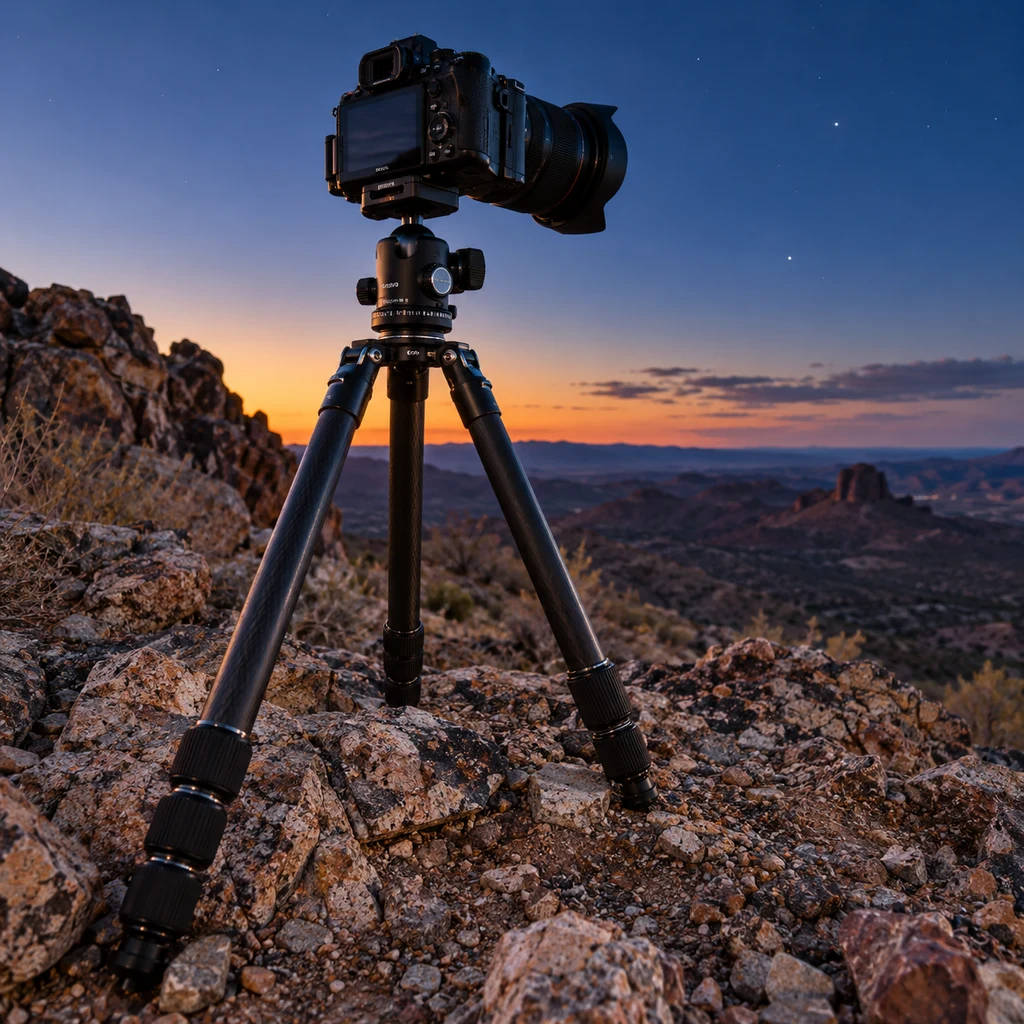
Table of Contents
What Separates the Best Tripods for Astrophotography
Stability is the first test, and it is not the same as weight. A tripod is stable when its legs are stiff, its joints do not flex and its head locks without creeping. A heavy tripod with wobbly leg sections is worse at night than a lighter one that is built tightly.
Then the head. Most photographers use a ball head, which lets you aim at any part of the sky quickly. For night work, the head needs to lock firmly with the camera pointed high, which is where cheap heads droop during the exposure.
Then usability in the dark. Leg locks you can operate by feel, a quick release plate you can mount without looking, and a height that lets you frame a steep overhead shot without kneeling in wet grass. These details matter far more at midnight than they do in a store.
Last, packed size and weight. Dark skies are usually far from the car. If a tripod is too heavy to carry to a ridge or a lakeshore, it stays at home, and the best tripod is always the one you actually bring.
The Best Tripods for Astrophotography at a Glance
| Tripod | Legs | Head | Reviews | Best For |
|---|---|---|---|---|
| Peak Design Travel Tripod Carbon | Carbon | Ball head | 4.6 stars, 659 | Best overall |
| NEEWER Basics TP17B | Carbon | Ball head | 4.6 stars, 3,139 | Best value carbon |
| K&F Concept 64 inch | Aluminum | 36mm ball head | 4.6 stars, 4,401 | Budget |
| K&F Concept 60 inch Carbon | Carbon | 25mm ball head | 4.4 stars, 913 | Monopod option |
| Sky-Watcher Star Adventurer Tripod | Steel | Mount plate | 4.7 stars, 251 | Star trackers |
| Peak Design Travel Tripod Aluminum | Aluminum | Ball head | 4.5 stars, 1,029 | Travel on a budget |
The Six Best Tripods for Astrophotography in Detail
Peak Design Travel Tripod Carbon: Best Overall
Peak Design rethought the travel tripod from scratch, and the result packs down to roughly the diameter of a water bottle. The legs nest tightly around the center column with no gaps, which is why it disappears into a daypack side pocket in a way most tripods never will.
For night work, the speed matters. The legs deploy and lock in seconds without flipping or twisting, and the ball head uses a single adjustment ring, so you can re-aim at a new part of the sky by feel in the dark. Peak Design rates it for up to 20 pounds, enough for a full frame body and a heavy fast lens.
Four point six stars across 659 reviews. It is expensive, and the compact design is not quite as rigid as a big studio tripod in strong wind, so hang your pack from the column on gusty nights.
Specs That Matter
- Legs: carbon fiber
- Capacity: 20 lb, as listed
- Head: ball head with single adjustment ring
- Packed: about the diameter of a water bottle
- Extras: built-in phone mount, can shoot low or inverted
Who It Is For
Photographers who hike to dark skies and want the lightest, most packable serious tripod.
NEEWER Basics TP17B: Best Value Carbon
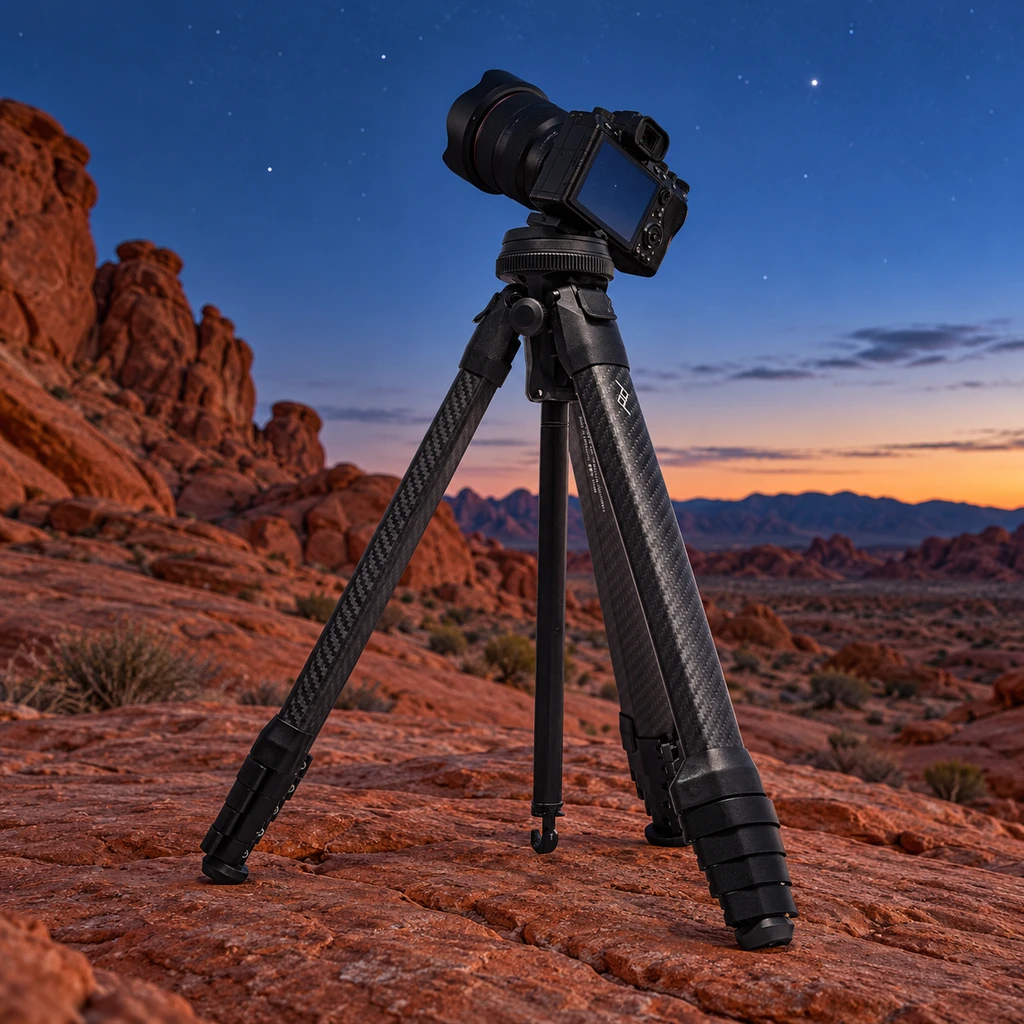
NEEWER Basics is the brand line built around doing the essentials well, and the TP17B is a carbon fiber travel tripod with 3,139 reviews at 4.6 stars. That review base makes it one of the most proven affordable carbon options available.
It supports up to 13.2 pounds and has a weight hook under the column, which is the single most useful feature for night work: hang a bag from it and the whole tripod settles. The reversible legs fold to 16.3 inches, the legs extend to 47.2 inches and the two section column takes it to 63.8 inches.
A 360 degree ball head and an Arca type quick release plate come in the box, plus a phone holder. Use the column extended only when you must, because every tripod is steadiest with the column down.
Specs That Matter
- Legs: carbon fiber
- Capacity: 13.2 lb, as listed
- Height: 21.3 to 63.8 inches with column
- Folded: 16.3 inches
- Head: 360 degree ball head, Arca type plate
Who It Is For
Anyone who wants carbon stiffness and weight savings without the premium price.
K&F Concept 64 Inch Aluminum: Best Budget
With 4,401 reviews at 4.6 stars, this is the most reviewed tripod on the list and the easiest recommendation for a first night sky setup. Four section aluminum legs adjust from 20.4 to 64.1 inches and fold to 15.5 inches for the carry bag.
The 36mm ball head is rated to 17.6 pounds, which is generous at this price, and the flip leg locks can be opened with one hand. The center column can be mounted inverted for very low angles, handy for putting a foreground rock or tent close to the lens.
Aluminum is heavier than carbon and feels colder to the touch on a frosty night, so pair it with gloves. As a starting tripod it does everything a beginner needs.
Specs That Matter
- Legs: aluminum, four section
- Height: 20.4 to 64.1 inches
- Folded: 15.5 inches
- Head: 36mm ball head, 17.6 lb rated
- Locks: quick flip locks
Who It Is For
Beginners who want a stable, tall tripod for their first Milky Way photos without spending much.
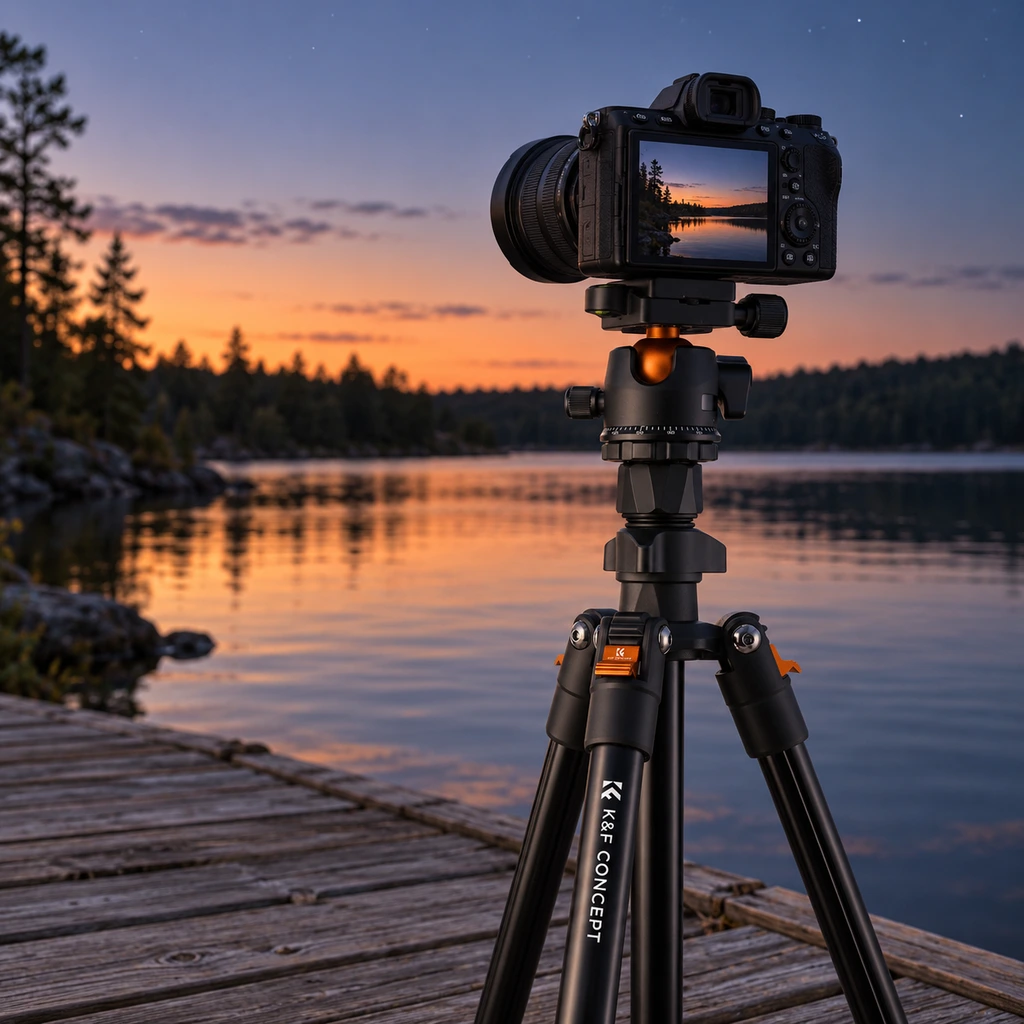
K&F Concept 60 Inch Carbon: Best With a Monopod
K&F Concept also makes this carbon model, and its standout feature is a leg that detaches and joins the column to form a monopod. That is less useful at night, but it makes the tripod a two in one for daytime hiking photography.
Five section legs with metal knob locks run from 18 to 60 inches. More sections mean a shorter packed length, but also more joints, so extend the thickest sections first and leave the thinnest folded when you can for maximum stiffness.
The 25mm ball head is small, rated for 8 kg, and fine for a mirrorless body with a wide lens. Four point four stars across 913 reviews. Heavier lens users should consider a bigger head later.
Specs That Matter
- Legs: carbon fiber, five section
- Height: 18 to 60 inches
- Locks: metal twist knobs
- Head: 25mm ball head, 8 kg rated
- Extras: detachable monopod, inverted column
Who It Is For
Hikers who want a light carbon tripod that doubles as a monopod for daytime shots.