
This post may contain affiliate links. If you buy through them, we may earn a small commission at no extra cost to you.
Cold water kayaking kills people who would have been fine in July, and it does it in the first minute rather than the first hour. The danger is not hypothermia, which takes half an hour or more to become dangerous. It is cold shock response, the involuntary gasp and hyperventilation that hits the moment you go under, and it is what fills a set of lungs before anyone has decided to panic.
Nine rules below, in the order that actually keeps you alive. They apply from the first cold snap of autumn through to spring, and they matter most on the days that feel mild, because air temperature is not the number that counts. If you are new to this, our beginner guide covers the basics first.
Table of Contents
Why Cold Water Is a Different Sport
The First Minute: Cold Shock
Immersion below roughly 15C triggers an immediate gasp reflex and a minute or two of hyperventilation you cannot suppress. If your head is under when it happens, you inhale water. This is why the National Weather Service cold water guidance treats anything under 60F as dangerous regardless of how warm the day is.
The First Ten Minutes: Losing Your Hands
Once the gasping stops you have roughly ten minutes of useful movement before cold shuts down the muscles in your arms and hands. That is your whole window to re enter the boat or reach shore. It is not enough time to swim a long way, which is why the rule about staying near shore is not fussiness.
The First Hour: Hypothermia
Only after that does hypothermia become the problem, and it is the slowest of the three. Most people who die in cold water never reach this stage, which is exactly the misunderstanding that makes autumn paddling dangerous.
Cold Water Kayaking: 9 Rules
1. Dress for the Water, Not the Air
This is the whole thing in one sentence. A 65F day over 50F water is a cold water day. The rule of thumb most paddling clubs use is to dress for immersion whenever air plus water temperature adds up to less than 120F. Our guide to what to wear kayaking covers the warm weather version.
2. Wear the Life Jacket, Not Stow It
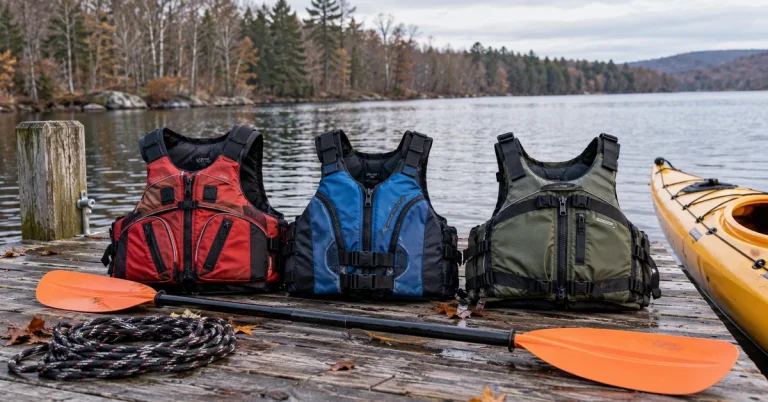
A personal flotation device under the deck bungee is a cushion, not a life jacket. During cold shock you cannot put one on. A paddling cut vest like the Onyx MoveVent Dynamic sits high enough not to foul the cockpit rim and has arm openings that let you paddle, which is the reason people actually keep it on.
Note what does not work here: a manual inflatable belt pack such as the Onyx M-16 requires you to find and pull a toggle after you are in the water. That is a reasonable warm weather compromise and a bad cold water one, because the gasp reflex arrives first.
3. Wear a Wetsuit or Drysuit
A wetsuit traps a thin layer of water your body heats, which buys you time and blunts the gasp. A drysuit keeps you dry entirely and is the right answer below about 50F water. Neither is optional once the numbers drop, and cotton under either is worse than nothing.
4. Never Paddle Alone in Cold Water
Solo paddling is reasonable in summer and reckless in November. A capsized paddler with failing hands cannot self rescue reliably, and a second boat is the only rescue that arrives in under ten minutes. This is the one rule in our solo paddling guide that reverses seasonally.
5. Stay Close Enough to Swim In
Paddle parallel to shore rather than across open water, and stay inside the distance you could swim in ten minutes with failing arms, which is far shorter than you think. Crossing a reservoir in October is a different risk from crossing it in July, on identical water.
6. Practise the Re Entry Before You Need It
Capsize deliberately in warm water and practise getting back in, so the movement is automatic rather than improvised. Whether that is a roll, a paddle float re entry or a scramble onto a sit on top, you want it in your hands before the day it counts. See basic kayaking techniques.
7. Carry Dry Layers in a Dry Bag
A full change of clothes in a sealed dry bag, plus a hat, turns a capsize from an emergency into an inconvenience. Wet clothes in cold air keep taking heat out of you long after you are back on the water, which is how a manageable swim becomes hypothermia an hour later.
8. Tell Someone Your Plan and Your Return Time
Where you are putting in, where you are taking out, and when to raise the alarm. In cold water the difference between a search starting at dusk and starting at midnight is the whole outcome. Carry a phone in a waterproof case, and on remote water a personal locator beacon.
9. Turn Around Earlier Than You Want To
Cold, wind and fading light all arrive faster in autumn, and they compound. Fix a turnaround time before you launch and keep it even when conditions look fine, because the conditions that catch people out are the ones that changed after they committed. The same discipline applies to every other kayaking safety decision.
The Numbers That Decide Your Kit
Water temperature, not air temperature, sets what you wear. These are the thresholds most paddling instruction uses.
| Water Temp | What Happens | What to Wear |
|---|---|---|
| Above 70F | Comfortable, low risk | Normal clothing plus a life jacket |
| 60F to 70F | Cold shock possible | Life jacket, synthetic layers, dry clothes aboard |
| 50F to 60F | Cold shock likely, hands fail fast | Wetsuit minimum, never paddle alone |
| Below 50F | Serious immersion risk in minutes | Drysuit, second boat, short crossings only |
| Below 40F | Survival time measured in minutes | Drysuit plus rescue plan, or stay off |
The combined rule is simpler to remember: add the air temperature and the water temperature in Fahrenheit, and if the total is under 120 you dress for immersion. It is crude, and it is right far more often than judging by how the day feels on the bank.
What Goes in the Boat
On Your Body
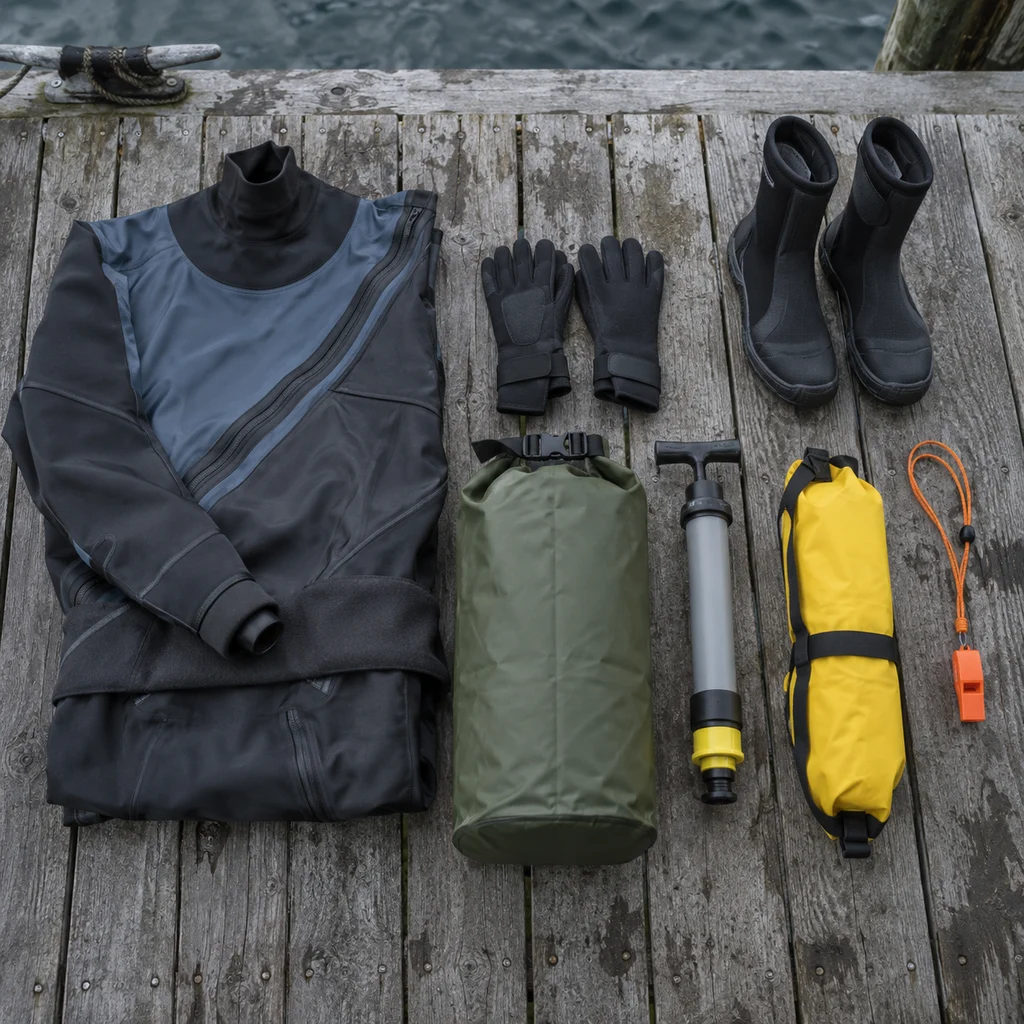
Life jacket worn and zipped, wetsuit or drysuit, synthetic base layers, neoprene boots and gloves, and a hat. Neoprene keeps working when it is soaked, which is the only property that matters here, and it is why cotton belongs nowhere in the system. Our essential gear guide covers the rest.
In the Boat
Dry bag with a full change of clothes, a bilge pump or bailer, a paddle float, a spare paddle on longer trips, a whistle, and a phone in a waterproof case. Thermos of something hot is not safety kit but it does more for morale than it has any right to.
What to Leave Behind
Cotton anything, alcohol, and the assumption that a mild afternoon means mild water. Reservoirs and lakes hold their summer heat into September and then drop fast, while rivers fed from high ground are cold all year, which is why reading the water matters as much as reading the forecast.
Common Mistakes
- Dressing for the air temperature on a mild autumn day over cold water.
- Stowing the life jacket under a bungee instead of wearing it.
- Relying on a manual inflatable belt pack in water cold enough to cause a gasp reflex.
- Paddling alone in autumn and winter because it was fine all summer.
- Crossing open water rather than staying within swimming distance of shore.
- Cotton base layers, which hold water and pull heat out of you.
- No dry clothes aboard, which turns one capsize into a cold rest of the day.
- Leaving no float plan, so nobody knows when to start looking.
Frequently Asked Questions
What water temperature is too cold for kayaking?
There is no single cut off, but below 60F you should be dressed for immersion and below 50F you want a drysuit and a second boat. Below 40F, survival time after a capsize is measured in minutes rather than hours.
Do I need a wetsuit for autumn kayaking?
If air plus water temperature is under 120F, yes. That catches most autumn days, including ones that feel warm, because water cools weeks behind the air.
Is a sit on top kayak safer in cold water?
Easier to re enter, which matters, but it also leaves you wetter and more exposed the whole time you are paddling. Neither hull type removes the need for immersion clothing. See our comparison.
How long can you survive in cold water?
Longer than most people expect and far less usefully. Roughly one minute to control your breathing, ten minutes of useful movement, and an hour before hypothermia becomes critical. The first minute is what kills.
Can I kayak alone in winter?
You should not. Self rescue in cold water fails in exactly the conditions where you need it, and there is no substitute for a second boat. If you paddle alone at all, stay on small sheltered water within easy swimming distance of a bank.
Cold water kayaking is safe when you dress for the water, wear the life jacket, and never paddle alone. Everything else on this list follows from those three. Our round up of the best life jackets for kayaking covers the first piece of kit, essential kayaking gear covers the rest, and what to wear kayaking covers the warm half of the year.
Discover more from Maive Verse
Subscribe to get the latest posts sent to your email.