This post may contain affiliate links. If you buy through them, we may earn a small commission at no extra cost to you.
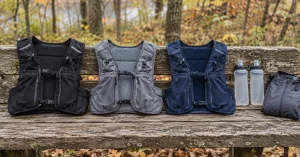
The best trail running vests disappear. You notice a vest exactly twice, when you put it on and when it bounces, and everything else about the design is in service of making the second one never happen. Capacity, pockets and bladder size all matter less than whether the thing sits still at mile ten.
We compared six vests that run the range from a 500ml minimalist for a 5k to a 12 litre pack built for a mountain race day. Every one was checked on its listing for stock, rating and real specifications, and two candidates were dropped for carrying Amazon’s frequently returned flag. If autumn is what pushed you into buying one, our fall trail running guide explains what the season demands you carry.
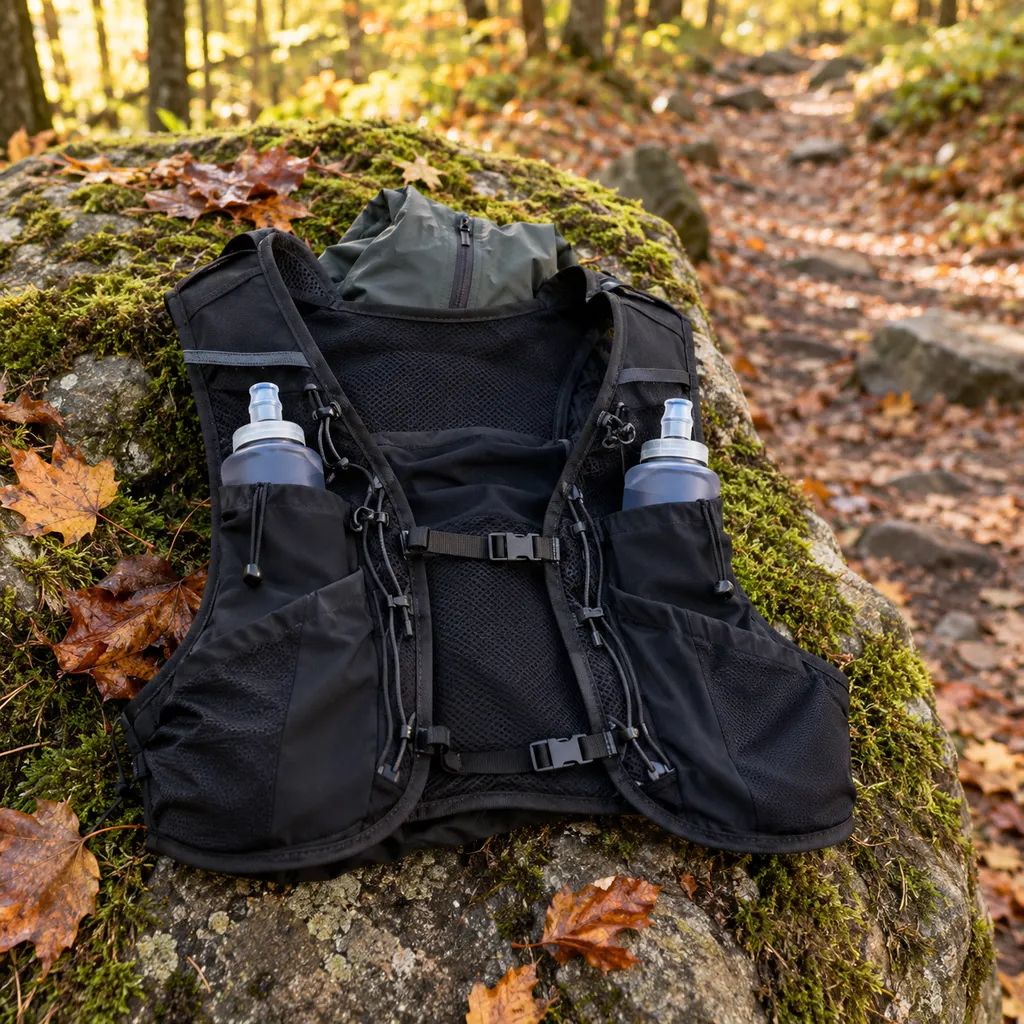
Table of Contents
What Separates the Best Trail Running Vests
Bounce is the whole game. A vest that shifts on every stride chafes your collarbones and your ribs, and it does it gradually enough that you only notice at the point where you cannot do anything about it. What stops bounce is a snug fit across the sternum, weight held high and close, and a rear drawcord or side straps that let you cinch the load rather than just the shell. It is the same problem a rucking pack solves in reverse: there you want the load high and still, here you want it high, still and invisible.
Then there is how you carry water. A bladder holds more and disappears into the back panel, but you cannot see how much is left and you have to stop to refill. Soft flasks on the chest let you drink and refill without breaking stride and let you monitor what you have used, at the cost of a bit of bulk in front. Long day, bladder. Racing and shorter efforts, flasks. Either way the volume you need comes from the hydration maths, not from the size of the vest you happen to own.
Capacity comes last, and most people buy too much of it. Five to seven litres carries water, a shell, a phone and food, which covers nearly every run under three hours. Twelve litres is a mountain day or a race with a mandatory kit list, and the extra volume is dead weight the rest of the year, the same trap as buying too much daypack.
The Best Trail Running Vests at a Glance
| Vest | Capacity | Water | Weight | Best For |
|---|---|---|---|---|
| Nathan TrailMix 7L | 7 L | 2L bladder included | 7 oz empty | Best overall |
| Criuage Hydration Vest | Multi pocket | 2.0L bladder included | Light | Best value |
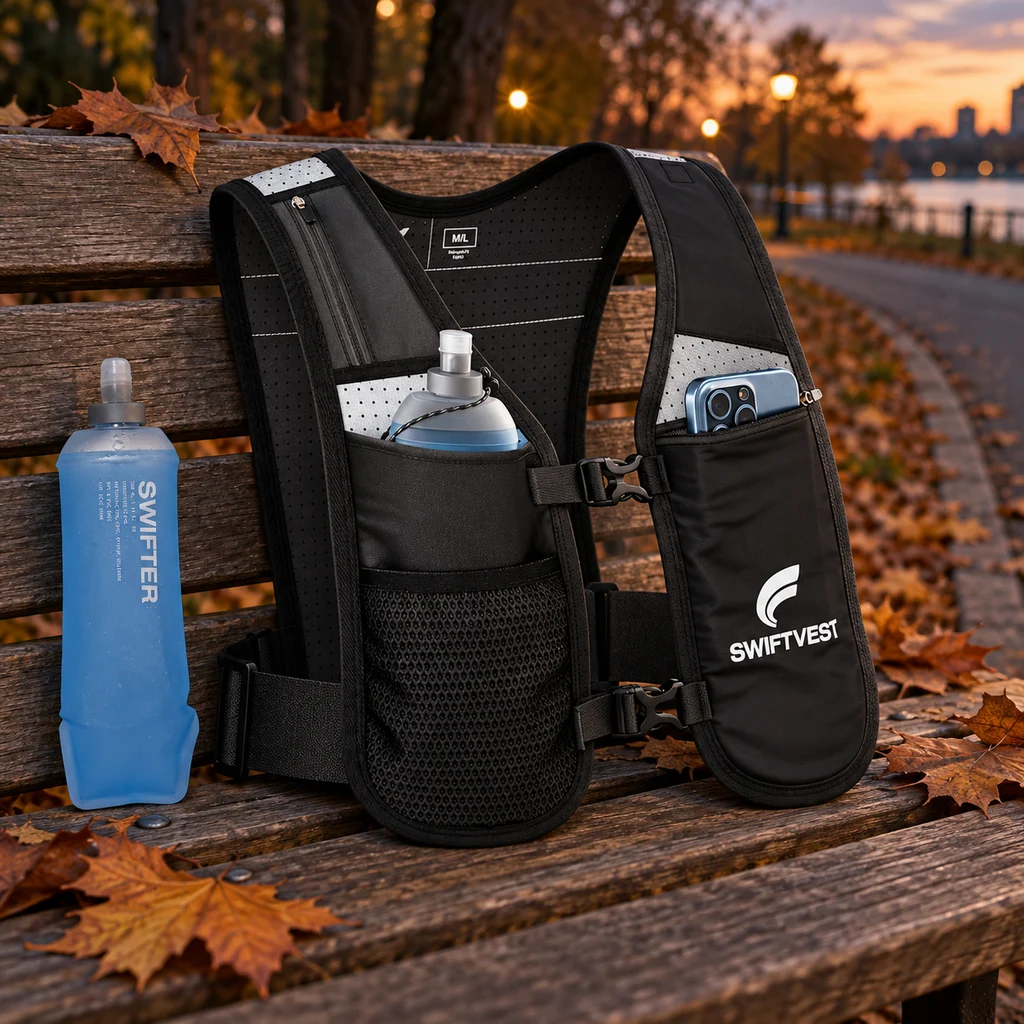
| SWIFTVEST Minimal | 6 pockets | 500ml soft flask | Minimal | Short runs |
| Nathan Pinnacle 12L | 12 L | 1.6L bladder included | 6.5 oz empty | Long mountain days |
| CamelBak Dart Run Vest | Minimalist | 1.5L Crux reservoir | Light | Simple and proven |
| AONIJIE 12L | 12 L | 2 x 500ml soft flasks | Light | Best pocket layout |
The Six Best Trail Running Vests in Detail
Nathan TrailMix 7L: Best Overall
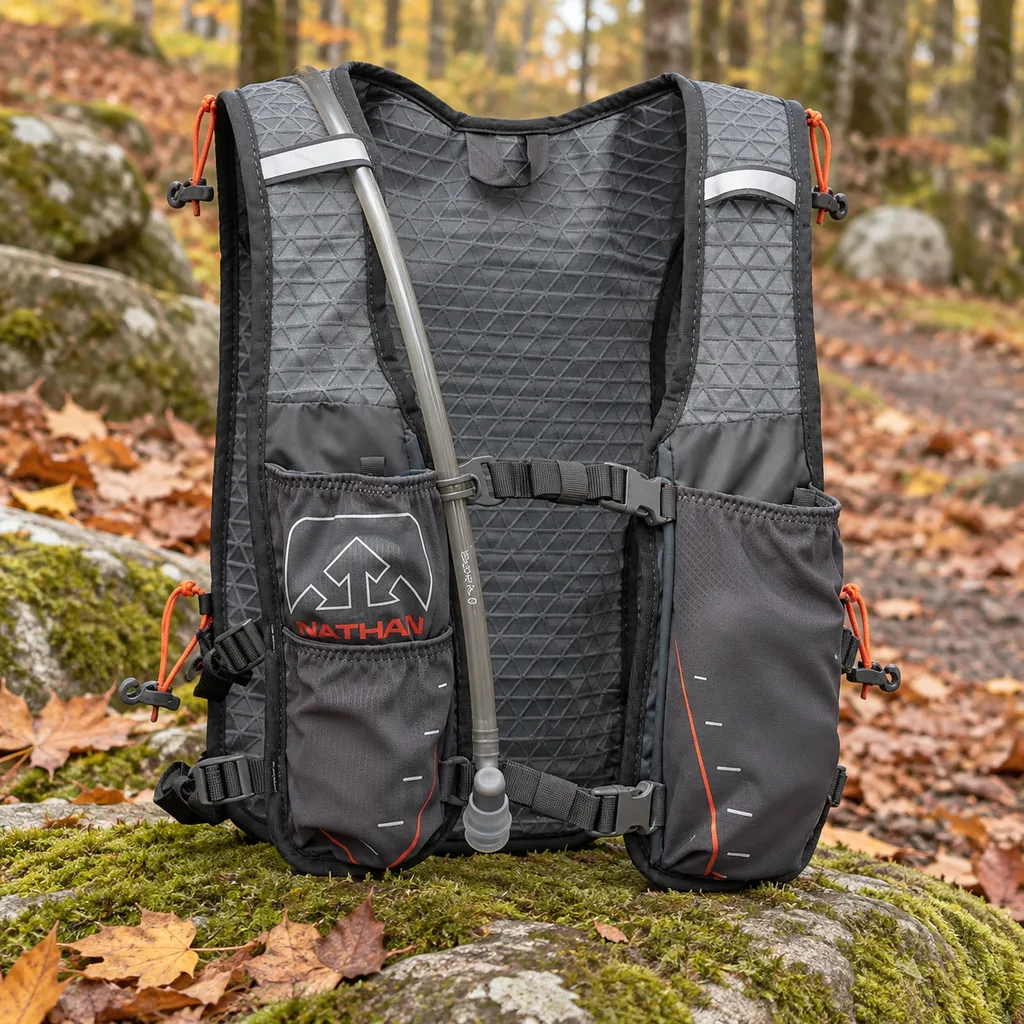
Seven litres is the sweet spot for trail running and this is the vest that hits it best. Seven ounces empty, eleven with the bladder in, and a 7 litre capacity that swallows a shell, a phone, food and a headlamp without any of it moving around.
The build is mesh throughout, which wicks and breathes rather than holding sweat against you, and the no bounce design is the part that justifies the price over a generic vest. Two zippered compartments on the back handle the things you do not need mid stride, and two front bottle pockets let you add flasks alongside the included 2 litre bladder.
One caution from the listing itself: the fit runs snug and sizes slightly small, so size up. A vest that is marginally too tight is uncomfortable in a way a marginally loose one is not, because you cannot loosen what was cut small.
Specs That Matter
- Capacity: 7 L, with a 2L hydration bladder included
- Weight: 7 oz empty, 11 oz with the bladder fitted
- Storage: two zippered rear compartments, two front bottle pockets
- Build: breathable wicking mesh, reflective detailing, no bounce fit
- Rating: 4.3 stars across 396 reviews
Who It Is For
Anyone buying one vest for general trail running, from an hour after work to a long weekend run.
Criuage Hydration Vest: Best Value
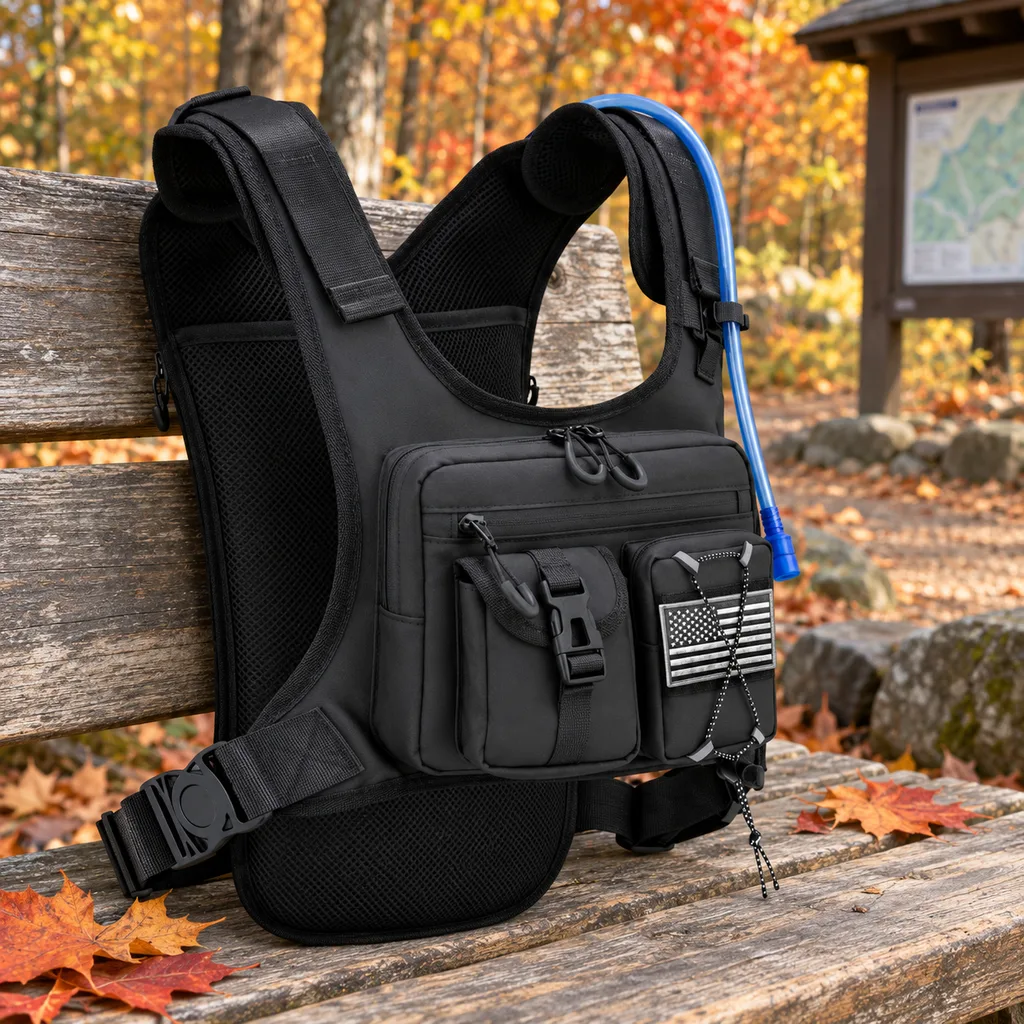
Over eleven hundred reviews at 4.5 stars makes this the most tested vest here, and it undercuts the brand name options substantially while including the thing they often leave out, which is the bladder.
You get a dedicated 2.0 litre BPA free PEVA bladder in the box, adjustable chest straps that let you dial the fit rather than living with a fixed cut, and enough pocket space for the phone, keys and gels that a long run demands. The company holds a US patent on the design.
It sits closer to a chest pack than a full race vest in feel, which suits people who dislike the wrapped in mesh sensation of the higher capacity options. If you are unsure whether you want to spend properly on a vest, this is the one to find out with.
Specs That Matter
- Water: 2.0L BPA free PEVA bladder included in the box
- Fit: adjustable chest straps for a customisable, secure fit
- Storage: multiple pockets sized for phone, keys, gels and essentials
- Design: US patented, built for endurance sessions
- Rating: 4.5 stars across 1,173 reviews
Who It Is For
Runners who want a bladder vest without the brand premium, and anyone testing whether they will use a vest at all.
SWIFTVEST Minimal: Best for Short Runs
Not every run needs two litres on your back. This is the vest for the forty minute loop where you want your phone secure, one flask of water and nothing else, and it does that job better than a 7 litre vest running half empty.
Six pockets cover the essentials, and the zippered waterproof phone pocket is the detail that matters most in autumn: a phone in a wet pocket is a dead phone, and this is the season for wet pockets. Reflective detailing and heat dissipation zones round it out.
Neoprene padding keeps the bounce down and it comes with a 500ml soft flask that compresses as you drink, so it does not slosh when half empty. Three sizes rather than one size fits most, which is unusual at this end of the market and worth having.
Specs That Matter
- Storage: six pockets including a zipped waterproof phone pocket
- Water: 500ml soft flask included, compresses as it empties
- Comfort: neoprene padding to minimise bounce, quick dry breathable material
- Sizing: three sizes rather than one size fits all, reflective detailing
- Rating: 4.5 stars across 1,377 reviews
Who It Is For
Short and medium runs, road to trail crossovers, and anyone whose main problem is carrying a phone rather than water.
Nathan Pinnacle Race Vest 12L: Best for Long Days
Twelve litres and thirteen exterior pockets is a mountain day pack rather than an evening run vest. If your races carry a mandatory kit list, or your long runs put you three hours from the car in changeable weather, this is the capacity that actually holds it.
It manages that volume at 6.5 ounces empty, lighter than the 7 litre TrailMix, and Nathan claims it is 20 percent lighter and more breathable than the vests it replaced. Tapered moisture wicking back panels keep it from becoming a sweat trap on a long climb.
The pocket layout is the reason to buy it: two water resistant pockets for the things that must stay dry, two kangaroo pockets for the shell you keep taking on and off, and a 1.6 litre hourglass bladder in the back. Unisex fit with women’s sizing available.
Specs That Matter
- Capacity: 12 L across 13 exterior pockets
- Weight: 6.5 oz empty, 12.5 oz with the bladder fitted
- Water: 1.6L hourglass bladder included
- Storage: two water resistant pockets, two kangaroo pockets, side pocket
- Rating: 4.2 stars across 176 reviews
Who It Is For
Mountain long runs, races with mandatory kit, and anyone who has run out of space in a 7 litre vest.

CamelBak Dart Run Vest: Simple and Proven
CamelBak effectively invented the hydration reservoir and the Dart is the company applying that to the simplest possible running vest. A 50 ounce Crux reservoir, breathable air mesh, one zippered pocket, and nothing else to think about.
The Crux reservoir is the reason to consider it over a cheaper vest: the bite valve and the fill system are the parts of a bladder that fail or annoy you, and this is the company with the longest track record of getting them right. It delivers a genuinely steady flow rather than the trickle some budget bladders give.
Dual adjustable chest straps dial in the fit across different layers, which matters when you go from a summer singlet to an autumn base plus shell. There is an optional trekking pole attachment if your routes involve enough climbing to want them.
Specs That Matter
- Water: 50 oz, 1.5L Crux reservoir included
- Build: minimalist construction with breathable air mesh
- Storage: zippered pocket for phone, keys or nutrition
- Fit: dual adjustable chest straps, optional trekking pole attachment
- Rating: 4.3 stars across 41 reviews
Who It Is For
Runners who want a proven reservoir and nothing else, and anyone who has fought a cheap bite valve and given up.

AONIJIE 12L: Best Pocket Layout
Ten pockets on a 12 litre frame, and unlike most high capacity vests this one comes with two 500ml soft flasks on the chest rather than only a bladder sleeve. That means you can drink without stopping and see exactly how much you have left, which is the practical advantage flasks hold over a bladder on a long day.
The layout is thought through: a rear bladder compartment and large storage for the shell and food, a kangaroo pocket for the things you grab often, and front pockets holding the two flasks plus a phone. It is aimed at 25 kilometre plus trail races and the organisation reflects that.
Fit is one size with chest straps adjusting up to 9.5 inches and side waist straps to 8.5 inches, plus a rear drawcord that pulls the load in as the vest empties. That drawcord is what stops a part empty 12 litre vest from swinging.
Specs That Matter
- Capacity: 12 L across 10 pockets, built for 25 km plus efforts
- Water: two 500ml soft flasks included, plus a rear bladder compartment
- Fit: chest straps to 9.5 in, waist straps to 8.5 in, rear drawcord
- Build: light breathable mesh, chafe free soft touch material
- Rating: 4.6 stars across 33 reviews
Who It Is For
Long trail races and big days out, especially anyone who prefers flasks to a bladder.

How to Choose Between Them
One Vest for Everything
The Nathan TrailMix 7L. Seven litres covers almost every run you will do, the bladder is included, and it is the best executed no bounce fit here. Size up, because the fit runs small.
Spending as Little as Possible
The Criuage. A 2 litre bladder in the box at a fraction of the brand name price, with more reviews behind it than anything else on this list.
Forty Minute Runs From Your Door
The SWIFTVEST. A 7 litre vest run half empty is worse than a small vest run full, and the waterproof phone pocket is the feature you will actually use on wet autumn evenings.
Races With a Kit List
The Nathan Pinnacle 12L or the AONIJIE 12L. Pinnacle if you want a bladder and water resistant pockets; AONIJIE if you would rather have two chest flasks and more pocket subdivisions. Both carry enough layers for the conditions in a mountain day.
You Hate Fiddling With Gear
The CamelBak Dart. One reservoir that works, one pocket, two straps. There is nothing to learn and nothing to go wrong, which is the same argument for simple gear made in soft hiking.
Bladders, Flasks and Fit: What the Specs Mean
Litres Describe the Shell, Not the Water
A 12 litre vest is 12 litres of storage volume; the bladder inside it is a separate number. People routinely buy more litres than they need because the figure sounds like capability. Match the volume to your longest regular run rather than your longest imagined one, the same discipline as cutting a daypack down.
Bladder Versus Soft Flask
A bladder carries more, sits flat and out of the way, and hides how much you have drunk. Flasks sit on your chest, refill in seconds at a stream or aid station, and show you your remaining water at a glance. Flasks also let you carry an electrolyte mix in one and plain water in the other, which a single bladder cannot do. If you are running long enough to need food as well, the nutrition rules apply on the run too.
Empty Weight Is the Honest Number
Six to eight ounces empty is light, and anything approaching a pound before you add water is a pack rather than a vest. Note whether a listing quotes weight with or without the bladder, because the difference is four to six ounces and manufacturers quote whichever number flatters them. Weight discipline matters more here than almost anywhere, as in ultralight packing.
Straps and Drawcords Are the Anti Bounce System
Chest straps stop lateral movement, side straps pull the vest against your ribs, and a rear drawcord compresses the load as it empties. A vest with all three can be dialled in as you eat and drink through a long run. A vest with only chest straps is snug at the start and swinging by the end. Test it the way you would test a loaded backpacking pack: jump, listen, adjust.
Wearing It and Making It Last
Fit it loaded, not empty. Put the water in, put a shell in the back, then adjust: a vest tuned empty will be loose in an hour and a vest tuned full will be tight at the start. Jump on the spot before you set off, and if anything moves, tighten it now rather than at mile four.
Rinse the bladder after every run and dry it open. A bladder put away damp grows mould in the corrugations where you cannot reach it, and the fix is a new bladder. Hang it upside down with the cap off, and freeze it between long gaps if you use one rarely.
Wash the vest by hand in cold water and never in a machine, which destroys the elastic and the flask pockets. Dry it flat out of the sun. The rules are the same as storing camping gear: clean, dry, unloaded, out of the light.
Check the reflective detailing survives the washing, because from October onwards you are running in the dark more than you planned, and the after dark rules assume you can be seen. Carry a headlamp in a pocket rather than hoping.
Frequently Asked Questions
What size trail running vest do I need?
Five to seven litres for runs up to about three hours, which is most people most of the time. Twelve litres for mountain days, races with mandatory kit, or winter runs where the layers alone fill a small vest.
Are soft flasks better than a bladder?
For racing and shorter efforts, yes, because you can drink without breaking stride, refill in seconds and see what you have left. For long steady days, a bladder carries more water more comfortably. Several vests here let you run both at once.
How do I stop a running vest from bouncing?
Load it, then fit it. Tighten the chest straps first, then the side straps, then the rear drawcord if it has one. If it still moves, you are carrying the weight too low or the vest is too big for the load you put in it.
Can I use a running vest for hiking?
For a fast day hike, easily, and it is a good deal more comfortable than a daypack for anything under a few hours. For a full day with real weight you want a hip belt, which running vests do not have. See our daypack picks for that end.
How long does a running vest last?
Two to five years of regular use. The vest itself usually outlives the bladder, whose bite valve and seams are the first things to go, and both die faster from being stored damp than from being run in. The same is true of trail shoes left wet in a car boot.
If you want one vest and no further thought, buy the Nathan TrailMix 7L and size up. If the budget is the constraint, the Criuage does the same job for less with more reviews behind it. And if it is autumn that finally pushed you into carrying something, our fall trail running guide covers what the season actually demands, while the shoe round up covers what to put under it.
Discover more from Maive Verse
Subscribe to get the latest posts sent to your email.


