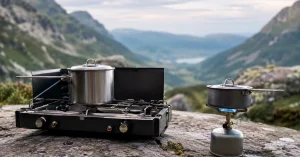
The best camping stoves, a two burner and a canister stove on a rock ledge

Best Camping Stoves: 6 Top Picks for 2026

This post may contain affiliate links. If you buy through them, we may earn a small commission at no extra cost to you.

The best camping stoves split cleanly into two families that barely compete with each other. A two burner propane stove sits on a picnic table, cooks for four and weighs twelve pounds. A canister stove screws onto a gas cartridge, boils water for one and weighs a few ounces. Buying the wrong family is the only real mistake available here.

Once you have picked a side, the decisions get small: how much heat, how fast it boils, whether the wind can get at the burner, and how it behaves when the temperature drops. Fuel type matters too, and it is the thing most first-time buyers never consider until a cold morning.

Below are six stoves genuinely stocked on Amazon right now, three for car camping and three for carrying. Ratings and specifications were checked at the time of writing. If you are still working out the menu, our guide to camp cooking for beginners covers what to plan around the stove.
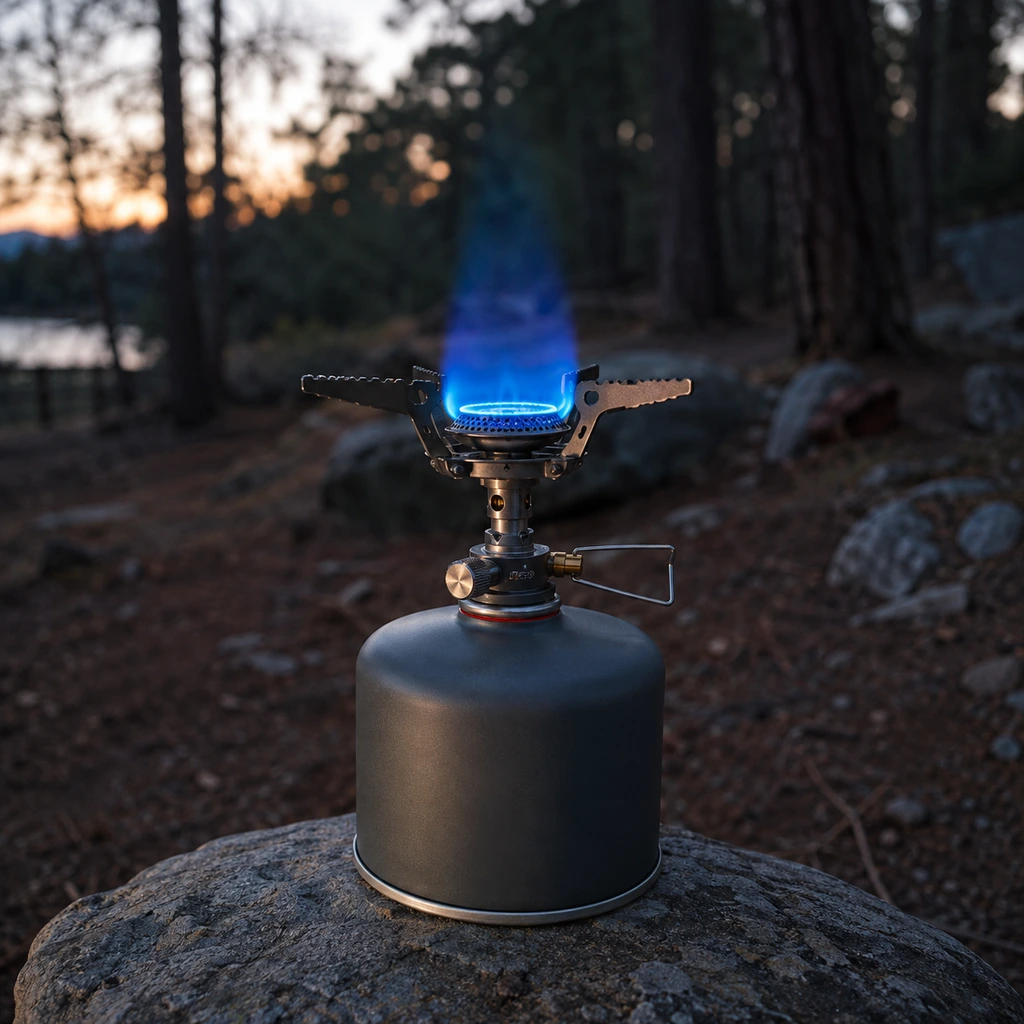
The best camping stoves, a canister burner with a blue flame at dusk

What Separates the Best Camping Stoves

Four things, and they matter in a different order depending on which family you are buying.

  • Heat output, measured in BTUs. On a two burner stove this decides how fast a full pan comes to the boil. Twenty thousand total is adequate; forty thousand is genuinely quick. On a canister stove, boil time is the more useful number.
  • Wind resistance. The most underrated specification. An unshielded burner in a breeze can triple boil times and burn fuel accordingly. Built-in wind guards on a two burner, and a sheltered pitch for a canister stove.
  • Fuel type. Propane for car camping, isobutane canisters for backpacking, butane for indoor-adjacent use. Butane performs badly below freezing, propane and isobutane much better.
  • Weight and packed size. Irrelevant on a picnic table, decisive in a pack. The spread here runs from twelve pounds to twenty five grams.

Simmer control deserves a mention too. Anything will boil water; a stove that holds a low steady flame is what lets you cook rather than just reheat. The prep advice in our guide to trail nutrition pairs with a stove that can do more than one thing, and our guide to camp cooking for beginners covers building a menu around what the stove can actually do.

The Best Camping Stoves at a Glance

StoveTypeOutput or boil timeFuelBest for
Coleman Triton 2-BurnerTwo burner22,000 BTUPropaneBest overall car camping
Camp Chef Everest 2XTwo burner40,000 BTUPropaneMost power
Gas One GS-3400PSingle burnerDual fuelButane or propaneBest budget
Jetboil FlashIntegrated system16 oz in 2 minIsobutaneFastest boil
MSR PocketRocket 2Canister burner1 litre in 3.5 minIsobutaneBest backpacking
BRS-3000TCanister burner1 litre in about 3 minIsobutaneLightest at 25 g
Specifications are taken from each product listing at the time of writing.

The Six Best Camping Stoves in Detail

Coleman Triton 2-Burner: Best Overall for Car Camping

The Triton is the stove most car campers should buy, and it earns that by getting the unglamorous things right. Twenty two thousand BTUs across two independently adjustable burners is enough to bring a full pan to the boil while something else simmers, and the improved knob rotation gives genuine simmer control rather than the on-or-off behaviour cheaper stoves have.

Two fold-up wind guards shield the burners, which is the single feature that most affects real world cooking. The cooking surface fits a twelve inch and a ten inch pan side by side, so you are not limited to two small pots, and the chrome-plated grate lifts out for cleaning.

Burn time is up to an hour on high on a single sixteen ounce propane cylinder, so a weekend needs two or three. A heavy-duty latch keeps it shut in the car. At 4.7 stars from over three and a half thousand ratings, this is the default recommendation.

Specs That Matter

  • 22,000 total BTUs across two independently adjustable burners
  • Two fold-up wind guards protecting both burners
  • Fits a 12 inch and a 10 inch pan at the same time
  • Removable chrome-plated grate for cleaning
  • Up to 1 hour on high per 16 oz propane cylinder

Who It Is For

Car camping for two to four people, and anyone who wants to cook properly rather than only boil water.
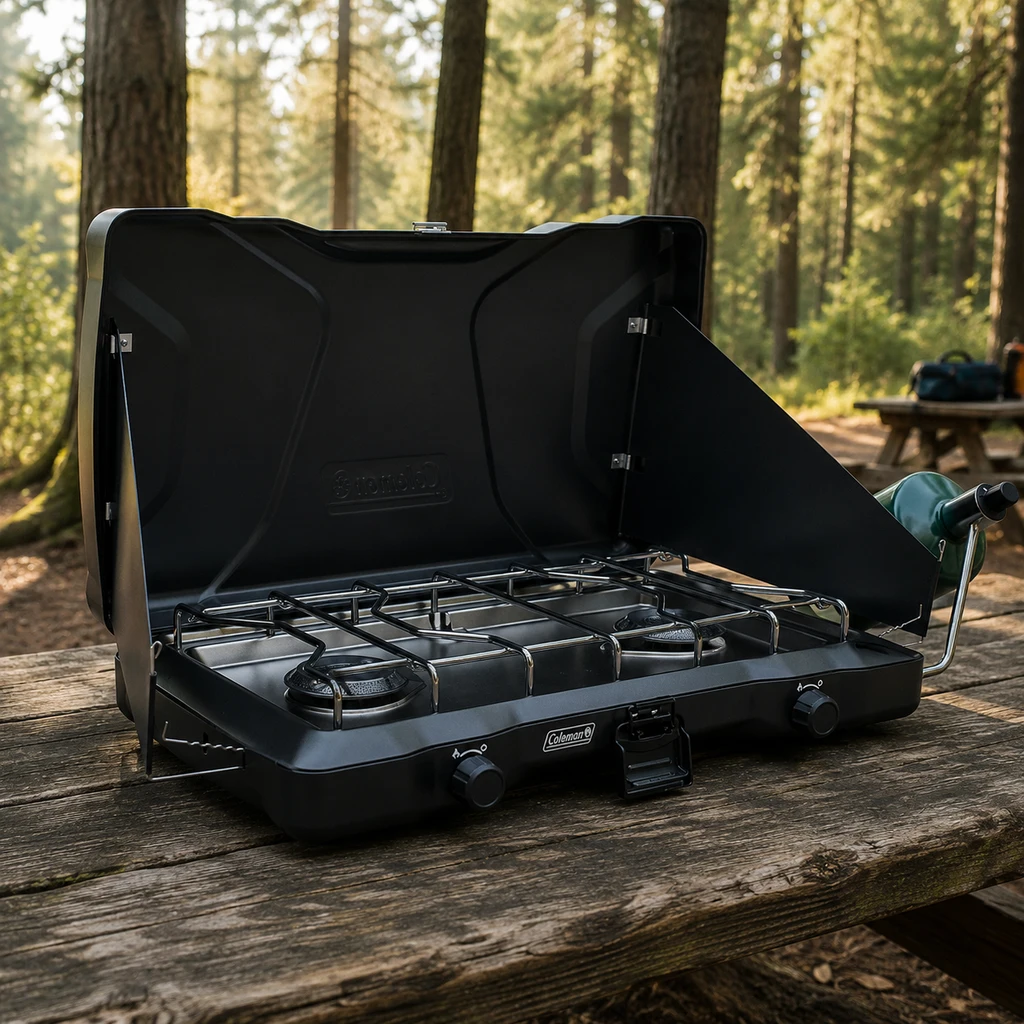
Coleman Triton two burner stove on a picnic table at a forest campsite

Camp Chef Everest 2X: Most Power

Forty thousand BTUs from dual twenty thousand burners is roughly double the Coleman, and you feel it. A large pan of water comes to the boil in a fraction of the time, which matters when you are cooking for a group or working in cold weather where everything takes longer.

The folding lid doubles as a windscreen, so the burners stay steady in a breeze without a separate shield. Matchless ignition means no lighter, and the controls are precise enough to hold a low simmer despite the output, which is not always true of high-BTU stoves.

The cooking surface is 215 square inches, comfortably enough for two pans plus accessories, and there is a drip tray and a carry handle. It is bigger, heavier and more expensive than the Triton. If you cook for four or more, or camp in the shoulder seasons, that is a fair trade. At 4.6 stars.

Specs That Matter

  • 40,000 BTUs from dual 20,000 BTU burners
  • Folding lid designed as a windscreen
  • Matchless instant-start ignition
  • 215 square inch cooking surface fitting two pans
  • Drip tray and carry handle for transport and cleanup

Who It Is For

Groups of four or more, cold weather cooking, and anyone who resents waiting for water to boil.
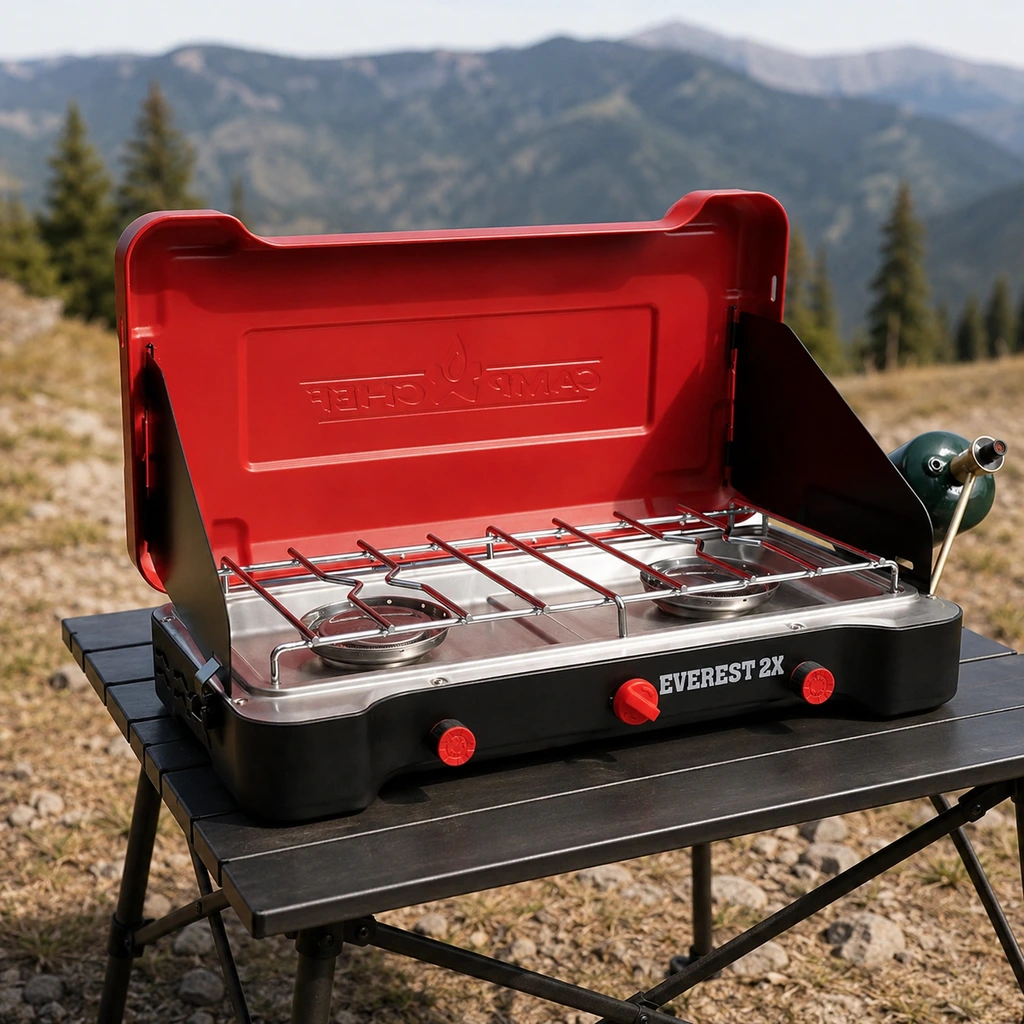
Camp Chef Everest 2X two burner stove on a camp table below mountains

Gas One GS-3400P: Best Budget

Fifteen thousand ratings at 4.6 stars makes this comfortably the most reviewed stove here, and the reason is that it costs very little and does one job reliably. It is a single burner that runs on either a butane cartridge or a propane cylinder, which is genuinely useful because availability of the two varies by region and season.

Automatic piezo ignition means no matches. The safety features are better than the price suggests: a built-in pressure sensor with a cartridge ejection system that pops the butane canister out if it detects irregular pressure, plus a gas flow cut-off.

It comes with a carrying case, which is why it turns up as often in emergency preparedness kits as at campsites. The limitation is one burner and no wind protection, so it wants a sheltered spot. For a first stove, a backup, or cooking for one or two, it is hard to argue with.

Specs That Matter

  • Dual fuel: runs on an 8 oz butane cartridge or a 16.4 oz propane cylinder
  • Automatic piezo electric ignition, no lighter needed
  • Pressure sensor cartridge ejection system and gas flow cut-off
  • Adjustable heat dial for basic simmer control
  • Carrying case included; 4.6 stars from over 15,000 ratings

Who It Is For

A first stove, cooking for one or two, emergency kits, and anyone who wants fuel flexibility.
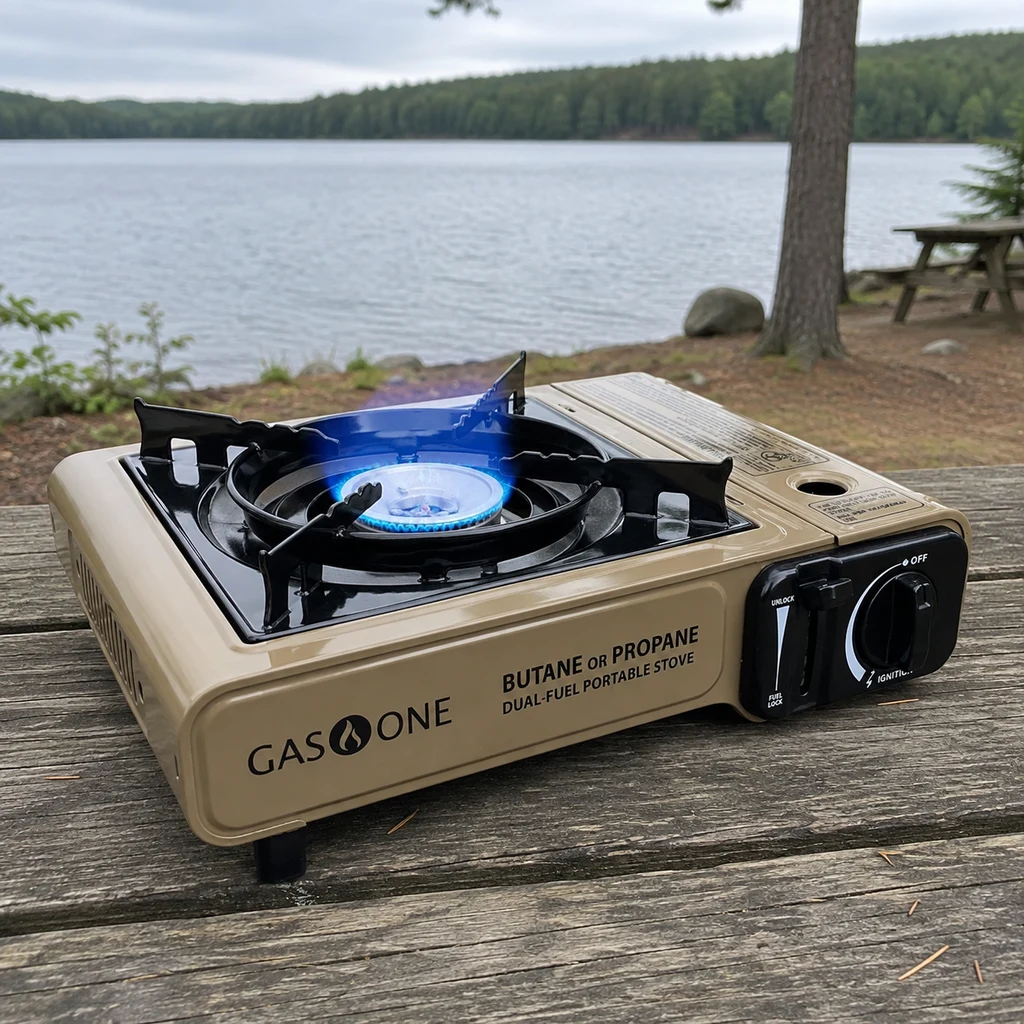
Gas One GS-3400P dual fuel stove burning on a bench at a lakeside camp

Jetboil Flash: Fastest Boil

Sixteen ounces of water in two minutes is the headline, and it is achieved by treating the stove and the pot as one sealed system rather than two separate items. The heat exchanger on the base of the cup captures far more of the flame than a pan sitting on a burner, which also means it uses noticeably less fuel per boil.

The one-step auto ignition works like a home hob: turn and click, no match. Three locking points with visual indicators secure the cup to the burner, which addresses the wobble that older integrated systems were criticised for, and colour-coded rubberised safe-touch zones stay cool enough to hold while it is running.

Everything nests: the burner and a 100 gram fuel canister pack inside the one litre cup. The trade is that it is a boiling machine rather than a cooking one. Simmering in the tall narrow cup is awkward and it scorches easily. Buy it for hot water fast, not for making dinner from scratch. 4.8 stars.

Specs That Matter

  • Boils 16 oz of water in about 2 minutes
  • One-step turn and click auto ignition, no match required
  • Three locking points with visual indicators for the pot to burner connection
  • Insulated cozy and colour-coded safe-touch zones
  • Burner and a 100 g canister pack inside the 1 litre cup

Who It Is For

Freeze dried meals, hot drinks, alpine starts, and anyone who values speed and fuel efficiency over cooking versatility.

Jetboil Flash cooking system steaming on a granite rock at sunrise

MSR PocketRocket 2: Best Backpacking All-Rounder

Two point six ounces, collapses to two by two by three inches, and boils a litre in three and a half minutes. That combination has made the PocketRocket the default backpacking stove for years, and the second version is lighter and more compact than the original without losing anything.

The important detail is the flame control. It adjusts smoothly from a rolling boil down to a genuine simmer, which is rare at this weight and is what separates a stove you can cook on from one that only boils. Serrated pot supports take a wide range of pot sizes and grip well rather than letting a pot slide.

Setup is nothing: no priming, no preheating, no pressurising. Screw it onto an isobutane-propane canister and light it. It comes with a protective case and weighs 4.2 ounces with it. At 4.8 stars from over four thousand ratings, it is the safest backpacking purchase on this list.

Specs That Matter

  • 2.6 ounces, or 4.2 ounces with the included case
  • Collapses to 2 x 2 x 3 inches
  • Boils 1 litre in about 3.5 minutes
  • Adjusts from a rolling boil to a genuine simmer
  • Serrated pot supports fitting a wide range of pots

Who It Is For

Backpacking, one or two people, and anyone who wants to actually cook rather than only boil.

MSR PocketRocket 2 stove on a rock beside a pack on a mountain trail

BRS-3000T: Lightest

Twenty five grams. Under an ounce. The BRS-3000T is a titanium alloy canister burner that is so small it disappears into a pot alongside the fuel, and it exists for people counting grams rather than convenience.

The performance is better than the size suggests: 2700 watts, boiling a litre in a little under three minutes, with smooth flame adjustment and a stable even burn. It nests with a 110 gram canister inside a 750ml pot, which is the classic ultralight cooking setup and packs into almost nothing.

The honest caveats are real. The pot support arms are small, so large or heavy pots are unstable, and it has no wind protection whatsoever, which means it burns fuel quickly in a breeze. The manufacturer is direct about the trade: this is for when weight and size matter more than features. At 4.5 stars from nearly four thousand ratings.

Specs That Matter

  • 25 grams, the lightest stove on this list by a wide margin
  • Titanium alloy construction generating 2700 W
  • Boils 1 litre in roughly 2 minutes 58 seconds
  • Nests with a 110 g canister inside a 750 ml pot
  • Smooth flame adjustment despite the size

Who It Is For

Ultralight backpacking and thru-hiking, solo cooking with small pots, in sheltered conditions.

BRS-3000T ultralight titanium stove on a river stone at a woodland camp

How to Choose Between Them

Driving to the Campsite

The Coleman Triton for most people, the Camp Chef Everest 2X if you cook for four or more or camp in cold weather. Both give you two burners and real wind protection, which is what separates cooking outdoors from reheating outdoors. Pair either with the seasonal advice in our guide to fall hiking and a hot meal becomes the best part of the day.

Carrying It on Your Back

The MSR PocketRocket 2, unless you are counting grams, in which case the BRS-3000T. Both screw onto the same isobutane canisters and both disappear into a pot. Weight adds up across a whole kit, which is the argument our guide to backpacking packs makes about the carrying system as well.

Only Boiling Water

The Jetboil Flash. If every meal is freeze dried or instant and you mostly want coffee at speed, the integrated system beats a separate stove and pot on both time and fuel. It is a poor choice if you plan to cook anything that can catch. It suits the fast-and-light approach in our guide to ultralight packing.

Spending as Little as Possible

The Gas One GS-3400P. One burner, dual fuel, piezo ignition, carrying case, and a price that makes it a reasonable second stove even after you upgrade. Give it a sheltered spot and it does everything a beginner needs, and the rest of a first kit is covered in our guide for beginner hikers.

One Stove for Everything

There is not one, and that is worth saying plainly. The families are too different. Most people who camp both ways end up owning a two burner for the car and a canister stove for the pack, and that is the correct answer rather than a compromise. The same split shows up in shelters, as our guides to backpacking and hammock camping both show.

BTUs, Boil Times and Fuel: What the Specs Mean

BTUs Measure Output, Not Efficiency

A BTU rating tells you how much heat the burner produces, not how much of it reaches your food. A forty thousand BTU stove boils faster than a twenty thousand one, but an integrated system with a heat exchanger can beat a higher-BTU open burner on both time and fuel, because far less heat escapes around the pot.

Boil Time Is the Useful Number for Canister Stoves

Manufacturers quote boil times in still air at room temperature with a full canister. Real conditions are worse on all three counts. Treat quoted figures as a way to compare stoves against each other rather than as a promise, and assume wind and cold will add substantially. Knowing the forecast helps more than the spec sheet, which is what our notes on predicting trail weather are for.

Fuel Type Decides Cold Weather Performance

Butane stops vaporising near freezing, so a butane stove can refuse to work on a cold morning. Isobutane-propane blends do far better, and straight propane best of all. This is why dual fuel stoves are useful, and why sleeping with a canister in your sleeping bag makes a real difference to the first brew of the day.

Wind Costs More Than Any Specification Gains

An unshielded burner in a light breeze can take three times as long and use three times the fuel. Built-in wind guards on a two burner are worth more than several thousand BTUs. With a canister stove, pitch behind a rock or your pack, and never fully enclose the canister with a windscreen, which traps heat dangerously. The same sheltered-pitch thinking applies to camping in the rain.

Using It Safely and Making It Last

Never run a stove inside a tent or a closed vehicle. Carbon monoxide is odourless and the accidents that happen every year are almost all people cooking in a porch to get out of the rain. Cook outside, downwind of where you sleep, and clear of anything that can catch. Where open fires are permitted instead, our guide to building a campfire covers doing it safely.

Check the canister seal each time you screw a stove on, and listen for a hiss. Let the burner cool completely before packing it, and store fuel canisters upright somewhere cool and out of the sun, never in a hot car boot. The advice in our guide to storing outdoor gear applies to the stove itself.

Wipe the burner ports clean before storing so nothing blocks them, and dry a two burner stove fully before it goes away, because the grate rusts. Store food and rubbish away from camp, and follow the Leave No Trace principles for washing up, which our guide to dispersed camping covers for sites without facilities.

Frequently Asked Questions

What kind of camping stove should a beginner buy?

It depends entirely on how you camp. Driving to a site, buy a two burner propane stove. Carrying everything, buy a canister stove. The best camping stoves for beginners are the ones matched to the trip, and buying the wrong family is the only expensive mistake in this category.

How long does a propane cylinder last?

Roughly an hour of cooking on high per 16 ounce cylinder on a two burner stove, so a weekend for two people usually needs two or three. Simmering rather than running flat out extends that considerably. Always carry one more than the calculation suggests.

Can I use a camping stove in my tent?

No. Carbon monoxide is odourless and builds up quickly in an enclosed space, and this causes deaths every year. That includes the tent porch and a car with the doors shut. Cook outside in the open, sheltered from wind by terrain rather than by fabric.

Butane or propane for camping?

Propane for anything cold, because butane stops vaporising near freezing and the stove simply will not run. Butane is fine in summer and the cartridges are cheap and widely sold. A dual fuel stove sidesteps the decision, which is a large part of why they sell so well.

Do I need a windscreen?

Yes, in some form. A two burner stove with built-in guards has it covered. For a canister stove, pitch behind a rock, a log or your pack rather than wrapping a screen fully around it, because trapping heat around the fuel canister is genuinely dangerous.

Decide which family you are buying before you compare anything else. Car camping, the Coleman Triton. Backpacking, the MSR PocketRocket 2. Everything else on this list is a refinement of one of those two answers. Then plan the food, which our guide to hydration and the menu section of our camp cooking guide both help with.


Discover more from Maive Verse

Subscribe to get the latest posts sent to your email.

Discover more from Maive Verse

Subscribe now to keep reading and get access to the full archive.

Continue reading