
This post may contain affiliate links. If you buy through them, we may earn a small commission at no extra cost to you.
Are inflatable kayaks safe? Yes, on the water they are designed for, and they are arguably more forgiving than a rigid boat for a nervous beginner. They are wider, they float even when swamped, and they are very difficult to tip. The honest answer has a second half though, which is that they fail differently from hard shells, and the two things that actually hurt people are wind and cold water rather than punctures.
This is what the risk picture really looks like, where the genuine limits are, and the short pre launch routine that removes most of the danger.
Why They Are Safer Than People Assume
People ask whether inflatable kayaks are safe because the mental image is a pool toy, and that is the wrong reference. A modern inflatable kayak is welded from thick PVC, laminate or drop stitch fabric, usually across two or three independent air chambers, and it is tested to hold several adults.
Stability and Buoyancy Are Genuine Advantages
A wide, air filled hull is extremely stable at rest, which is why these boats suit beginners, children and anyone who wants to fish or photograph rather than race. Even a fully swamped inflatable still floats, because the buoyancy is in the structure itself rather than in sealed bulkheads. A capsized rigid kayak fills and becomes a heavy, awkward object; a capsized inflatable is still a raft you can climb back onto.
Multiple Chambers Mean a Puncture Is Not a Sinking
Two or three separate chambers is the standard, so a hole in one leaves the boat floating on the others. Punctures also happen far less often than people fear, and almost never from paddling: they come from dragging the hull over gravel, or from a branch under the surface. Every boat ships with a patch kit precisely because the repair is a ten minute job.
The Real Risks, In Order
None of the common fears about whether inflatable kayaks are safe is the actual problem. These three are.
Wind Is the Serious One
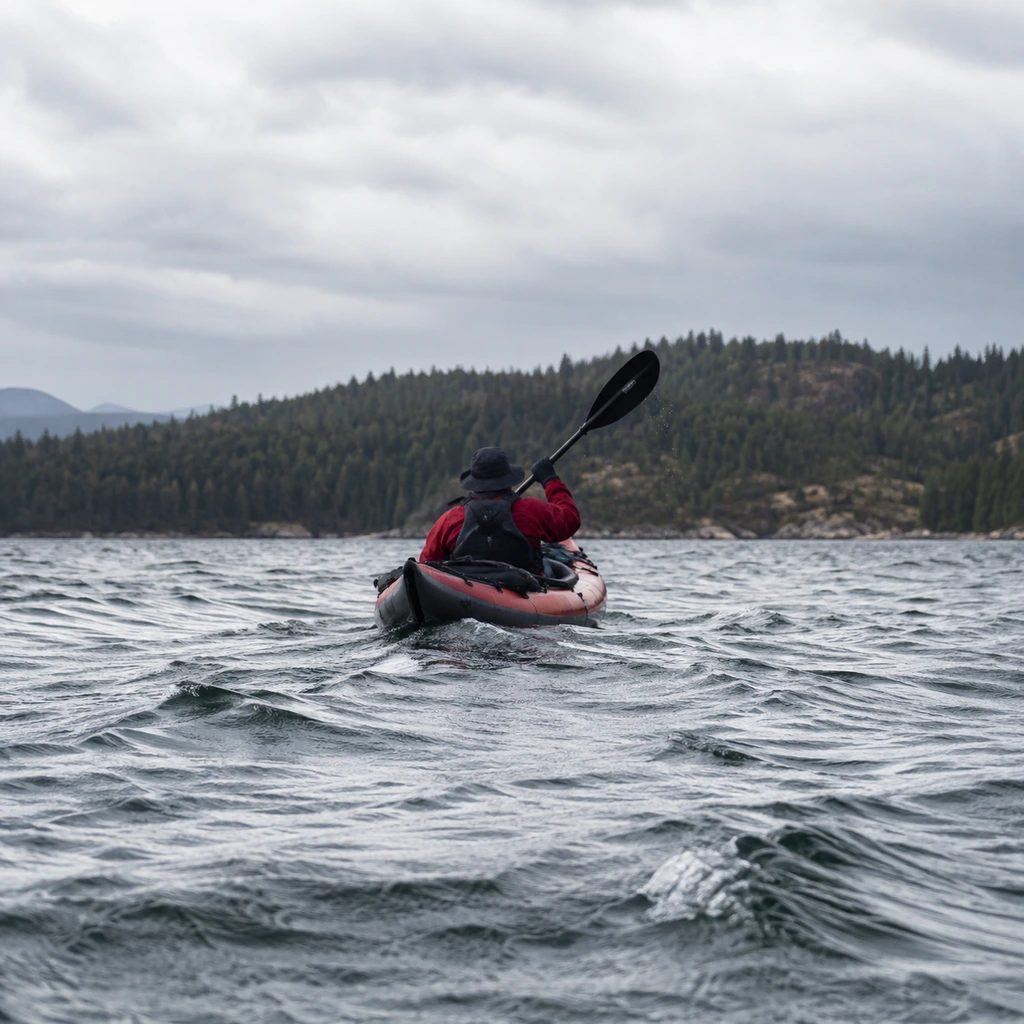
A light boat with high sides catches wind like a sail, and the classic incident goes like this: you paddle out easily with the breeze behind you, turn around, and cannot make progress back. Above roughly ten to twelve miles per hour, an inflatable becomes genuinely hard work. Check the forecast, start into the wind so the easy leg is the return, and stay within swimming distance of shore on anything breezy.
Cold Water, Not Cold Air
Water temperature is what matters, and it lags months behind the air. A pleasant sixty five degree autumn afternoon can sit over fifty five degree water, which is cold enough to cause an involuntary gasp and a rapid loss of hand function if you go in. Dress for immersion rather than for the sun, and carry a dry spare layer. Our guide to what to wear kayaking covers the layering.
Overloading and Current
A stated capacity is a flotation figure, not a comfort figure. Loaded near its limit, an inflatable sits low, slows down and takes water over the bow, and the same is true of any current beyond a gentle drift unless the boat is built for moving water with self bailing drains. Use about seventy percent of the rated load, and match the boat to the water rather than hoping.
Where They Should Not Go
Inflatable kayaks are safe within their design brief, and three environments sit outside it for a general purpose inflatable, and no amount of care changes that.
- Open sea and exposed coast, where offshore wind and swell can carry a light boat away from shore faster than you can paddle back
- Whitewater and rocky rivers, unless the boat is specifically rated for it with multiple chambers and self bailing valves
- Cold water alone without immersion clothing, a float plan and someone who knows where you are
For everything else, lakes, reservoirs, canals, sheltered bays and slow rivers, they are a sensible choice. Our list of beginner friendly launches sticks to exactly that kind of water.
The Five Minute Safety Routine
Are inflatable kayaks safe in practice? They are if you do these five things every time, which removes most of the risk that matters.
- Pump every chamber to full pressure. A soft boat handles badly and is the most common self inflicted problem
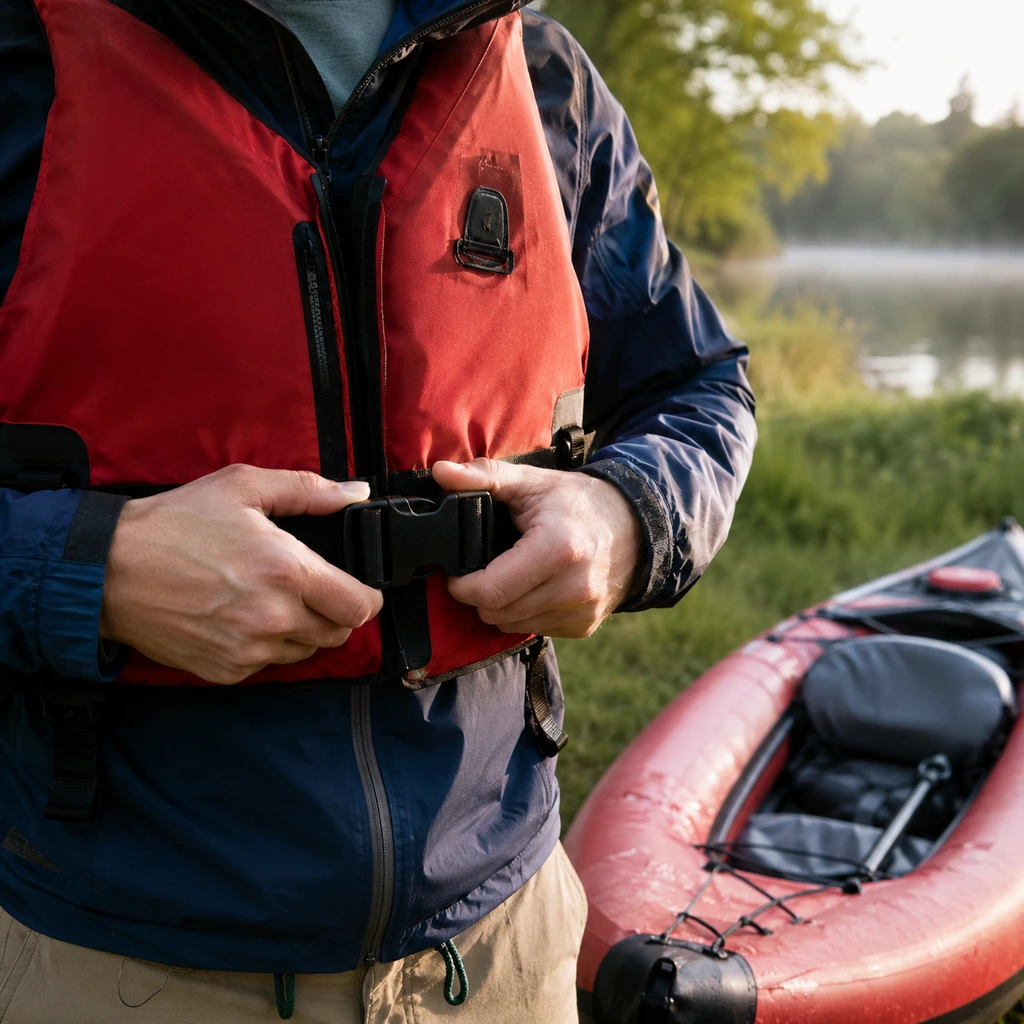
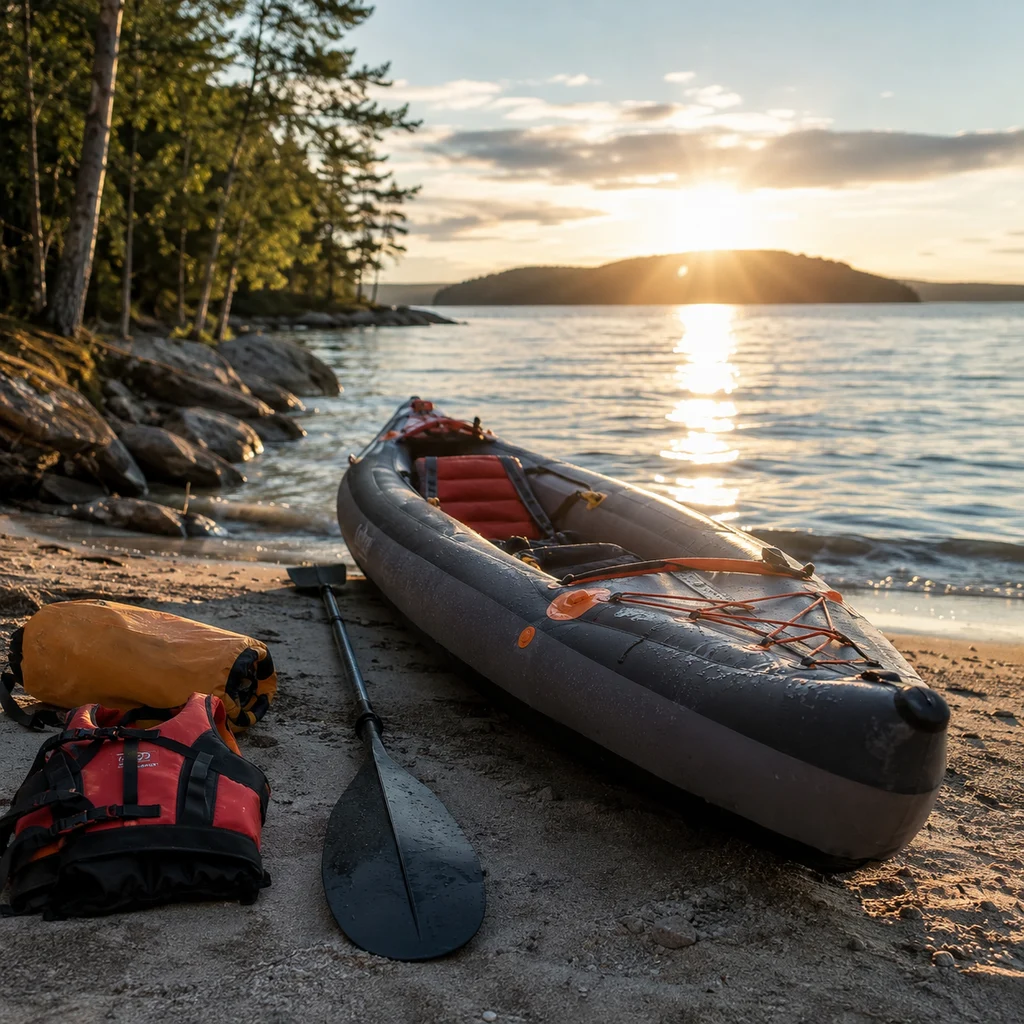
- Wear an approved life jacket, fitted before you launch rather than carried loose. State requirements are listed by the US Coast Guard boating safety programme
- Check wind speed and direction, and plan the outward leg into the wind
- Send one text with where you launched, your route and your expected return
- Carry a phone in a waterproof case, plus water and a spare layer in a dry bag
If you are paddling alone, add the extra habits in our solo kayaking guide, and if children are coming, fit their jackets first and keep the first trip short, as our kayaking with kids tips explain.
Frequently Asked Questions
Are inflatable kayaks safe for beginners?
Yes, and often safer than a rigid boat, because they are wider, more stable and far harder to capsize. The learning curve is gentler, which is why so many first boats are inflatable. Start on a small lake in calm conditions and build from there with our complete beginner guide.
Can an inflatable kayak sink?
Practically speaking, no. With two or three independent chambers and buoyancy built into the fabric itself, a punctured boat becomes soft and slow rather than submerged. The danger in a capsize is cold water and distance from shore, not the boat disappearing under you.
Are they safe in the ocean?
Not for open water. A sheltered bay in calm conditions and light offshore wind is defensible with experience, but exposed coast, swell and tidal current are outside what a general purpose inflatable should be asked to do. Choose a sea kayak and training instead.
Do sharks or wildlife pose a risk to the hull?
No, in any realistic freshwater or sheltered setting. The fabric is thick, welded and multi chambered, and wildlife has no interest in it. Snags, gravel and dragging the boat are what damage hulls.
How safe are they for children?
Well suited, with the usual conditions: a correctly fitted jacket, calm water, a short first trip, and paddling parallel to the shore rather than out and back. The stability that makes these boats slow also makes them very hard for a child to tip.
Are Inflatable Kayaks Safe? The Short Answer
Are inflatable kayaks safe? On flat and sheltered water, with a life jacket, full pressure in the chambers and an eye on the wind, yes, and they are a genuinely good way to start paddling. The risk is not the material, it is being blown offshore or ending up in cold water without the clothing for it. Choose the boat for the water, and the boat itself is rarely the problem. If you are still shopping, our picks for the best inflatable kayaks published today cover which models handle which conditions, and our kayaking safety tips cover the rest of the routine.
Discover more from Maive Verse
Subscribe to get the latest posts sent to your email.