
This post contains affiliate links. If you buy through them, we may earn a small commission at no extra cost to you.
The season ends, the trip is over, and a pile of gear sits by the door. How you store your camping gear over the off months decides whether it is ready next spring or ruined by mildew, flat foam, and mouse damage. A tent packed away damp can grow mold in weeks, and a sleeping bag left crushed in its stuff sack slowly loses the loft that keeps you warm.
The good news is that keeping your kit in great shape is simple once you know the rules. This guide walks through why proper storage matters, how to handle each type of gear, and which containers and spaces work best so everything lasts for years.
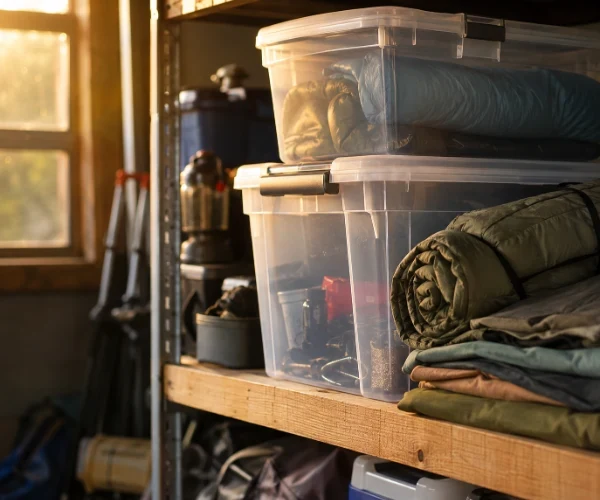
Table of Contents
Why It Pays to Store Your Camping Gear Properly
Most gear does not wear out on the trail. It quietly degrades in a garage or closet between trips. Three things do the damage, and all of them are avoidable with a little care before you pack anything away.
Moisture and Mildew
Trapped moisture is the number one killer of outdoor gear. Fabrics, coatings, and zippers all suffer when they sit damp in a sealed bag. Mildew leaves permanent stains and a musty smell that never fully washes out, and it can eat through waterproof coatings. Always let every item dry completely before it goes into storage.
Compression and Insulation Loss
Sleeping bags and sleeping pads rely on loft, the air trapped in their fill, to keep you warm. Leaving them tightly compressed for months flattens that fill and it never fully recovers. A bag stored loose stays warm far longer than one crammed in its sack all year.
Pests and Rodents
Mice love soft, quiet nesting material, and a rolled tent or fleece jacket is perfect for them. They chew through fabric and mesh to build nests and leave droppings that are hard to clean. Sealed hard containers keep rodents out and protect your investment.
How to Store Your Camping Gear by Type
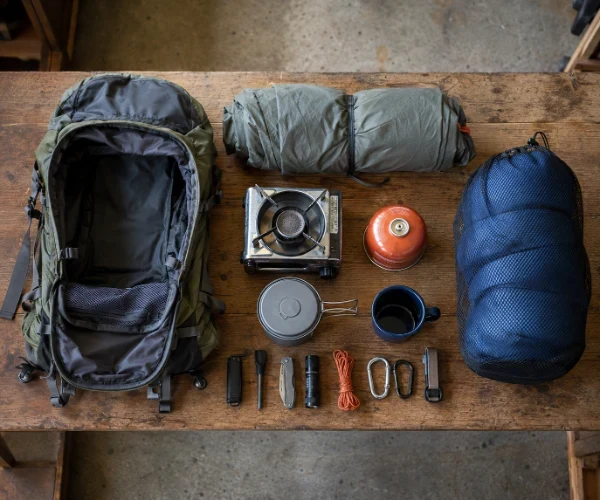
Different gear needs different handling. Here is how to store your camping gear piece by piece so each item comes out of storage ready to use.
Tents and Tarps
Set the tent up or hang it to dry fully after every trip, even if it looks dry when you pack it. Shake out dirt and pine needles, wipe down the poles, and store the body loosely folded rather than tightly rolled to protect the coating. Keep stakes and poles in a separate bag so they do not poke holes in the fabric.
- Dry the tent completely before storing, inside and fly
- Store loosely folded in a breathable bag, not a tight stuff sack
- Keep poles and stakes bagged separately to avoid tears
Sleeping Bags and Pads
Never store a sleeping bag compressed. Keep it in a large cotton or mesh storage sack so the fill can breathe and hold its loft. Wipe down inflatable pads, leave the valve open so trapped air can escape, and store them flat or loosely rolled. For more on choosing a bag that lasts, see our guide to picking a summer sleeping bag.
- Store bags loose in a large breathable sack, never compressed
- Leave pad valves open and store flat or loosely rolled
- Keep both off concrete floors to avoid drawing damp
Stoves, Cookware, and Fuel
Clean every pot and pan so no food residue attracts pests. Empty and detach fuel canisters, and store fuel in a cool, ventilated space away from living areas, never in a hot car or near a heater. Nest cookware together to save room and keep a stove in a small box so small parts do not go missing.
- Scrub cookware fully so no food smell lingers
- Detach and store fuel canisters in a cool ventilated spot
- Nest pots and keep stove parts together in one small box
Backpacks and Clothing
Empty every pocket, brush off dirt, and hang packs so the shoulder straps and hip belt keep their shape. Wash and fully dry all clothing before storing it, and keep base layers and fleece in a sealed bin so moths and mice cannot reach them.
- Empty all pockets and hang packs to hold their shape
- Wash and dry clothing fully before it goes away
- Seal base layers and fleece in a bin away from pests
Best Containers to Store Your Camping Gear
The container matters as much as the space. Clear, sealed bins keep moisture and rodents out, stack neatly, and let you see what is inside without opening every lid. For a deeper look at gear care, REI publishes helpful maintenance guides in their expert advice library.
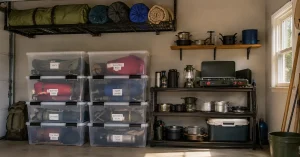
- Budget: Clear stackable storage totes with lids keep gear visible, sealed, and easy to stack on a shelf.
- Mid-range: Heavy duty rolling storage bins handle bulky items like tents and sleeping bags and roll out of the way with ease.
- Premium: An overhead garage ceiling rack lifts bins off the floor entirely, freeing space and keeping gear away from damp concrete.
Where to Keep Everything
The ideal storage spot is cool, dry, and dark with steady temperatures. Avoid attics that bake in summer, damp basements, and outdoor sheds that swing from hot to freezing. A closet shelf or a raised rack in a climate steady garage is usually the best option.
- Choose a cool, dry, dark space with stable temperatures
- Keep bins off the floor on shelves or racks
- Avoid hot attics, damp basements, and unheated sheds
- Add a few silica gel packs to bins to absorb stray moisture
Camping Gear Storage at a Glance
| Gear Type | Storage Method | Key Risk to Avoid |
|---|---|---|
| Tent and tarp | Dry fully, loosely folded, breathable bag | Mildew and coating damage |
| Sleeping bag | Large cotton sack, stored loose | Lost loft and warmth |
| Sleeping pad | Valve open, flat or loosely rolled | Trapped damp and mold |
| Stove and fuel | Cleaned, fuel detached, cool vented spot | Pests and fuel hazards |
| Backpack and clothing | Hung or sealed in a bin | Rodents and moths |
Frequently Asked Questions
How should I store a sleeping bag long term?
Store it loose in a large cotton or mesh sack so the fill stays lofted. Keeping it compressed in its stuff sack for months flattens the insulation and reduces how warm it will be.
Can I store camping gear in the garage?
Yes, as long as the garage stays reasonably dry and does not swing to extreme temperatures. Keep everything in sealed bins raised off the concrete floor so damp and pests cannot get in.
How do I keep mice out of my gear?
Use hard, sealed containers rather than soft bags or cardboard boxes. Clean all cookware so no food smell remains, and avoid leaving gear loose on shelves where rodents can nest.
Do I need to dry my tent before storing it?
Always. Even a slightly damp tent can grow mold and mildew within days in a sealed bag. Set it up or hang it until every part is bone dry before packing it away.
Final Thoughts
A little effort at the end of the season saves you money and hassle when the next trip comes around. Dry everything fully, store soft gear loose, seal it away from pests, and keep it cool and dry. For your next adventure once the gear is ready, check out our ultimate guide to family summer camping.
Discover more from Maive Verse
Subscribe to get the latest posts sent to your email.