
This post contains affiliate links. If you buy through them, we may earn a small commission at no extra cost to you. Thank you for supporting Maive Verse.
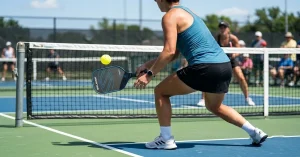
Nothing stings quite like floating a soft shot too high and watching your opponent tee off on it. In outdoor pickleball, the pop-up is the single most punished mistake at the kitchen line, and it usually has nothing to do with how hard you swing. It comes down to control: a quiet paddle face, soft hands, and the patience to keep the ball low.
The good news is that pop-ups are fixable. Once you understand why the ball jumps off your paddle and you drill the right movement patterns, your dinks get flatter, your resets get calmer, and your unforced errors drop fast. The right paddle helps too. Below we break down the biomechanics of a clean soft dink, the drills that groove it, and the softest control paddles that absorb pace so the ball stays down where it belongs.
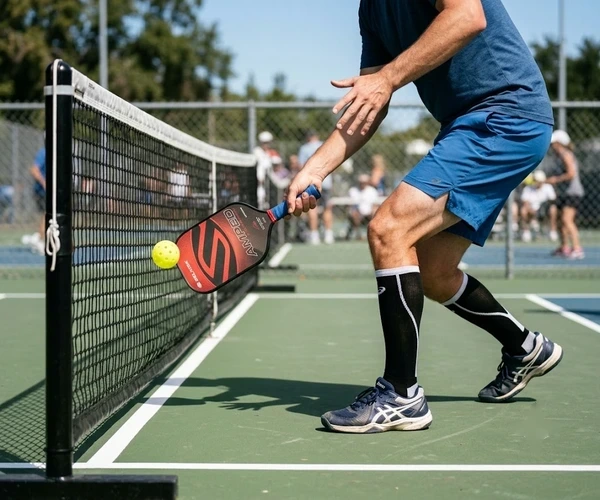
Table of Contents
Why Pop-Ups Happen at the Kitchen Line
A pop-up is any soft shot that rises too high over the net, sitting up in your opponent’s strike zone. At the non-volley zone line, even a ball that floats a few inches too high gives the other team an easy putaway. Most pop-ups trace back to one of a few root causes, and almost all of them are about excess energy going into the ball at contact.
- Too much wrist or arm action, which adds uncontrolled speed to a shot that should be gentle.
- A paddle face that is open (tilted up) at contact, launching the ball upward.
- Meeting the ball late or too close to your body, so you jab at it instead of guiding it.
- Gripping the paddle too tightly, which transfers the ball’s incoming pace right back out as height.
- Using a stiff, powerful paddle built for driving rather than for touch.
Notice that four of those five causes are technique, and one is equipment. That is the theme of this guide: fix the movement first, then let a control paddle do the rest.
The Biomechanics of a Soft Dink
A great dink is less like a hit and more like a lift. You are not trying to add speed. You are trying to catch the ball’s energy and redirect just enough of it to clear the net by a few inches and drop it into the kitchen. Getting there means controlling three things: the paddle face, your hands, and where the power comes from.
Paddle Face and Contact Point
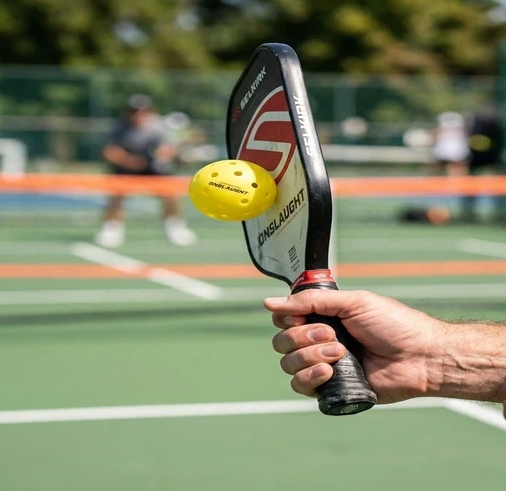
Keep the paddle face close to vertical, tilted only slightly upward, and make contact out in front of your body around knee-to-thigh height. Contact in front lets you see the ball onto the paddle and push it forward and up in a controlled arc. Reaching down late or letting the ball get behind you forces an open face and a scoopy motion that sends it skyward.
Quiet Hands and Dwell Time
Soft hands are everything. A relaxed grip (think three or four out of ten in pressure) lets the paddle face give slightly at contact, increasing dwell time, the split second the ball stays on the face. More dwell means more control and less rebound speed. Squeeze hard and the ball springs off with all its incoming pace, which is exactly how pop-ups happen.
Power from Legs, Not Wrist
The lift on a dink should come from your legs and shoulder gently rising, not from flicking your wrist. Bend your knees, get low, and use a smooth pendulum motion from the shoulder. A locked, quiet wrist keeps the paddle face stable so the ball comes off predictably every time. Learn more foundational movement in our guide to how to play pickleball.
How to Reset a Hard Drive
Resetting is dinking under pressure. When an opponent rips a hard drive at your feet, your job is to absorb that pace and drop the ball softly back into the kitchen instead of blocking it back with interest. The mechanics are the same as a dink, just exaggerated toward softness.
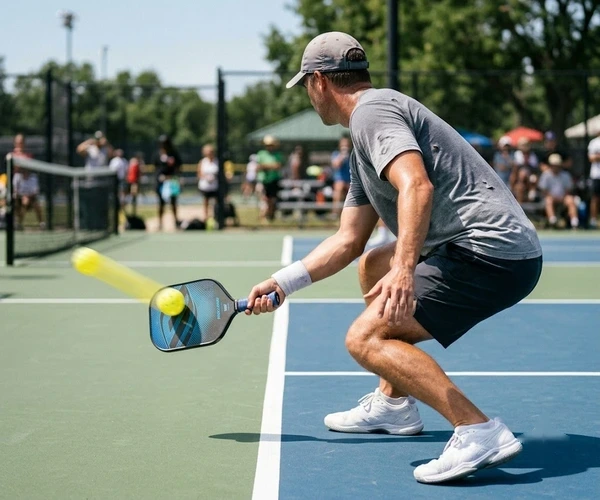
- Loosen your grip even further and let the paddle act like a cushion, not a wall.
- Meet the ball in front with a still, slightly open face and almost no forward swing.
- Give a little with the shot, allowing the paddle to move back a touch on contact to deaden the pace.
- Aim high over the net on the reset, not flat and hard, so the ball has time to fall into the non-volley zone.
- Stay low with your knees bent so your whole body can absorb the shot, not just your hand.
Think of it as catching an egg. If your hand is rigid, the egg breaks. If your hand gives with the throw, it lands safely. A good reset takes all the sting out of a drive and buys you time to get back into the point.
Dinking Drills to Stop Pop-Ups
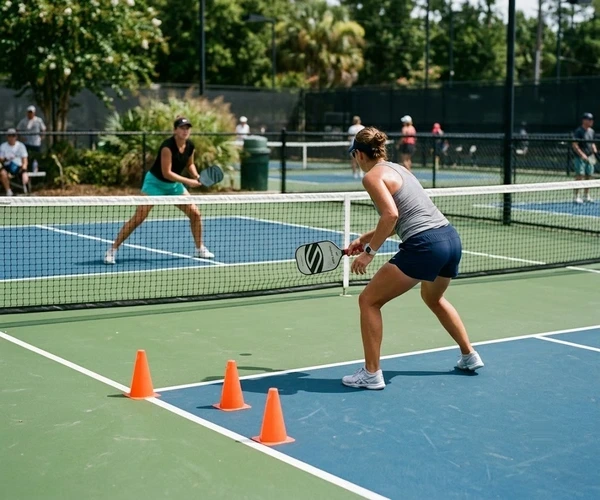
Technique only sticks with repetition. These outdoor pickleball dinking drills groove soft hands and a stable paddle face so a low dink becomes your default under pressure. Start slow, prioritize control over pace, and only speed up once your misses are consistently low rather than high. For more court-tested reps, pair these with our full set of outdoor pickleball drills.
Wall Dink Drill
Stand a few feet from a wall and dink the ball against it continuously, keeping each rebound soft and controlled. The wall gives instant feedback: hit too hard and it comes back too fast to handle. Aim for smooth, unhurried contact and try to keep a rally going for 30 or more touches without a miss.
Cross-Court Dink Drill
With a partner, dink diagonally cross-court to each other over the highest part of the net. Cross-court dinks travel over the lowest tension zone and give you more court to work with, making them the safest, most common dink in a real point. Trade 20 to 30 in a row, focusing on keeping every ball below net-cord height as it crosses.
Figure-8 Dinks
One player dinks straight ahead while the other dinks cross-court, so the ball travels in a continuous figure-8 pattern. This drill forces you to move your feet and reset your paddle face for each shot, mimicking the footwork of a live kitchen exchange.
Third-Shot Reset Drill
Have a partner feed medium-pace drives at your feet from the mid-court while you stand at the kitchen line and reset each one softly into the non-volley zone. This trains the absorption motion under realistic pressure and is one of the fastest ways to stop panicking on hard shots.
Target Dinks
Place a towel or a couple of cones in the kitchen and try to land your dinks on the target. Precision practice sharpens your paddle-face control and teaches you to place dinks at an opponent’s feet or into the open middle, where pop-ups are least likely to be punished.
Why a Control Paddle Helps
Once your technique is solid, equipment becomes the multiplier. Paddles are built along a spectrum from power to control, and if you struggle with pop-ups, a control paddle is your friend. These paddles are engineered to be forgiving on soft shots and to absorb incoming pace rather than amplify it.
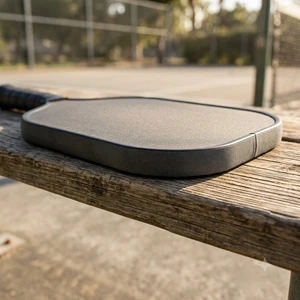
Thicker 16mm Cores Absorb Power
Control paddles typically use a thicker 16mm polymer core, compared to the 13mm to 14mm cores found on power paddles. The extra thickness flexes more on contact, softening the response and increasing dwell time. That built-in cushioning means a hard incoming ball comes off the face slower and lower, which is exactly what you want on dinks and resets.
Soft Face, Bigger Sweet Spot
Many control paddles pair the thick core with a softer surface and a larger, more forgiving sweet spot. Off-center hits stay calmer instead of jumping off the face, so a slightly mishit dink still stays down. If you are still choosing your first serious paddle, start with our primer on the best outdoor pickleball paddles for beginners.
The Softest Control Paddles for Dinking
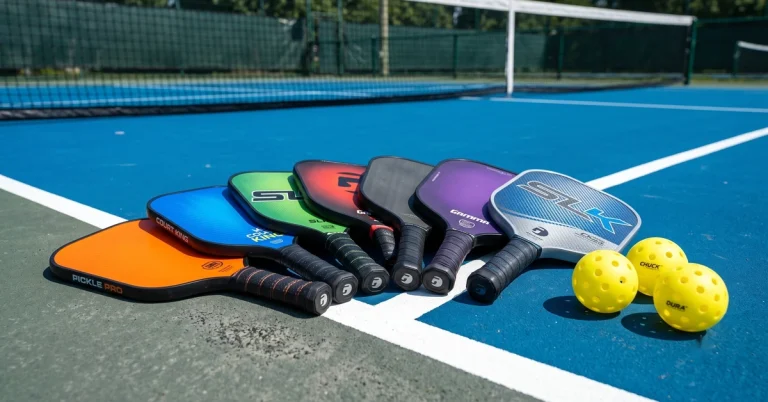
These are proven 16mm control paddles that touch players reach for when they want the ball to stay down. Each one prioritizes feel, dwell time, and a forgiving face over raw power. Availability and pricing change often, so check current listings before you buy.
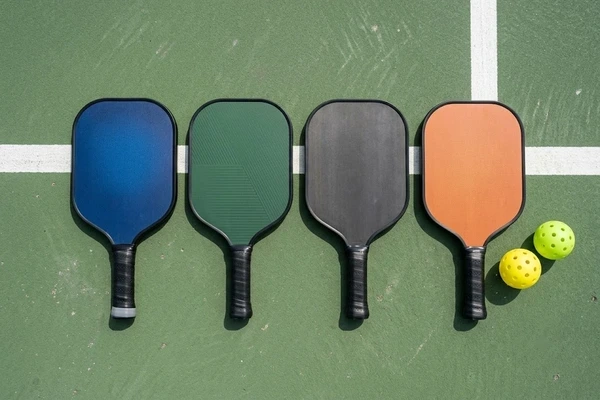
Selkirk LUXX Control Air
The Selkirk LUXX Control Air is a benchmark control paddle with a plush 16mm core and Selkirk’s soft, muted face. It swallows pace beautifully, making resets and dinks feel effortless, and its floated, quiet response is a favorite among players who live at the kitchen line. If your game is built on touch and patience, this is one of the softest feels on the market.
JOOLA Ben Johns Perseus 16mm
The JOOLA Ben Johns Perseus 16mm blends control-friendly softness with enough pop to still drive when you need to. The 16mm version leans toward touch, offering a long dwell time and a stable face that keeps dinks low. It is a great pick if you want a control base but do not want to give up all your offense.
Paddletek Bantam TKO-C
The Paddletek Bantam TKO-C is the control-oriented member of the TKO line, tuned for a soft, connected feel at the net. Players praise its consistency on dinks and its forgiving sweet spot, which keeps off-center soft shots from ballooning. It is a dependable everyday control paddle for the outdoor game.
Engage Pursuit Pro MX 6.0
The Engage Pursuit Pro MX 6.0 features a thick core and a soft, textured face designed for grip and control. It excels at deadening pace on resets and gives you fine touch on placement dinks, while still holding up in longer outdoor pickleball exchanges where consistency wins the day.
| Paddle | Core | Best For |
|---|---|---|
| Selkirk LUXX Control Air | 16mm | Maximum touch and reset feel |
| JOOLA Ben Johns Perseus 16mm | 16mm | Control with some offense |
| Paddletek Bantam TKO-C | 16mm | Consistent everyday control |
| Engage Pursuit Pro MX 6.0 | Thick | Grippy face, placement dinks |
Common Dinking Mistakes to Avoid
Even with the right paddle, a few habits keep the ball popping up. Watch for these and you will cut your kitchen-line errors dramatically.
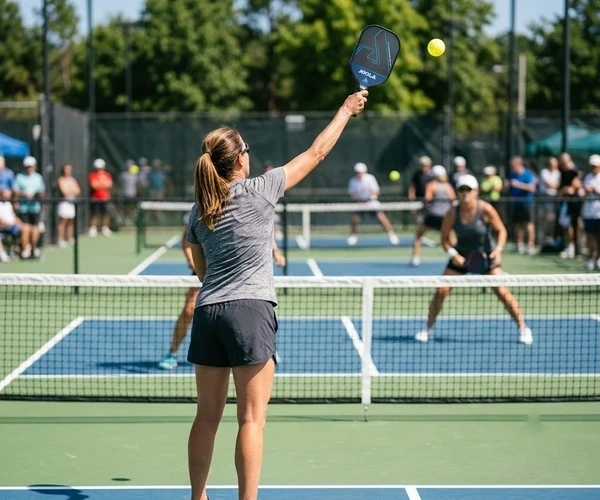
- Standing up tall instead of staying in an athletic, knees-bent stance.
- Swinging at dinks with the arm or wrist instead of gently lifting from the shoulder and legs.
- Backing up off the kitchen line, which turns easy dinks into awkward half-volleys.
- Trying to end points too early with a speed-up before the ball is high enough to attack.
- Watching your opponent instead of the ball all the way onto your paddle.
Discipline at the kitchen line is a huge part of winning outdoor pickleball. For more tactical patience and shot selection, see our outdoor pickleball strategy guide.
Frequently Asked Questions
What is the fastest way to stop popping the ball up?
Loosen your grip and make contact in front of your body with a nearly vertical paddle face. Most pop-ups come from a tight grip and an open face, so softening both fixes the majority of them right away.
Does a control paddle really reduce pop-ups?
It helps. A 16mm control paddle absorbs incoming pace and increases dwell time, so hard shots come off the face slower and lower. It will not fix bad technique, but it makes good technique more forgiving.
How thick should a control paddle be?
Most control paddles use a 16mm core. The added thickness flexes more on contact for a softer, more muted response, which is ideal for dinking and resetting. Power players tend to prefer thinner 13mm to 14mm cores.
Are these drills good for outdoor courts specifically?
Yes. Wind and a slightly livelier outdoor ball make control even more important outdoors, so grooving soft hands and low dinks pays off directly. According to the official USA Pickleball rules, the non-volley zone is the same seven feet indoors or out, so this technique transfers everywhere.
Final Thoughts
Stopping pop-ups at the kitchen line is a matter of energy management. Keep your grip soft, your paddle face quiet, and your contact out in front, then let a forgiving 16mm control paddle absorb the pace you used to send skyward. Drill the patterns above until a low dink is your reflex, and the easy putaways you keep gifting away will start turning into won points. Grab a control paddle, hit the court, and dink with patience.
Discover more from Maive Verse
Subscribe to get the latest posts sent to your email.