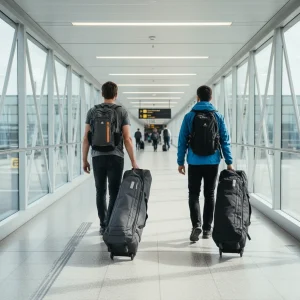
Master air travel with our ski bag buying guide. Discover the best hard cases and wheeled bags to protect your gear on any winter adventure.
Table of Contents
The Crucial Role of Protective Ski Luggage
Selecting the correct luggage is a critical step in any ski bag buying guide. A ski bag is not merely a container; it is a specialized piece of equipment designed to shield thousands of dollars of gear from the rigors of baggage handlers and conveyor belts. For beginners preparing for their First Ski Day at a destination resort, air travel poses the first major technical hurdle. Without a reinforced shell or high-density padding, skis can suffer edge damage or structural delamination during transit.
Modern ski luggage has evolved for the 2026 season to prioritize weight reduction without sacrificing impact resistance. This is essential because airlines have become increasingly strict with weight limits for oversized items. Utilizing a wheeled bag ensures that navigating through crowded terminals is effortless rather than a physical burden. This guide identifies the top seven options that provide the best balance of protection, mobility, and value. Choosing the right bag is as vital as following a Complete Winter Skiing Equipment Guide 2026.
The technical requirements for a bag depend heavily on the destination and frequency of travel. A simple sleeve might suffice for a short drive, but international air travel demands a wheeled, padded, or hard-shell solution. This guide focuses on the “transit” aspect of skiing, ensuring your gear arrives in peak condition so you can focus on Mastering Every Snow Condition. Professional athletes often note that gear failure in transit is the most common reason for a ruined ski week.
Hard Case vs. Soft Padded Bags: Decoding Protection
The first decision in any ski bag buying guide involves choosing between a hard-shell case and a soft padded bag. Each construction type offers distinct mechanical advantages for the traveling skier.
- Hard-Shell Cases (The Ultimate Armor):
- Construction: Made from high-density polyethylene or similar rigid plastics.
- Protection Level: Provides the highest level of crush and impact resistance.
- Durability: Virtually indestructible; many models like Sportube Series 2 are designed to last for decades.
- Air Travel Safety: Highly recommended for long-haul international flights where gear is handled multiple times.
- Soft Padded Bags (The Flexible Alternative):
- Construction: Heavy-duty 600D or 900D polyester with integrated foam padding.
- Protection Level: Shields against scratches and light impacts; relies on thick padding (usually 10mm to 15mm).
- Weight Benefit: Generally lighter than hard cases, helping travelers stay under the 50lb airline limit.
- Storage: Can be folded or rolled up when not in use, which is essential for small hotel rooms or lockers.
The choice often comes down to the sensitivity of your equipment. For example, if you carry high-end carbon-fiber poles, as identified in our Best Ski Poles Buying Guide, the crush resistance of a hard case is superior. Conversely, if you need to fit your Best Ski Jackets 2026 inside the bag to save space, a soft bag offers the necessary expansion. Technical specifications from TSA Travel Rules confirm that both types are acceptable, provided they are securely fastened.
Essential Features for Air Travel and Transit
Beyond the outer shell, several functional features dictate how well a bag performs in a real-world airport scenario. High-quality casters and reinforced handles are the hallmarks of a premium ski bag buying guide recommendation.
[Image Prompt 5: A traveler’s hand grasping a padded ergonomic handle on a ski bag, with visible reinforced stitching at the stress points.]
- High-Performance Wheel Systems:
- Urethane Wheels: Look for large, treaded urethane wheels similar to those on inline skates for smooth rolling over ice and salt.
- Internal Housings: The wheels should be recessed into a plastic housing to prevent them from being sheared off during rough handling.
- Reinforced Padded Zones:
- Tip and Tail Protection: The ends of the bag should have double padding or plastic skids, as these areas hit the ground first.
- Internal Compression Straps: These keep the skis from sliding inside the bag, which prevents the edges from cutting the interior lining.
- Strategic Handle Placement:
- End Handles: Essential for pulling the bag through the airport.
- Side Handles: Necessary for lifting the bag onto check-in scales or into car roof boxes.
- Drag Plates: Plastic plates on the bottom of the bag protect the fabric from abrasion when dragging over curbs.
[Image Prompt 6: An underside view of a ski bag showing the plastic drag plate and the recessed wheel housing.]
Efficient transit also requires considering how the bag interacts with other luggage. Many travelers use “hitch-pro” systems where the boot bag connects to the ski bag, allowing for one-handed towing. This level of integration is vital when navigating terrain like Ski Slope Difficulty resort base areas where parking may be far from the lodge. For more on the mechanical integration of gear, consult Sportube Technology for their telescopic locking systems.
[Image Prompt 7: A person effortlessly towing a ski bag and a boot bag simultaneously using an integrated connection system.]
The 7 Best Ski Bags for 2026 Transit
Based on waterproofing, durability, and wheel quality, the following models are the top recommendations for the 2026 season. These have been vetted specifically for their performance during air travel.
1. Sportube Series 2 (Best Hard Case)
Pros
Cons
- Key Features: Telescopic length adjustment, high-density polyethylene shell, TSA-compliant lock hole.
2. Dakine Fall Line Wheeled (Best Overall Value)
Pros
Cons
- Key Features: Fully padded 360-degree protection, removable boot bag included, #10 YKK zippers.
3. Thule RoundTrip Ski Roller (Best Internal Organization)
Pros
Cons
- Key Features: Structural reinforcements at ends, internal cinch-top sleeves for poles, internal mesh pockets.
4. Douchebags (Db) The Djärv (Best Maneuverability)
Pros
Cons
- Key Features: Rib Cage Construction (ABS ribs), length-adjustable system, hook-up system for backpacks.
[Image Prompt 11: The Db ski bag rolled up into a tight spiral, demonstrating its unique storage capabilities.]
5. Athletico Rolling Double Ski Bag (Best Budget Wheeled)
Pros
Cons
- Key Features: 600D water-resistant polyester, padded handles, external compression straps.
6. Kulkea Kantaja Wheeled (Best Durability)
Pros
Cons
- Key Features: 1680D ballistic nylon, hitch-end for boot bag, heavy-duty treaded wheels.
7. Rossignol Tactic Single Ski Bag (Best for Single Pair)
Pros
Cons
- Key Features: Reinforced 600D construction, adjustable shoulder strap, compression webbing.
Sizing and Packing Strategy for Maximum Efficiency
Choosing the right size is a cornerstone of this ski bag buying guide. A bag that is too long will “flop” at the end, making it difficult to roll, while a bag that is too short will not close securely.
- The Length Formula:
- Measured Length: Measure your skis from tip to tail in centimeters.
- Buffer Space: Add 5cm to 10cm to this measurement to account for padding and gear at the ends.
- Adjustable Options: Models like Thule Sizing Guide often feature internal cinches to shorten the bag if needed.
- Weight Distribution Techniques:
- Heavy Items at the Bottom: Place the heavy bindings toward the wheel end of the bag. This lowers the center of gravity and makes the bag easier to tow.
- Padding with Apparel: Wrap your Best Ski Jackets 2026 around the tips and tails for extra cushioning.
- Avoiding Edge Cuts: Use “ski ties” to keep the bases together. This prevents the sharp metal edges from vibrating against each other or slicing the bag’s liner during Parallel Turn Progression level turbulence.

Proper packing also involves protecting the sensitive components of your Ski Poles. Carbon-fiber poles should be placed in the center of the ski “sandwich” to prevent them from being snapped by external side pressure. If you are also carrying gear for Mogul Skiing for Beginners, ensure the extra-stiff mogul poles are not bent by over-tightening compression straps.

Transit Logistics: Airlines, Weight, and Protection
Navigating airline policies is the final hurdle in any ski bag buying guide. Most airlines treat a ski bag and a boot bag as a “single item,” provided they only contain ski-related gear.

- Airlines and Baggage Policies:
- The “One Item” Rule: Check your airline’s specific policy. Usually, you can check one ski bag and one boot bag for a single checked-bag fee.
- Weight Limits: The standard limit is 50lbs (23kg). Exceeding this can result in fees ranging from $50 to $200 per flight.
- TSA Inspections: Always use TSA-approved locks. Hard cases often require a specific padlock, while soft bags use standard luggage locks.
- Protection Beyond the Bag:
- RECCO Reflectors: Some high-end bags from brands like Dakine include RECCO reflectors to help locate lost luggage in warehouses.
- Insurance: For expensive gear, consider separate travel insurance or checking if your credit card covers “Sporting Equipment” damage.
- Labeling: Use a durable, permanent luggage tag. Many travelers also place a business card inside the bag in case the outer tag is torn off.

Understanding these logistics is as important for your safety as knowing Ski Slope Difficulty levels. If your gear arrives damaged and you don’t notice until you are on the mountain, you risk an equipment failure mid-run. Always inspect your skis at the baggage claim. Professional organizations like PSIA-AASI Travel Safety recommend a full binding and edge check before your first run of the trip.
Maintenance and Storage for Ski Luggage
To ensure your investment lasts for several seasons, consistent maintenance of the bag itself is required. Snow, salt, and moisture are the primary enemies of ski luggage.
- Cleaning Protocols:
- Salt Removal: After every trip, wipe down the wheels and the bottom of the bag with fresh water to remove road salt, which can corrode bearings.
- Drying: Never store a ski bag while it is damp. Mold can grow in the padding, leading to odors and fabric degradation.
- Storage Solutions:
- Soft Bags: These should be rolled up and stored in a cool, dry place. Avoid hot attics, as the heat can cause the internal waterproof coating to become sticky and peel.
- Hard Cases: These can be stored standing up in a garage. Use the telescopic feature to make the case as short as possible to save space.
- Off-Season Care: For a full equipment protection strategy, see Off-Season Maintenance guide.
Proper care of your luggage is a reflection of your commitment to the sport. Just as you master Carving vs. Skidding to improve your performance, you must master gear management to protect your ability to ski. A well-maintained bag ensures that when the next season arrives, your skis are ready to perform without the need for emergency repairs.
Investing in Gear Longevity
Selecting the best ski bag for 2026 is an investment in your peace of mind and the longevity of your equipment. Whether you choose the bombproof security of the Sportube Series 2 or the versatile organization of the Thule RoundTrip, the goal remains the same: ensuring your gear arrives safely. By prioritizing wheel quality, padding thickness, and airline weight compliance, you can eliminate the stress of transit.
Clear planning for your travel is the foundation of a successful ski trip. Remember that your bag is part of a larger technical system that includes your Best Ski Poles and your overall Ski Fitness. As you progress from local hills to international Difficult Slopes, your reliance on high-quality transit solutions will only increase.
The mountain is waiting, and with the right luggage, you can bring your own trusted gear to any peak in the world. Treat your bag with respect, clean it after every trip, and always pack with care. The transition from resort traveler to expert explorer is paved with organized, protected gear. Ensure your stance is solid, your equipment is ready, and your transit is seamless, then step into the snow with total confidence.


