
Essential kayaking safety tips for beginners. Learn 15 crucial rules, proper equipment, and water safety techniques to stay safe on your paddling adventures.

Kayaking looks peaceful—and it can be. But make no mistake: water is powerful, unpredictable, and unforgiving. If you’re new to paddling, the number one thing you can do to stay safe (and alive) is follow these 15 kayaking safety rules that seasoned paddlers swear by. This isn’t about being paranoid. It’s about paddling smart.
Ready to hit the water? Bookmark this list and revisit it before every trip. And if you’re serious about becoming a safe, confident paddler, consider signing up for a kayaking safety course near you.
Table of Contents
15 Kayaking Safety Tips Every Beginner Should Follow
1. Wear a Coast Guard-Approved Life Jacket — Always
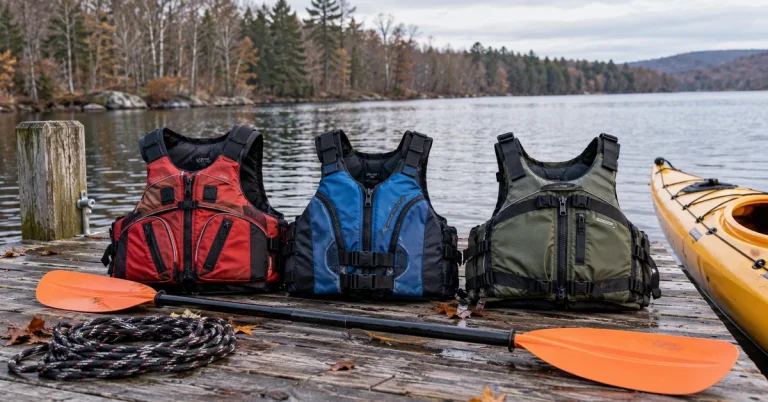
A personal flotation device (PFD) is your single most important piece of safety gear — and yes, you should wear it the entire time you’re on the water. It must fit snugly around your chest without riding up and should be rated for your weight. Even if you’re a strong swimmer, sudden capsizes, fatigue, or cold water shock can make swimming impossible. The life jacket isn’t just for emergencies — it’s your lifeline.
Pro Tip: Choose a high-visibility PFD with reflective strips and pockets for small gear.
2. Check the Weather 24–48 Hours in Advance
Before you even think about launching, check the marine forecast — not just the regular weather app. Look specifically at wind speed, wave conditions, and chances of storms. What looks like a calm sunny day inland can mean rough, windy waters on a lake or coast. Conditions change fast, and kayaking in strong winds or sudden thunderstorms is one of the most common ways paddlers get into trouble.
Pro Tip: Avoid kayaking if wind speeds are over 12–15 mph, especially on open water.
3. Follow the 120-Degree Rule
This rule is simple but often ignored: if the air temperature plus the water temperature adds up to less than 120°F (48°C), wear a wetsuit or drysuit. Cold water shock can cause gasping, loss of muscle control, and even unconsciousness within minutes. You won’t have time to “adjust” — so dress for immersion, not for comfort on land.
Example: 60°F water + 55°F air = 115°F → that’s cold water conditions.
4. Let Someone Know Your Float Plan
Before heading out, tell a friend or family member where you’re launching from, your route, estimated return time, and what to do if they don’t hear from you. This float plan could be the reason search and rescue teams find you quickly if something goes wrong.
Bonus Tip: Use apps like “Float Plan” or simple templates you can text before launching.
5. Never Paddle Alone When You’re New
Solo paddling might seem peaceful, but it leaves you without help when things go sideways — and they can, fast. Bring a buddy, especially someone with more experience. If your kayak flips, your paddle floats away, or you get too tired, another paddler can be the difference between a minor inconvenience and a life-threatening situation.
Rule of Thumb: Beginners should always go with a group or an experienced friend.
6. Pack Essential Safety Gear — Every Time
Don’t launch without these basics in a dry bag:
- Bilge pump or sponge (to remove water from the cockpit)
- Whistle (for signaling — 3 blasts = distress)
- Paddle leash (so you don’t lose your paddle)
- Waterproof flashlight or headlamp
- Basic first aid kit
- Spare dry clothes in a ziplock or dry sack
This isn’t just for “worst-case” scenarios — water entering the boat is common, and having a way to deal with it can save your trip.
Tip: Know where each item is packed and how to access it quickly.
7. Learn to Do a Wet Exit
Flipping over in a kayak is scary — unless you’ve practiced it. Learn how to exit your kayak calmly and safely if it capsizes. Do this in shallow water with someone nearby the first few times. The key is to remain calm, lean forward, and push yourself out. Practicing this makes it second nature and reduces panic when it happens unexpectedly.
Make it a ritual: Practice your wet exit every few months to keep it fresh.
8. Train in Basic Self-Rescue Techniques
The ability to get back into your kayak from the water is a must-have skill. Learn:
- Paddle float rescue (solo re-entry method)
- T-rescue (assisted rescue with a partner)
- Cowboy scramble (for sit-on-top kayaks)
These aren’t hard, but they must be practiced. Don’t wait until you’re freezing and exhausted to learn them for the first time.
9. Stay Within Swimming Distance of the Shore
When starting out, don’t venture too far from the shoreline. Not only is it safer if you capsize, but it’s easier to assess weather, get help, or bail out if something doesn’t feel right. Open water feels limitless until you’re fighting wind, waves, or fatigue.
Guideline: Stay within 100–200 feet from shore until you build up your skill and confidence.
10. Dress for the Water — Not the Weather
Air temperatures can be deceiving. Even on warm days, lakes, rivers, and coastal waters can be dangerously cold. Avoid cotton, which stays wet and drains heat. Wear quick-drying synthetic fabrics, and in cooler climates, layer up with neoprene or drysuits. Your outfit should protect you during an unexpected swim.
Always bring: A spare warm layer in a waterproof bag.
11. Carry Backup Communication Devices
A phone is great — if it’s waterproof, charged, and has signal. Don’t rely on it alone. Add a:
- Waterproof VHF radio (ideal for coastal paddlers)
- Personal locator beacon (PLB)
- Signal mirror or strobe light
Having multiple communication tools gives you backup options in case batteries die, phones get lost, or signals fail.
12. Know and Respect Your Limits
Don’t push yourself just because others are. Be honest about your skills, endurance, and comfort level. If you’re unsure about conditions, the best move is often to cancel or postpone. You don’t have to prove anything to anyone — safe paddlers are smart paddlers.
Mantra: The water will still be there tomorrow — make sure you are too.
13. Learn to Read Nature’s Clues
Get familiar with how water “talks.” Pay attention to:
- Wind direction and strength (creates chop and pushes you off course)
- Cloud patterns (can warn of incoming weather)
- Current strength and flow changes
- Water color (discolored = shallow, underwater hazard, or fast current)
The better you get at reading the environment, the more confident and safer you’ll become.
14. Establish Visual Signals with Your Group
When paddling with others, shouting won’t always work. Agree on simple hand or paddle signals for:
- “Help”
- “Stop”
- “Go left/right”
- “Regroup”
Review these before launching to avoid confusion or delayed responses in emergencies.
15. Take a Kayaking Safety Course
If you’re serious about kayaking, consider taking a class with certified instructors. You’ll learn everything from paddle strokes to capsizing drills in a controlled environment. It’s hands-on experience that builds real confidence — and often teaches things you didn’t know you didn’t know.
Where to start: Look up ACA (American Canoe Association) or local outfitters for beginner-friendly safety clinics.
Building Your Kayaking Foundation
These safety rules work best when combined with proper preparation and skill development. If you’re just starting out, our comprehensive Kayaking for Beginners: Ultimate 2025 Guide to Epic Start covers everything from choosing your first kayak to planning your maiden voyage.
Having the right equipment makes following these safety rules much easier. Check out our detailed Essential Kayaking Gear for Beginners: Must-Have Checklist (2025) to ensure you’re properly equipped before hitting the water. The American Canoe Association also provides excellent safety guidelines and certification programs that complement these fundamental rules.
Once you’ve mastered safety basics, developing proper paddling technique becomes crucial for both efficiency and emergency situations. Our guide on Basic Kayaking Techniques: Paddle Like a Pro in 10 Easy Steps will help you build the skills that make these safety rules second nature.
Why These Rules Matter
These aren’t arbitrary restrictions – they’re lessons learned from real emergencies. Every experienced paddler has stories about close calls that reinforced why safety rules exist. The goal isn’t to scare you away from kayaking, but to help you enjoy it safely for years to come.
Start with calm conditions, build skills gradually, and always prioritize safety over adventure. Kayaking offers incredible experiences, but only if you’re prepared to handle whatever the water throws at you.
Discover more from Maive Verse
Subscribe to get the latest posts sent to your email.