
Understand the North American Ski Slope Difficulty ratings (Green, Blue, Black Diamonds). Learn what the symbols truly mean and how to progress safely.
Table of Contents
Introduction: The Universal System
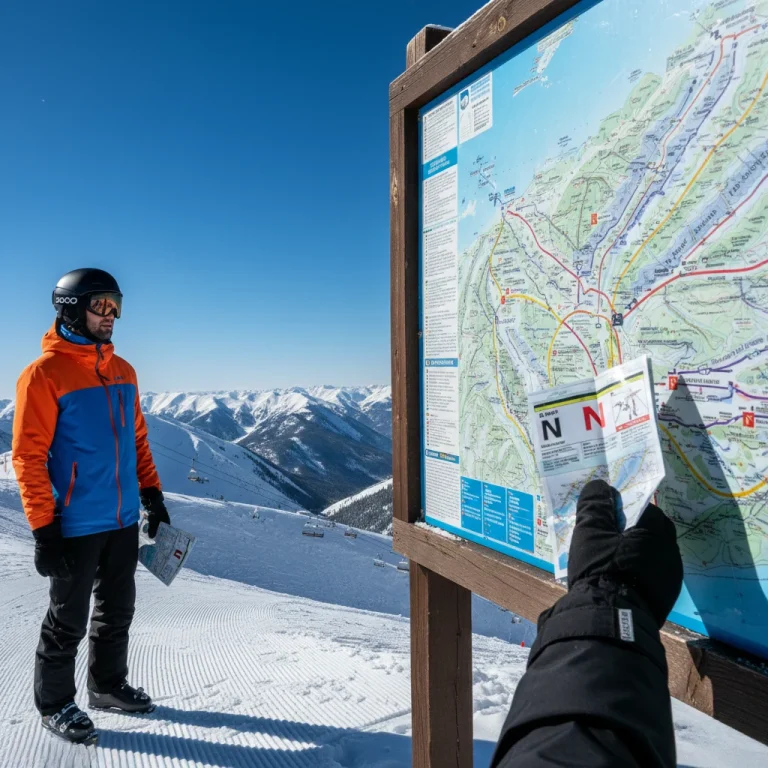
Understanding the symbols used to classify trails on a ski mountain is the most fundamental aspect of resort safety and personal skill progression. Known as the Ski Slope Difficulty rating system, these symbols: the Green Circle, Blue Square, and Black Diamond provide skiers and snowboarders with a quick visual assessment of a trail’s challenge level. These designations are designed to guide users toward terrain that matches their ability, minimizing risk and maximizing enjoyment.
It is important to recognize that this is a relative system, not an absolute one. A Black Diamond run at a smaller, local resort may feel significantly easier than a Blue Square run at a major mountain known for extreme vertical. The ratings compare the difficulty of one trail only against the difficulty of other trails at that same resort. Therefore, before progressing to a new trail, it is essential to be comfortable with the entire range of runs below it on the difficulty scale at that specific location.
This comprehensive guide breaks down each symbol, explains the technical factors that determine the rating, and provides guidelines for safely progressing through the terrain levels.
The Foundation: Green Circle (Easiest)
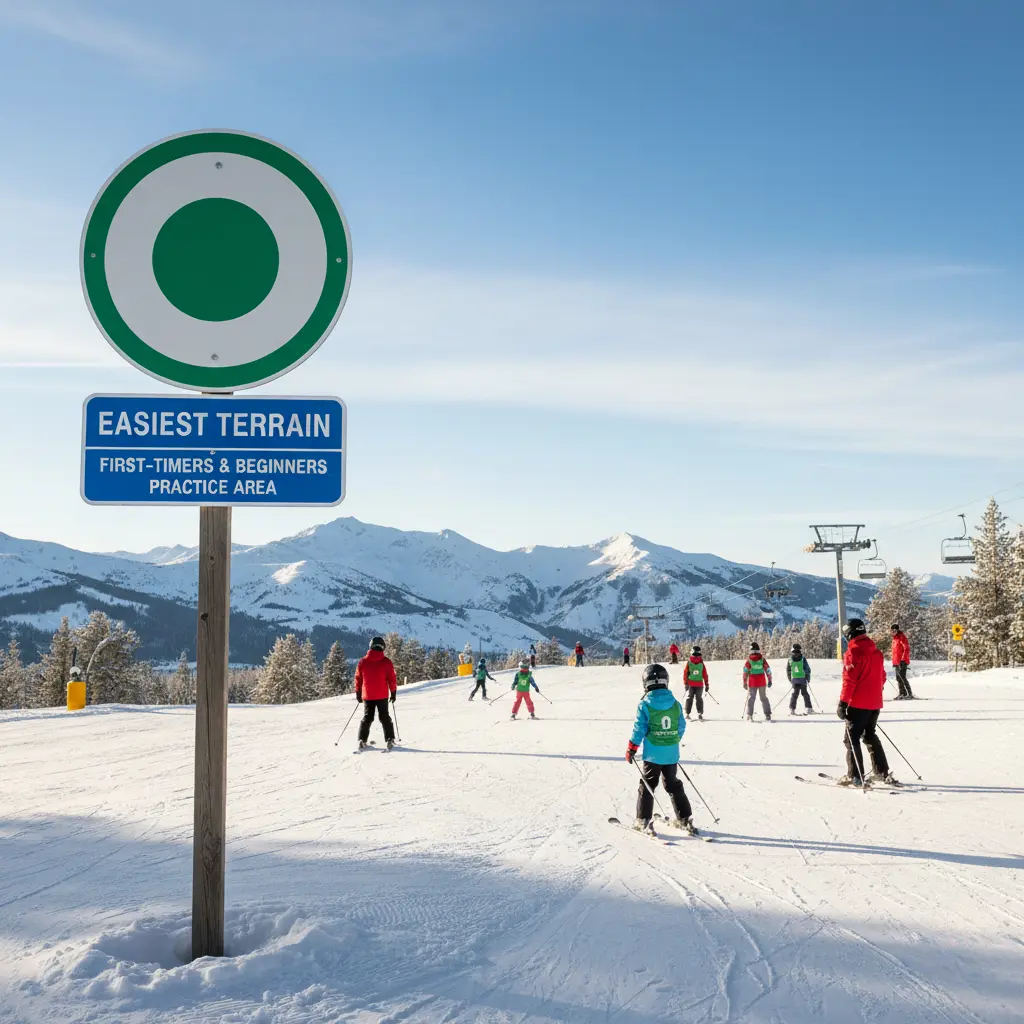
The Green Circle represents the easiest skiing terrain on the mountain. This designation is explicitly intended for first-time skiers, novices, and those primarily focused on practicing basic skills.
Key Characteristics of Green Circle Trails
The factors determining a Green Circle rating are focused almost entirely on gentleness and accessibility:
- Slope Angle (Vertical Pitch): Green runs typically have a very shallow pitch, generally ranging from 6% to 25% gradient (approximately 3 to 14 degrees). This low angle prevents excessive speed buildup, allowing beginners maximum time to react and practice turning, sliding, and stopping.
- Width: These trails are usually the widest runs on the mountain. This increased width provides ample space to maneuver, fall down, and recover without obstructing other skiers.
- Grooming: Green runs are consistently groomed and maintained. They should offer a smooth, predictable surface free of moguls (bumps), obstacles, and exposed natural hazards.
- Length: They are typically short access trails, or longer, meandering routes designed to reduce vertical descent over a longer horizontal distance.
Who Should Ski Green Runs?
The Green Circle is the correct choice for anyone during their first few days on snow, or for experienced skiers returning after a long absence to shake off rust. It is the ideal place to learn the wedge (pizza) turn, master the controlled stop, and get comfortable riding the lift. When planning your initial outing, mastering the Green Circle is the critical step before attempting higher difficulty terrain. If you are preparing for your first day, be sure to review what to expect on your first ski day guide.
When to Move On
A skier is ready to progress from the Green Circle when they can maintain a smooth, controlled parallel or wedge turn, perform a confident and quick stop, and traverse the entire run without losing control or needing to shuffle forward. Crucially, they must be able to do this while safely navigating around other skiers and snowboarders on the hill.
Intermediate Challenge: Blue Square (More Difficult)
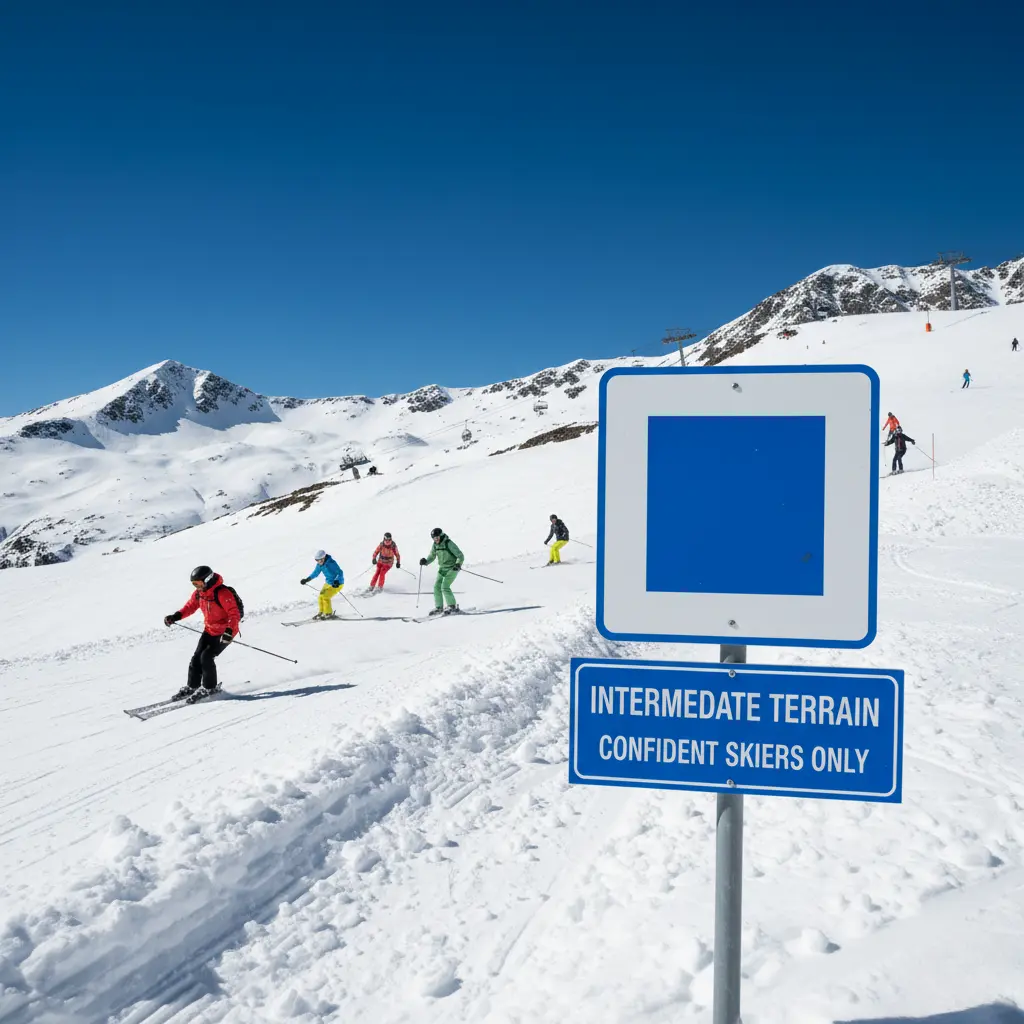
The Blue Square is the workhorse of the resort, indicating terrain that is suitable for intermediate skiers who have established foundational control. This is the level where most resort visitors spend the majority of their time.
Key Characteristics of Blue Square Trails
Blue runs demand a confident command of speed and technique, marking a significant step up from the Green Circle:
- Slope Angle: The average pitch for Blue Square runs ranges from 25% to 40% gradient (approximately 14 to 22 degrees). This steeper pitch naturally accelerates the skier, requiring active, managed turning to control speed.
- Variable Terrain: While still frequently groomed, Blue runs often integrate sections with different challenges, such as unexpected pitches, narrower sections, or slightly rolling terrain.
- Moguls (Optional): Some Blue runs may be intentionally left ungroomed to allow natural moguls to form, introducing the intermediate challenge of skiing bumpy terrain. These are typically smaller and more widely spaced than those found on Black Diamond trails.
- Snow Conditions: Blue runs may be left ungroomed after a light snowfall, requiring the skier to begin dealing with marginally variable snow depth.
The Intermediate Skill Set
To confidently tackle a Blue Square run, a skier must be able to execute controlled turns on both edges (heel and toe), manage speed purely through the shape of their turns, and handle moderate exposure to speed. They should be consistently using a parallel turn, or at least a highly refined wedge that rapidly transitions into a parallel shape. Any skier who feels out of control or who struggles to stop quickly should remain on Green Circle terrain.
The Crucial Step-Up
The transition from Green to Blue is the largest jump in required skill. Green runs are about learning to stop and turn; Blue runs are about linking turns fluidly while maintaining a specific speed under gravity’s greater influence. If a Blue run feels overwhelming, the skier must retreat to the Green runs to practice edge control and balance. Using the entire width of the Blue trail to make large, arcing turns is the safest strategy for maintaining controlled speed. Keep in mind that progressing to Blue Square runs also requires having high-quality, properly fitted equipment.
Expert Terrain: Black Diamond (Most Difficult)
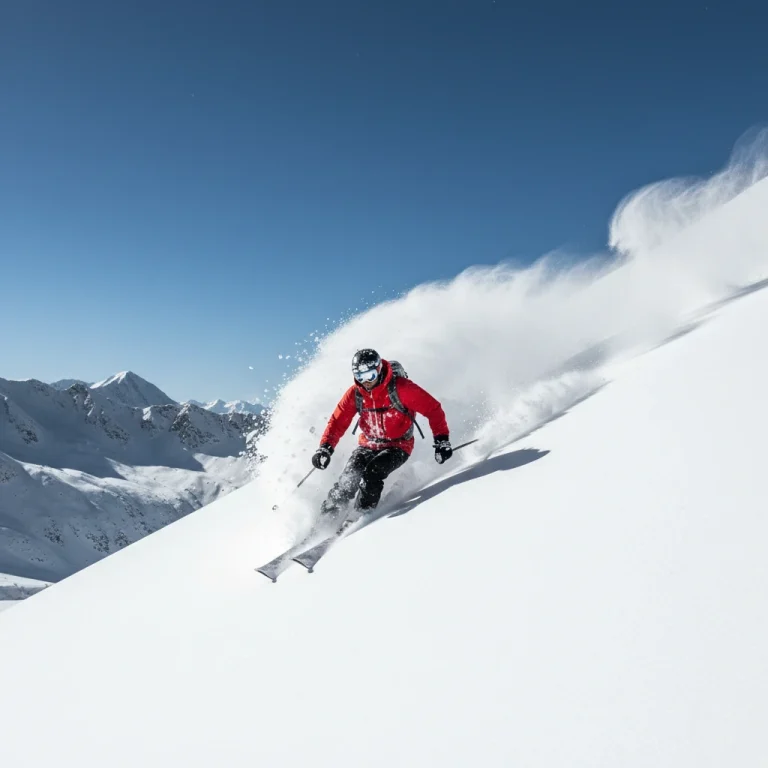
The Black Diamond and Double Black Diamond ratings indicate terrain reserved for expert skiers who possess a high degree of confidence, technical skill, and situational awareness. These runs should not be attempted by intermediate or casual skiers.
Black Diamond (Single) Characteristics
The single Black Diamond represents a run that features one or more of the following expert-level challenges:
- Steepness: Trails commonly feature sustained pitches exceeding 40% gradient (over 22 degrees). This steepness ensures rapid acceleration, requiring tight, aggressive turns to control speed.
- Moguls and Bumps: The majority of Black Diamond runs are left ungroomed, often developing large, challenging mogul fields. Skiing these bumps requires stamina, precise timing, and the ability to absorb shocks with the legs.
- Variable Conditions: These runs may be found in areas that receive high winds or sun exposure, leading to ice patches, deep powder pockets, or heavily wind-affected snow. Dealing with these constantly changing, difficult surfaces is part of the required skill set.

Double Black Diamond (Extreme Expert)
The Double Black Diamond is used to designate the most extreme and difficult terrain on the mountain. These runs combine multiple high-level risks:
- Extreme Slope Angle: They are the steepest trails, often exceeding 50% gradient.
- Natural Hazards: They may include mandatory jumps, extremely narrow chutes, cliffs, dense trees, or rock outcroppings.
- Exposure: These runs are rarely, if ever, groomed and will feature deep, heavy powder, ice, or massive, irregular moguls.
Skiers on Double Black Diamond trails must be prepared for everything, including navigating difficult snow that can be heavy or extremely light, which is where true technical mastery of mastering every snow condition becomes necessary.
Who Should Ski Black Diamond Trails?
Only experts who can confidently execute short-radius, high-speed parallel turns under duress should attempt a Black Diamond. They must be prepared for potential falls, able to recover quickly, and carry the fitness and stamina required to manage steep terrain and moguls for an entire descent. If there is any doubt about one’s ability, the run should be avoided. be avoided.
Understanding Ski Slope Difficulty and Relativity
As noted, the Ski Slope Difficulty system is relative to the specific resort. The local context is determined by several factors:
- Mountain Height: A tall mountain may rate a trail Blue simply because there are many steeper Black trails above it.
- Climate: Resorts known for heavy powder may have softer Black runs than resorts primarily dealing with hard-packed, icy conditions.
- The Day’s Grooming: Even a standard Blue run can feel like a Black Diamond if it hasn’t been groomed after heavy overnight snow or if warm temperatures have caused ice to form.
Always begin a day on familiar or easier terrain, and progress slowly. It is always better to be the best skier on an easy trail than the weakest skier on a difficult one. For more information on the history and standardization of these symbols in North America, consult the National Ski Areas Association (NSAA) Safety Standards.
Conclusion
The Ski Slope Difficulty rating system—the Green Circle, Blue Square, and Black Diamond—is the essential map for navigating any ski resort safely. These symbols are a voluntary but standardized code: Green means go slow and learn, Blue means controlled speed and linked turns, and Black means commit to technical expertise across challenging terrain and conditions. By respecting these ratings and accurately assessing one’s own capabilities, every skier and snowboarder can find terrain that matches their goal for growth and enjoyment on the mountain.
Discover more from Maive Verse
Subscribe to get the latest posts sent to your email.