
Wondering how much a beginner kayak costs in 2025? This budget guide breaks down prices, gear, and real customer insights so you can choose the right kayak with confidence.
This post may contain affiliate links, as an amazon associate, we earn from qualifying purchases.Maiveverse may also earn commissions from other affiliate programs at no extra cost to you.

Table of Contents
How Much Does a Beginner Kayak Cost?
Kayaking is one of the most accessible outdoor sports, but for beginners, the big question is always the same: How much does a kayak actually cost? The answer depends on what type of kayak you choose, the gear you’ll need, and how much you’re willing to spend for comfort or durability.
In this 2025 budget guide, you will find a breakdown of the real costs of beginner kayaks, from inflatables and sit-on-tops to tandems along with the additional expenses such as paddles, life jackets, and transport. The guide also summarizes real customer feedback and reviews, highlighting how popular entry-level models perform in practice. By the end, you’ll have a clear idea of what to budget, where to spend, and what to avoid.
Budget Breakdown: What Beginner Kayaks Cost in 2025
Before diving into specific models, let’s look at the current market ranges:
- Inflatable Kayaks: $200–$500
- Sit-on-Top Recreational Kayaks: $300–$700
- Sit-Inside Kayaks: $350–$800
- Tandem Kayaks: $500–$900
Inflatables are the cheapest and easiest to store, while sit-on-tops are the most popular for their stability. Sit-inside kayaks and tandems cost more but offer better comfort, speed, and room for gear or multiple paddlers.
Now, let’s break down the main categories with real customer experiences.
Inflatable Kayaks: Affordable, Portable, and Beginner-Friendly
Price Range: $200–$500
Example Model: Intex Challenger K1 (often under $150 with paddle and pump)
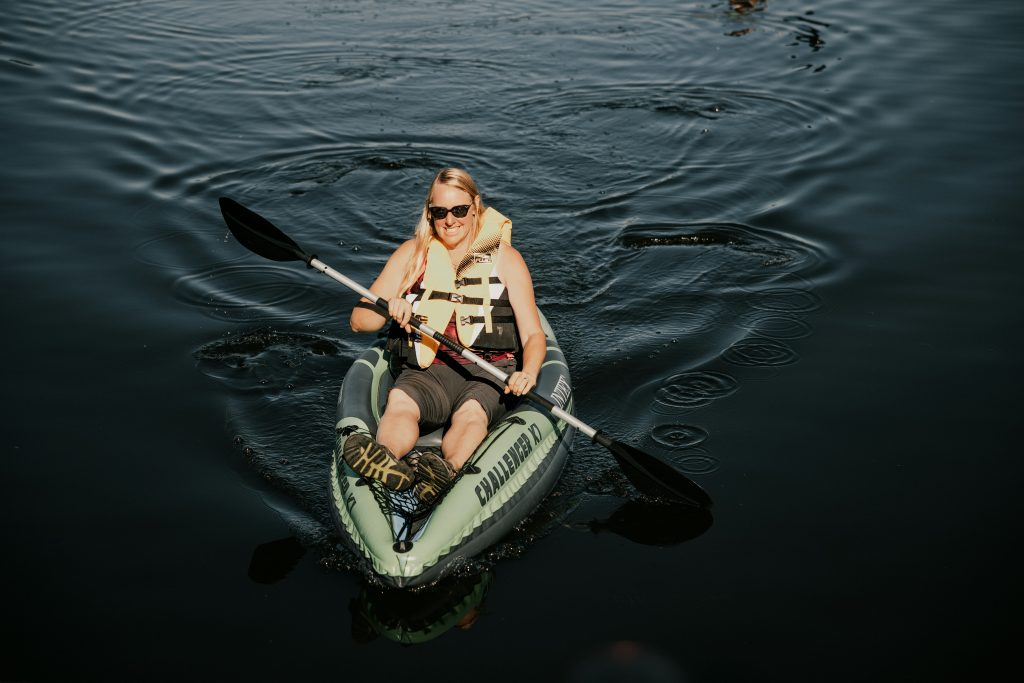
Inflatable kayaks are the go-to option for anyone starting out on a tight budget. The Intex Challenger K1 is one of the most popular models in this category, and after looking through dozens of reviews, here’s what stood out.
What Customers Love
Many owners are surprised at how durable the Challenger K1 is. Some have used it for years without a single leak. One reviewer even mentioned that after six years of weekly use, their kayak still held air perfectly. For an inflatable at this price point, that’s impressive.
People also like the portability; deflating it, rolling it up, and tossing it in a trunk is far easier than dealing with a full-size hardshell kayak. Beginners appreciate that it comes as a bundle with a paddle and pump, so there’s no need to buy everything separately.
The Trade-Offs
That said, most reviewers agree it’s not perfect. Tracking (how straight the kayak moves through the water) is a common complaint. Because the K1 is light and short, it tends to spin or drift in the wind. Others note that the vinyl construction feels more like a pool float than a “serious” kayak.
If you’re planning long paddles or rougher waters, you’ll outgrow it quickly. But if your goal is simply to get on calm lakes and rivers for fun, it delivers huge value for under $150.
Bottom Line: Inflatable kayaks like the Challenger K1 are great starter options if you’re budget-conscious and need portability. Just don’t expect speed or perfect performance.
Sit-on-Top Recreational Kayaks: Stable and Easy to Use
Price Range: $300–$700
Example Model: Pelican Sentinel 100X (~$400–$500)
Sit-on-top kayaks are some of the most beginner-friendly boats available. They’re wider, stable, and easy to climb in and out of, which makes them a favorite for new paddlers.
What Customers Love
The Pelican Sentinel 100X comes up again and again as a top choice for beginners. Reviewers mention that it’s lightweight enough for one person to carry, but still feels sturdy once on the water. Stability is one of its strongest points, many owners say they felt confident on their first paddle, even without much prior experience.
Another highlight is tracking. Unlike most inflatables, the Sentinel 100X glides straight without constant correction, making it easier to cover longer distances without tiring out. Storage is another plus: the rear tank well and front bungee area provide space for gear, snacks, or a small cooler.
The Trade-Offs
The main downside mentioned is that it isn’t suited for rougher conditions or heavy loads. Some paddlers said it feels less stable if overloaded or used in stronger currents. A few noted the seating isn’t the most comfortable for very long trips, although adding a cushion often fixes this.
Bottom Line: If you want a stable, reliable beginner kayak and don’t mind spending a bit more than an inflatable, a sit-on-top like the Pelican Sentinel 100X offers excellent value.
Sit-Inside & Tandem Kayaks: Comfort and Protection
Price Range: $350–$800 (sit-inside) | $500–$900 (tandem)
While sit-on-tops are more popular with beginners, sit-inside kayaks and tandems have their own appeal.
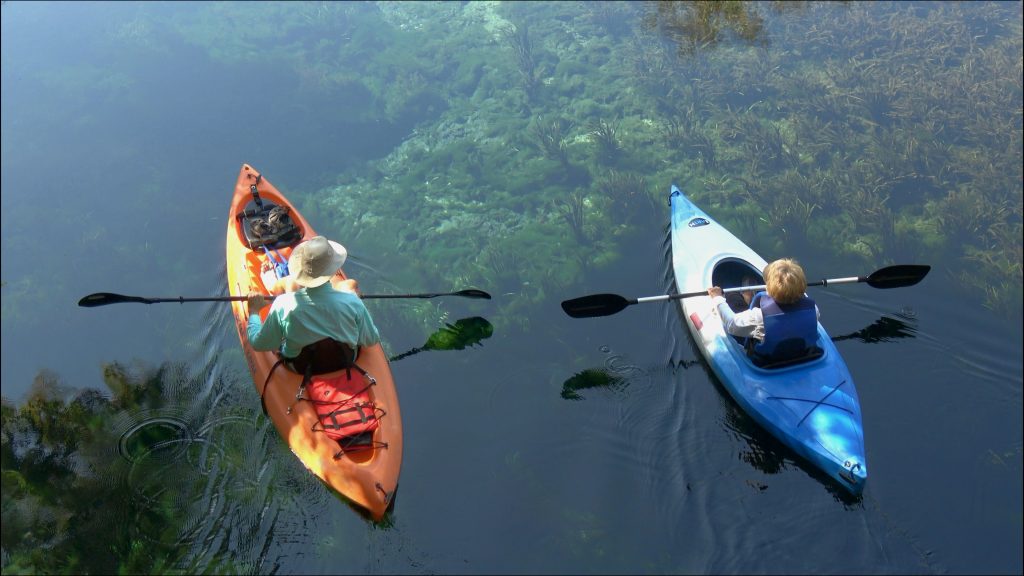
- Sit-Inside Kayaks: Offer better protection from wind and splashing water, making them great for cooler conditions or slightly longer trips. They also track better, meaning less work to paddle straight. Beginners who want to explore beyond calm ponds often find these a worthwhile investment.
- Tandem Kayaks: Perfect if you plan to paddle with a partner, child, or even a dog. Reviewers often say tandems feel like “a family kayak”—though they can be heavier and harder to transport.
If you’d like to dive deeper into the differences, check out our guide on sit-on-top vs sit-inside kayaks.
What Customers Love
Owners of beginner sit-insides appreciate the feeling of being “inside” the kayak, which provides more control and stability in windy conditions. Tandem users highlight the shared experience, saying it’s a great way to introduce kids to kayaking without needing a second boat.
The Trade-Offs
The trade-off is price and weight. Both sit-insides and tandems usually cost more and require more effort to carry. For solo beginners, this can be a hassle.
Bottom Line: Choose sit-inside or tandem models if comfort, protection, or paddling with company matters more than portability.
Extra Costs: Gear You Can’t Skip
Buying a kayak is just the start, you’ll need some essential gear to paddle safely. Here’s what to budget in addition to the boat:
- Paddle: $40–$150
- Life Jacket (PFD): $50–$150
- Dry Bag: $15–$60
- Whistle or Safety Gear: $20–$50
- Roof Rack or Storage Bag: $50–$300
Realistic Budget
When you add it up, most beginners spend:
- Kayak: $200–$900
- Gear: $150–$400
- Total: $350–$1,300
This range makes kayaking one of the more affordable outdoor sports especially if you compare it to mountain biking or skiing.
Smart Spending Tips for Beginners
Here are a few ways to save money without sacrificing safety or fun:
- Buy off-season: Kayak prices drop in late fall and winter.
- Check used markets: Many beginners resell after one season. Lightly used kayaks can be 30–50% off retail.
- Rent before you buy: Test different types to see if you prefer sit-on-top vs. sit-inside.
- Look for bundles: Some packages include paddles, pumps, and even life jackets.
Conclusion: What’s the Real Cost of a Beginner Kayak in 2025?
So, how much does a beginner kayak really cost? Based on current prices and customer feedback, here’s the quick answer:
- Inflatables like the Intex Challenger K1: $200–$500. Affordable, portable, but limited in performance.
- Sit-on-tops like the Pelican Sentinel 100X: $300–$700. Stable, durable, and ideal for casual lakes and rivers.
- Sit-insides & Tandems: $350–$900. Better for comfort, protection, or family paddling.
Once you add essential gear, expect to spend $350–$1,000 for a full beginner setup.
Customer reviews show that budget models like the Challenger K1 can last years if treated well, while slightly pricier options like the Pelican Sentinel 100X offer better performance and stability. Both have proven to be reliable beginner boats, depending on your needs.
If you’re planning solo adventures, check out our Solo Kayaking Tips guide for safety and confidence on the water. And don’t miss our Kayaking Safety Tips for Beginners to make every trip enjoyable.
With the right kayak and gear, you can launch into kayaking this year without overspending knowing you’ve made a smart, beginner-friendly choice.
Frequently Asked Questions
How much is a starter kayak?
Most starter kayaks cost between $200 and $600 depending on the type. Inflatables are often the most affordable, while sit-on-top or recreational hard-shell kayaks fall in the mid-range. Higher-end models with extra features may cost closer to $800.
How much does it cost to start kayaking?
The total cost to start kayaking includes the kayak plus essential gear like a paddle, life jacket, and safety accessories. On average, beginners can expect to spend $400 to $1,000 to get fully set up for safe paddling.
What is a good entry level kayak?
A good entry-level kayak is typically lightweight, stable, and easy to maneuver. Inflatables and sit-on-top models are popular choices because they are beginner-friendly, affordable, and don’t require much maintenance. Brands like Intex, Lifetime, and Perception offer reliable starter options.
Is kayaking a cheap hobby?
Kayaking can be an affordable hobby, especially if you start with a budget kayak and basic gear. Ongoing costs are low compared to many sports, but transportation, storage, or upgrades can add expenses over time. Many find it cost-effective when compared with other outdoor activities.