
This post may contain affiliate links. If you buy through them, we may earn a small commission at no extra cost to you.
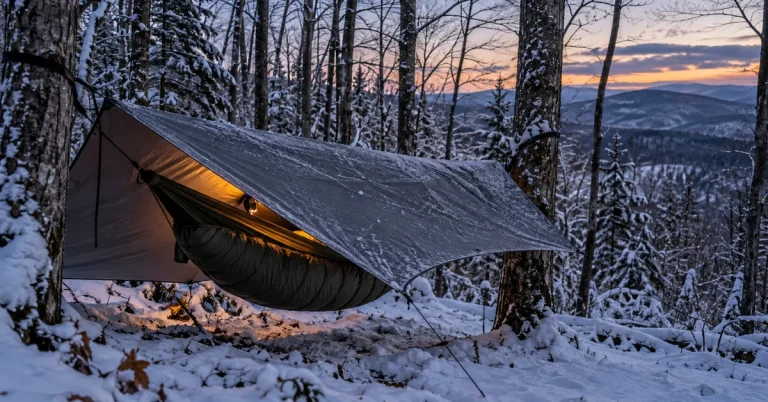
The best hammock tarps are chosen on coverage and pitch options, not on the weight printed on the stuff sack. A hammock with no roof is a lawn chair the moment rain starts, and a tarp that is too short or too narrow leaves your quilts soaked by sideways rain at two in the morning. A hammock tarp is a specialized tarpaulin: long enough to cover the whole hammock, with tie-outs placed to pitch it tight over a ridgeline.
Six tarps below, from a 10 ounce ultralight to a four-season model with doors, every one checked for stock, rating and the specifications on the listing. New to hanging? Our hammock camping for beginners guide covers the basics, and our picks for the best camping hammocks will get you a hammock to go under it.
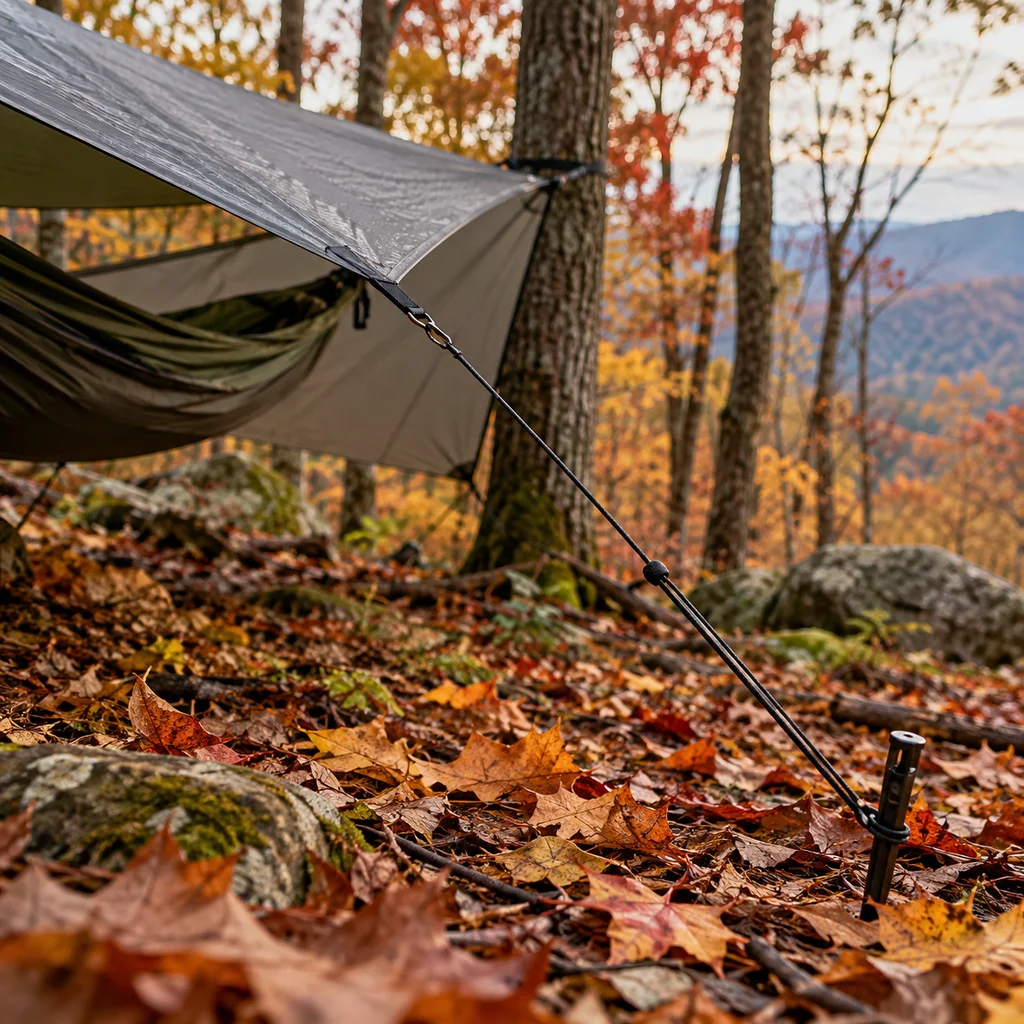
Table of Contents
What Separates the Best Hammock Tarps
Coverage is the first test. The tarp should extend at least six inches past each end of your hammock, and more in cold or windy weather. A tarp around 11 to 12 feet long covers most hammocks. Width decides how low you can pitch the sides, which is what keeps blowing rain off you.
Then shape. Hexagonal tarps cut away the corners to save weight and still cover a hammock well. Square and rectangular tarps weigh more but pitch in many more ways. Tarps with doors close off the ends for full protection, which matters in wind and winter.
Then fabric. Most hammock tarps are ripstop nylon or polyester with a waterproof coating. Nylon is lighter and packs smaller; polyester sags less when wet. The denier and coating tell you how durable and waterproof it is.
Last, the kit. Guylines, stakes, line tensioners and a stuff sack add convenience. A tarp that comes with good cordage and tensioners is ready to pitch out of the bag.
The Best Hammock Tarps at a Glance
| Tarp | Shape | Listed Weight | Reviews | Best For |
|---|---|---|---|---|
| onewind 12×10 with Doors | Doors | 1.8 lbs | 4.7 stars, 806 | Best overall, winter |
| ENO ProFly | Hex | 22 oz | 4.7 stars, 190 | ENO hammock owners |
| Wise Owl Outfitters Rain Fly | Hex | 26 oz | 4.7 stars, 3,932 | Best value |
| Bear Butt Rain Fly | Hex | Just over 1 lb | 4.6 stars, 859 | Budget coverage |
| DD Hammocks Superlight | Square | 16 oz | 4.7 stars, 365 | Most versatile |
| Kammok Kuhli Ultralight | Tapered hex | 10 oz | 5.0 stars, 8 | Ultralight |
The Six Best Hammock Tarps in Detail
onewind 12×10 Tarp with Doors: Best Overall
This is the tarp to buy if you want one hammock tarp for every season. At 12 by 10 feet it covers any standard hammock with room to spare, and the doors at each end fold closed to block wind and rain completely, or open for airflow on warm nights.
The fabric is 1.1 ounce 20D ripstop, which keeps the listed weight at 1.8 pounds for the tarp itself despite the extra door panels. The knotless setup is a real help in the cold, and it comes with what you need to pitch it straight out of the bag.
Four point seven stars across 806 reviews. It is heavier and bulkier than a simple hex tarp, which is the honest tradeoff for full winter protection.
Specs That Matter
- Size: 12 x 10 ft
- Shape: rectangular with doors
- Fabric: 20D ripstop
- Weight: listed at 1.8 lbs
- Setup: knotless, stakes and guylines included
Who It Is For
Hangers who camp into fall and winter, or anywhere storms blow in sideways.
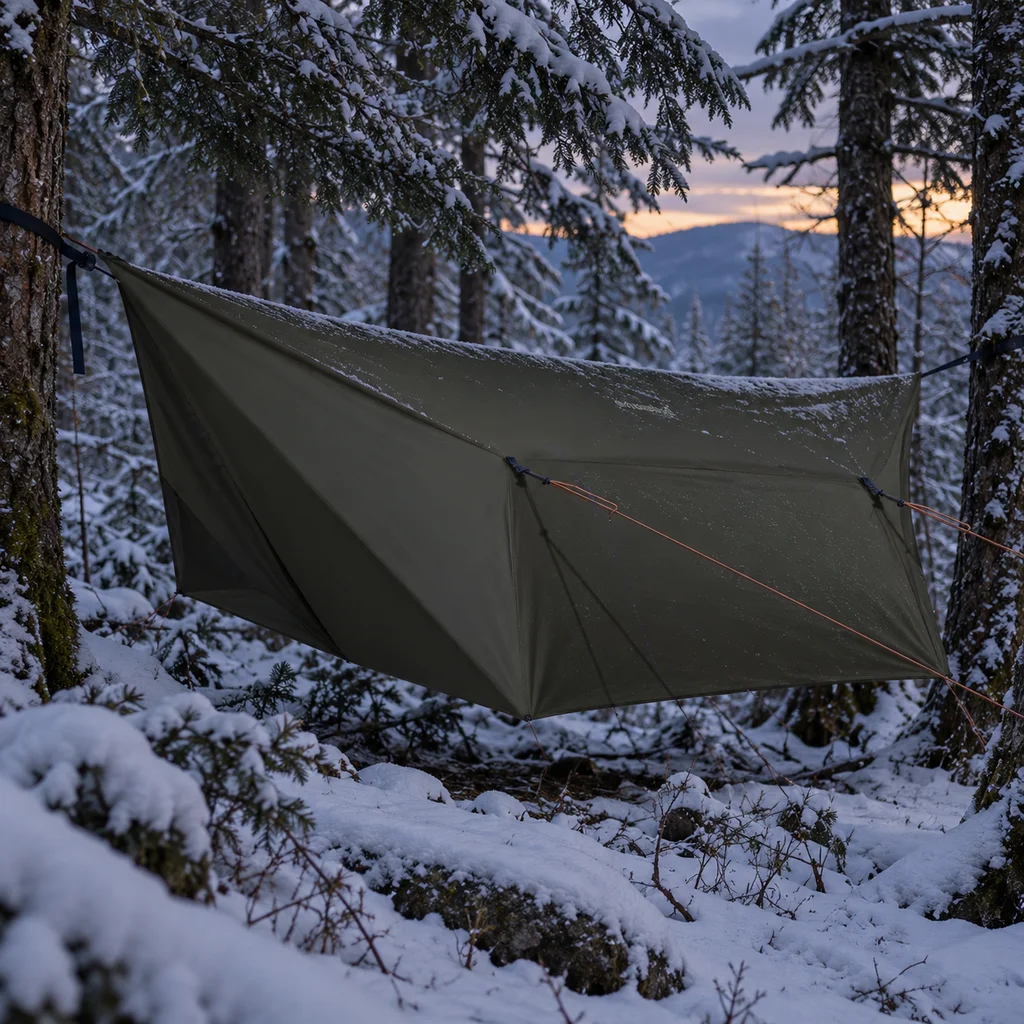
ENO ProFly Rain Tarp: Best for ENO Hammocks
Eagles Nest Outfitters make the hammocks many people start with, and the ProFly is designed to go over them. It is made of polyurethane-treated 210D ripstop nylon, much heavier fabric than ultralight tarps, which makes it very tough.
Six connection points give you a secure pitch, and at a listed 22 ounces with a stuff sack it is still easy to carry. It is also useful as a camp kitchen or gear shelter when you are not sleeping under it.
Four point seven stars on 190 reviews. Stock can run low, and the asymmetric hex shape covers less than a big door tarp, so it is best for three-season use.
Specs That Matter
- Fabric: 210D ripstop nylon, PU treated
- Shape: hex
- Weight: listed at 22 oz
- Tie-outs: six connection points
- Includes: stuff sack
Who It Is For
ENO hammock owners who want a matched, durable three-season tarp.
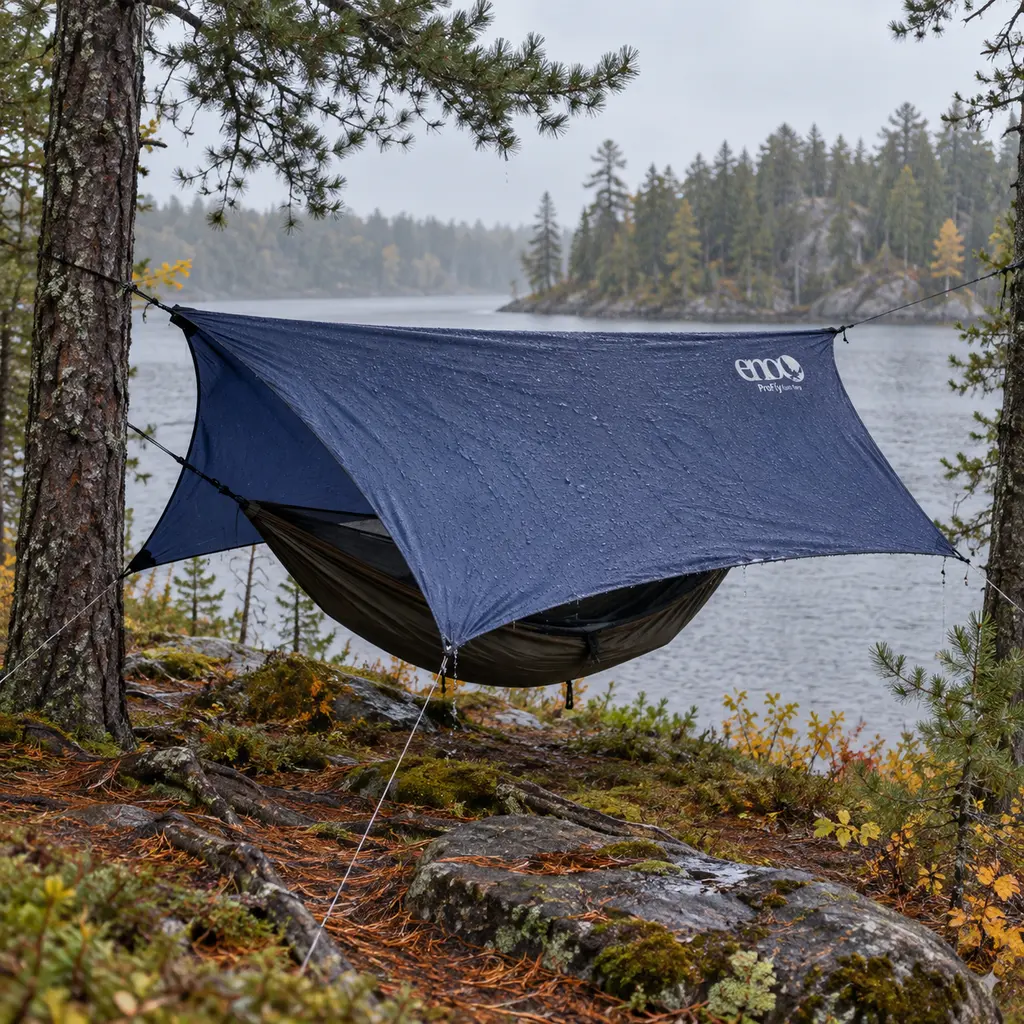
Wise Owl Outfitters Rain Fly: Best Value
With 3,932 reviews at 4.7 stars, this is the most bought tarp here and the easiest recommendation for a first hammock tarp. It measures 11 by 9 feet, which covers most single hammocks, and weighs a listed 26 ounces.
The ripstop nylon is PU coated to 3,000 mm of water pressure, and the seams are taped, which is exactly what you want on a rain fly. Six 10 foot guylines, aluminum stakes, a stake pouch and a waterproof carry bag come included.
It is not the lightest or the most weatherproof option. It is simply a well-made, well-equipped tarp at a fair price.
Specs That Matter
- Size: 11 x 9 ft
- Fabric: ripstop nylon, PU coated, taped seams
- Waterproof rating: 3,000 mm
- Weight: listed at 26 oz
- Includes: six guylines, stakes, carry bag
Who It Is For
Anyone buying a first hammock tarp who wants everything in the box.
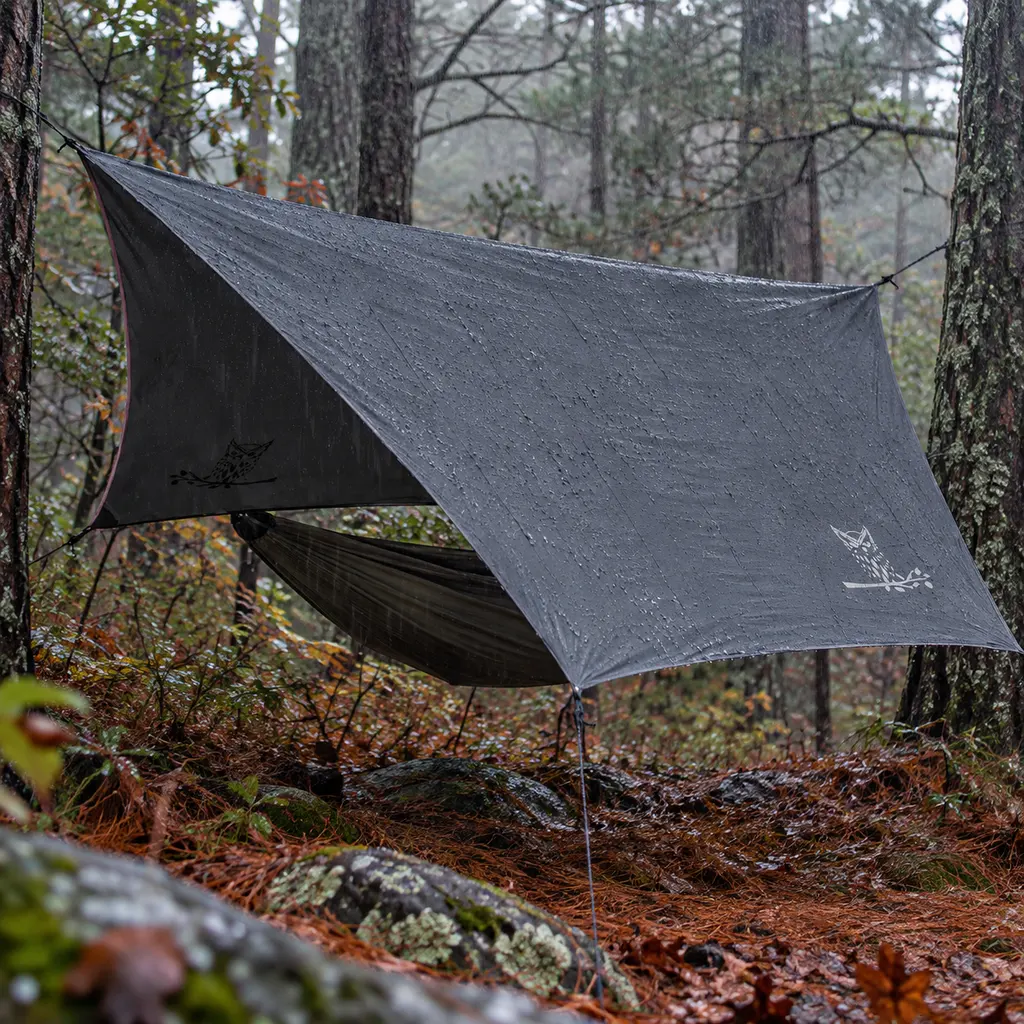
Bear Butt Rain Fly: Best Budget Coverage
Bear Butt makes a popular line of budget hammocks, and this 11 by 9 foot rain fly is sized to cover even a double hammock. At just over a pound, it is light for its size.
It uses waterproof polyester rather than nylon, which the brand says is stronger, and polyester stretches less when wet, so it holds a taut pitch better through a rainy night. Reflective tracers on the guylines help you avoid tripping over them after dark.
Four point six stars across 859 reviews. Setup is simple: swing the fly over the hammock and tie it to the same trees.
Specs That Matter
- Size: 11 x 9 ft
- Fabric: waterproof polyester
- Weight: listed at just over 1 lb
- Guylines: with reflective tracers
- Fits: single and double hammocks
Who It Is For
Budget hangers, especially with a double hammock, who want big coverage.
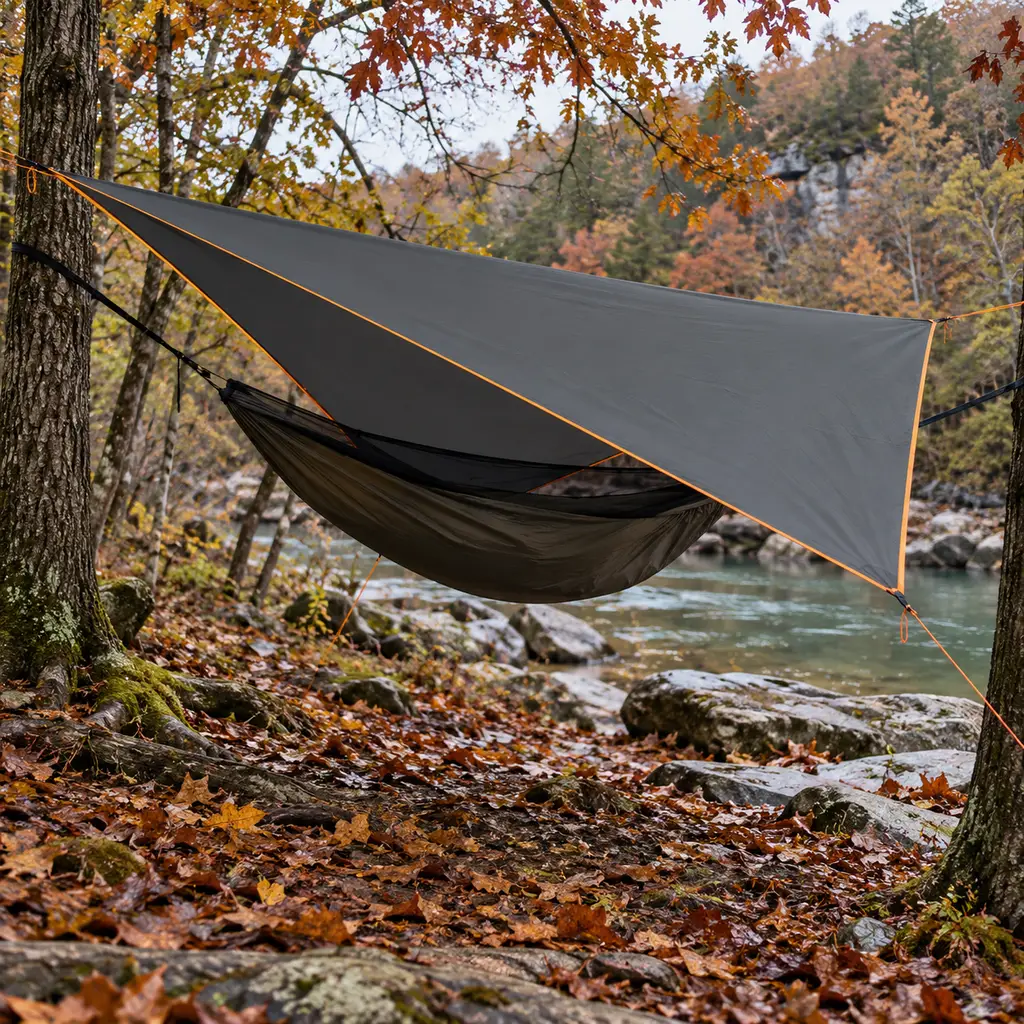
DD Hammocks Superlight Tarp: Most Versatile
DD Hammocks makes one of the most popular square tarps among hangers and bushcrafters. At 10 by 10 feet, the square shape pitches as a standard hammock roof, a diamond for minimal weight, a closed wedge against wind, or a ground shelter if you ever camp without trees.
Nineteen attachment points around the edges and along the ridgeline make all those pitches possible. The ripstop nylon is PU coated to 3,000 mm, and the listed weight is 16 ounces, excluding pegs and guylines.
Four point seven stars on 365 reviews. Stock runs low on some colors, and it comes in olive green, coyote brown or sunset orange.
Specs That Matter
- Size: 10 x 10 ft
- Shape: square
- Fabric: ripstop nylon, 3,000 mm PU coating
- Weight: listed at 16 oz
- Tie-outs: 19 attachment points
Who It Is For
Hangers who like to experiment with pitches, and anyone who also tarp camps on the ground.
Kammok Kuhli Ultralight: Best Ultralight
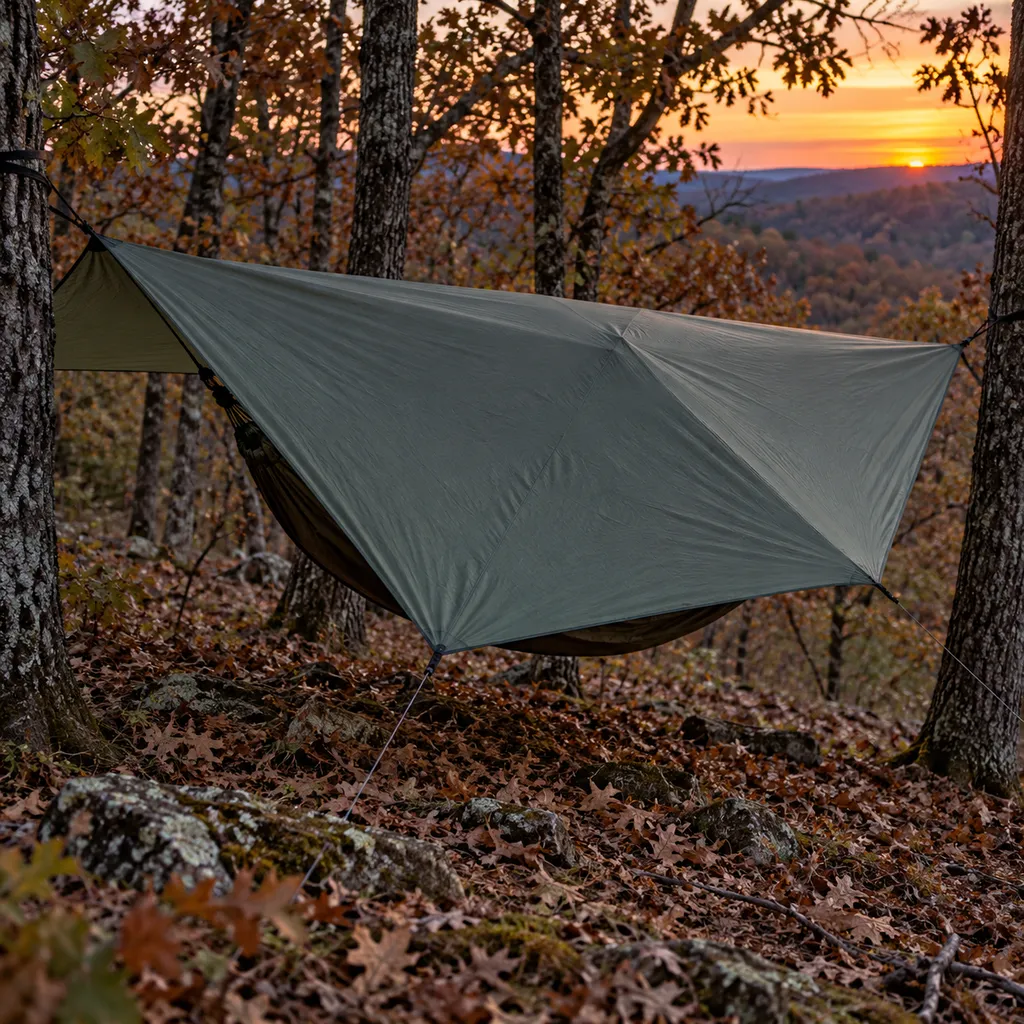
At a listed 10 ounces, the Kuhli Ultralight is the lightest tarp here by a wide margin. The tapered hexagonal shape puts coverage where your body is and trims fabric where it is not.
Kammok uses its Patagium fabric with a Sil/PU and DWR coating and sealed seams, rated for rain and snow. Line-locks and tensioners make the setup knotless, and eight guyout points let you pitch it tight in wind.
The honest caveat: only eight reviews so far, all five stars. Kammok has a strong reputation, but the review base is small, and a tapered tarp leaves less margin in sideways rain than the bigger options.
Specs That Matter
- Shape: tapered hex
- Fabric: Patagium, Sil/PU and DWR coated
- Weight: listed at 10 oz
- Guyouts: eight
- Setup: knotless line-locks
Who It Is For
Ultralight backpackers who count every ounce and camp mostly in fair weather.
How to Choose the Right Tarp
Hex Tarps
A good default for three-season hangers. Hex tarps save weight by cutting away corners you do not need and still cover the hammock well. The ENO, Wise Owl and Bear Butt tarps are all in this group.
Square and Rectangular Tarps
The most versatile shape. A square tarp like the DD Superlight can be pitched as a diamond, an A-frame or a closed wedge, and doubles as a ground shelter or even a tarp tent. They are heavier for the coverage they give over a hammock.
Tarps with Doors
The choice for winter and wind. Doors close off both ends of the hammock, trapping warmer air and blocking weather. Our guide to cold weather hammock camping explains why that matters so much when temperatures drop, and pairs well with a quilt from our list of the best hammock underquilts.
What the Specifications Mean
Denier
Denier measures the thickness of the fibers. A 20D tarp is light and packs small; a 210D tarp like the ENO ProFly is far tougher and heavier. For most backpacking, 20D to 70D with ripstop weave is the sweet spot.
Silnylon Against PU Coating
Silnylon is nylon coated with silicone. It is light, strong and slippery, and sheds water very well, but it stretches when wet. Polyurethane coatings are cheaper, allow seam taping, and stretch less. Sil/PU fabrics combine both.
Hydrostatic Head
The waterproof rating, in millimeters, is the hydrostatic head: how tall a column of water the fabric can hold back before leaking. A rating of 1,500 mm handles most rain; 3,000 mm, as on the Wise Owl and DD tarps, gives a comfortable margin for heavy storms.
Ridgeline Length
The ridgeline is the long center seam of the tarp. It needs to be longer than your hammock, ideally by at least a foot. Most gathered-end hammocks are 10 to 11 feet long, so an 11 or 12 foot ridgeline is right for most people.
Pitching and Caring for Your Tarp
Hang the tarp first, before the hammock, so everything stays dry if it is already raining. Run the ridgeline tight between the same two trees, then stake out the sides. Our guide on how to hang a hammock covers the right heights and angles for both.
In rain, pitch the edges lower and angle the tarp so water runs off away from the hammock suspension. Drip lines, short pieces of cord tied to the hammock straps, stop water running down the straps into the hammock.
After a trip, dry the tarp fully before storing it loosely, not packed tight in the stuff sack. Our guide on how to store your camping gear covers the rest. Check guylines and tie-outs for wear each season, and reseal seams on older tarps.
A good tarp is the difference between an enjoyable wet night and a miserable one. Our tips for camping in the rain and for cold weather backpacking are both worth reading before your first stormy night out.
Wind is the other thing a tarp handles. On an exposed site, drop the windward edge nearly to the ground and pitch the leeward side higher for ventilation, which keeps condensation down. On still, humid nights, pitch higher and more open, because trapped moist air soaks quilts faster than light rain does. If you carry a satellite messenger or phone for navigation, our guide on satellite messengers for solo safety covers checking the forecast from the backcountry, so you know which pitch the night calls for before you set up.
Last, practice at home. Pitching a new tarp in the backyard or a local park once or twice means that on a dark, wet evening at camp, you are working from habit rather than reading instructions by headlamp. Our hiking for beginners guide makes the same point about every new piece of gear.
Frequently Asked Questions
What size hammock tarp do I need?
Pick a tarp whose ridgeline is at least a foot longer than your hammock. For most hammocks, 11 to 12 feet long and 9 to 10 feet wide covers you in rain and gives you room to pitch lower in wind.
Do I need a tarp with doors?
For summer and mild weather, no. For fall, winter or exposed sites with wind, doors make a real difference by closing off the ends and trapping warmer air.
Can I use a regular tarp over a hammock?
A cheap rectangular hardware store tarp works in a pinch, but it is heavy, noisy and has few tie-outs in the right places. A purpose-built hammock tarp is lighter and pitches much tighter.
Is silnylon or polyester better for a hammock tarp?
Silnylon is lighter and packs smaller but stretches when wet, so you may need to retension it at night. Polyester is heavier but holds its pitch. Both keep you dry.
How high should I pitch my hammock tarp?
High and open in good weather for airflow and views, low and close in rain, wind or cold. Adjustable guylines and line tensioners make it easy to change the pitch without re-hanging.
For most hangers, the onewind 12×10 with doors tops our list of the best hammock tarps: big coverage, doors for winter, and a fair weight. The Wise Owl rain fly is the easy value pick, and the Kammok Kuhli Ultralight is the one for ounce counters. Planning a colder trip? Read our fall camping essentials before you go.
Discover more from Maive Verse
Subscribe to get the latest posts sent to your email.