This post may contain affiliate links. If you buy through them, we may earn a small commission at no extra cost to you.
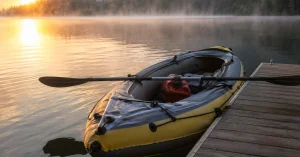
An inflatable kayak solves the two problems that stop most people paddling: where to put a twelve foot boat, and how to get it to the water without a roof rack. The best inflatable kayak for you is the one that packs into your car boot, inflates in about ten minutes, and is honest about the water it can handle. That last part is where most buying goes wrong, because a hundred and thirty dollar lake boat and a four hundred and fifty dollar river boat look almost identical in photographs.
Below are six that each own a clear job: two budget classics that between them hold more than fifty thousand reviews, a comfortable tandem for long days, a tougher laminate version for fishing and light current, a genuinely river capable three seater, and a drop stitch convertible that paddles closest to a hard shell. Prices and ratings were checked on Amazon while writing, so read them as a snapshot rather than a promise.
Before the picks, the four things that decide whether an inflatable kayak is any good: the material it is made from, the floor construction, the seats, and how long the whole business takes at the water.
What an Inflatable Kayak Is Actually Good At
The best inflatable kayak is the one matched to your water, so set expectations correctly and these boats are excellent. Set them wrong and you will be disappointed in the first hour.
Storage and Transport, Which Is the Whole Point
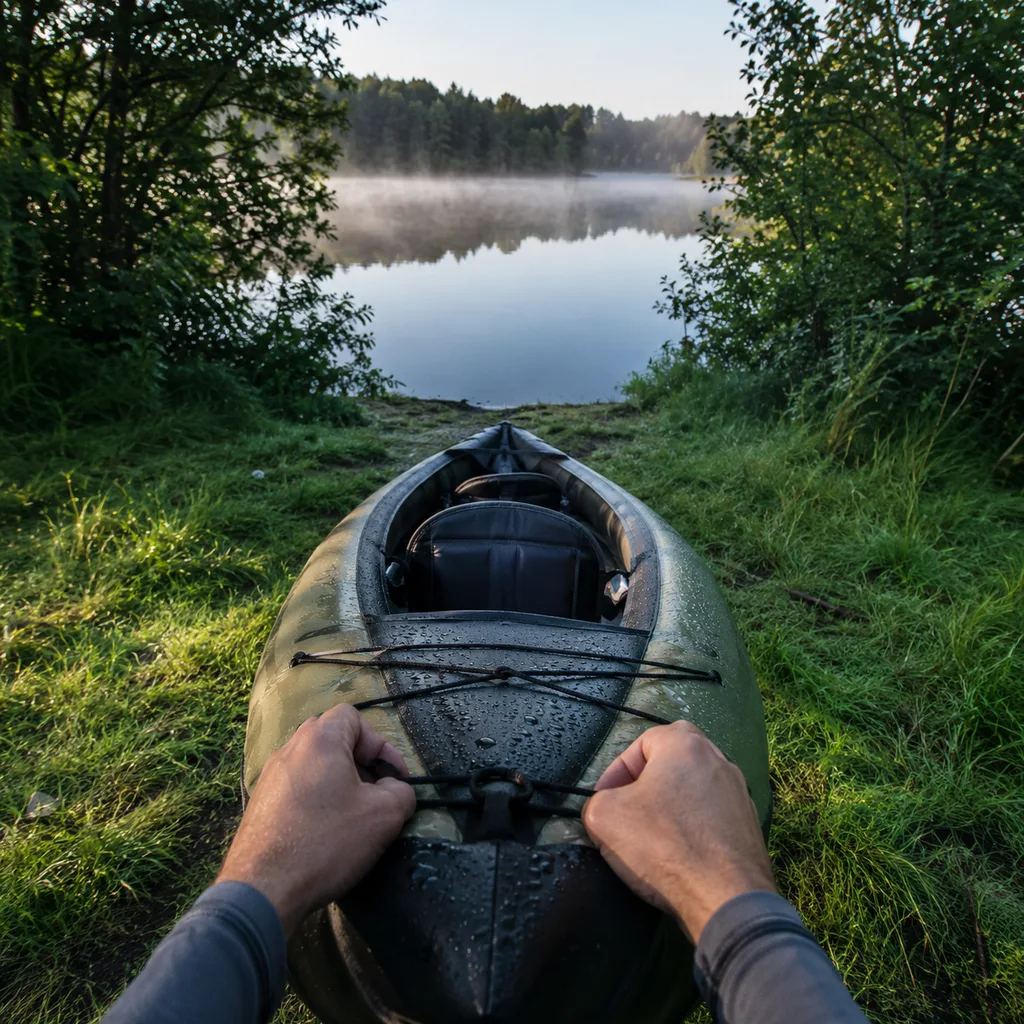
A packed inflatable is roughly the size of a large suitcase and weighs between twenty and forty pounds. It lives in a cupboard, travels in a car boot, and goes on holiday in the back of an estate. No roof bars, no trailer, no garage negotiation. For anyone in a flat or a house without a garage, this is not a compromise, it is the only realistic way to own a kayak.
Flat Water, Slow Rivers and Sheltered Coast
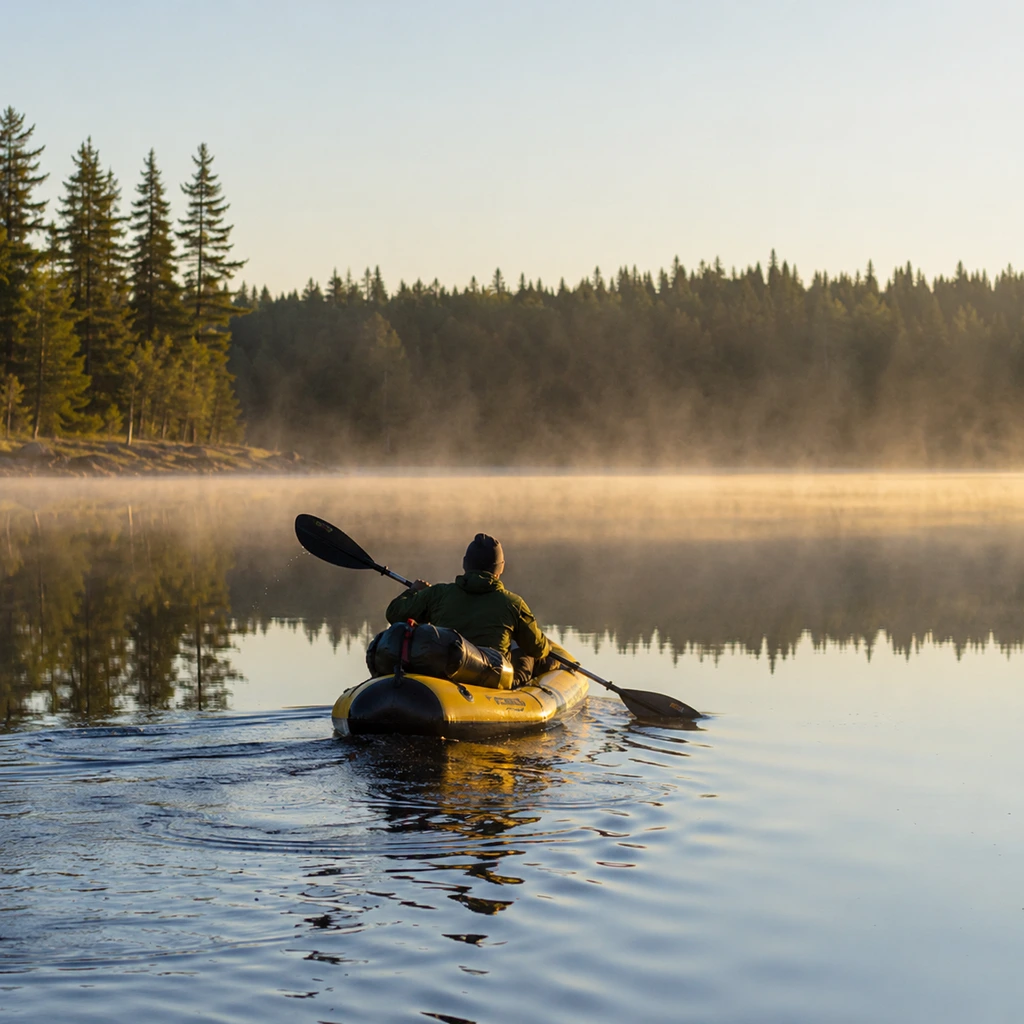
On lakes, reservoirs, canals and slow moving rivers, a decent inflatable is genuinely pleasant. It is stable, forgiving and very hard to capsize, which makes it a good first boat. What it does not like is wind, because a light boat with a high profile gets pushed around, and it does not like open sea or anything with real current unless it is built for it. Our guide to where to go kayaking as a beginner is a sensible place to pick a first launch.
Where a Hard Shell Still Wins
A rigid kayak tracks straighter, is faster over distance, handles wind better and needs no setup at all. If you paddle three times a week from a house with storage, buy a hard shell. Our comparison of sit on top and sit inside kayaks covers that side of the decision, and the honest summary is this: inflatables win on logistics, hard shells win on the water.
How To Choose the Best Inflatable Kayak
The best inflatable kayak for you comes down to four specifications, and the rest is marketing. Get these right and a hundred and fifty dollar boat will make you happy.
Material: PVC, Laminate or Drop Stitch
Entry level boats use welded PVC, which is cheap, repairable with a patch kit and vulnerable to abrasion on gravel. Mid range boats use a laminate of PVC over a polyester grid, which resists punctures much better and costs about twice as much. The premium end uses drop stitch, thousands of internal threads that let the boat hold much higher pressure, which is what makes it feel rigid rather than squishy. Price tracks that ladder almost exactly.
Floor Construction Decides How It Paddles
A simple inflatable I beam floor is comfortable and slow. A high pressure drop stitch floor gives you a firmer platform, better glide and a boat that turns when you ask rather than a moment later. If you have paddled a hard shell and found an inflatable disappointing, the floor is usually why.
Seats Are the Part People Regret
Basic inflatable backrests are fine for an hour and tiring after two. Look for a seat with a firm back panel and adjustable straps, and treat a cheap seat as an upgrade you will make later rather than a dealbreaker now. Most of the comfort complaints in reviews of budget boats are seat complaints in disguise.
Setup Time, Honestly Measured
Manufacturers quote five to ten minutes and that is broadly true with the supplied hand pump if you are fit and unhurried. Add a few minutes for seats and skeg, and the same again for drying and packing at the end. An electric pump changes the experience more than any other accessory, and it is the first thing most owners buy.
Weight Capacity Is Not Payload
A stated capacity of four hundred pounds does not mean two adults and a dog will paddle well. Aim to use no more than about seventy percent of the quoted figure, because a boat loaded to its limit sits low, gets slow and takes water over the bow. Our notes on choosing a first kayak apply here just as they do to rigid boats.
The 6 Best Inflatable Kayaks
These are the six best inflatable kayaks for lakes and easy rivers, and each one owns a different job. Intex dominates the budget end of this category by sheer volume, so three of the six are theirs, and the honest reason is that nothing else at the price has anywhere near the same track record.
Intex Challenger K1: Best Budget Solo
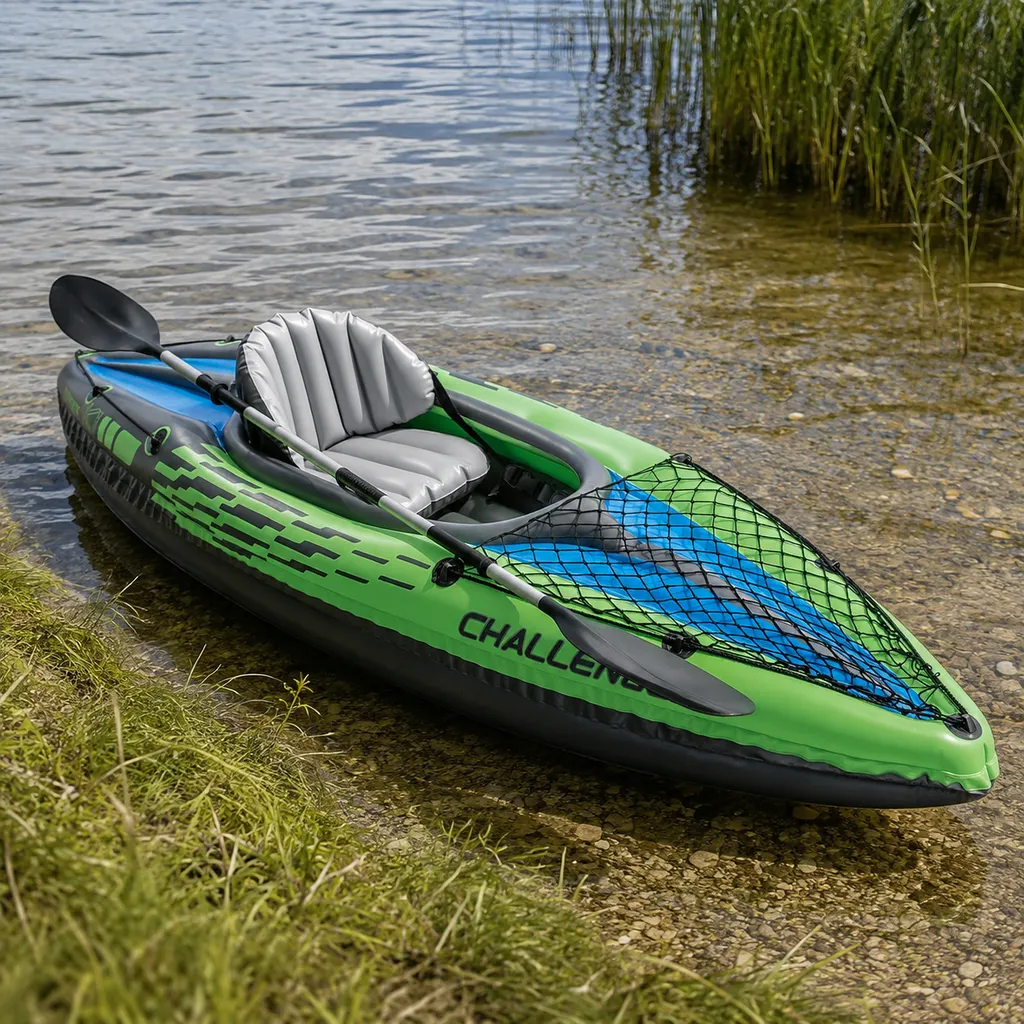
Around a hundred and thirty dollars for a complete solo kit, paddle and hand pump included, and more than twenty one thousand ratings at 4.3 stars. The green and black hull is welded PVC with an inflatable I beam floor, a single grey seat with a backrest, and a cargo net on the bow that is more useful than it looks.
It is nine feet long and it paddles like it: stable, slow and easy. The seat is the weak point on trips over about ninety minutes, and there is no skeg, so it wanders a little in wind. For a first boat on a local lake, or a second boat so a friend can come, the value is very hard to beat.
Who It Is For
First time paddlers, anyone testing whether they enjoy kayaking before spending real money, and solo trips on calm water.
Intex Explorer K2: Best Overall Value
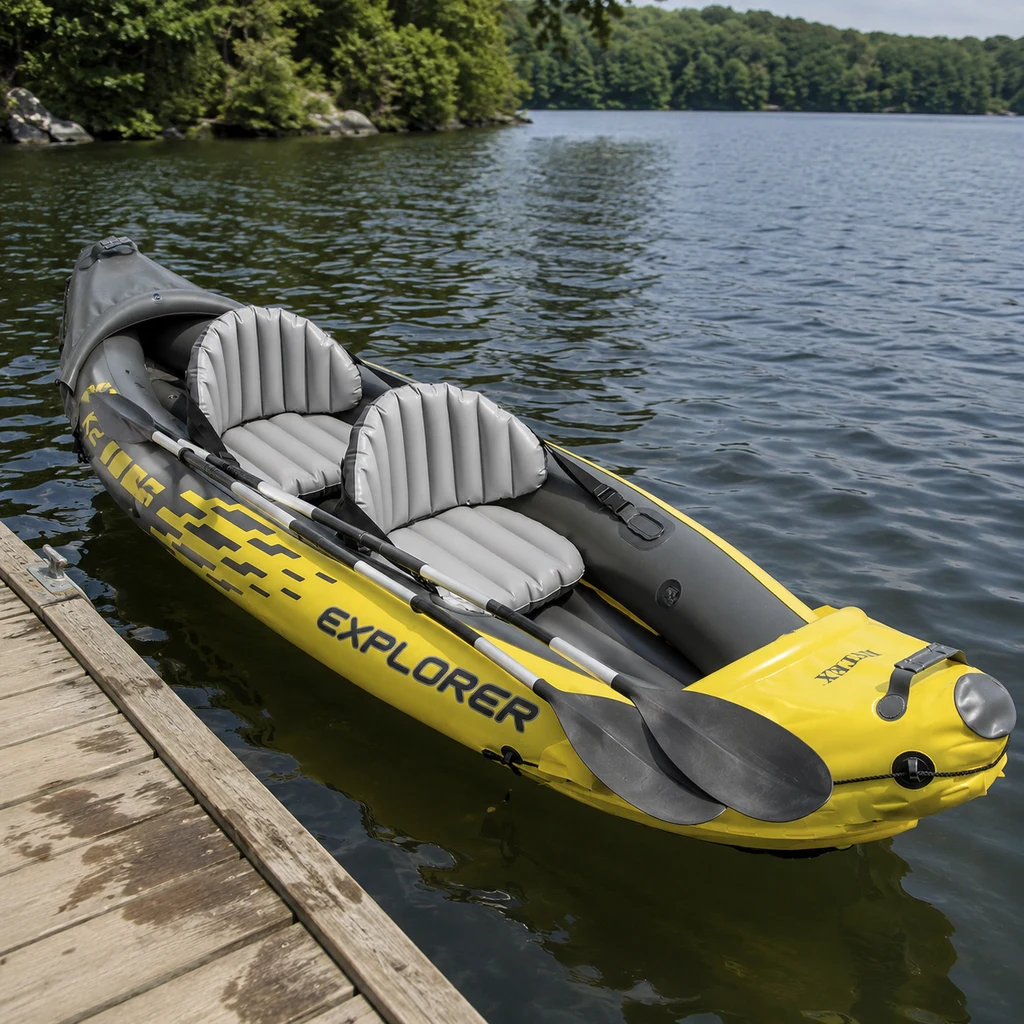
The most reviewed inflatable kayak on Amazon, with more than thirty thousand ratings at 4.4 stars, and about a hundred and forty five dollars for a two person kit with two paddles and a pump. The bright yellow hull is deliberately visible on water, the removable skeg helps it hold a line, and two adults fit properly rather than theoretically.
It is the boat most people should start with. The trade offs are the same as its smaller sibling, basic seats and PVC construction that wants care around gravel launches, plus a real sensitivity to wind because the tubes sit high. Paddled on a lake in the morning calm, it is genuinely good, and a bargain.
Who It Is For
Couples, parents with one child, and anyone who wants one boat that can go out solo or tandem without spending three hundred dollars.
Intex Dakota K2: Best Comfort for Long Days
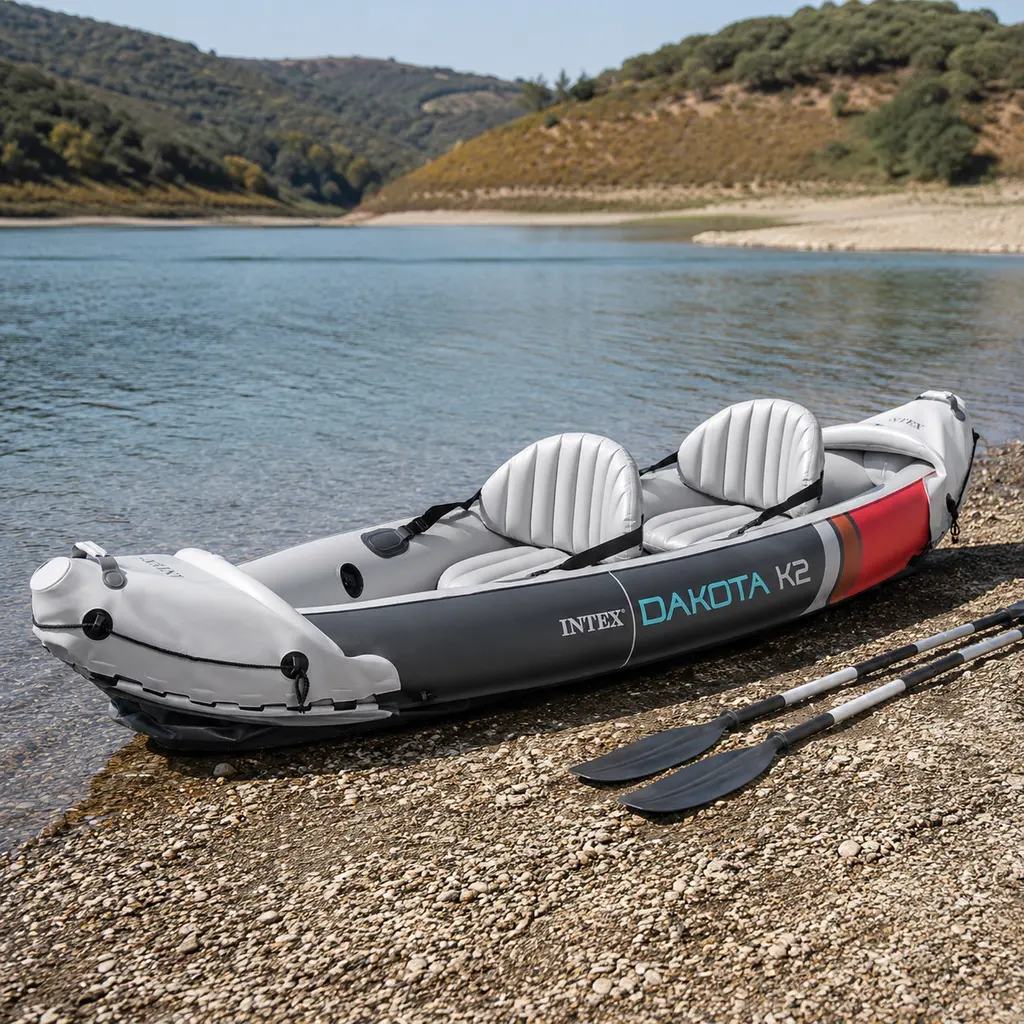
This is the Explorer with the problems fixed. Two high back adjustable seats instead of simple backrests, a roomier cockpit, higher capacity and a grey and blue hull that looks less like pool equipment. It runs about two hundred and twenty five dollars and holds 4.3 stars across nearly fifteen hundred ratings.
The seats alone justify the extra money if your trips run past two hours, which is when the cheaper boats start to hurt. It is still PVC rather than laminate, so it is not the pick for rocky rivers, and the extra volume makes it a little more of a handful in wind. On a long flat water day it is the most comfortable boat here under four hundred dollars.
Who It Is For
Paddlers doing three and four hour lake days, anyone with a bad back, and tandem crews who want to talk rather than negotiate.
Intex Excursion Pro K2: Best for Fishing and Light Current
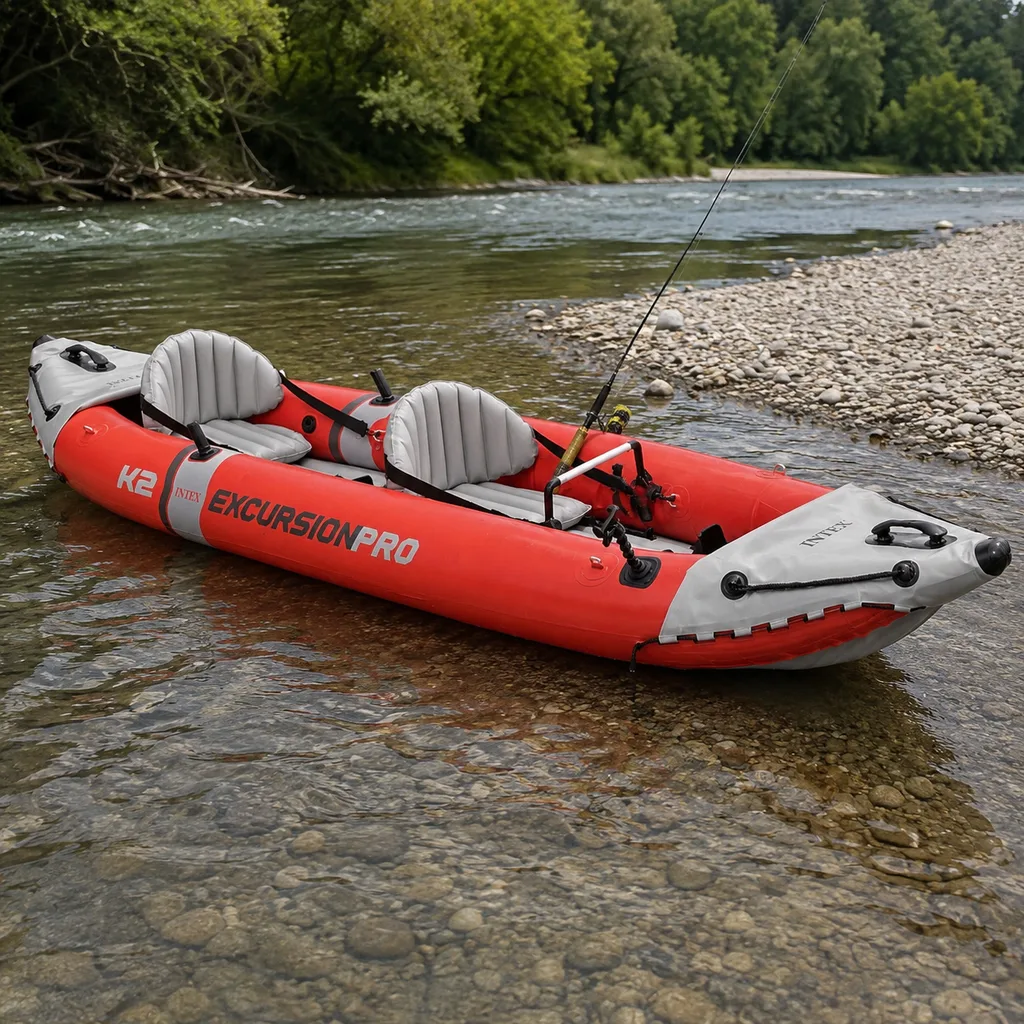
The material changes here and it matters. The red and grey hull is a three ply laminate rather than plain PVC, which resists abrasion and punctures far better, and it holds higher pressure so the boat feels firmer underfoot. It also arrives with two adjustable rod holder mounts, a removable skeg, and a floor that copes with standing up to cast.
At around two hundred and ninety five dollars with 4.3 stars from more than six thousand ratings, it is the sensible step up from the budget boats. It is heavier to carry and takes a little longer to inflate properly, and it is still not a whitewater boat, but it handles light current and gravel bars without the constant care the PVC hulls need. If fishing is the plan, our roundup of beginner fishing kayaks compares it against rigid options.
Who It Is For
Anglers, paddlers on slow rivers with gravel launches, and anyone who wants one boat to last several seasons.
Sea Eagle 370 Pro: Best for Moving Water
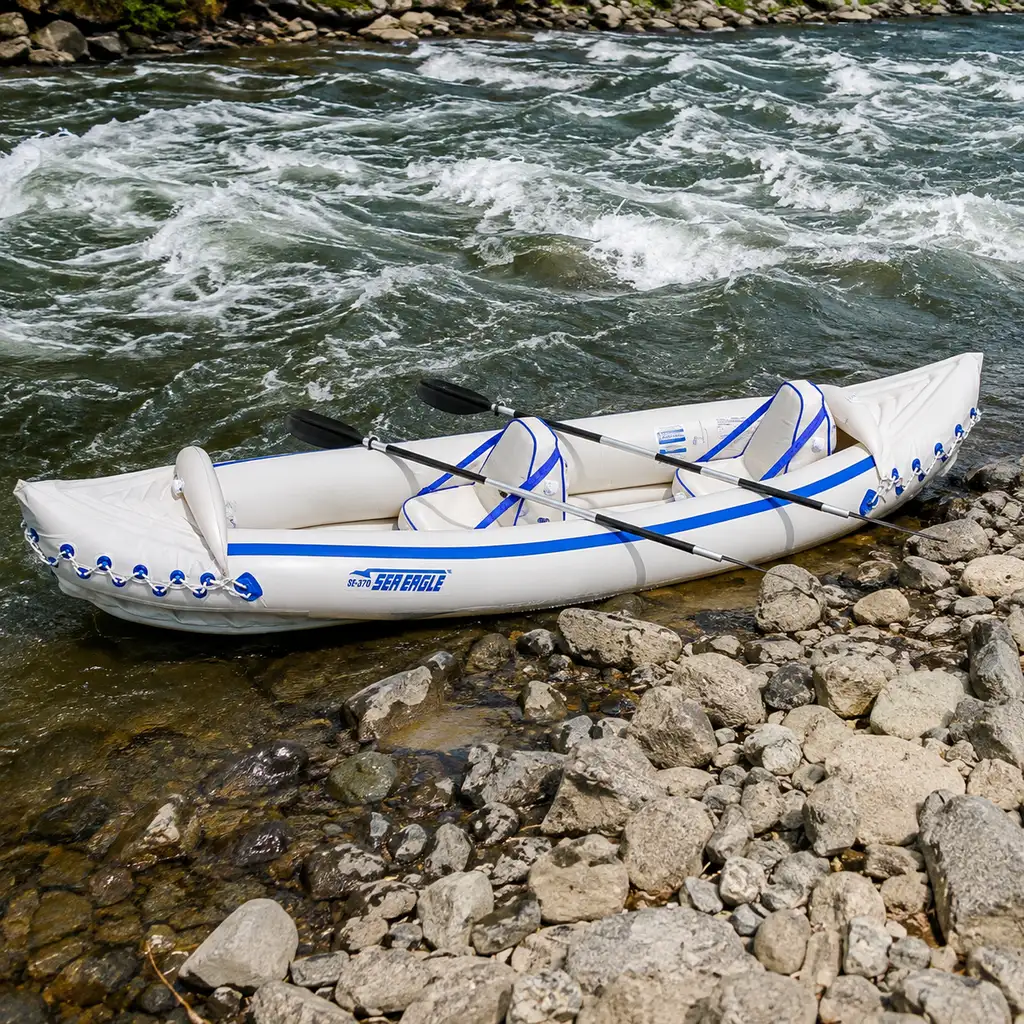
The Sea Eagle is the first boat on this list built for rivers rather than tolerating them. The white hull with its blue trim is a thicker polykrylar material rated for class three whitewater, it has three separate air chambers so a single puncture is an inconvenience rather than a swim, and self bailing drain valves let water out instead of pooling around you.
It costs about four hundred and forty nine dollars in the Pro package with two paddles, deluxe seats, a foot pump and a carry bag, and holds 4.3 stars across roughly sixteen hundred ratings. It seats three, though two adults and gear is the realistic load. It is slower than a hard shell and the seats are still inflatable, but it is the one boat here I would take down a moving river with confidence.
Who It Is For
Paddlers on rivers with real current, families wanting a three seat capacity, and anyone who values redundant air chambers.
Retrospec Coaster: Best Drop Stitch Convertible
This is the closest thing here to a hard shell experience. The yellow and black hull uses a high pressure drop stitch floor and converts between single and tandem, with a 220 pound solo and 440 pound tandem capacity, tracking fins underneath, bungee storage at both ends and a proper wheeled backpack rather than a stuff sack.
It is the most expensive option at around five hundred and fifty dollars, and the honest caveat is the review pool: 4.2 stars from about sixty ratings is a much thinner evidence base than the Intex boats have. Buy it for the rigidity and the packing system if you paddle often and want an inflatable that does not feel like one, and buy an Intex if you want the safety of thirty thousand opinions.
Who It Is For
Frequent paddlers, people who carry the boat any distance from the car, and anyone stepping up from a budget inflatable.

Comparison at a Glance
Here are the best inflatable kayaks side by side. Prices are the Amazon listing at the time of writing and change often. The material column is the one that predicts how long the boat lasts.
| Kayak | Best For | Seats | Material | Reviews | Price |
|---|---|---|---|---|---|
| Intex Challenger K1 | Budget solo, first boat | 1 | Welded PVC | 4.3 from 21,000+ | About $130 |
| Intex Explorer K2 | Overall value, tandem | 2 | Welded PVC | 4.4 from 30,000+ | About $146 |
| Intex Dakota K2 | Comfort on long days | 2 | Welded PVC | 4.3 from 1,477 | About $225 |
| Intex Excursion Pro K2 | Fishing, light current | 2 | 3 ply laminate | 4.3 from 6,358 | About $294 |
| Sea Eagle 370 Pro | Moving water, 3 seats | 3 | Polykrylar | 4.3 from 1,590 | About $449 |
| Retrospec Coaster | Rigid feel, convertible | 1 or 2 | Drop stitch | 4.2 from 61 | About $550 |

What Else You Need To Buy
Even the best inflatable kayak arrives incomplete. The kits include a paddle and a pump, and both are the parts owners replace first.
A Life Jacket, Which Is Not Included
No inflatable kayak arrives with a personal flotation device, and in most US states an approved one per person is a legal requirement rather than a suggestion. Buy a paddling specific jacket with large armholes rather than a bulky boating vest. The rules by state are collected by the US Coast Guard boating safety programme, and they are worth two minutes of reading before your first launch.
An Electric Pump Changes Everything
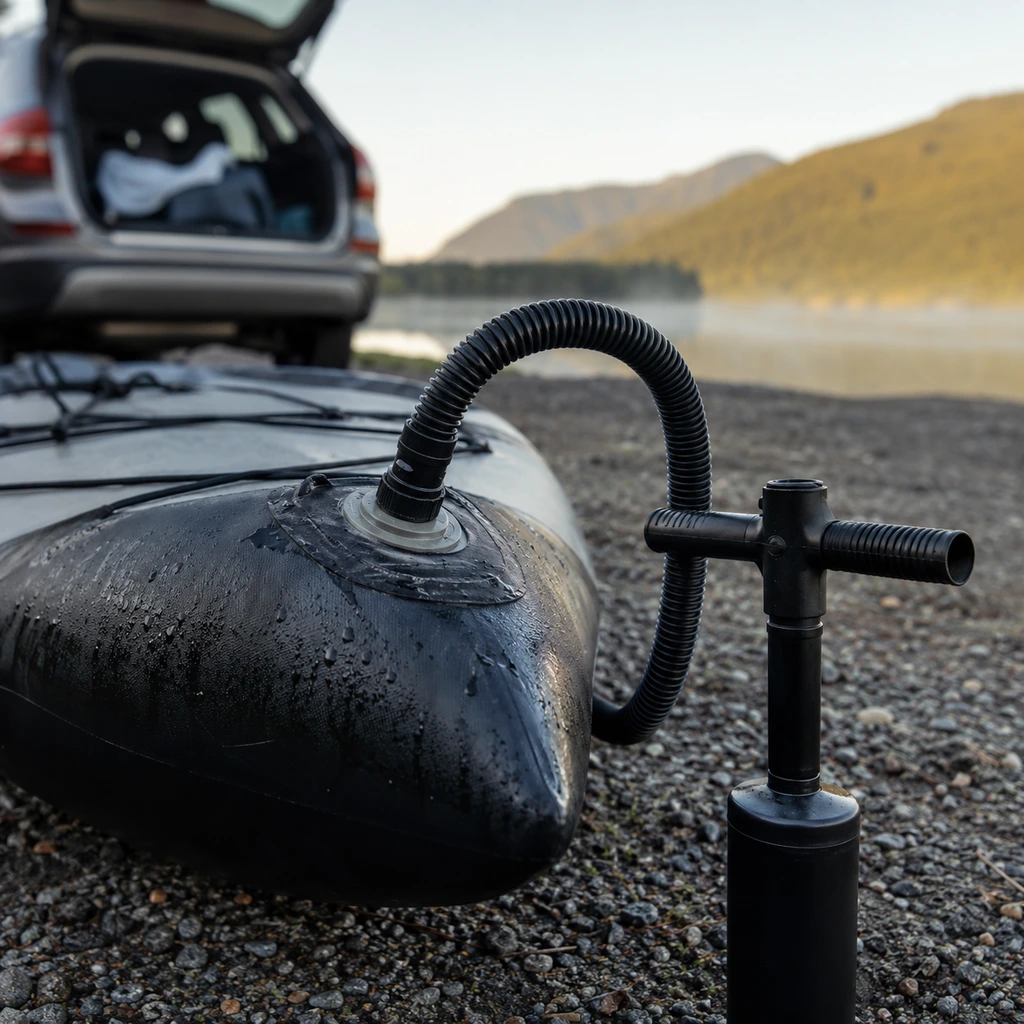
The supplied hand pump works and it is tedious. A twelve volt electric pump that runs off the car socket takes the boat to pressure while you sort the seats, and it hits a consistent pressure rather than the vague “firm enough” of arm power. Correct pressure is also what makes the boat paddle properly, so this is a performance upgrade as much as a convenience one.
A Better Paddle Is the Cheapest Speed
The aluminium paddles in these kits are heavy and flex under load. A lighter shaft with a smaller blade reduces fatigue enormously over a few hours, and it is the upgrade most people notice first. Our picks for lightweight beginner paddles cover what to look for, and the same logic as our essential kayaking gear list applies to the rest of the kit.
Dry Bags, Because Everything Gets Wet
An inflatable cockpit collects water from the paddle, from your feet and from anything you dip in the lake. Two small dry bags, one for a phone and keys and one for a layer and food, remove the entire problem for about twenty dollars. Keep water in a bottle you can reach without stopping, which is the same discipline as our hydration guide recommends on land.
Setting Up and Packing Down Without Frustration
The best inflatable kayak in the world is annoying if the routine is wrong. It is short once you have done it twice, and doing it in the wrong order is what makes first outings feel like hard work.
Inflate the Floor Last
Do the side tubes first and the floor last, because a floor at full pressure makes the sides harder to seat properly. Take each chamber to firm rather than hard, then top up in order once everything is in place. If a chamber will not hold, check the valve insert is screwed down before assuming a leak.
Launch Off Grass or Sand, Not Gravel
Carry the inflated boat to the water rather than dragging it, and choose a soft launch where you can. Almost every puncture in reviews of PVC boats comes from dragging over gravel or a hidden branch. Getting in is a different skill from a rigid boat too, and the method in our guide to getting in and out of a kayak translates directly.
Dry It Fully Before It Goes in the Bag
This is the single habit that decides whether the boat lasts three seasons or ten. Sponge the cockpit, open every valve, and leave it in the sun or over a fence until the folds are dry. Packing a damp boat grows mould inside the folds and the smell never fully leaves. The same principle as storing camping gear: dry, loose and out of direct heat.
Patch Small Damage Immediately
Every boat comes with a patch kit and it works well on PVC. Clean the area, let the adhesive tack, and press the patch down for longer than you think. A pinhole fixed at home in ten minutes is a boat that still floats next weekend, and it is the reason to check the hull while it dries rather than at the launch.

Safety Basics for an Inflatable
The best inflatable kayaks are stable and very buoyant, and they still deserve the same respect as any other kayak.
Wind Is the Real Hazard
A light boat with high sides is pushed downwind fast, and the classic incident is paddling out with the wind and being unable to paddle back against it. Check the forecast, start upwind, and stay close to shore on anything above about ten miles per hour. Our kayaking safety tips cover the rest of the pre launch routine, and our piece on how safe inflatable kayaks really are published today goes deeper on the risk picture.
Cold Water Deserves More Caution
Autumn water is colder than the air suggests, and cold shock is what turns a capsize into an emergency. Dress for immersion rather than for the sunshine, which usually means a synthetic layer and a spare in a dry bag. Our guide to what to wear kayaking has the layering detail.
Tell Someone and Take a Phone
A float plan is one text message: where you launched, where you are heading, when you expect to be back. Carry a phone in a waterproof case and know that signal on water is often better than on land. If you paddle alone, our solo kayaking guide is worth a read first, and the American Canoe Association lists instruction near you if you want a lesson.
Children and Passengers
Inflatables suit children well because they are stable, forgiving and warm to sit in. Fit the jacket before the boat, keep the first trip to twenty minutes, and paddle parallel to shore rather than out and back. There is more on that in our kayaking with kids safety tips.
Paddling an Inflatable Through Autumn
Late season is quietly the best time to own one of these boats. The water is quiet, the light is better, and the launches that were full of families in July are empty by late September. The best inflatable kayak for autumn is simply the one you will still bother to carry down to the water when it is fifty degrees at eight in the morning.
Shorter Days Change the Plan, Not the Boat
Setup and packdown both take longer than you remember, so work backwards from sunset and allow half an hour at each end. A head torch in a dry bag costs nothing and turns a rushed packdown into a calm one, the same habit our fall hiking guide recommends on land.
Dress for the Water, Not the Forecast
Air at sixty five degrees and water at fifty five is an autumn combination that catches people out, because the paddling feels warm until you are in it. A synthetic base layer, a windproof shell and a spare set in a dry bag is the whole answer, and there is more in our kayaking clothing guide and our notes on cold season safety.
Store It Right Over Winter
At the end of the season, wash the hull with fresh water, dry it completely, dust the folds with talc if the manual suggests it, and store it loosely rolled somewhere cool and dark rather than compressed in a hot loft. That single afternoon is the difference between a boat that is ready in April and one that needs patching, exactly as our gear storage guide argues for tents and pads.

Inflatable or Hard Shell: Deciding Honestly
Most people asking which of the best inflatable kayaks to buy are really asking whether to buy an inflatable at all. Three questions settle it.
Where Would a Rigid Boat Live?
If the honest answer is a shared hallway, a balcony or nowhere, the decision is made: an inflatable you own beats a hard shell you never bought. If you have a garage wall and a roof rack, the calculation changes completely and our guide to choosing a first kayak is the better starting point.
How Far Do You Actually Paddle?
Under three miles at a gentle pace, the difference in speed is a curiosity. Above about five, you will feel every bit of the extra drag, and the boats worth considering narrow to the drop stitch end of this list. Building the technique in our basic technique guide closes more of the gap than most people expect.
Who Else Is Coming?
One person, one boat, simple. Add a partner and a child and a tandem inflatable is far cheaper than two rigid boats, easier to transport, and considerably more forgiving when someone stands up at the wrong moment. Our kayaking with kids guide and our easy water activities list both assume exactly this setup.

Frequently Asked Questions
How long does an inflatable kayak last?
Five to ten years for a PVC boat that is rinsed, dried and stored loose, and considerably less for one packed wet or left in sunlight. Laminate and drop stitch hulls last longer because they resist abrasion better. The failure point is almost never the fabric, it is the valve seals and the seams, both of which suffer most from heat and damp storage.
Do inflatable kayaks puncture easily?
Less easily than people expect. The material is far thicker than a pool toy, and most boats have multiple chambers so one puncture does not sink you. Punctures happen from dragging over gravel and from hidden branches, not from normal paddling, and a patch kit fixes them in minutes.
Which is the best inflatable kayak for beginners?
The Intex Explorer K2 for most people, because it is cheap enough to be a low risk experiment, stable enough to be forgiving, and can be paddled solo or tandem. If you know you will only ever paddle alone, save the money and take the Challenger K1. Read our complete beginner guide before the first outing either way.
How long do they take to inflate?
Ten minutes with the supplied hand pump is realistic, plus a few for seats and skeg. An electric pump cuts the pumping to three or four. Packing down takes longer than setting up, because drying properly is not optional.
Can you use an inflatable kayak on a river?
On slow rivers, yes, and a laminate hull like the Excursion Pro handles gravel and light current well. For anything with real current or rocks you want a boat built for it with self bailing drains and multiple chambers, which in this list means the Sea Eagle 370. Do not take a budget PVC boat down moving water.
Are they slower than hard shell kayaks?
Yes, noticeably, and drop stitch narrows the gap rather than closing it. Expect to work harder for the same distance, and choose routes accordingly. In exchange you get a boat you can actually store, which is why so many people paddle an inflatable and not a rigid boat.
What does an inflatable kayak cost to own?
The boat plus a jacket, an electric pump and two dry bags is a realistic starting budget, so add roughly a hundred dollars to the sticker price. After that the running costs are nil. Our breakdown of what a beginner kayak really costs and our list of kayaks under three hundred dollars both put those numbers in context.
Do I need lessons?
Not for a calm lake, where an hour of trial and error and our notes on basic kayaking technique will get you paddling in a straight line. For rivers, tidal water or anything you are nervous about, a single lesson is the fastest possible improvement, and our comparison of lessons against teaching yourself weighs it up.
Which One To Buy
If you want one answer from all the best inflatable kayaks here, buy the Intex Explorer K2. It costs about a hundred and forty five dollars, it is the most reviewed boat in the category for a reason, and it will tell you within three outings whether you want to spend more. If your trips are long, pay the extra for the Dakota K2 and its proper seats. If you fish or paddle gravel rivers, the Excursion Pro laminate hull is the one that survives, and if there is current involved, the Sea Eagle 370 is the only boat here I would trust with it.
Whichever you choose, buy a jacket the same day, pump it to full pressure before you judge how it paddles, and dry it properly before it goes back in the bag. Then go and find water: our list of beginner friendly places to launch and the mistakes in our common beginner kayaking mistakes will save you the first two disappointing trips, and easy water activities are a good way to start with children.

Discover more from Maive Verse
Subscribe to get the latest posts sent to your email.


